For a first Tibet trip, start with a properly arranged Lhasa-based stay and add another region only when the route, permissions and your condition support it. A city-and-monastery holiday, an Everest visitor-area journey and a Mount Kailash pilgrimage circuit are different commitments. More remote places need more travel time and a separate plan for altitude, rooms and returning early.
For current winter planning: the Kailash scenic area closed on 20 October 2026, with its 2027 reopening to be announced separately. Do not schedule a circuit during the closure. Everest attraction operations and the traveller’s route permissions are separate checks; a general scenic-area reopening is not an individual permit.
This guide concerns travel within the Tibet Autonomous Region. Gannan in Gansu, western Sichuan and Shangri-La in Yunnan have their own geography and arrangements; they are not interchangeable entry routes or permission systems.
Updated 26 October 2026.
Cities, Everest or Kailash: choose one main purpose
Choose the experience your party most wants, then ask the receiving agency to develop a route that can lawfully operate for the actual dates and documents. Avoid starting with the largest list of places. A distant viewpoint can add several road and overnight decisions, while a pilgrimage walk cannot be treated as an ordinary roadside excursion.
| Main purpose | A useful planning direction | What changes the decision |
|---|---|---|
| Culture, monasteries and city time | Develop a Lhasa-based stay, with selected visits and a separately arranged excursion if suitable. | Altitude on arrival, admission slots, walking, the permitted itinerary and time to rest. |
| An Everest landscape visit | Consider a longer approved road journey with its own overnight and return plan. | Border-area arrangements, actual attraction operation, high sleeping places and weather. |
| Kailash pilgrimage or circuit | Plan for a later operating period after a published reopening and route-specific arrangements. | The current closure, walking demands, traveller eligibility, support and the ability to withdraw. |
| A short first visit | Keep a smaller cultural programme and meaningful time in one base. | Remove a remote extension rather than making every travel day longer. |
A first visit does not have to include Everest or a pilgrimage circuit. Remaining in Lhasa for an appropriate, lighter programme can be a worthwhile holiday. The right decision also depends on personal medical advice: a city stay in Tibet is still a high-altitude stay.
Arrange Tibet travel before fixing the transport
Foreign visitors need Tibet travel arrangements through a suitably qualified receiving agency. Ordinary permission to enter China and permission for the Tibet itinerary are different matters. Visa-free entry to China does not establish independent travel permission in Tibet.
The Shannan tourism authority’s document guidance distinguishes the Tibet travel approval handled by a qualified travel agency from border-area documents. Give the agency each traveller’s nationality and travel document, the lawful China-entry basis, proposed dates, arrival and departure, and every intended stop. A generic answer for a different passport does not settle your itinerary.
Obtain written instructions covering the application, route, receiving team, document handover and the format accepted for your actual flight or train. Confirm what changes to a passport, arrival date or itinerary would require another application. Supply sensitive documents through the agency’s appropriate private channel, not in public comments.
Border-area access needs separate attention. The NIA notice effective 28 August 2026 suspended electronic border-permit issuance for Shigatse and told holders whose permits included Shigatse not to travel to those areas, with resumption to be announced separately. That notice concerns its specified document and area. It does not by itself describe every foreign visitor’s Tibet approval, cancel all Tibet tourism, or establish permission for a particular Everest journey. Have the applicable authorities and receiving agency settle the actual route before non-refundable bookings.
Arriving from Nepal: check the border before fixing Tibet dates
Do not use an earlier Gyirong itinerary as a current arrival plan. The January 2026 reopening report predates the disaster of 26 August. The 29 August road-control notice restricted the approach to emergency and support movements, with release to be announced separately. Rescue access does not establish tourist access.
The US Nepal advisory advises against travel to the Rasuwagadhi–Timure–Syafrubesi area, including the Nepal–China crossing, because of flood damage and continuing hazards. Consult your own government’s advice, the responsible authorities and your insurer before choosing an arrival.
| Your priority | Planning choice | Settle before booking |
|---|---|---|
| Tibet sightseeing | Discuss a separately accepted arrival and programme. | Travel permission, actual transport, sleeping plan and departure. |
| Yunnan and Laos | Consider a separate China arrival and a regional journey. | Passport entry, Laos road or rail channel and local vehicle return. |
| The same foreign car or motorcycle | Keep the through journey conditional or postpone it. | Acceptance on both sides, road access, customs, insurance and receiving. |
The September report on diverting stranded people and goods does not make those diversion ports tourist alternatives. Ask the receiving agency about an accepted arrival and permitted itinerary before buying fixed-date transport. The electronic Shigatse border document described above, foreign Tibet travel permission and road access are separate matters.
If continuing towards Yunnan and Laos, decide whether the priority is a Tibet visit, a regional Yunnan holiday or keeping the same foreign vehicle. A separately arranged passenger connection can change the holiday, but it does not resolve a vehicle’s custody, customs or exit requirements. Use the China overland comparison to frame that enquiry rather than treating the whole journey as an available through-service.
Give Lhasa usable days rather than leftover hours
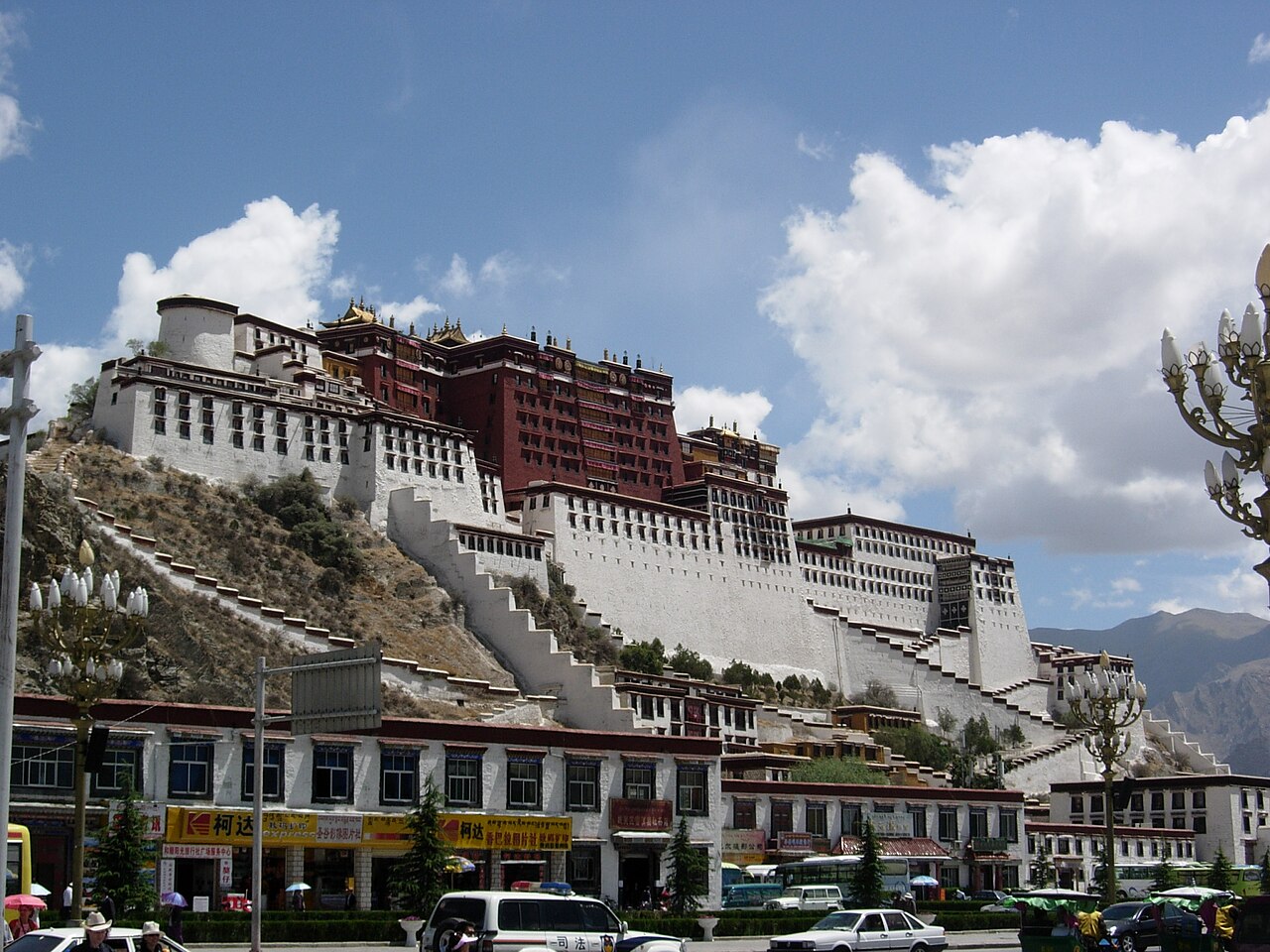
Lhasa (拉萨) is a useful cultural base for a first visit. Potala Palace, Jokhang Temple and the Barkhor area are different experiences with different walking and admission requirements. A photograph of an exterior does not establish an interior ticket, a convenient booking slot or a step-free approach.
Choose one major booked visit at a time and keep a meal and room break. Ask the guide about the actual entrance, stairs, permitted visitor route and interpretation. Respect worshippers, follow photography instructions and ask before photographing people. A monastery should not become a stage for intrusive photographs or private rites.
If the arrival journey leaves you tired or unwell, change the sightseeing rather than trying to recover the schedule through a longer first day. Do not fix an essential timed admission immediately after an uncertain flight or train. Your response to altitude and the instructions from appropriate medical professionals take priority over a prepaid attraction list.
| Part of a city stay | What to protect | How to simplify |
|---|---|---|
| Arrival | The actual transfer, room and a light programme suited to your condition. | Leave important admissions off an uncertain arrival. |
| First cultural visits | A selected booked venue with manageable walking and a seated break. | Choose fewer visits instead of moving faster through them. |
| Another local day | A second interest and flexibility for changed slots or rest. | Use an open, permitted shorter visit when conditions change. |
| Optional excursion | A named destination, route, guide and complete return. | Keep it removable without losing the core city stay. |
| Departure | A realistic journey to the correct station or airport. | Do not use the last transfer as spare sightseeing time. |
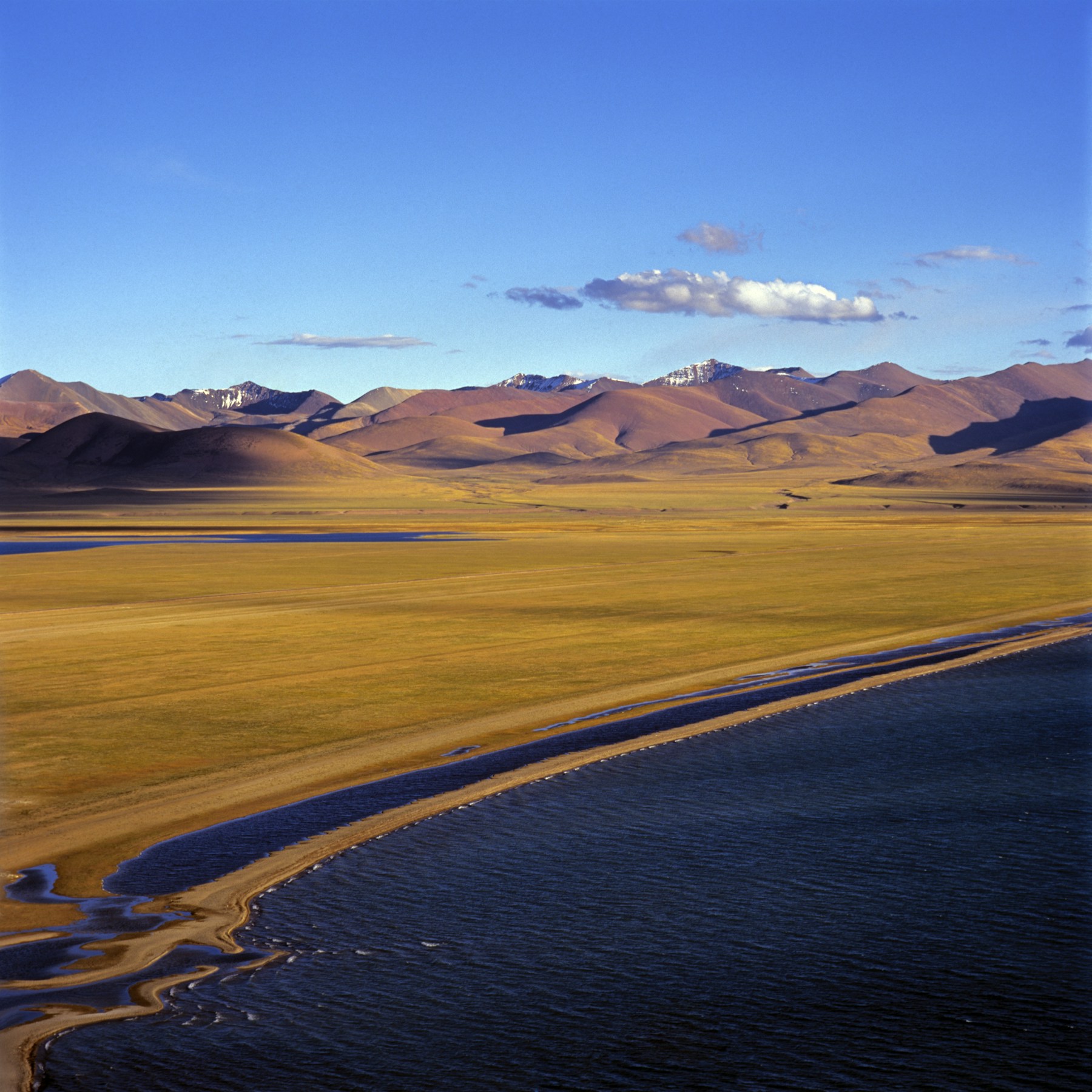
For Samye Monastery and the separate Namtso lake decision, use the Chengdu–Lhasa, Samye and Namtso planner. It develops the rail journey and the two excursions in more detail. A lake north of Lhasa and a monastery in Shannan are not two quick additions to the same arrival day.
Compare the full arrival journey
Flying can preserve holiday time, while a train journey can be an experience in its own right. Neither is a guarantee against altitude illness. Count actual departure and arrival calendar dates, the transfer on both ends, document collection and the rest needed after travel.
A traveller previously describing a Qinghai–Tibet train journey found sleep difficult and still felt unwell after arrival; other commenters reported more comfortable journeys. Use the contrast to choose a berth and schedule that suit you. Do not adopt medication, oxygen or infusion advice from comments as a personal prevention plan.
For a train, check the current service through China Railway’s official channels and match the complete station name and original booking document. For a flight, identify the airport and the whole road transfer to the room. Ask the agency and carrier how the Tibet documents must be presented for that departure. A purchased ticket alone does not resolve the permission or document-handover steps.
Everest: distinguish a visitor journey from mountaineering
An Everest trip should name the visitor area, actual overnight place, road sequence and return. It is different from access to a climbing expedition’s camp or a mountaineering permit. Do not book solely from the phrase “base camp” without understanding the destination and the facilities.
The scenic operator and Tingri tourism authority’s May 2026 notice describes official gates, checkpoints and a change to electric visitor transport for the final approach. A private road vehicle should not be assumed to continue to every visitor point. Ask for the actual transfer and luggage arrangements for your programme.
The scenic authority announced ticket sales resuming on 26 September 2026 after snow clearance, while noting remaining snow and ice and requiring visitors to stay within designated areas. This dated notice illustrates why road conditions and attraction operation need checking near departure; it does not establish an October all-clear or your nationality’s permission.
Ask whether a higher overnight is necessary for the experience you want and whether a different approved room would suit you better. Confirm heating, bathroom facilities, bedding, food and access to help. A room advertised with oxygen equipment does not replace an appropriate ascent, medical advice or descent plan.
Kailash: the current closure comes before the walking plan
The closure notice issued by Pulan tourism authorities and the scenic operator states that the Kailash scenic area closed from 20 October 2026 and that the 2027 reopening will be announced separately. It prohibits entry to the closed area. Earlier opening notices and an older traveller’s successful circuit do not override it.
For a future operating period, a visit to the wider region and completing a pilgrimage circuit remain different decisions. Obtain the current route conditions, eligibility requirements and the receiving agency’s arrangements for your documents. A pilgrimage’s spiritual importance does not make its physical demands suitable for everyone.
Ask where you would sleep, what you must carry, what support is actually available and how you withdraw if unwell or unable to continue. Confirm with the insurer whether the named walking activity, elevation and evacuation are covered. Do not buy transport or a circuit departure on an assumed 2027 opening date.
How much time should you reserve?
Count usable time in Tibet separately from long-distance travel. The following choices describe scope rather than a guaranteed operating itinerary. More time can mean a slower stay in fewer places; it need not mean another remote objective.
| Your available time | What to discuss | Do not squeeze in |
|---|---|---|
| A short stay with only a few usable local days | A selective Lhasa cultural programme, subject to personal suitability and arrangements. | A remote road circuit that removes the city’s rest and visiting time. |
| A fuller city stay with another usable day | A separately approved local excursion when weather, access and condition suit it. | Several higher lakes or distant monasteries in one transfer day. |
| Enough time for a western road extension | A named permitted route, staged nights, complete return and a disruption allowance. | Everest added as an unplanned day trip. |
| A future pilgrimage-focused holiday | Kailash only after a relevant reopening and individual route arrangements. | A circuit during the present closure or an assumed fixed reopening. |
Keep altitude, rooms and food in the same plan
The CDC’s altitude guidance recommends gradual sleeping ascent and explains that fitness does not remove the risk of altitude illness. Discuss personal suitability and previous altitude problems with a clinician. Arrival by train, driving rather than walking and a single city rest day do not certify that a higher stage is appropriate.
Do not ascend farther with symptoms of altitude illness. Worsening symptoms require descent and medical help; confusion, difficulty walking or breathlessness at rest require urgent assistance. Arrange a practical exit and access to appropriate care before a remote stage, rather than relying on a small oxygen can.
Confirm the exact property and room category, heating, hot water, bathroom, stairs and the final luggage approach. Give the agency the party’s ages, mobility needs and passport details so the accommodation arrangements match the actual travellers. Keep large bags with the agreed vehicle or storage and carry essentials within reach.
Discuss meals along the actual road stages. Ask separately about halal requirements, allergies, broth, cooking fat, alcohol and shared preparation. Agree a suitable packed-food alternative where needed and practical prayer breaks; a monastery visit does not establish a prayer facility for another faith.
Ask for a proposal with clear responsibilities
| Decision | What the proposal should identify | Why you need it |
|---|---|---|
| Documents and route | The qualified receiving agency, application responsibility, named stops and document handover. | Ordinary China entry, Tibet approval and border-area arrangements are separate. |
| People and transport | Guide language, vehicle capacity, driver, visitor shuttles and pickup points. | A tour label does not specify the service you will receive. |
| Nights and physical demands | Exact rooms, sleeping heights, walking and longest travel stages. | The advertised duration alone does not show comfort or suitability. |
| Changes | Closed-site alternatives, illness response, extra-night costs and cancellation terms. | The replacement must work within the applicable route arrangements. |
Use the Tibet, Everest and Kailash collection to compare journey styles, then request the actual dated arrangements. A published outline is not confirmation that its route, border or attraction operates for your party today.
Send Vero Trip your Tibet planning details: dates, nationalities, arrival and departure, party ages, previous altitude experience, walking limits, room expectations and food or prayer needs. State whether the priority is city culture, an Everest landscape visit or a future pilgrimage. Settle the applicable permissions and receiving arrangements before committing to the transport and remote nights.
For the remote western road beyond a regional Tibet stay, compare the permission, Kailash and overnight decisions in the Lhasa to Kashgar via G219: Route, Kailash and Altitude.
Build the trip around the experience you want to keep
A list of place names conceals several different holidays. A temple-focused visitor may want an unhurried explanation and a seated lunch; a photographer may prefer a second chance at a lake under different light; someone travelling with a parent may value one warm room for several nights. Write down the experience you would regret losing before choosing the number of destinations. It helps the organiser shorten the right part of a day when weather, reservations or your condition change.
Recent social travel diaries offer a useful contrast. Some favour economical, tightly packed lake excursions; others describe their best time as a quiet village day after several rushed transfers. Neither preference belongs to every traveller. For an overseas visitor, the useful lesson is to specify the pace within the approved programme, rather than copy a domestic independent itinerary or add places spontaneously.
| Priority to protect | Put this in the proposal | Remove first if time shrinks |
|---|---|---|
| Understanding Lhasa | Separate major booked visits, guide explanation and a proper rest | Repeated exterior photo stops |
| A lake experience | Name the shore, visitor area and usable time outside the vehicle | A second similar lake rushed into the following morning |
| Eastern forests and villages | At least one settled base and a day without moving all luggage | A distant out-and-back added for one photograph |
| A western journey | Approved stages, every overnight and a workable return | Unconfirmed side trips or closed attractions |
Count the hours that remain after arriving
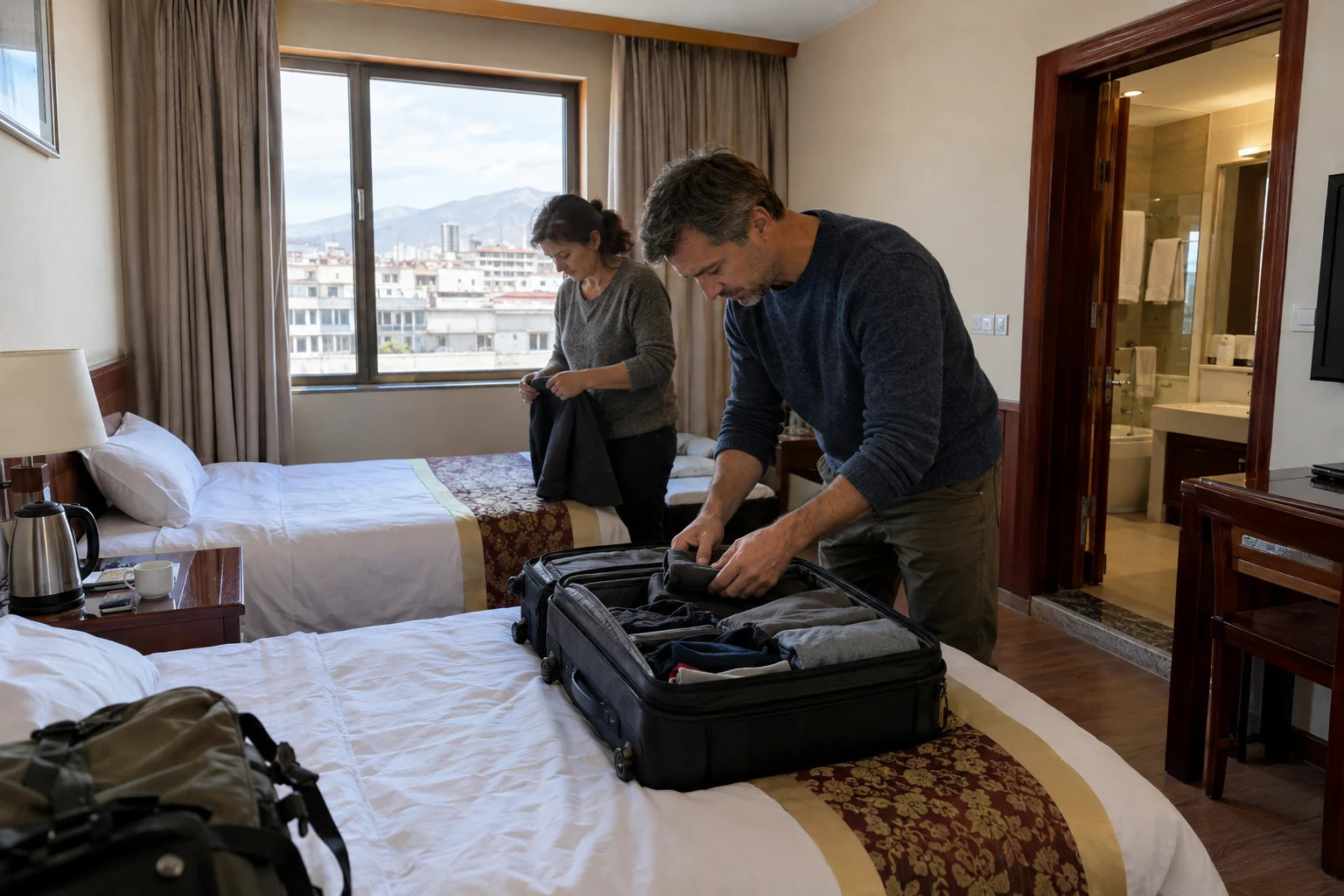
Start an arrival-day calculation at your previous hotel. Include getting to the departure terminal, document checks, the flight or train, arrival formalities, the onward transfer and checking into the room. The advertised arrival time is only one line in that calculation. Avoid purchasing a time-sensitive attraction reservation on the assumption that all those steps will run perfectly.
Keep the first meal simple and near the hotel. If you feel well enough for a short outing, agree a nearby turning point and an easy return with your guide. Do not convert a clear sky into an obligation to climb a viewpoint. A train journey, including one with onboard oxygen, does not certify that you are acclimatised. Initial altitude symptoms require changes to the programme, not a more efficient sightseeing schedule.
Compare two versions of a long day before booking
Ask for the departure window, the longest continuous vehicle section, the lunch stop, the time actually at the main sight and the expected return window. Then ask which part is shortened if the road is delayed. A quotation saying “visit the lake” can describe a roadside panorama, a developed shore walk or several transfers followed by a short stop. Those are different purchases even when the destination name is identical.
Place a low-commitment day after a demanding excursion. It can hold an already-approved city activity if you feel well, while leaving room for rest or a changed reservation. This is particularly useful before a flight home: recovery time and transport contingency serve different purposes, and a single spare afternoon may not cover both.
A practical way to allocate a limited week
For a short first visit, start with arrival, settled Lhasa days and departure, then see how many genuinely usable days remain. Choose one main regional addition from those days. If eastern Tibet is the priority, compare a Nyingchi-focused route with a return-to-Lhasa plan. If the Everest area is the priority, ask to see the complete sleeping sequence and approval process before adding another faraway lake. A high-altitude journey is not improved simply by filling every blank box.
For a longer trip, extend the part you value. An extra Bomi night may support a proper regional day; another city night may separate temple reservations; an additional western stage may reduce rushing. Extra nights do not automatically create safe ascent, so have the organiser and your clinician assess the actual elevations and your circumstances.
Turn preferences into a useful enquiry
Send the real arrival and onward travel dates, party size, passport nationalities, room sharing, guiding language, walking limitations and dietary requirements through the booking channel. Include two priorities and one thing you are comfortable dropping. Request both a preferred plan and a feasible approved alternative, including how price differences and cancellations would be handled. That gives you a concrete basis for choosing rather than a longer attraction list.
Detailed guides for each decision
| Planning topic | Focused guide | Use it to decide |
|---|---|---|
| Lhasa in Four Days | Lhasa in Four Days: A Slower First-Visit Plan | Arrival, old-city time and reserved visits |
| Lhasa Food and Sweet Tea | Lhasa Food and Sweet Tea: Ordering a Better Meal | Tea-room setting, portion sizes and dietary questions |
| Where to Stay in Lhasa | Where to Stay in Lhasa: Rooms, Streets and Rest | Room facilities, actual distances and rest |
| Barkhor and Jokhang | Barkhor and Jokhang: Walks, Worship and Photography | A respectful walk, temple entry and everyday lanes |
| Potala Palace | Potala Palace: Tickets, Steps and a Realistic Visit | Booking, the climb and architectural interpretation |
| Getting to Lhasa | Getting to Lhasa: Flight, Train and the Hotel Transfer | Door-to-door journey, documents and sleep |
| What to Pack for Tibet | What to Pack for Tibet: Layers, Luggage and Daily Comfort | Accessible layers, overnight kit and luggage |
| Tibet Altitude Planning | Tibet Altitude Planning: Arrival, Sleep and When to Stop | Sleeping sequence, symptoms and when to change plans |
| Yamdrok Lake | Yamdrok Lake: Viewpoints, Lakeside Stops and a Day Plan | Panorama versus shore time and the return |
| Namtso Lake | Namtso Lake: Choose the Shore and Plan the Return | Exact shore, transport stages and weather |
| Nyingchi Travel Guide | Nyingchi Travel Guide: Bayi, Lulang and Basum Tso | Regional bases, forest and lake days |
| Bomi and Ranwu | Bomi and Ranwu: Forest Stays, Lake Stops and Road Days | Extra nights, photo stops and road-day structure |
| Shigatse and Tashilhunpo | Shigatse and Tashilhunpo: A Stay beyond the Road Stop | A meaningful monastery and city stay |
| Everest North-Side Visit | Everest North-Side Visit: Rongbuk, Rooms and the Return | Tourist area, sleeping place and the return |
| Shannan and Samye | Shannan and Samye: Plan a Cultural Journey from Lhasa | Cultural priorities, walking and usable visit time |
Continue planning this journey
Use our Tibet route-planning guide to place this topic within the whole trip. The railway, Samye and Namtso planning guide explains how arrival and separate outings fit together.
Compare 4-day Lhasa city tour, 8-day Lhasa, Nyingchi and lakes tour. These are existing route descriptions, not confirmation of a departure, present access or every optional stop discussed above. Ask for the exact permitted programme, accommodation, guiding language and itemised services for your dates.
Sources and research notes
Reviewed 29 October 2026. Practical perspectives were compared with original Xiaohongshu note bodies and initially visible comments: 西藏|纳木措&羊卓雍措攻略; 西藏日喀则封路,阿里小环线受阻,启动planB; 南宁出发一个人去拉萨. These individual experiences mainly concern domestic travellers; they are not evidence of foreign-visitor eligibility, present prices or medical safety.
China regional risks: Tibet; CDC Yellow Book: High-Altitude Travel and Altitude Illness. Confirm operating notices and passport arrangements for the actual travel date.
Culture visits in Lhasa and Gyantse
These separate guides explain the pace and practical choices for five cultural visits. Confirm the specific places and services in your permitted itinerary.