Drepung Monastery (哲蚌寺) feels like a hillside settlement as much as a single monument. Its white buildings, narrow passages and changes of level make the visit rewarding, but also make a map pin an inadequate description of the walking. Plan where the vehicle can actually stop, which halls matter most to you and how much energy you want left for the afternoon.
International visitors need Tibet permits and organised travel through a specialist agency; access may change. Ask before monastery photography. Include Drepung and its visitor arrangements in the confirmed programme, rather than adapting domestic self-drive advice directly.
Understand the hillside before adding a second monastery
The Tibetan and Himalayan Library places Drepung west of Lhasa and describes a large monastic institution. That scale matters more for planning than a claim about how many minutes somebody needed for a photograph. The complex contains several destinations within one visit, and moving between them is part of the experience.
The original Xiaohongshu accounts we compared had markedly different reactions to the walking. One writer liked the quiet atmosphere but had time only for selected buildings. Another hurried to finish, found the climbing tiring and abandoned later plans. Comments ranged from finding the slope modest to describing a much longer walk from the bus stop. These are subjective reports; neither a single step count nor another traveller’s tolerance predicts your own.
Use them to ask more precise questions. Is your quoted excursion time measured from the hotel or from the upper visitor entrance? Does the driver wait at the lower ticket area? Is any local onward transport currently operating, and can your party use it? What remains on foot even after the closest permitted drop-off?
Separate the four parts of the approach
| Part of the journey | What needs confirming | Why it matters |
|---|---|---|
| Hotel to the monastery area | Exact pickup and realistic city transfer allowance | A short distance on a map still involves traffic and checks |
| Vehicle stop to ticket arrangements | Where your authorised vehicle may wait and whether the guide handles tickets | The lower access point may differ from the start of the main visit |
| Ticket area to visitor entrance | Any permitted onward vehicle or uphill approach on foot | Do not assume an informal ride mentioned online will be available |
| Walking within the complex | Stairs, uneven surfaces, open halls and return route | A ride uphill does not remove the steps inside |
Ask for these answers in relation to your party, including anyone using a walking aid. A promise that the vehicle goes “to Drepung” does not answer all four. Avoid budgeting from a social post’s small parking or shuttle charge; have the operator itemise anything additional in the dated quotation.
Agree where to reunite after the visit. If people split between a shorter and longer route, there should be a named meeting place, a clear time and a way to contact the guide. Taking photographs is not a reason to wander into a different part of the complex without telling the group.
Choose a route with a clear priority
For a first visit, prioritise the main assembly hall, the part of the Ganden Phodrang complex open to visitors, and a modest exterior walk. Ask your guide to explain the role of the assembly hall and the historical importance of Ganden Phodrang. Check the sequence locally: individual buildings may have different visiting arrangements, and a site-wide closing time does not establish access to each room until that hour.
The aim is to understand how a large monastery worked, rather than tick off every name on a map. Ask how colleges, communal spaces and residential areas relate to one another. An explanation beside an open public building can be valuable even when another interior is unavailable. Private accommodation and service spaces remain outside the visitor route.
| Route style | Planning allowance inside the visitor area | Practical focus |
|---|---|---|
| Selected highlights | About 1½–2 hours | One or two priority buildings, pauses and a direct return |
| Unhurried first visit | About 2½–3 hours | Main open buildings, architectural context and exterior details |
| Specialist interest | A longer agreed block | Art or history explanations with appropriate permissions; fewer other appointments |
These are suggested time budgets, not official routes or a claim that every building is open. Add the approach and return transfer. For a group needing more rests, a shorter selection may occupy the longer slot. Do not turn the allowance into a deadline for climbing faster.
What to notice without memorising a catalogue
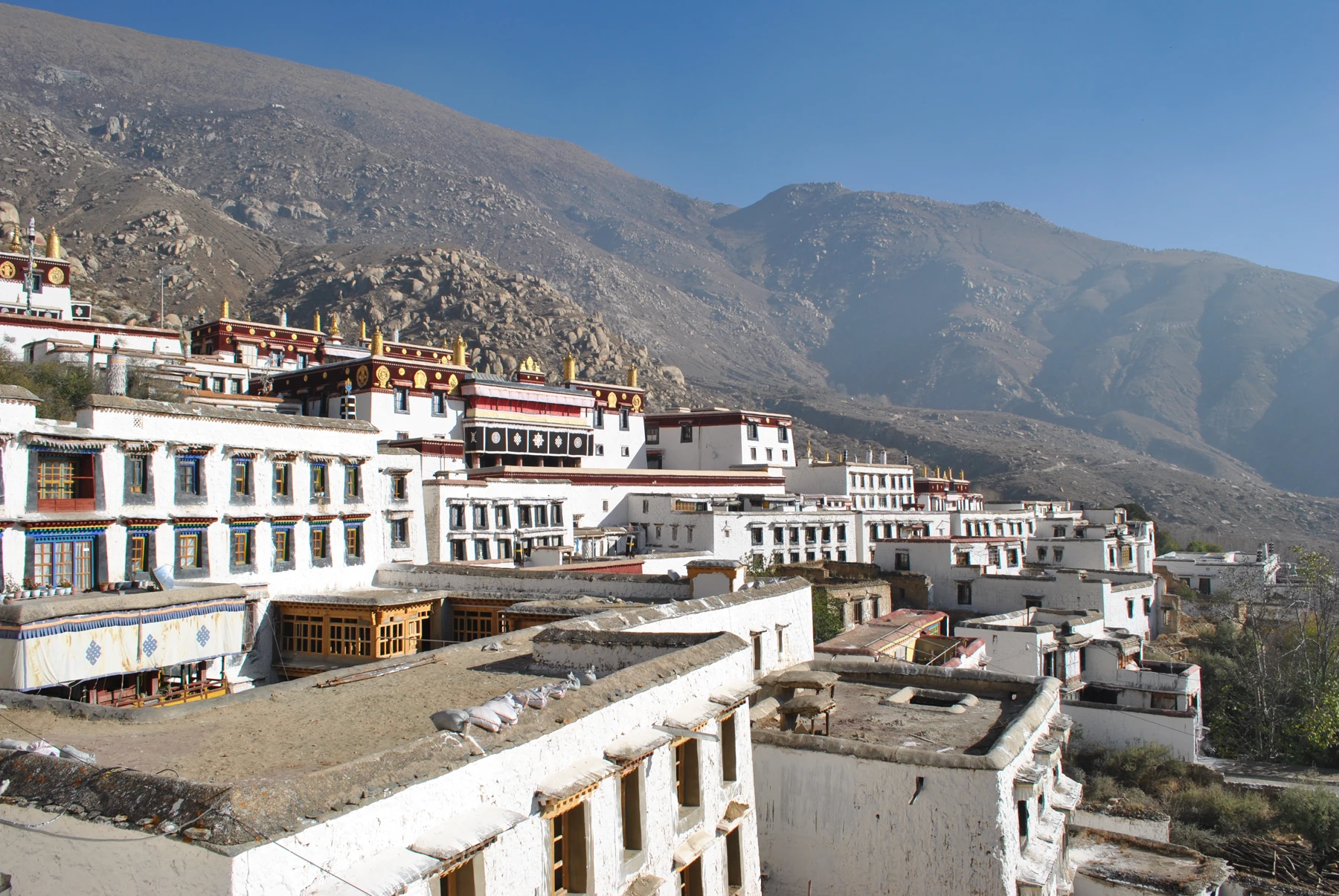
Start with the relationship between buildings and slope. From a permitted open position, look at the stepped arrangement of roofs and white walls, then compare it with the enclosing feeling of a narrow passage. The change in scale helps explain why Drepung can feel like a small settlement. Keep walking routes clear while looking back for a photograph.
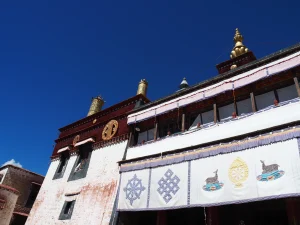
At a hall entrance, ask your guide to explain one architectural feature before going inside. Within the permitted interior, choose one painting or object to discuss in depth. Who is represented? How is the subject identified? Is the object part of an active religious setting? Distinguishing a guide’s interpretation from a label or documented historical fact makes the explanation stronger.
If a painting is difficult to see, let your eyes adjust rather than leaning against the wall or adding phone light. Do not touch painted surfaces, furnishings or devotional objects. Photography permission for an exterior is not permission for the next interior. Ask staff or your guide about the specific room.
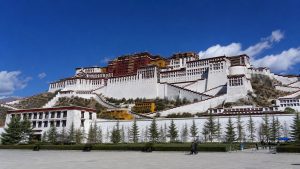
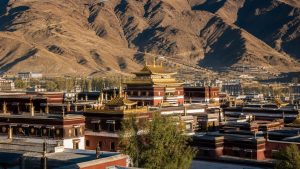
The real photograph above was taken in 2013 and helps show the hillside architecture. It is not a current visitor map, and it does not show where your vehicle will stop. Barriers, paths and building access may differ from the photograph.
Build rests into the route itself
Choose breaks before a party becomes separated on the steps. A pause in an appropriate open area is better than blocking a doorway while people catch their breath. Keep water accessible, wear shoes with a secure sole and carry only a small bag. A sun hat and layer that can be removed easily are more practical than carrying a bulky coat over one arm.
Do not use a companion’s fast pace as a test of acclimatisation. If someone feels unwell, tell the guide and stop adding climbs. If breathing difficulties are severe or occur at rest, seek urgent medical help. A monastery visit should never depend on pushing through symptoms to finish the planned circuit. See the separate Tibet altitude and pacing guide for preparation, and discuss personal medical concerns with a qualified clinician.
A shorter visit can still be coherent: one main space, one useful explanation and a clear view of the complex. Remove optional uphill detours first. A photograph from a higher path is not automatically worth the additional effort, and a visible trail is not evidence of visitor permission.
Drepung and Sera on the same day
Both the 4-day Lhasa city tour and 6-day Lhasa and Shigatse tour currently list Drepung in the morning and Sera later. Their native itineraries establish a route match; they do not guarantee a particular hall, a debate session, private transport flexibility or a fixed departure date.
| At the end of Drepung | Sensible next decision | What to avoid |
|---|---|---|
| Everyone is comfortable and interested | Lunch and a proper break before the confirmed Sera programme | Using lunch time for an extra climb |
| One person is tired | Discuss a shorter afternoon or the agreed alternative | Assuming the whole group can change a shared departure’s timing |
| The visit ran late | Recheck Sera’s visitor arrangements with the guide | Chasing a social-media timetable across the city |
| You want deeper art or history discussion | Consider separate visits within a private permitted itinerary | Compressing specialist interests into two rushed admissions |
Read the Sera Monastery guide before choosing that combination. Drepung’s appeal is the hillside complex and its religious spaces; Sera adds a different learning and courtyard experience. Seeing both is worthwhile when the day has enough space for each.
Timing, festivals and everyday etiquette
If travelling around a major religious event, ask for the dated access plan rather than treating it as an ordinary sightseeing morning. Crowd management, transport and building access may differ. An old photograph of a festival does not establish that an equivalent event will be visible on your date, and it does not justify joining a restricted route.
Keep voices low in the halls, follow the indicated direction and ask where it is appropriate to stand. Offerings are voluntary and personal; a visitor does not need to imitate a practice to show respect. Ask before photographing identifiable people, and avoid security-related subjects.
Can I visit only the lower parts? Ask the guide which meaningful route is possible with the current access layout. Describing the whole monastery as accessible or inaccessible from a single photograph would be misleading.
Should I go on arrival day? A substantial hillside visit is a poor default after a tiring transfer. Use the Lhasa arrival guide to build rest into the beginning of the trip, then choose Drepung when the party is ready for walking.
What should be in the quotation? Vehicle arrangements, guiding language, admissions, any permitted onward transport, lunch arrangements and the alternative if a priority space is closed. Put those details alongside the wider route in the Tibet trip-planning guide.
Sources and research notes
Reviewed 30 October 2026. Original Xiaohongshu note bodies and initially visible comments informed the practical angles: 爬完哲蚌寺其它地方不想去了😭……; 拉萨哲蚌寺|海拔3800米爬台阶,安静得刚好. Individual experiences and photographic preferences are anecdotal; they do not confirm current prices, operating arrangements or foreign-visitor eligibility. No Xiaohongshu photographs have been reproduced.
UK FCDO: China regional risks, Tibet; Tibetan and Himalayan Library: Places, Drepung introduction; CDC Yellow Book 2026: High-altitude travel and altitude illness. Check dated visitor notices before travelling.