
Choose China overland transit routes by the entry and exit arrangements first, then fit the sightseeing between them. For a foreign-registered car or campervan, a road on a map, a visa exemption and a traveller’s successful crossing are three different pieces of information. None alone establishes that your vehicle, passengers and intended journey can use the same route.
A Yunnan holiday returning to Laos has different demands from a journey connecting Southeast Asia with Central Asia. Start with both countries at either end, your available nights, every passenger’s nationality and the vehicle’s registration details. Keep an alternative that does not depend on bringing the vehicle into China.
Updated 12 October 2026
Choose a loop, a through journey or a China-only holiday
A loop is usually easier to organise around a regional holiday because it brings you back towards the same departure area. It still needs lawful entry, road use and departure arrangements. A through journey makes sense when reaching the next country is a central purpose of the trip and you can accommodate substantial driving and changes.
| Journey shape | Best reason to consider it | Decision before booking |
|---|---|---|
| Laos–Yunnan–Laos loop | You want southern Yunnan, tea country or a longer visit including Kunming. | Confirm the Boten–Mohan road crossing in each direction and the vehicle’s authorised Yunnan route. |
| Laos–Yunnan–Vietnam, or the reverse | You need a connection between two different neighbouring countries. | Check both port pairs and Vietnam’s vehicle arrangements before treating this as a continuous drive. |
| Central Asia–China–Yunnan–Laos | The trans-China journey itself is a major part of an extended trip. | Compare regional sectors, permitted roads, receiving arrangements and total available nights; decide separately whether Tibet is essential. |
| Enter China as a passenger and travel locally | Your main aim is a Yunnan holiday with less border administration. | Arrange the foreign vehicle’s lawful return or storage obligations first; compare trains, a local driver or an eligible rental. |
These are route concepts, not advertised departures. Reversing the arrow does not reverse the paperwork automatically. A Nepal-linked or Mongolia-linked journey needs its own assessment; adding another country is not a small change to a Yunnan itinerary.
Name the exact port pair and the type of crossing
Write down the Chinese and neighbouring-country names, the road channel, your direction of travel and the proposed date. Include the receiving contact and an agreed meeting location outside any restricted area. An airport, railway station, pedestrian crossing and freight lane can share a place name while serving different movements.
| Planning reference | What the name establishes | What it does not establish |
|---|---|---|
| Mohan, China / Boten, Laos | A paired China–Laos border location; distinguish the road crossing from the railway. | Acceptance of your registration country, campervan class, nationality or intended onward route. |
| Hekou, China / Lao Cai, Vietnam | A border-city connection with distinct road and rail infrastructure. | That a passenger entry document admits a foreign car, or that a freight channel is an alternative tourist entrance. |
| Irkeshtam / Torugart, China–Kyrgyzstan | Two different ports to investigate for a Central Asian connection. | Interchangeable procedures, round-the-clock tourist processing or an automatic alternative when one crossing is unsuitable. |
The China–Laos border agreement identifies Mohan and Boten as a pair. That geographical starting point is useful, but your journey still needs current acceptance on both sides. Hekou’s 2024 Nanxi River inspection-building notice describes passenger channels; it is not a current foreign-car booking confirmation.
A January 2026 Wuqia report describes extended freight clearance at Irkeshtam. Do not use freight hours to time a private tourist arrival. A separate July 2026 embassy warning concerns Chinese self-drive drivers with repeated Kyrgyzstan entries and particular visa conditions. It demonstrates why nationality and travel history matter; it is not a blanket rule for every foreign traveller.
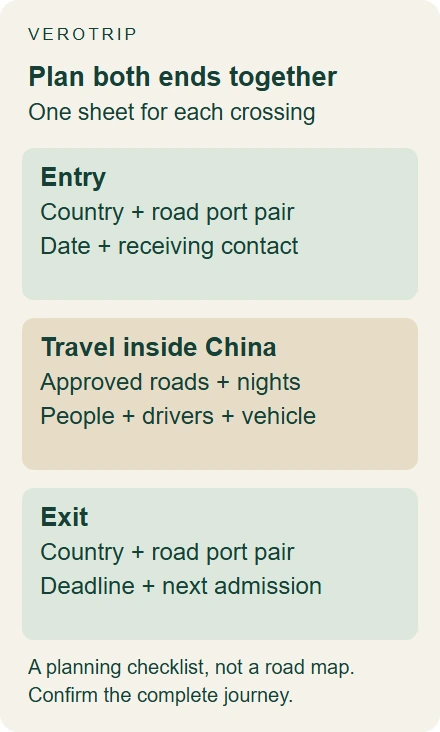
Keep people, drivers and vehicle permissions separate
China’s temporary-entry vehicle rules provide for temporary Chinese vehicle plates and a driving document, registration and admission evidence, inspection evidence and Chinese compulsory motor liability insurance. The vehicle documents specify permitted areas or routes and validity. An intended driver also needs the applicable Chinese driving permission, with a vehicle class that matches the authorised driving entitlement and vehicle.
Use the temporary driving permit guide for the driver’s preparation. Give each proposed driver a separate line in the enquiry. A companion who may take over when you are tired must be included from the start; possession of someone else’s documents does not cover that person.
For the vehicle, prepare the registration country, owner, registration certificate, make and model, seats, dimensions, weight and fuel type. Explain any lease, finance arrangement, conversion or trailer. Ask which ownership authorisation, translations and inspection documents apply. A small car in another traveller’s account is not evidence for a large campervan or a borrowed vehicle.
Does “transit” mean I can use 240-hour visa-free transit?
Do not assume that it does. The National Immigration Administration’s August 2026 explanation sets nationality, travel-document, onward-ticket, designated-port and permitted-area conditions for the 240-hour policy. Your own-car plan needs an answer from the immigration authority about the intended entry and exit evidence. Passenger permission does not replace customs or vehicle road-use documents.
Keep the dates on the passenger permission, driver permission, vehicle documents, insurance and customs departure obligation visible on one sheet. Plan within all of them. A longer period on one document does not extend another. Never build the itinerary around a promised extension without an applicable official basis.
Build a Yunnan route that leaves room for the border days
For a Laos approach, use Boten–Mohan as the border pair and then consider Mengla or Jinghong before Pu’er and Kunming. This is a planning sequence, with overnight choices determined by the approved roads and the time you can actually leave the processing location. Dali is an optional extension beyond Kunming, not an essential detour for every through journey.
For a Vietnam approach through Lao Cai–Hekou, consider the Honghe area before Kunming. Mengzi and Jianshui serve different interests from the Yuanyang terraces; decide which matters rather than attaching every southern Yunnan destination to a clearance day. Our Jianshui and Mengzi comparison helps choose the stop.
| Stage | Put in the plan | Keep flexible |
|---|---|---|
| Before the border appointment | A lawful overnight location, document access and a local contact. | Arrival after an international driving delay. |
| Entry and local formalities | The actual offices, required vehicle attendance and meeting times. | The first onward hotel; avoid an essential late arrival far away. |
| Yunnan travel | Named overnight towns, realistic daily driving and selected sightseeing days. | Optional visits within the permitted route if the trip loses time. |
| Exit preparation and departure | Receiving contact, vehicle departure documents and the next country’s permissions. | A lawful waiting plan if the onward crossing cannot proceed. |
Ask for the driving hours and rests to be shown separately from sightseeing. Set your maximum comfortable day before comparing proposals. A family with a young child, an older passenger who needs frequent stops and a solo driver have different limits. An account of someone driving almost all day is a reason to question the pace, not a target to copy.
For Thailand, Malaysia or Singapore departures, use the dedicated drive to Yunnan via Laos guide for the approach-country distinctions. This page focuses on choosing the Chinese entry–exit arrangement.
Treat a long western crossing as a different journey
Ask for two complete proposals if you are comparing a route through Tibet with one through other western provinces. Compare their entry and exit ports, actual roads, overnight towns, permitted areas, rest days and assistance. A route that bypasses Tibet may still involve long distances, high terrain and local restrictions. It cannot be substituted simply because it looks easier on a map.
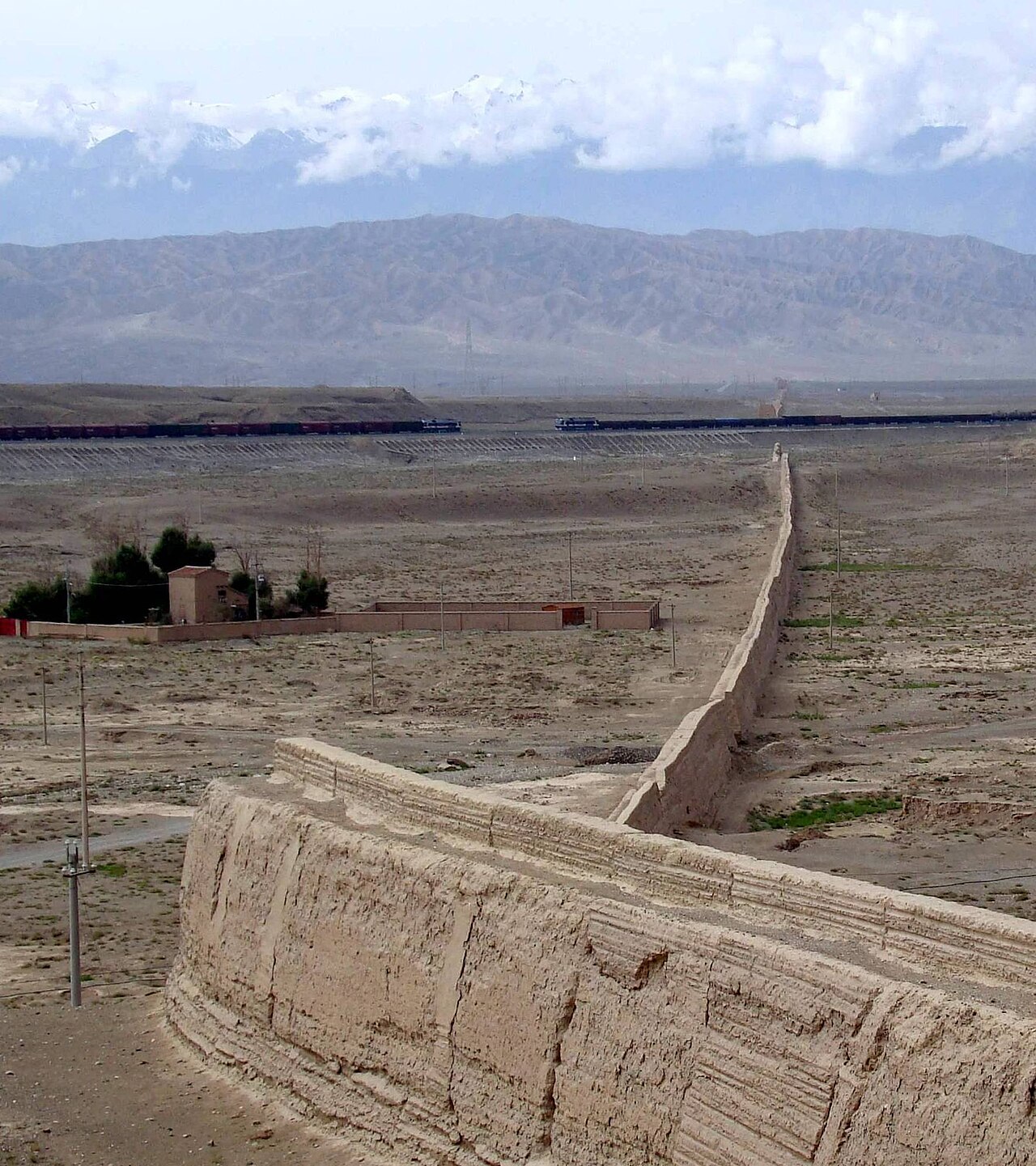
If a proposal includes Gansu, put sightseeing time at places such as Jiayuguan on its own line. That makes the choice between a transit and a sightseeing holiday visible. The regional road-trip comparison discusses destinations; it does not authorise a foreign vehicle to connect them.
For Tibet, Shannan’s September 2026 guidance says foreign tourists need an organised arrangement through a qualified travel agency and the Tibet travel approval. Obtain the requirements for your nationality and specific itinerary, including any additional border-area sections.
A National Immigration Administration notice effective 28 August 2026 suspended electronic border-area permits for Shigatse after the Gyirong disaster and told affected permit holders not to travel there, with resumption to be announced separately. If your journey involves Shigatse or a Nepal crossing, ask the responsible agency which current instructions apply to your nationality, vehicle and travel documents before committing to that exit.
Plan for the vehicle to leave, even if the holiday changes
Put the departure plan in the first enquiry. Ask who handles the vehicle’s customs departure record, what evidence closes the temporary admission and how any security is released. Request the payee, amount, currency, basis, refund conditions and deductions in writing. Another owner’s deposit is not a tariff for your car.
Agree what happens if a driver becomes unable to continue, a vehicle breaks down, or the planned exit becomes unavailable. The answer should name the contact responsible for approaching the authorities and distinguish passenger transport from vehicle recovery. A flight home does not resolve the car’s customs position. Storage or shipment needs its own lawful arrangements, insurance and costs.
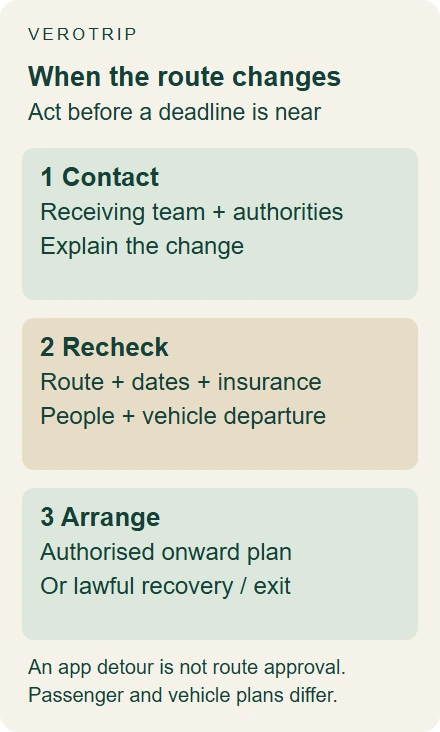
| If this changes | First practical action | Avoid this assumption |
|---|---|---|
| Entry date slips | Contact the receiving team and check every dated permission and insurance period. | The appointment and document dates automatically move with you. |
| A road is closed | Get a permitted alternative from the responsible team before taking a different route. | A navigation app’s detour is authorised. |
| The exit cannot proceed | Check the current port instructions and remaining lawful stay; arrange an authorised solution early. | You may choose another border at the last minute. |
| The car cannot continue | Activate the agreed assistance and customs plan, keeping receipts and reference numbers. | Leaving the car at a hotel settles re-export. |
Weather can affect people and vehicles differently. Yunnan’s September 2026 transport report describes flood-related interruption around Mohan and an earlier reopening for passengers while freight remained interrupted at that time. It is a dated example, not today’s opening-status bulletin. Check the journey’s actual date and vehicle channel before approaching.
Make the waiting days workable for everyone
Choose border-area accommodation by access, parking and the ability to wait comfortably. Send the full vehicle height, including roof equipment, and ask about entrance clearance, guarded or designated parking, toilets, lift access and distance from the permitted meeting place. Keep passports, medicine, a change of clothes and essential child supplies in a small accessible bag. Do not bury the documents below the whole campervan’s luggage.
For an electric vehicle, ask about connector compatibility, activation and payment at specific intended stops, plus an alternative charger or a revised overnight location. A charger icon on an app does not demonstrate that your foreign vehicle and account can use it. For any vehicle, agree assistance for punctures and faults before a remote section.
Build meal and prayer stops into the day before departure. Tell the planner the group’s dietary requirements, required food preparation standards and whether a private room is needed for prayer. Keep suitable food and water for a delay within applicable import rules. The Yunnan Muslim travel guide helps explain those needs; a general restaurant description is not a guarantee for every stop.
Send an enquiry that can produce a usable answer
Through Plan My Trip, send your proposed entry and exit countries, date range and available nights; all passenger nationalities; each driver’s licence country and vehicle class; registration country, vehicle type, dimensions and ownership; and the places you consider essential. State whether Tibet is essential or optional, your comfortable daily driving limit and your preferred fallback.
Start with a summary rather than uploading passport scans in a public message. If a provider needs documents, establish its identity, purpose and secure submission method. Ask any proposed border-service provider to identify its receiving team, responsibilities, insurance, services and price basis before paying. A planning enquiry is not a reservation or a promise of vehicle admission.
If your priority is simply travelling in Yunnan, compare the local Yunnan planning options and the Kunming, Dali and Lijiang itinerary. A local itinerary is an alternative holiday arrangement; it does not include importing your own vehicle.