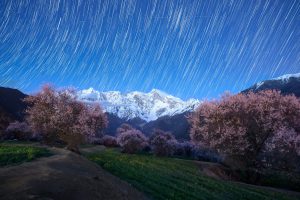
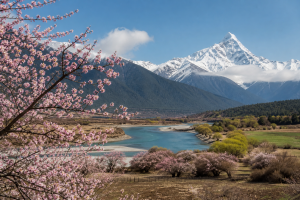
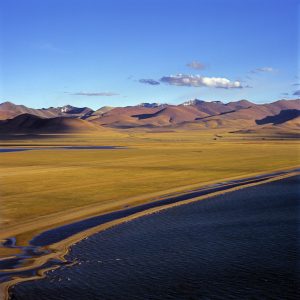
Bomi and Ranwu reward a route with time to stop safely and sleep properly. The journey is often photographed as a continuous sequence of forest, river, lake and snow peaks. In practice, repeated photo stops, a closed optional attraction or a vehicle problem can change the day dramatically. Build the overnight pattern first, then decide which scenery you want to enjoy in depth.
Do not treat Bomi and Ranwu as the same place
Bomi is a regional base along the G318 corridor; Ranwu is a separate lake-and-town stop farther along the route. A package mentioning both should show the drive and overnight clearly. Bomi County’s own geographical information identifies its eastern connection toward Basu County’s Ranwu Town, which helps explain why the names are linked in road itineraries without being interchangeable.
Ask for the actual hotel settlement, direction of travel and main stopping places. “Bomi hotel” may mean a room in the county town or accommodation in a village area with different access and meal arrangements. A lake photo alone cannot identify where you will sleep or whether the route includes the lake area you expect.
| Component | What it adds to the journey | What to decide first |
|---|---|---|
| Bomi town stay | A practical base for meals, rest and regional outings | Number of nights and exact room |
| Guxiang or Galang area | A different village, water and forest setting | Approved visitor area and transfer to the hotel |
| A forest visit | Time walking and noticing smaller landscape details | Real walking route, surface and return point |
| Ranwu Lake | A separate lake experience along the road | Which section, time there and onward travel |
| An optional glacier viewpoint | A different attraction with its own controls | Current opening and approved foreign-visitor access |
The most useful extra night may be in Bomi
Arriving for dinner and leaving after breakfast gives you a hotel night, not a Bomi day. If the region is a priority, compare two nights at a suitable base so a full day is available without moving the main luggage. Ask which local outing fits the approved programme and what remains flexible for rest or weather.
A recent road diarist described stopping repeatedly for autumn scenery, arriving after dark and then deciding to stay an extra day. The practical lesson is to allocate enough time before departure, not to rely on finding another room spontaneously. For foreign visitors, any change must remain consistent with the organised route and permissions.
Give the forest and village landscape a purpose
The regional tourism bureau identifies Galang Lake and Gangyun Spruce Forest as different Bomi-area experiences. Use an approved visit to look beyond the main mountain skyline: changing forest light, water at the edge of the settlement, or how fields and buildings sit within the valley. You do not need to walk to the most distant point to enjoy that landscape.
Ask the guide about the actual trail or developed visitor route, not only an advertised circuit length. Confirm surfaces, steps, weather exposure, toilets and the option to return earlier. Stay on authorised paths and avoid entering private fields or residential spaces for photographs. An attractive village is still a place where people live and work.
Ranwu: choose the lake stop you actually want
Travel diaries describe different sections of Ranwu Lake and can favour different views. Request a map or named stopping places in the proposal, with the Chinese place names where helpful. Establish whether the programme gives a broad panorama, time close to the water or several short stops connected by driving.
Lake colour and reflections depend on light, water conditions, wind and season. A clear blue image from one month is not a guarantee for another. Keep the visit worthwhile without a perfect reflection: fewer safe stops and time to look can be more satisfying than trying to reproduce every image in a post.
Do not stop on a road bend, bridge or unsafe verge for a photograph. Let the driver choose lawful parking and follow the guide to permitted visitor areas. A social comment about a “secret” staircase or roadside angle does not establish safe access. Avoid drone use unless the relevant permissions and current local conditions have been explicitly established.
Separate the glacier question from the lake day
Older regional promotions and travel diaries may show glacier visits, ice or dramatic detours. Access can change, and a viewpoint visit is different from going onto ice. Have the organiser check the current status and actual foreign-visitor arrangements before including any named glacier attraction.
If it is closed or unavailable, omit it. Do not substitute an unverified rough road toward another glacier, an ice cave or a barrier crossing. A recent diary’s author turned back from a deteriorating detour as daylight faded; the better planning decision is not to make the day depend on such a detour in the first place.
Compare a through route with an out-and-back
An out-and-back Ranwu visit from Bomi may repeat a substantial road section. That can still be worthwhile if the lake is a priority and enough time is available, but it should be visible in the programme. Do not conceal it inside the phrase “continue exploring the region”.
| Pattern | What to protect | What to avoid |
|---|---|---|
| One-way through journey | A real lake stop and manageable final hotel arrival | Too many optional stops before another long stage |
| Return outing from a Bomi base | Departure, lunch and realistic turning point | Continuing farther because the route is already long |
| Bomi regional day | Settled room and time at fewer nearby places | Packing in a distant lake as a casual extra |
| Weather or road disruption | Approved alternative and clear cost implications | Unplanned shortcuts or night-driving pressure |
Build the daylight budget explicitly
Ask for expected road windows, the main stop duration, lunch and the hotel-arrival target for your season. Then ask which part changes if departure is late or the road is held. A long day does not become comfortable just because its attractions are scenic.
Agree a safe end to photography before the final drive, with room for ordinary delays. Protect the driver’s breaks and the party’s meals. The correct response to a problem may be a shorter visit, another authorised overnight or turning back, rather than maintaining every stop and arriving much later.
Food, warm rooms and practical luggage
Confirm breakfast before an early departure, the lunch stop and what food suits the party. Regional menus can include pork, beef, dairy and meat stock; ask rather than infer dietary suitability. Carry an agreed fallback for delays while retaining a proper meal in the programme.
Keep warm and windproof layers, water, documents and hygiene supplies in the day bag. Check heating, bathroom facilities, stairs and luggage access at the actual overnight. A lower or forested setting is not a medical guarantee; monitor symptoms and review the whole sleeping sequence, especially when the route later continues to higher regions.
Place this section within the wider Tibet holiday
Choose Bomi and Ranwu for the time they add to eastern Tibet, then compare onward Lhasa or other regions. Our spring Bomi itinerary lists a distinct Ranwu day; the Nyingchi, Bomi, Lhasa and Shigatse route has a different sequence and should not be assumed to include every lake discussed here. Request the exact permitted itinerary, current attraction status, room allocation and itemised services. Protect the regional experience instead of collecting names that the available days cannot support.
Continue planning this journey
Use our Tibet route-planning guide to place this topic within the whole trip. The railway, Samye and Namtso planning guide explains how arrival and separate outings fit together.
Compare 13-day spring Bomi, Everest-area and railway itinerary, 8-day Nyingchi, Bomi, Lhasa and Shigatse tour. These are existing route descriptions, not confirmation of a departure, present access or every optional stop discussed above. Ask for the exact permitted programme, accommodation, guiding language and itemised services for your dates.
Sources and research notes
Reviewed 29 October 2026. Practical perspectives were compared with original Xiaohongshu note bodies and initially visible comments: 318自驾D11|八宿→波密✨秋色让眼睛忙的很; 五日藏东南 | 路线篇. These individual experiences mainly concern domestic travellers; they are not evidence of foreign-visitor eligibility, present prices or medical safety.
China regional risks: Tibet; CDC Yellow Book: High-Altitude Travel and Altitude Illness; Nyingchi tourism bureau regional landscape overview, 22 June 2024; Nyingchi tourism bureau: Bomi regional landscape and route introduction, August 2024; Bomi County: township geography and eastern connection to Ranwu. Confirm operating notices and passport arrangements for the actual travel date.