The Tibet Museum in Lhasa (西藏博物馆) is most useful when you arrive with a question: how did the region’s history develop, what do everyday objects reveal about life on the plateau, or what would help you understand the palaces and monasteries you have seen? A short, purposeful selection of galleries can answer more than a fast walk through every display.
This is the museum in Lhasa, not the Tibet Museum in Dharamshala or another Tibetan-culture museum elsewhere. Use its Chinese name and the official address when confirming your route. International visitors still need Tibet permits and organised travel through a specialist agency; museum admission does not replace those arrangements.
Passport ticketing and the calendar
The museum’s official visitor guide describes free admission and on-site reservation and ticket collection at the north-gate ticket centre using valid identification, explicitly including passports. Bring the original document and have your guide confirm the process for your party. Online availability, a reservation screenshot and physical entry are separate steps; allow time for ticket handling and security.
Its published seasonal timetable is below. Check dated notices, especially around holidays and the change from October to November. A last-entry time is a cutoff, not a recommended arrival time for a worthwhile visit.
| Season in the published timetable | Opening hours | Last admission |
|---|---|---|
| May–October | 09:30–18:30 | 17:30 |
| November–April | 10:00–17:30 | 16:30 |
| Mondays | Normally closed | Holiday exceptions follow official notices |
Confirm both the ticket centre and visitor entrance before setting off. A map showing the building’s nearest edge may not show the route used for admission. The official address is 34 Norbulingka Road; ask the operator to arrange the appropriate approach rather than translating the name informally at the last moment.
Arrive with enough time to deal with a document question without sacrificing the whole gallery block. Keep the passport accessible in a secure pocket, not at the bottom of several bags. Have the guide’s contact and your later meeting arrangements available if members of the party want different lengths of visit.
Choose a question before choosing a gallery
Original Xiaohongshu accounts show why expectations matter. One visitor went after Potala because they wanted more historical context and valued a guided explanation. Another found the displays less engaging; comments under that note disagreed, with some valuing the historical texts and others mentioning comfort or arriving close to last entry. These opinions do not establish conditions on your date, but they show why “everyone must spend half a day here” is an unhelpful rule.
Choose a focus that connects with your interests. For a first trip, a history overview can help place places and names in sequence. For travellers interested in daily life, objects associated with household routines, work and celebrations may be more engaging. If somebody prefers visual art, check the current exhibition list rather than assuming a temporary show seen online is still present.
| Your question | A useful focus | A way to keep the visit active |
|---|---|---|
| What sequence of history am I looking at? | The main history and culture gallery | Write down a few dates and names that recur at other sites |
| How did people live and work? | The folk-culture displays | Choose one ordinary object and ask how its material and use relate |
| How should I understand a particular artwork? | A relevant display or confirmed temporary exhibition | Read its date, place and interpretation before comparing appearances |
| What will interest a child? | A small selection of objects, with breaks | Let the child choose one detail and explain what they noticed |
These are viewing strategies, not a declaration that a particular object is on display. The label and the current gallery arrangement take priority over a saved list of “treasures”. A replica, model or reconstruction may be useful when interpreted as such; read the label before describing it as an original historic object.
A two-hour visit with a beginning and an end
The official guide identifies Gallery 8 on the second floor as the history-and-culture exhibition and Gallery 1 on the first floor as the folk-culture exhibition. Use the current map to locate them. The names and floor numbers give you a starting point; choose the order with the guide according to your interests, the visitor flow and available time.
The outline below is our planning suggestion. The times are allocations, not official tour lengths, and admission checks are additional. If a group explanation starts during your visit, decide whether to join it or keep your selected route rather than trying to do both simultaneously.
| Stage | Suggested allowance | What to concentrate on |
|---|---|---|
| Orientation | 10–15 minutes | Locate the chosen galleries, toilets, seating and the way back out |
| First selected gallery | 40–50 minutes | Read a small number of labels carefully and discuss the main theme |
| Break | 10–15 minutes | Sit or pause in an appropriate area rather than collecting more steps |
| Second selected gallery | 35–45 minutes | Compare a different theme without trying to read every panel |
| Final questions and exit | 10–15 minutes | Note what you want to understand at the next site; leave room for the return |
For a shorter visit, choose one gallery well. For a longer visit, add a confirmed exhibition after a real break and lunch arrangements. A full day of close reading can be tiring even indoors, and a long gallery circuit is not a substitute for rest after arrival in Lhasa.
Reading a display carefully
Start with the gallery introduction, then select three or four displays. For each, ask what the object is, when and where it was made, and how the museum explains its significance. Compare material, scale and intended use before taking a photograph. The process is simple enough to use without specialist knowledge.
If a display combines an original object with a reconstruction, identify the two parts. If the wording offers an interpretation, keep it distinct from what can be observed directly. Photographs of a label can help later if permitted, but should not replace reading the main explanation while you are there.
When visiting with children, one concrete task is better than a long quiz: find two objects used for similar purposes and compare how they were made. Avoid asking a child to read every panel or describe difficult historical material without context. Check the displays yourself and choose what suits the child’s age and interests.
Guides, language and comfort
The museum advertises visitor-centre information about interpretation services. Ask there or through your operator about current sessions, language, duration, availability and any charge. A Chinese-language free talk mentioned in a social post does not establish a free English tour. If English interpretation matters, confirm it before the visit.
Give a private guide two or three themes you want explained. That helps them match the time to your interests. Ask where a group can gather without obstructing a case or passage. If you use an audio device, check the language, how it is returned and whether the listening time fits the visit.
Carry a removable layer rather than assuming indoor comfort will be constant. Some visitors have described rooms as warm; that is an individual experience, not a live ventilation report. Take breaks, tell the guide if you feel unwell and leave the programme flexible. If symptoms are serious, obtain medical help rather than treating another gallery as a chance to recover while walking.
Ask staff about accessible circulation and any assistance required for your particular route. Do not infer that every gallery is accessible merely because the building has lifts, or that a wheelchair will be available without checking. Keep bags compact so they do not catch a case or inconvenience other visitors.
Photography, shopping and temporary exhibitions
Follow the sign for the specific room and display. Permission in one gallery does not authorise flash or recording elsewhere. Keep the camera behind barriers, do not place a phone against glass and leave room for people who are looking without photographing. Ask before including an identifiable visitor in a close portrait.
A gift-shop stop can be pleasant, but keep its budget and time separate from the galleries. Check the material, size and packaging of a purchase, and do not assume a product seen in a post is still stocked. There is no need to buy a souvenir to make a museum visit complete.
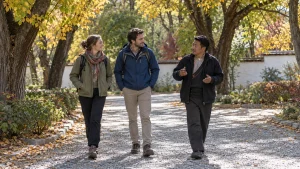
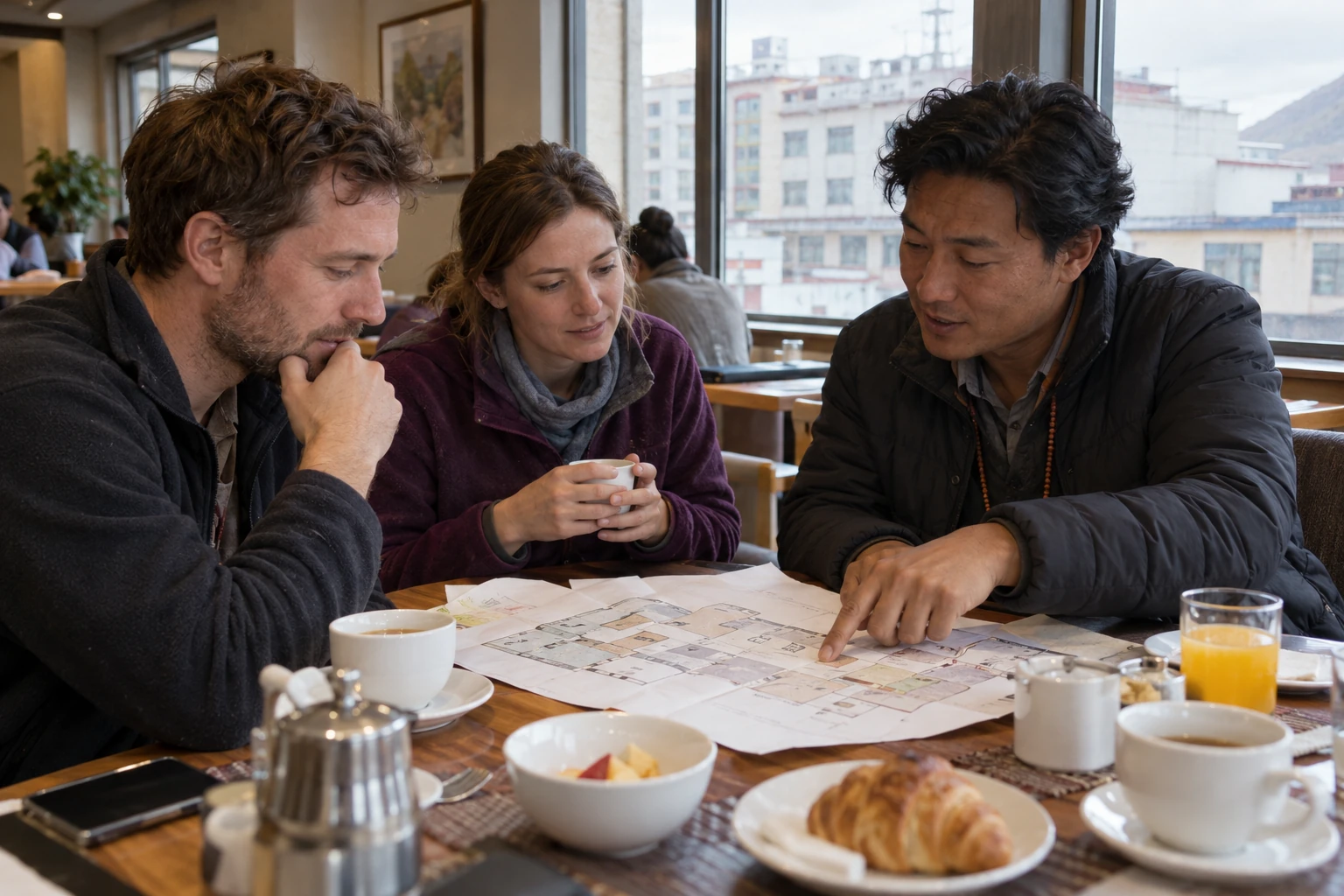
Temporary exhibitions can change independently of the permanent galleries. Confirm the current title and dates, including the year, before designing a visit around one. The image on this page is a fictional travel-planning scene created as a travel illustration. It is not an image of the museum, its floor plan, exhibits or actual Vero Trip guests.
Add Norbulingka only when the day has room
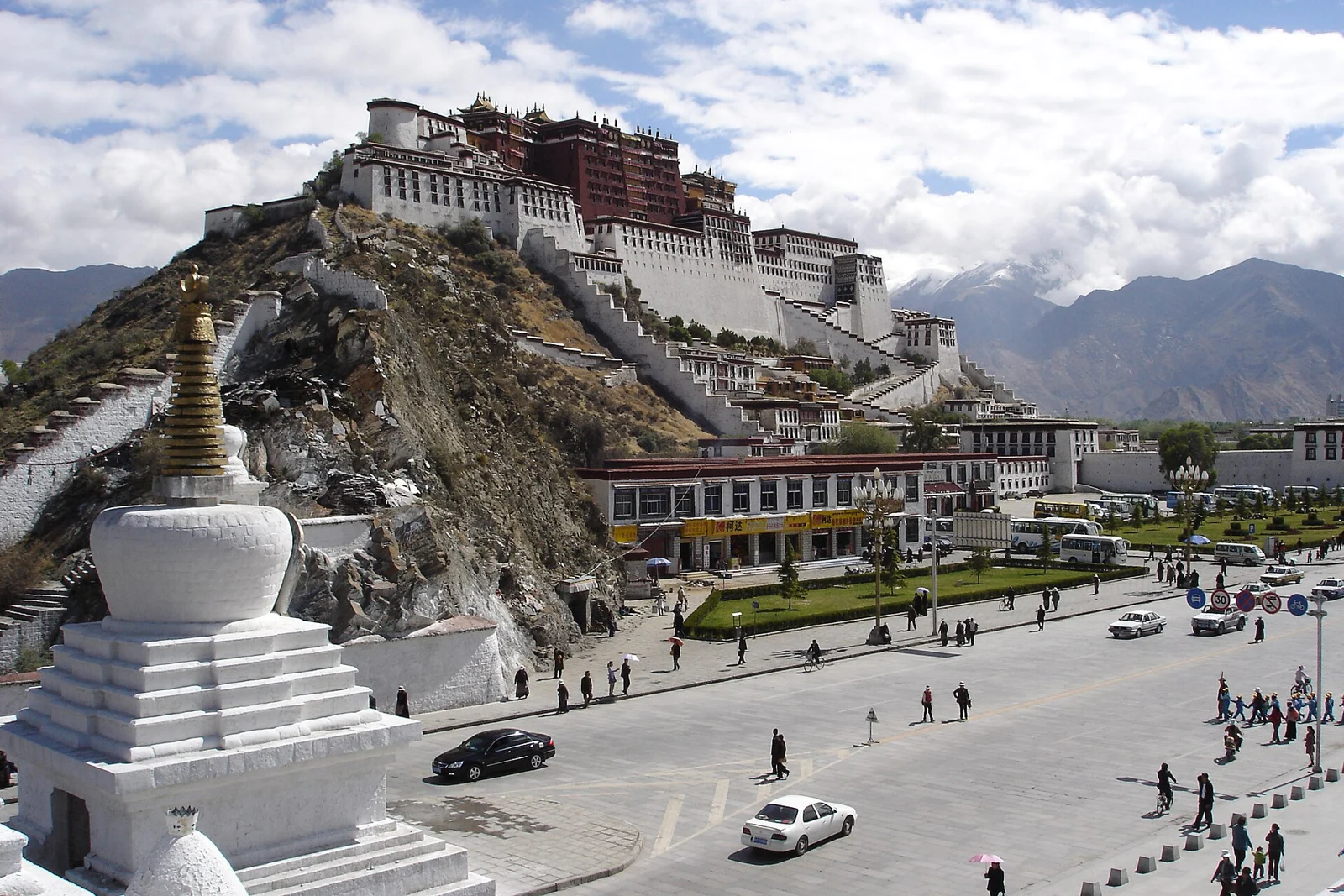
Norbulingka’s gardens and palaces make a useful nearby pairing. Give the transfer or walk, lunch and its own admission arrangements separate time. Confirm the actual open gates; a building’s proximity on a map does not determine the easiest route for your party.
If the museum is your main interest, visit it first and keep the garden outing short and flexible. If the palace visit matters more, protect its interior access and book the museum block with enough margin before last admission. Splitting them over two days is sensible for travellers who like explanations and frequent pauses.
The standard city tours do not all list this museum, so no automatic tour inclusion is implied here. Ask for a dated permitted programme specifying guide language, tickets and transport. Continue with four days in Lhasa, the Potala Palace guide and Tibet trip planning to connect the displays with the places on your journey.
Sources and research notes
Reviewed 30 October 2026. Original Xiaohongshu note bodies and initially visible comments informed the practical angles: 西藏博物馆免费人工讲解以及注意事项; 西藏博物馆,一般般. Individual experiences and photographic preferences are anecdotal; they do not confirm current prices, operating arrangements or foreign-visitor eligibility. No Xiaohongshu photographs have been reproduced.
UK FCDO: China regional risks, Tibet; Tibet Museum official visitor guide; Lhasa government: museum reservations, 28 September 2026. Check dated visitor notices before travelling.
Related Journeys to Compare
These existing routes offer starting points for the region or travel interests discussed above. Read the full daily itinerary to see what is included. A visit described in this guide, a specialist session or an international border crossing is added only when confirmed in your own programme.