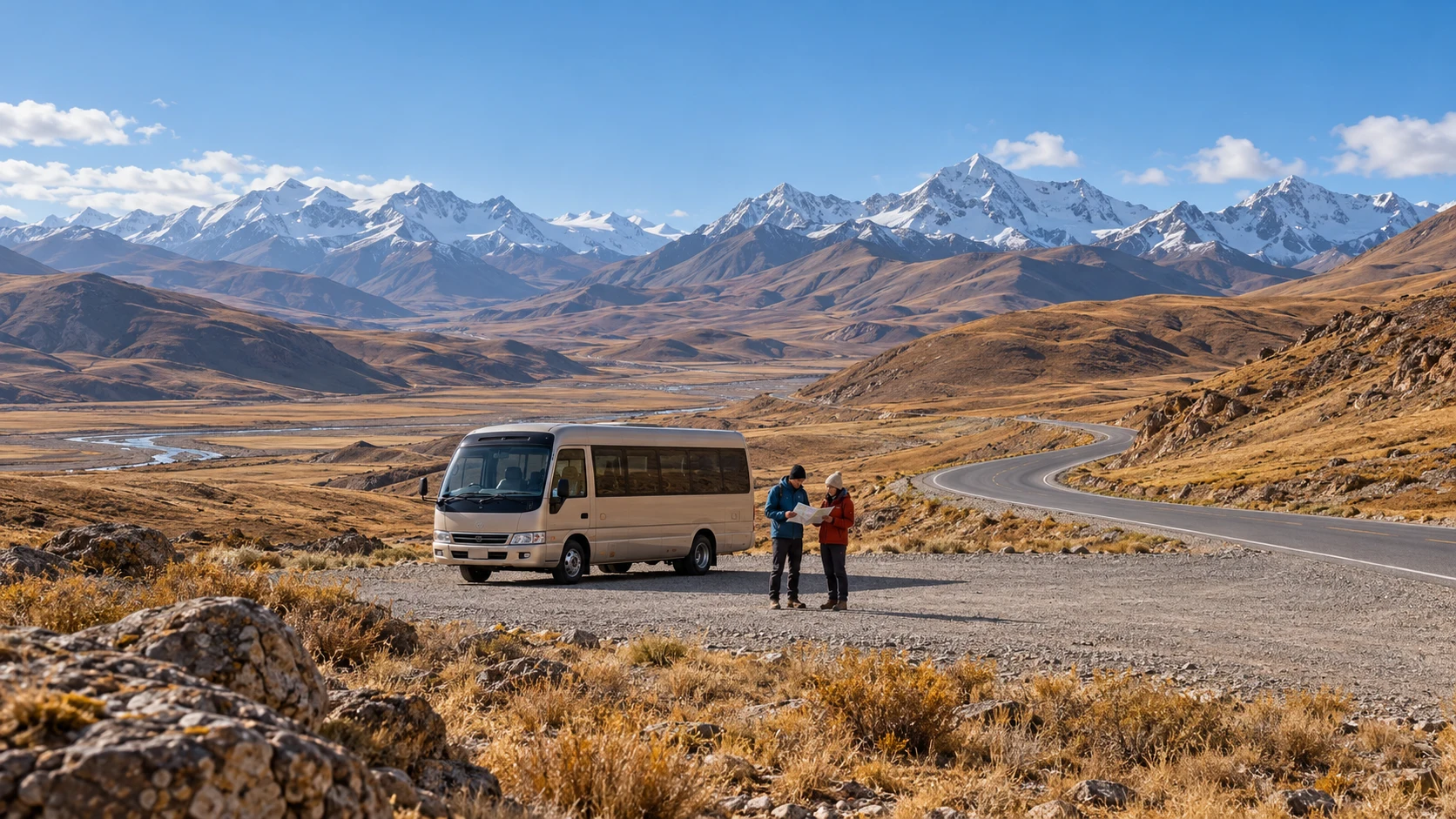
A Lhasa-to-Kashgar G219 journey is a remote high-altitude road expedition requiring an accepted foreign-visitor itinerary, suitable sleeping stages and a real support plan. It is not a quick extension of a Lhasa city visit. Decide whether the long road through western Tibet is the experience you want, or whether a shorter regional stay and separate onward transport would make a better holiday.
For current planning, Mount Kailash is closed from 20 October 2026; its 2027 opening will be announced separately. Do not build a present departure around a Kailash circuit or enter the closed scenic area. Permission for a through-road journey and access to an individual attraction remain different decisions.
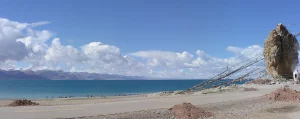
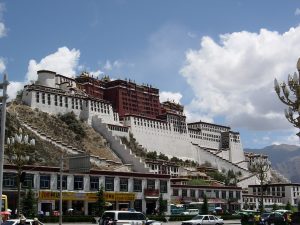
Updated 24 October 2026. The opening image was created as a travel illustration as a high-plateau travel illustration, not an exact G219 location, Mount Kailash, an approved stopping place or actual customers.
What does “Lhasa to Kashgar via G219” mean?
The name commonly describes a journey from Lhasa through western Tibet and the Xinjiang–Tibet road corridor towards Yecheng and Kashgar. It should not be read as one uninterrupted road number from the hotel in Lhasa to the hotel in Kashgar. Ask for the actual approved roads and overnight list, including the approach from Lhasa and the selected western Tibet sectors.
| Block | What it means | Decision that controls the plan |
|---|---|---|
| Lhasa and the approach west | Arrival, accepted local visits and the chosen approach towards Shigatse/western Tibet. | Actual admission, rest and a suitable sleeping-altitude sequence. |
| Western Tibet and the Saga area | The selected roads and legal overnight bases towards the Ali region. | Exact accepted roads, hotel conditions and medical/recovery alternatives. |
| Kailash-area decision | A separate future attraction visit if open and accepted; not an automatic through-road inclusion. | Kailash closed from 20 October 2026; 2027 reopening separate. |
| Ali and the remote sector towards Yecheng | A demanding high-country road journey with actual stops and support. | Suitable nights, current road access and practical emergency options. |
| Yecheng–Kashgar finish | The Xinjiang approach to the final city and onward connection. | Lawful route, actual arrival and time before a fixed departure. |
These are geographical planning blocks, not driving days or a recommended sleeping-altitude sequence. A named town in a route discussion is not evidence of a suitable hotel, lawful foreign-visitor reception or medical fallback. The actual overnight plan has to work before the total duration is useful.
For a general Tibet visit, begin with the Tibet region and route guide. For Xinjiang, use the north-versus-south comparison. Combining the two regions by road is a separate decision with much greater continuity, altitude and support requirements.
Choose the long road for its own purpose
This journey suits travellers whose main interest is a sustained western highland road experience and who can accept basic stages, long distances and changes. It is a poor fit when the trip depends on a single currently closed attraction, fixed international departure immediately after a remote drive, or the assumption that every day can finish at a comfortable low-altitude city.
Discuss walking tolerance, previous altitude experience, medical history and the standard of accommodation the party can accept. A campervan, four-wheel-drive vehicle or private driver does not remove the need for lawful stops, suitable sleeping altitude and a reliable emergency response. High clearance is not a substitute for access permission.
If the main interests are Lhasa, a shorter cultural route or Kashgar city, compare separate regional trips with an actual dated flight or other practical connection. That changes the experience, but can protect time and comfort. Do not choose a remote road solely to avoid buying another ticket.
Foreign-visitor arrangements and vehicle papers are separate
Request a receiving agency that can arrange the foreign-visitor Tibet itinerary and identify the actual guide and vehicle responsibilities. The Shannan tourism authority’s foreign-visitor guidance describes the role of a qualified receiving agency and distinguishes the relevant travel and border documents. An ordinary China entry stamp does not by itself approve this complete road journey.
Send the actual nationality, passport and entry basis, dates, proposed roads and places to the responsible agency through an agreed secure channel. Ask what must be arranged before travel and what document must be carried at each stage. Keep the response specific to the route and party; an account of another traveller’s permit is not your permission.
If bringing a foreign-registered car, keep customs admission, temporary road documents, appropriate Chinese driving permission, insurance and the vehicle’s exit obligations as a separate project. A Tibet itinerary does not replace those papers. The own-car and campervan entry guide explains the broader distinction.
| Decision | Ask the responsible party | What it does not establish |
|---|---|---|
| China passenger entry | The entry basis and permitted stay for each nationality. | Acceptance of the complete Tibet or border-area itinerary. |
| Foreign-visitor Tibet arrangements | The qualified receiving agency, actual roads, visits and required documents. | Permission for every optional detour or closed attraction. |
| Border-area requirements | The current requirements for the precise passport, road and stops. | A blanket exemption inferred from another document. |
| Vehicle and drivers | Customs admission, road documents, insurance and the correct driver permission. | A foreign vehicle’s rights from its number plate or the passenger permit. |
| Attractions | Named entrance, operating date, permitted visit and transport arrangements. | Availability because a regional road is accepted. |
Read the Shigatse notice within its actual scope
The National Immigration Administration’s 28 August 2026 notice concerns suspension of electronic border-permit handling in Shigatse and instructions for the specified permit holders. It should not be used as a complete statement of every foreign visitor’s Tibet arrangements.
Have the receiving agency establish the current position for the exact passport, roads and dates before booking the western journey. Do not infer that a different document bypasses a restriction, or that an old permit proves access has resumed. If the intended itinerary cannot be accepted, choose an accepted regional alternative or postpone.
Kailash: keep a future visit separate from the through road
The October 2026 notice from the Tibet tourism authority, carrying the Pulan and operator announcement sets the Kailash closure from 20 October and leaves the 2027 reopening to a later announcement. It prohibits entry to the closed scenic area. A future-year itinerary or an old trekking account does not establish current access.
If a Kailash circuit is the essential experience, plan around its actual reopening and accepted visitor arrangements. If the purpose is the wider road, ask whether a suitable through route can be arranged without entering the closed area. Do not turn that question into a promise that every surrounding road or town is either open or closed.
A visit to Lake Manasarovar or another western Tibet place needs its own dated access and itinerary decision. Nearby attractions can have different operators and restrictions. Request the named entrance, permitted activity and actual accommodation rather than using “Kailash and the lake” as one undifferentiated inclusion.
The sleeping sequence controls the journey
Give a qualified clinician the actual sleeping locations and altitudes, the approach to Lhasa, previous nights and medical background before committing to the route. Reaching Lhasa by air and later driving farther west are different altitude exposures. A long road holiday does not automatically mean gradual sleeping ascent.
The CDC’s altitude guidance emphasises gradual ascent and explains that fitness does not protect against altitude illness. Do not move to a higher sleeping altitude with symptoms; if symptoms worsen despite rest, descend and obtain appropriate medical help. A permit date or prepaid room must not prevent that response.
Ask what descent or medical transfer is actually possible from each remote sector, who makes the call, and how help is contacted if normal mobile reception fails. Check the insurer’s geographic, altitude and activity exclusions for the intended roads. A generic statement that “oxygen is carried” does not answer those questions.
Do not copy an arbitrary minimum-day itinerary. The western sector towards Yecheng can require difficult choices about sleeping altitude and long distances. A place on a map is not a medically suitable overnight, and a hotel description is not a clinical assessment. Add time, remove activities or choose another transport arrangement when the real sequence does not work.
Know the vehicle, support and daily rhythm
Ask for the actual vehicle class, usable passenger and bag capacity, seat restraints, maintenance and recovery arrangements. An attractive photograph of a convoy does not establish which vehicle you receive. Confirm whether the driver and guide stay with the party throughout, and where any regional team changes responsibility.
Request a daily route sheet that distinguishes driving, inspections, meals, short permitted stops and any walking. Keep a realistic finish before darkness and an earlier stopping alternative. Do not attempt to recover time lost to a closure or administrative wait by driving faster or removing essential rest.
For accommodation, ask about heating, bedding, bathrooms, steps, hot water and the distance from the vehicle. Agree what happens when a proposed property cannot receive the party. In a remote area, a substitute should be a known lawful and suitable option, not a suggestion to find somewhere after arrival.
Weather, meals and the option to change direction
Ask the receiving team which current weather and road notices govern each sector. A summer road report, a recent photograph and a highway’s nominal status do not establish passage on your date. Accept official traffic controls and the provider’s lawful safety decision; do not seek an unofficial track around a closure.
Plan actual meal and water stops and carry permitted backup supplies. For halal requirements or allergies, agree ingredients, preparation and realistic alternatives before the long sectors. Prayer and washing arrangements should be fitted to the real stops and accommodation, rather than assumed at every roadside facility.
| Trigger | Practical decision | Arrange together |
|---|---|---|
| Kailash remains closed | Postpone that visit or request an accepted route without the scenic-area entry. | Main purpose, actual road, nights and cancellation terms. |
| The foreign-visitor itinerary cannot be accepted | Choose an accepted regional alternative or delay the journey. | Transport, accommodation and document dates. |
| Weather or traffic controls block a sector | Use the agreed lawful earlier stop; follow official instructions. | Rooms, support, permissions and the onward connection. |
| Altitude symptoms develop | Stop further sleeping ascent and follow medical guidance; descend if worsening despite rest. | Medical help, practical transport and the revised road/border plan. |
| Support or accommodation is unsuitable | Add time, remove the sector or use another appropriate arrangement. | A real lawful fallback, not an unconfirmed village on a map. |
If Everest is also proposed, treat it as another separate detour with its own admission, transport, weather and altitude decisions. A ticket-sales resumption notice for a particular date is not a general all-clear for an October or future visit. A long western road does not create unlimited room for additional high-altitude attractions.
Send a detailed brief before fixing the departure
Send dates, nationality and China entry basis, arrival method, previous altitude experience, party ages, medical planning needs, luggage and required room standard through Vero Trip’s planning enquiry. Say whether Kailash, the through road or the two endpoint regions is the main purpose, and whether you are bringing a vehicle.
Request a written feasibility response naming the accepted roads, actual nights, guide and vehicle, permissions, medical and recovery arrangements, insurance limits and change terms. The China road-trip collection offers other route interests; it does not confirm a G219 service or an attraction’s opening. Choose the journey only when the real plan fits the travellers and current access.
Compare the direction through the nights, not a reversed list
Social G219 diaries can be valuable for the ordinary details between panoramas: where luggage was carried, what food was available and how different the next room felt. They can also describe the opposite direction from the trip you are considering. A Kashgar-to-Lhasa hotel list is not a Lhasa-to-Kashgar ascent plan when read backwards. Keep the exact overnight sequence, elevation changes and medical considerations attached to your own direction.
A recent diary changed accommodation every night and relied on simple food on several stages. The lesson is to plan the practical rhythm. It does not establish current hotel availability, foreign registration arrangements, equipment quality or a safe seven-day schedule. Request an approved proposal with enough detail to evaluate each night before choosing the overall duration.
| Remote-road question | Useful answer to request | What it helps you decide |
|---|---|---|
| Fuel and vehicle support | Planned refuelling settlements, reserve strategy and breakdown contact | Whether the stage relies on one uncertain stop |
| Toilets and breaks | Expected facilities and longest stretch between planned breaks | Whether the day is workable for your party |
| Meals | Hot meal location, opening contingency and dietary fallback | How much suitable food to carry |
| Room access | Exact property or agreed standard, stairs, heat and bathroom | Whether a different overnight is needed |
| Oxygen support | Equipment type, use process, limits and separate medical response | What support exists without treating it as a safety guarantee |
Make the overnight bag part of the support plan
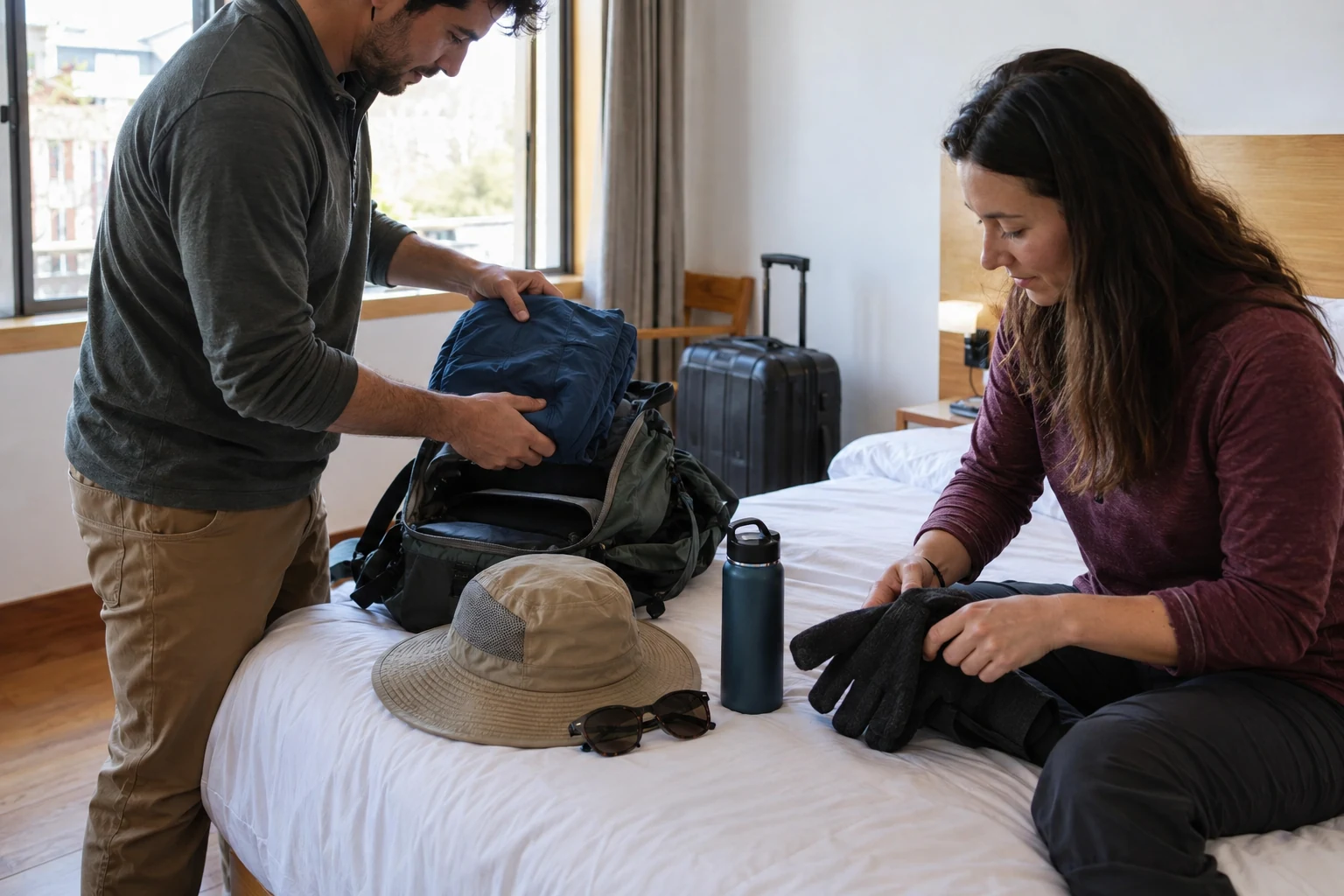
Prepare a small bag for the coming night and keep the main case organised. Carry the personal items you cannot readily replace, plus the document copies requested by the organiser. Ask where cases are secured during visits and how loading works when the vehicle is full. A seat count alone does not tell you whether every passenger’s luggage fits without obstructing the cabin.
Dry clothing for the room and a warm accessible layer are more useful than an extensive photographic wardrobe. Confirm whether laundry can dry before the next departure. Do not base a multi-stage packing plan on the assumption that every hotel has identical heating, hot water or electrical arrangements.
Agree how a permitted alternative is chosen
A booking can become impractical because of road conditions, documents, weather or a traveller’s health. Ask who contacts the relevant authority or local operator, who explains the alternative and when you must decide. The alternative needs its own approved route, viable overnight and service scope. A spontaneous side road or border crossing is not a substitute.
Keep closed attractions separate from the through-road discussion. A photograph, an old hotel booking or a domestic traveller’s completed circuit does not establish that a current sightseeing visit is permitted. Retain the closure limitations above until an authoritative reopening and actual foreign-visitor arrangements are confirmed; do not assume a future reopening date.
Preserve the option to shorten the journey
Discuss the practical and financial consequences of stopping early, adding a room night or returning to a previous base where feasible. Specify what happens to guide and vehicle costs, unused services and onward transport. Insurance and medical assistance need to match the actual remote and high-altitude itinerary; a generic travel policy should not be assumed to cover every part.
At the daily briefing, look beyond kilometres. Review the next sleeping place, the longest vehicle section, the meal stop, the party’s condition and the decision point for changing plans. This gives the long road a manageable structure without turning every delay into a race to reach the original hotel.
Continue planning this journey
Use our Tibet route-planning guide to place this topic within the whole trip. The railway, Samye and Namtso planning guide explains how arrival and separate outings fit together.
Sources and research notes
Reviewed 29 October 2026. Practical perspectives were compared with original Xiaohongshu note bodies and initially visible comments: 西藏日喀则封路,阿里小环线受阻,启动planB; 川藏南线🆚北线攻略 你怎么选评论区聊聊; 新藏线|G219住宿全攻略 收藏这一篇就够了📝. These individual experiences mainly concern domestic travellers; they are not evidence of foreign-visitor eligibility, present prices or medical safety.
China regional risks: Tibet; CDC Yellow Book: High-Altitude Travel and Altitude Illness; NIA Shigatse electronic border permit suspension, 28 August 2026. Confirm operating notices and passport arrangements for the actual travel date.
Related Journeys to Compare
These existing routes offer starting points for the region or travel interests discussed above. Read the full daily itinerary to see what is included. A visit described in this guide, a specialist session or an international border crossing is added only when confirmed in your own programme.