

A reliable Yunnan travel agency should explain not only what is included, but why the route is paced that way. Yunnan’s climate zones, long road transfers and high-altitude north-west make operational judgement more important than a long attraction list.

Agency comparison table
| Check | Strong answer | Warning sign |
|---|---|---|
| Route timing | Door-to-door estimates and rest stops | Only driving distance is shown |
| Guide expertise | Named language and destination experience | “English guide” with no role detail |
| Pricing | Hotel standard, meals, tickets and supplements itemised | One total with broad exclusions |
| Altitude planning | Gradual ascent and contingency day | Strenuous programme immediately after arrival |
| Local support | Reachable operations contact during the trip | Only an overseas sales contact |
Questions worth asking before payment
- Which company is the contracting travel service provider?
- Is the itinerary private, small group or assembled from local day tours?
- Who handles a missed train, weather closure or illness?
- Are shopping stops or commissions part of the programme?
- Can the agency adapt meals, walking distance and hotel location?
- What cancellation terms apply to each component?
The planner should also tell you when a requested schedule is unrealistic. For example, adding Shangri-La to a short Kunming–Dali–Lijiang week increases altitude and transfer time. The right advice may be to remove a destination, not sell another night.
What local expertise looks like
It is visible in small decisions: choosing a Dali village at a time when residents are not overwhelmed, arranging luggage access for pedestrian old towns, booking the correct station rather than the city name alone, and knowing which mountain day needs a weather alternative. Cultural expertise means identifying Bai, Naxi, Yi, Tibetan or Dai contexts accurately instead of treating Yunnan as one generic “minority” culture.
Best Time to Visit and Seasonal Weather
Our recommendation: A good agency should recommend a season for your exact route, not claim that every month is equally suitable. March to May and October to November suit the classic Kunming–Dali–Lijiang circuit. July to September is valuable for mushrooms and green scenery but needs rain contingencies; November to March is stronger for Yuanyang terraces and southern Yunnan. The table below is a planning guide, not a live forecast. Yunnan’s elevation changes create large local differences, so check each overnight stop shortly before departure.
| Season or route | Typical conditions | Who it suits |
|---|---|---|
| Classic north-west route | Mar–May; Oct–Nov | Comfortable walking and more dependable visibility |
| Shangri-La and Meili | Late May–Jun; Sep–mid-Oct | Better balance of access, pasture colour and clear views |
| Yuanyang and Jianshui | Nov–Mar | Drier travel and water-filled terrace season |
| Pu’er and Xishuangbanna | Nov–Apr | Warm, generally drier southern conditions |
Where to Go and What Is Actually Worth Your Time
Stone Forest planning
The agency should state door-to-door drive time, park shuttle arrangements and realistic walking level.
Dali village access
Ask which Bai village is visited, whether the host expects the group and how much time is spent on the experience.
Lijiang heritage
A serious itinerary distinguishes Dayan, Baisha and Shuhe instead of calling all three ‘Lijiang Old Town.’
High-altitude operations
For Shangri-La, confirm arrival-day workload, medical contingency, driver experience and what happens if a guest should not ascend.
Seasonal alternatives
A written Plan B for rain, snow, cableway closure or poor visibility is more valuable than another attraction name.
What to Eat: Local Dishes Worth Planning Around
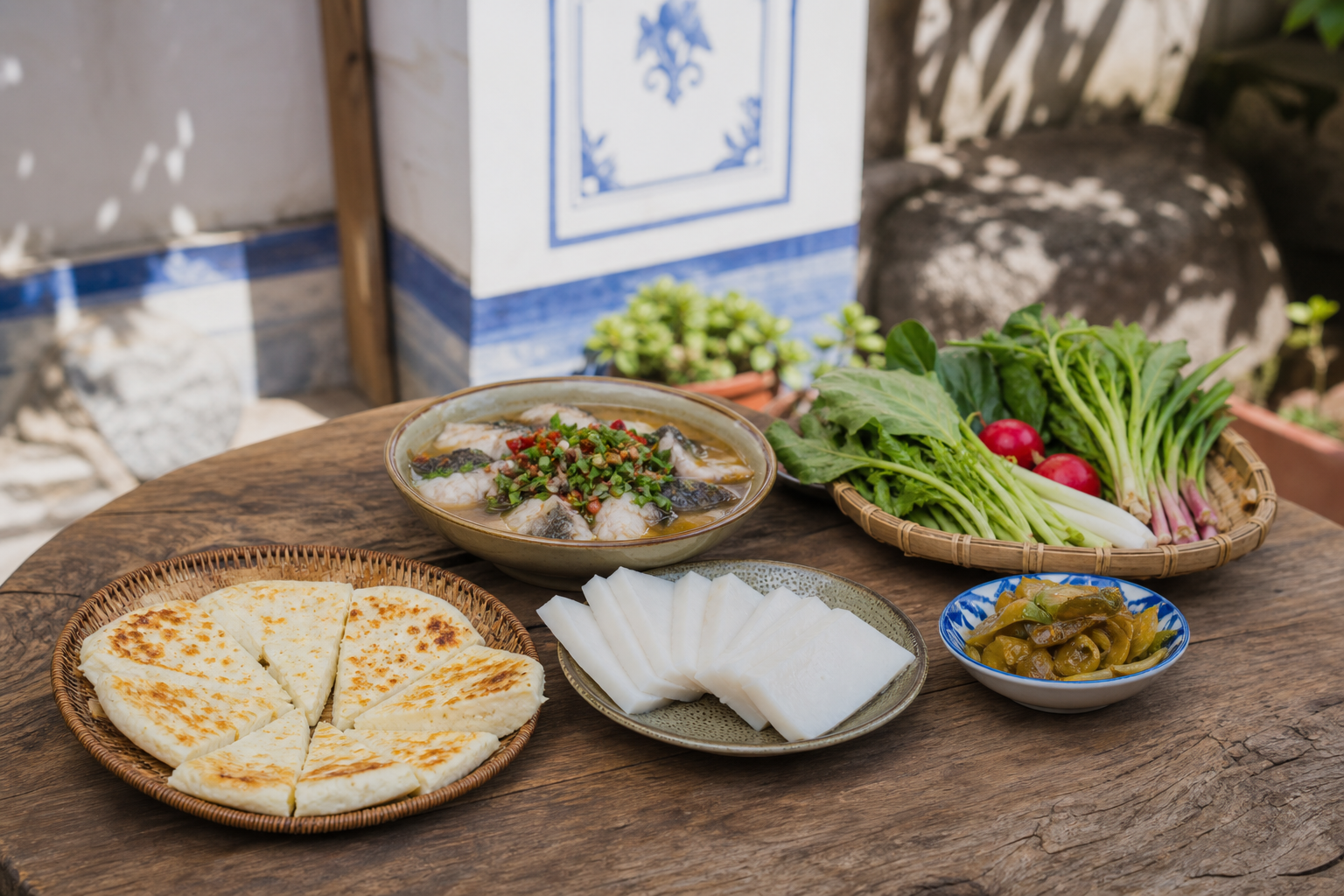
Meal specificity
A credible quote names opportunities for crossing-the-bridge noodles, Bai food, Naxi dishes or Tibetan highland meals.
Dietary handling
Ask how allergies, vegetarian meals, halal requirements and shared cooking are communicated to restaurants.
Market visits
The guide should identify ingredients and secure permission for photography instead of using the market as decoration.
No forced shopping
Tea or craft visits should be genuine interpretation, with purchases optional and clearly separated from guiding.
Our Recommended VeroTrip Route
8-Day Classic Yunnan Private Tour
Our recommended benchmark itinerary is the 8-day private route. Use it to compare hotel locations, transfer rhythm, guide coverage and included experiences against any competing quote; we can then adjust pace, food and altitude exposure. See the itinerary and ask about dates, pacing or hotel options →
Before You Book
VeroTrip recommends checking current transport, attraction and immigration information against official sources. For rail identity and ticket rules, consult China Railway 12306. This preparation is designed to make agency comparisons clearer; it is not a legal commitment.
Local Planner Notes
Good planning is visible in the route: sensible drive times, clear hotel areas, realistic activity length and honest exclusions. A long list of attractions is not evidence of better service. Communication before booking is a useful signal of communication during the trip.
Frequently Asked Questions
What should a Yunnan travel company explain before I book?
Ask for the day-by-day route, realistic transfer times, hotel names or standards, guide and vehicle arrangements, inclusions, exclusions and what remains subject to availability. A clear written proposal is more useful than a long list of attractions.
How should I compare two Yunnan quotations?
Compare the route sequence, hotel location, private versus shared services, transport, entrances, meals, guide language and cancellation terms. A lower total can omit transfers, tickets, meals or the time needed to make the plan workable.
What are warning signs in an itinerary?
Be cautious when a route adds several distant places in one day, gives no transfer time, promises weather-dependent experiences as certain, or does not explain the level of walking and altitude involved.
Should a company confirm seasonal activities in writing?
Yes. Tea processing, coffee harvests, village workshops, road access and mountain conditions can change. The proposal should say what is confirmed for your dates and what will be replaced if local conditions change.
What happens if a confirmed service changes before travel?
Ask how the company will communicate the change, what comparable alternative it will offer and how any price difference is handled. These points should be clear before payment, not left to guesswork on the trip.
Related Planning
Turn the Idea Into a Workable Route
Share your dates, arrival and departure cities, preferred pace and the experience that matters most through Plan My Trip. VeroTrip can compare the practical route options and prepare a written proposal with confirmed inclusions and limitations.
Continue Planning Your Yunnan Trip
Use these Yunnan resources to compare route length, season, transport, budget and private travel options before fixing the daily sequence.
For the services available from our Kunming team, see VeroTrip Yunnan travel agency and planning support.