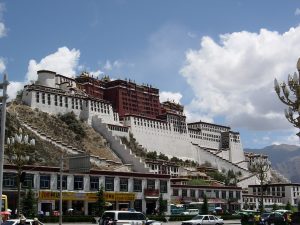
Sera Monastery (色拉寺) rewards two different kinds of attention: listening to the rhythm of monastic debate, and looking slowly at a working religious complex. Give both room. A visit built around one viral photograph can miss the courtyard atmosphere, while an arrival timed only for late light can miss the part of the day you most wanted to see.
This guide proposes an afternoon plan with optional pauses, rather than a guaranteed performance timetable. International visitors should arrange Tibet permits and organised travel through a specialist agency; access can change. Ask permission before photographing inside monasteries. Confirm Sera itself, the open visitor areas and the day’s debate arrangements with your guide.
Decide what you want from Sera before choosing the time
The Xiaohongshu notes we read point to different priorities. One visitor came specifically for debate but also enjoyed the quieter parts of the large complex. Another preferred the atmosphere after debate. A third did not find the famous wall they had expected and noticed a small flower instead. These are individual reactions, not a ranking of the best hour. They suggest a useful question: would you feel disappointed if the debate did not happen, or are architecture and a slower walk enough?
| Your main interest | Put first in the plan | Leave flexible |
|---|---|---|
| Monastic learning | Ask whether visitors may observe debate that day and where to stand | Photography time after observing, rather than arriving late for a wall portrait |
| Architecture and religious spaces | Find out which halls are admitting visitors and which route is appropriate | Quiet courtyards and exterior detail after the main visit |
| Photography | Choose permitted exterior positions and allow people to pass | Light and weather; neither justifies blocking worshippers |
| A gentler afternoon | A short route with seated breaks and an agreed pickup | Extra lanes or time standing at the courtyard |
Do not copy a social-media claim about a cheaper late ticket into your budget. The same applies to a repeatedly quoted debate start time: ask for the actual day’s arrangements. If the activity is the reason for your visit, make that clear when confirming the itinerary, before the vehicle sets out.
How to observe debate without treating it as a show
Debate belongs to Buddhist education. Xinhua’s reporting on the Geshe Lharampa examination describes debate as part of advanced study and includes a Sera monk among the graduates. That report concerns a separate event at Jokhang; it explains the educational context, not Sera’s current visitor schedule.
When observation is permitted, begin with several minutes of listening. Notice how one participant presents a challenge and another responds, how a discussion may involve a pair or a larger group, and how gestures help carry the exchange. Ask your guide to explain the method at a suitable distance. Without understanding Tibetan and the subject, volume or facial expressions alone will not tell you who has made the stronger argument.
Stay in the visitor space indicated by staff. Leave the circulation route clear, lower your voice and silence phone notifications. Moving across the courtyard for a closer portrait can interrupt the very activity you came to understand. If photography is allowed, take a few frames and then put the camera down. Close-up images of an identifiable monk deserve the same care and permission as a portrait elsewhere.
An enjoyable alternative on a day without visitor observation is an architectural visit with your guide. Ask about the relationship between communal halls, learning spaces and daily religious life. If that is not the experience you want, discuss a different permitted outing; there is no value in buying an extra admission merely to fill the afternoon.
A realistic visit sequence
Treat the following durations as planning allowances, measured from the visitor entrance, not as opening hours. Add the transfer from your hotel, admission checks and the return separately. A taxi’s map estimate to the site is not the total excursion time.
| Stage | Suggested allowance | What to do |
|---|---|---|
| Arrival and orientation | 15–20 minutes | Confirm the return meeting place, ticket arrangements, open halls and activity information |
| Main religious and architectural visit | 45–75 minutes | Follow the guide’s permitted sequence; pause for explanations outside doorways |
| Debate observation, if available | 20–40 minutes | Watch patiently from the designated area; shorten if standing becomes tiring |
| Exterior details and a break | 20–30 minutes | Look at windows, wall textures and changing light without seeking private residential spaces |
A roughly two- to three-hour slot can accommodate this outline when the local programme permits. It is not a commitment to enter every hall. If the group is already tired after Drepung, keep the orientation and the priority activity, then remove the optional photography circuit. Finish before the return transfer becomes a rush.
Bring a small day bag with water, sun protection, an extra layer and anything personally necessary. Keep both hands available on uneven steps rather than carrying several loose bags. Some spaces may require a slower single-file flow; a small group should gather for the explanation before entering, not stop in the narrowest point.
Give the halls and courtyards their own time
Ask which hall is the main communal space, how a monastic college differs from the whole monastery, and what your guide recommends noticing in a doorway or painting. Three clear explanations will usually be more memorable than a rapid list of unfamiliar names. Discuss whether an object is used in worship, is part of the architecture, or is being interpreted through historical research.
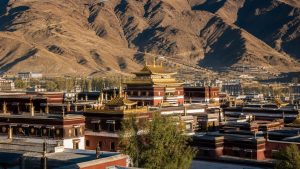
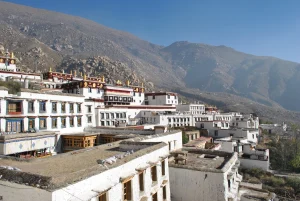
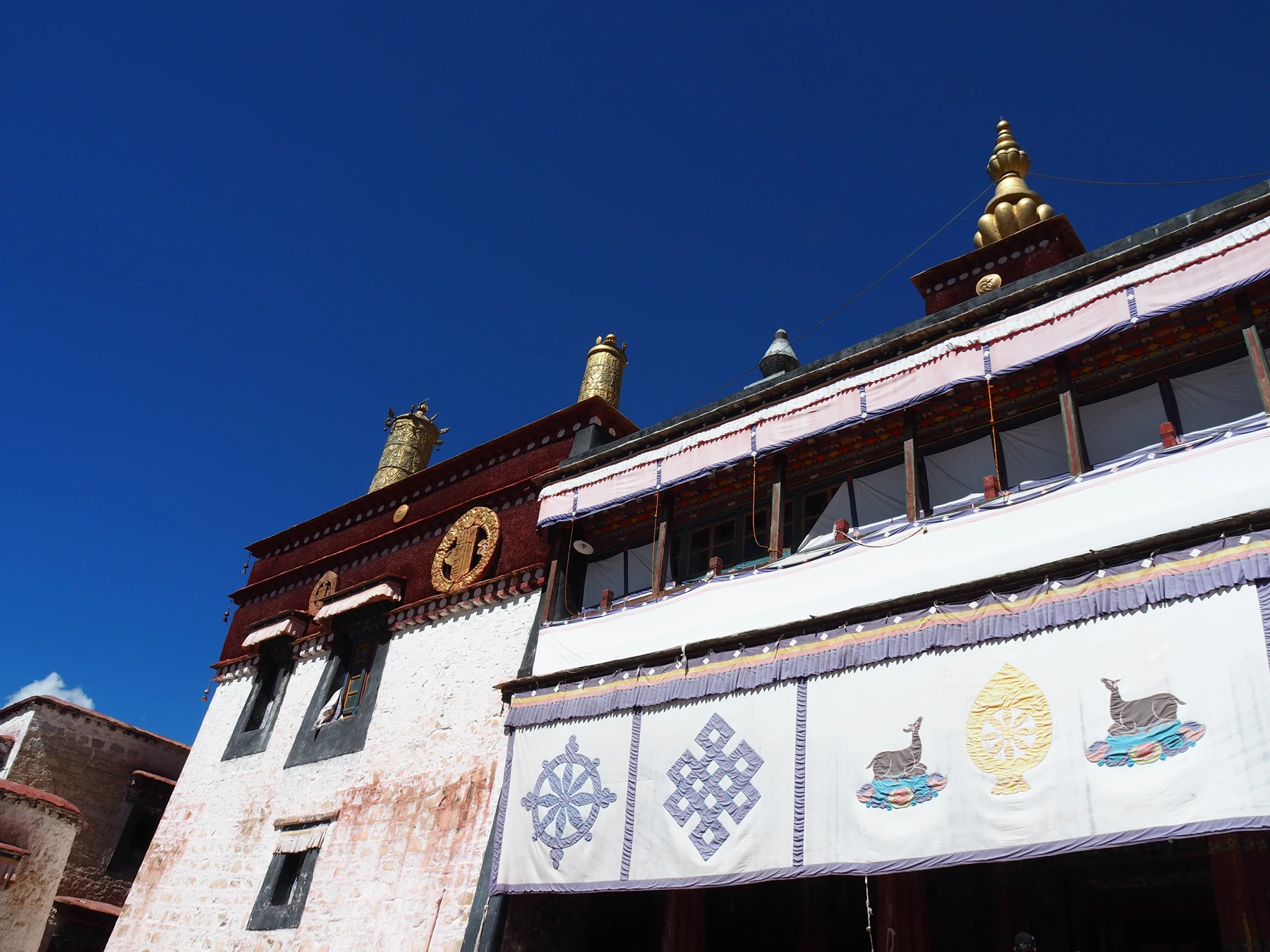
Outside, look at the way painted surfaces, cloth, roof details and shadows change the character of a façade. The licensed photograph above shows architectural detail rather than a promised view from a particular visitor position. It was taken in 2015; it cannot establish today’s entrances, barriers or building condition.
Keep residential and service areas out of the itinerary unless staff explicitly direct visitors there. A lane that appears in somebody’s photograph is not automatically a public route. Nor should a quiet moment be staged by asking worshippers to move away or repeat a ritual.
Photography that retains the sense of place
One useful set of images is a wide permitted exterior, a detail of a window or wall, and a portrait of your own companion in a place where stopping is allowed. This tells a fuller story than copying one wall angle. Step aside to compose the image, check the background for people who may not want to appear, and move on when others need the path.
Do not photograph a hall simply because a phone is already in your hand. Ask again when entering a different area, and follow restrictions on cameras, flash and recording. Keep security personnel, checks and equipment out of photographs. A photographer hired elsewhere does not override a monastery’s instructions.
If you have rented clothing for personal portraits, think about walking comfort and the time needed to change. Keep heavy accessories out of a visit centred on steps and extended standing. It is perfectly reasonable to visit in ordinary modest travel clothing and save a longer portrait session for another permitted setting.
Pairing Sera with the rest of Lhasa
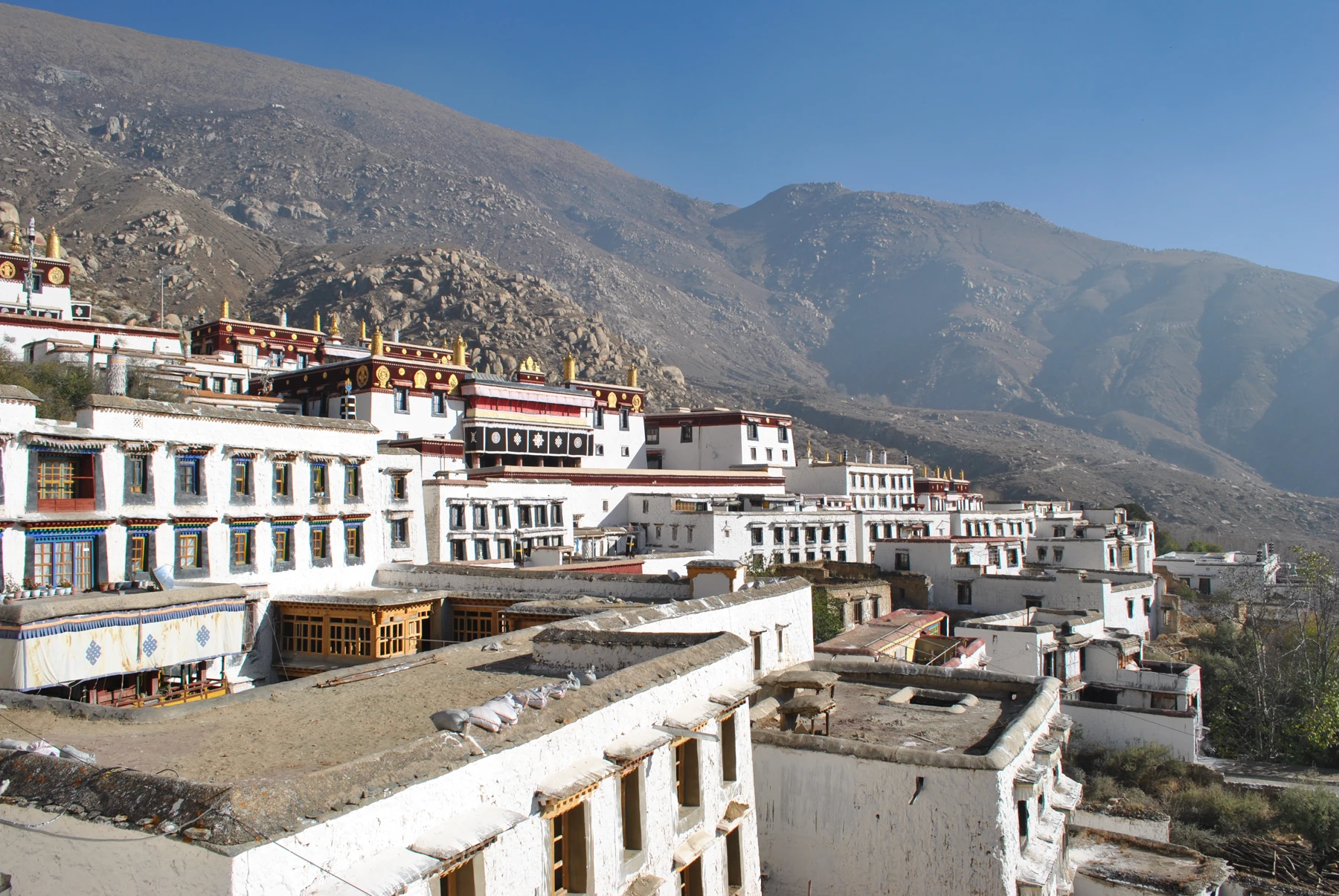
The existing 4-day Lhasa city tour and 6-day Lhasa and Shigatse tour list Drepung in the morning and Sera in the afternoon. That is a practical route framework, but it combines two substantial visits. Check the actual walking, lunch break and afternoon activity before booking; the written departure programme determines services and admissions.
For a private itinerary, ask whether separating Drepung’s hillside visit from Sera would give your party a better pace. A longer stay can also leave room for Norbulingka’s gardens and palaces on a different day. These are planning alternatives, not an offer of independent unguided travel within Tibet.
Avoid putting a fixed flight or train connection immediately after the visit. Leave time for the return to your hotel, collecting luggage and the separate departure transfer. Use the Tibet trip-planning guide to fit the afternoon into the whole permitted journey.
Questions worth settling before the visit
Is debate guaranteed? No. Ask about the specific date and visitor access. A published itinerary or an old note cannot guarantee a religious activity.
Is Sera a suitable first-day outing? Do not make a long standing-and-walking programme the default after arrival. See how you feel and agree a quieter schedule with your guide. A shorter route is an option, not a medical assessment.
Can I go only for late-afternoon photographs? Ask which areas would still be open and whether that visit would satisfy your interests. Remaining outside in attractive light and entering the halls are different experiences.
What makes a good visit? Understanding a little more about monastic learning, allowing people space to worship and leaving enough time to notice the complex beyond one photograph. Choose the route that makes those things possible for your party.
Sources and research notes
Reviewed 30 October 2026. Original Xiaohongshu note bodies and initially visible comments informed the practical angles: 藏地之行 – 色拉寺; 赶飞机前去了趟色拉寺; 【西藏系列】📝拉萨必打卡 | 色拉寺. Individual experiences and photographic preferences are anecdotal; they do not confirm current prices, operating arrangements or foreign-visitor eligibility. No Xiaohongshu photographs have been reproduced.
UK FCDO: China regional risks, Tibet; Xinhua: 2023 Geshe Lharampa debate and degree report. Check dated visitor notices before travelling.