Shannan offers a cultural journey through Tibet’s early religious and royal history. Samye, Tradruk and Yumbulagang give different subjects to understand; they should not be reduced to three quick photographs. Choose a main purpose and enough time for the road, interpretation, walking and lunch. A focused visit can be more rewarding than reproducing every stop in a domestic one-day circuit.
Choose the cultural thread before the timetable
The Ministry of Culture and Tourism’s historical Shannan route introduction groups Samye, Tradruk and Yumbulagang within the region’s cultural landscape. It is useful for identifying the theme, not as a current schedule, transport service or foreign-passport access confirmation. Have the Tibet organiser establish the actual permitted programme for your dates.
Samye can anchor a monastery-focused day. The Tsetang and Yarlung Valley side can support a different combination of temple, palace setting and local context. If you want a broader introduction, compare an overnight in an appropriate base with a return day from Lhasa. The longer version should add usable cultural time, not merely more names.
| Main interest | A useful focus | Detail to protect |
|---|---|---|
| Monastery architecture | Samye and its permitted visitor spaces | Time to understand the layout and hear an explanation |
| Royal and valley history | The Yumbulagang setting and regional context | Actual climb, weather and an alternative for limited mobility |
| Religious art | A Tradruk visit if arranged and available | Current viewing arrangements and interpretation |
| A broader introduction | A staged combination with a suitable overnight | Meals, check-in and enough time at each site |
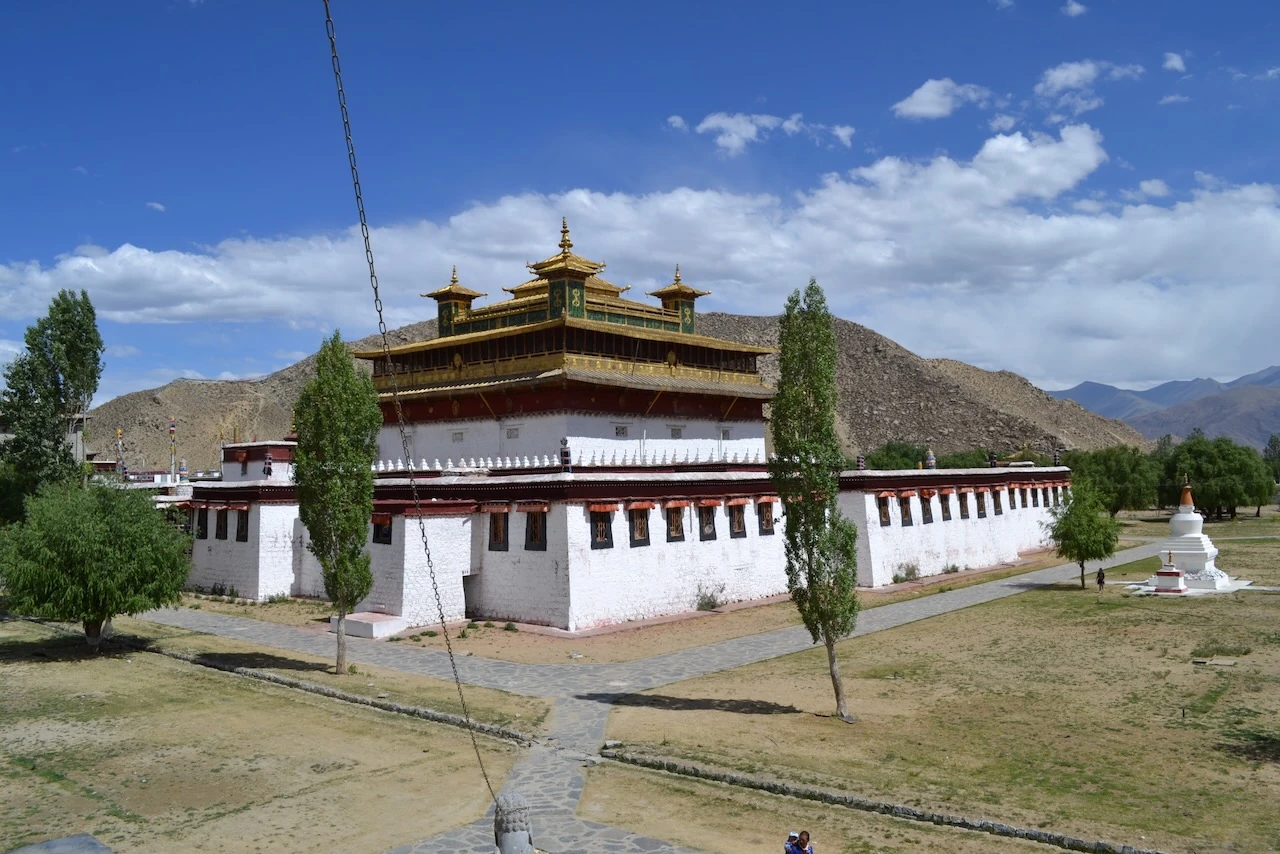
Samye: look at the organisation of the place
Ask the guide to explain the relationship between the main temple and the surrounding elements you can visit. A good first question is how the overall arrangement expresses the site’s religious meaning. You do not need to identify every building to understand why the layout matters.
Move through the current visitor route at a pace that allows observation. Notice the changes between open space and interior, the scale of doors and the relationship of buildings to the landscape. Follow staff instructions and do not touch painted surfaces, statues or religious objects. Ask before photographing people and keep the camera away where interior photography is prohibited.
Allow for the whole stop: arrival, parking, walking to the entrance, tickets or checks, interpretation, toilets and the return to the vehicle. A domestic shuttle diary specifically warned that returning to the correct parking area was less obvious than expected. Agree a recognisable meeting point and contact method rather than relying on a memory of the first turn.
Tradruk: allow time for what is actually available
Tradruk, also written Changzhu, can provide a different art and religious focus from Samye. Ask the guide which spaces and objects can currently be viewed and whether any special viewing has separate admission or timing. Do not build the day’s main promise around a particular treasure without confirming availability.
A short stop can become frustrating if the guide has no time to explain what you are looking at. In a recent first-person day-tour diary, the author felt the allocated temple time was insufficient. Treat that as a reason to ask for usable time, not a universal minimum duration. Your interest, walking pace, current access and the rest of the route determine what is appropriate.
Respect active religious use and current photography rules. A detailed image online does not mean that you may reproduce it in the same room today. Let the visit be an opportunity to listen and look, with a discussion outside at a suitable place if the interior requires quiet movement.
Yumbulagang: separate the view from the climb
The hilltop setting is part of Yumbulagang’s appeal, but the approach should be evaluated honestly. Ask how far and steep the actual route is, where the vehicle stops, what steps or surfaces are involved and whether a shorter exterior viewpoint suits the party. Do not use another traveller’s climbing time as a promise for yourself.
An optional riding service, if operating and lawful, is a separate activity with its own suitability and charges; it is not an automatic mobility solution. If a companion cannot comfortably manage the approach, discuss a different approved plan before the day. Keep the party’s needs visible rather than treating reaching the top as compulsory.
Do not cross barriers or enter closed terraces for a wider photograph. Wind and exposure can differ from the valley below. Keep a suitable layer accessible, follow the guide and allow enough time to return without hurrying downhill.
One day or an overnight?
| Version | What it can prioritise | What needs care |
|---|---|---|
| Focused return day | One main cultural visit with a proper meal | Real road windows and return to Lhasa |
| Several-site return day | A broad introduction if timing and condition fit | Reduced interpretation, cumulative walking and late return |
| Regional overnight | More usable time and a different daily rhythm | Approved hotel, room facilities and the sleeping sequence |
| Shortened programme | The site that matters most to you | Clear agreement on omitted services and cost effects |
Do not assume Shannan is automatically an acclimatisation excursion because some places are lower than Lhasa. The actual route, exertion and sleeping elevations still matter, and individual symptoms need appropriate advice. An arrival-day road marathon is not equivalent to rest.
Keep a real lunch in the programme
Some very economical domestic circuits move quickly and leave travellers eating snacks in the vehicle. That may suit an individual’s choice, but it should not become the default for a detailed private or organised foreign-visitor day. Ask where lunch is planned, what food is suitable and whether it is included.
Tell the organiser about allergies, vegetarian or halal requirements in advance. Carry a suitable backup for delays without assuming every temple-area restaurant can meet a strict need. Include time for the toilet and getting back to the correct vehicle. A meal is part of the day, not an inconvenience to be removed to preserve another stop.
Use a guide to connect the sites
Request the guiding language and the kind of interpretation you want: early history, architecture, religious art or a broad introduction. Ask for a few connections between sites rather than isolated facts at each gate. What makes this visit different from the one before it? Which feature should you notice? How does the valley setting help explain the buildings?
Avoid presenting legends as established historical events without explanation. Let the guide distinguish tradition, interpretation and evidence. You can appreciate a story while understanding its place in the visit. Keep religious behaviour respectful even when the subject is unfamiliar.
Before you book
Confirm the actual sites, current access, foreign-passport arrangements, guide language, admission scope, road windows, walking, lunch and return or overnight. If a public shuttle promotion appears in a social post, do not assume foreign eligibility, current operation or its price. Request a specifically arranged Samye programme with the guide, transport and admissions stated clearly. Choose the version that leaves time to understand the cultural thread and enough room to change pace when needed.
Continue planning this journey
Use our Tibet route-planning guide to place this topic within the whole trip. The railway, Samye and Namtso planning guide explains how arrival and separate outings fit together.
Sources and research notes
Reviewed 29 October 2026. Practical perspectives were compared with original Xiaohongshu note bodies and initially visible comments: 藏源山南|一日溯源三圣地🏔️; 174元 冬游西藏第二天; 扎什伦布寺和桑耶. These individual experiences mainly concern domestic travellers; they are not evidence of foreign-visitor eligibility, present prices or medical safety.
China regional risks: Tibet; CDC Yellow Book: High-Altitude Travel and Altitude Illness; Ministry of Culture and Tourism: historical Shannan cultural route introduction, May 2021. Confirm operating notices and passport arrangements for the actual travel date.
Compare a Lhasa-Based Journey
The 8-Day Tibet Tour: Lhasa, Shigatse & Namtso is an existing starting point for a wider Tibet journey. Its published programme does not include a Shannan or Samye excursion. Ask Vero Trip to revise the route if that is your priority, with the extra travel days, accommodation and permit arrangements confirmed before booking.