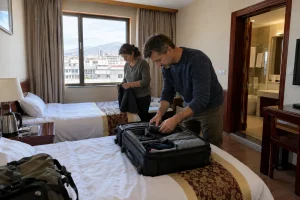
Eating well in Lhasa starts with choosing the kind of meal you want: a quick bowl before a visit, a sociable tea break, a quiet lunch with a parent or a longer dinner after returning to the hotel. A popular restaurant list will not answer all of those needs. This guide focuses on ordering, comfort and practical choices rather than a fixed ranking of shops or unverified prices.
Choose a meal environment before choosing a dish
Two recent first-person Xiaohongshu accounts show how different the same city can feel. A solo visitor enjoyed exploring tea halls and comparing noodles, while a traveller with her mother found smoke, ventilation and unfamiliar textures more important than the venue’s popularity. These are individual experiences, not current inspection findings about any business. They suggest useful questions before sitting down.
Look at the seating, ventilation, crowding and distance to a toilet. Ask whether a quieter table is available and whether there is a non-smoking area. If the setting does not suit a companion, choose another place without treating a famous shop as compulsory. A hot familiar breakfast at the hotel can support a much better morning than a long queue for an unfamiliar meal.
| Meal situation | A useful starting choice | Question before ordering |
|---|---|---|
| First evening after arrival | A modest hot meal close to the hotel | Can you serve a small portion with little chilli? |
| Solo lunch between visits | One bowl or a small individual dish | Where do I order and how large is the serving? |
| Tea with a companion | A seated break with a quiet alternative | Is this tea sold by cup, pot or refill? |
| Family dinner | A few shared dishes with different textures | Which dishes are mild, soft and easy to share? |
| Strict dietary needs | A meal agreed before the outing | What stock, fat, dairy and utensils are used? |
Sweet tea and butter tea are different decisions
Sweet tea is generally a milky, sweet drink; butter tea has a richer, savoury profile and commonly contains dairy. Ask what is in the version being served rather than assuming every shop uses the same recipe. If you do not know whether you will enjoy it, order the smallest practical amount. You can appreciate a tea-room setting without committing the whole group to a large pot.
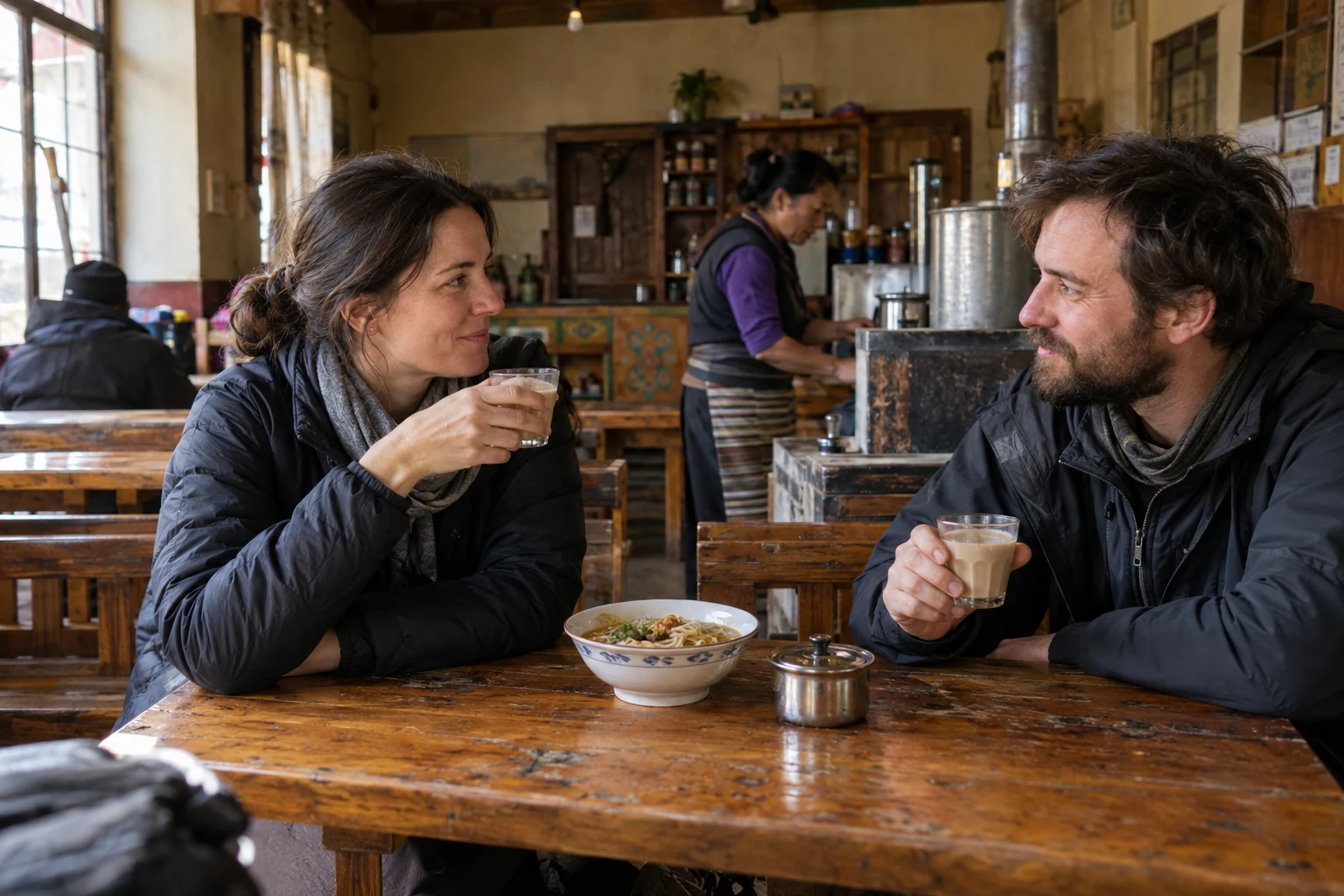
In some traditional tea halls, drinks and food are handled separately. One traveller described choosing a cup, paying for tea at the table and ordering food from another counter. Treat this as a prompt to ask how your chosen place works, not as a universal instruction to take crockery or leave cash anywhere. Watch the staff’s directions or ask the guide to clarify the ordering sequence.
Confirm whether a refill is included, how payment is recorded and whether food arrives at the table or must be collected. Ask before taking a seat reserved for another group. Do not photograph staff or diners at close range without permission. A busy tea hall is someone’s ordinary social space, as well as part of your visit.
Make a noodle order precise
The name of a noodle dish does not tell you its texture, size, toppings or spice level. Ask whether the noodles are in soup or served dry, what meat is used, whether the chilli can be separate and whether the bowl is intended for one person. If you prefer soft noodles or dislike a chewy texture, say so before ordering. A picture of the dish on a menu can help, but it will not reveal the stock ingredients.
Beef on a menu does not establish that the kitchen is halal. A vegetable topping does not establish vegetarian broth. Pork and beef can both appear in city restaurant menus, and a restaurant’s regional style is not certification. For religious dietary requirements, discuss acceptable suppliers, preparation and alternatives before the day’s route is fixed.
For two people, start with a manageable quantity. You can add a side once you see the portions. Avoid ordering several large bowls because each appears in a social post. A later temple or vehicle transfer is more comfortable when lunch has been a meal you actually wanted, rather than an eating challenge.
Try unfamiliar foods in smaller steps
Tibetan-style yogurt may taste much tarter than the sweetened yogurt familiar from home. Ask whether it is plain, sweetened or served with toppings, and tell staff about dairy restrictions. A small taste makes more sense than buying several portions from a photograph. The same principle applies to tsampa and unfamiliar breads: ask how the food is served and eaten, rather than guessing from the name.
Stone-pot chicken and shared hot pots can be enjoyable group meals, but establish the quantity and charging basis first. Is the menu price for one person, a pot, a minimum party or a particular meat portion? Ask whether vegetables, staple food, tea and other drinks cost extra. If you eat no meat, confirm the stock and cookware before assuming the vegetable side can become a suitable main meal.
Very cold food, strong chilli and large rich meals are preferences to discuss, not tests of authenticity. A simple rice dish or mild soup is a valid choice. You can explore different flavours later in the trip when you have more energy and a clearer sense of what suits you.
Use a dietary question card with the guide
| Requirement | Clarify specifically | Avoid assuming |
|---|---|---|
| Vegetarian | Meat stock, animal fat, fish sauce and shared cooking | A dish is vegetarian because no meat is visible |
| Vegan or dairy-free | Butter, milk, yogurt, cheese and tea ingredients | All tea is dairy-free |
| Halal | Certification or acceptable sourcing and preparation | Beef, lamb or a noodle-shop name proves suitability |
| Food allergy | Exact ingredient, cross-contact and ability to accommodate | Removing a garnish removes the allergen |
| Low spice | Chilli oil, sauces and condiments served separately | A mild-looking soup has no chilli |
Carry a clear translated description of an allergy or serious restriction, and have the organiser establish whether a restaurant can accommodate it. If staff cannot reliably answer, use an agreed alternative. A restaurant recommendation from a traveller with no dietary restriction cannot settle that question for you.
Plan food on an excursion day before leaving Lhasa
Ask where lunch is expected, whether the stop has a hot meal, what happens if the road is delayed and when you return to the city. A lake excursion can leave little time for an elaborate meal between vehicle changes. Carry suitable snacks and drinking water, while keeping a proper meal in the programme rather than assuming snacks always replace lunch.
Tell the hotel about an early departure before breakfast closes the previous evening. Confirm whether an early meal or packed option can be arranged and whether it is included. If you return late, ask the guide to check a realistic dinner option near the hotel. Do not depend on a particular restaurant remaining open because it appeared in an older post.
Find the correct doorway, not only the map pin
Courtyard restaurants and small businesses can be set back from the street. Keep the Chinese business name and address, and confirm the entrance when making arrangements. A navigation pin may point at a complex rather than the door. Ask at an appropriate staffed entrance instead of walking into private spaces or following an unmarked staircase.
For a group, agree a meeting point that is easy to recognise after the meal. Record the final bill and included items before leaving. These small steps are especially useful when the restaurant is part of a longer guided day and the touring vehicle cannot wait at the doorway.
Build food into your Lhasa visit
Keep at least one unrushed meal and one seated tea break in the city plan, with a different setting available if the first choice is crowded. Avoid alcohol during the initial acclimatisation period; do not treat a local drink as an altitude remedy. If appetite loss accompanies headache, nausea or unusual fatigue, tell the guide and seek appropriate advice rather than dismissing it as dislike of the menu.
Ask for the actual meal scope in a tour quotation: hotel breakfast, included group meals, independent meals, drinks and dietary arrangements. This guide describes choices, not complimentary food, fixed prices or guaranteed restaurant access. A suitable meal at the right time will usually do more for the day’s enjoyment than another famous name on the list.
Continue planning this journey
Use our Tibet route-planning guide to place this topic within the whole trip. The railway, Samye and Namtso planning guide explains how arrival and separate outings fit together.
Compare 4-day Lhasa city tour, 8-day Lhasa, Nyingchi and lakes tour. These are existing route descriptions, not confirmation of a departure, present access or every optional stop discussed above. Ask for the exact permitted programme, accommodation, guiding language and itemised services for your dates.
Sources and research notes
Reviewed 29 October 2026. Practical perspectives were compared with original Xiaohongshu note bodies and initially visible comments: 🥢Solo trip 拉萨饮食篇; 与妈妈旅游之西藏拉萨美食. These individual experiences mainly concern domestic travellers; they are not evidence of foreign-visitor eligibility, present prices or medical safety.
China regional risks: Tibet; CDC Yellow Book: High-Altitude Travel and Altitude Illness. Confirm operating notices and passport arrangements for the actual travel date.