Barkhor and Jokhang are closely connected places with different visiting decisions. Jokhang is a religious complex with an admission and reservation process. Barkhor is a living circuit and old-city setting where worship, work, shopping and visitors share limited space. Plan enough time to understand both, without turning a temple visit into a race between photographs.
Distinguish three parts of the old-city outing
Ask the guide to mark the temple entrance, the public circuit and the vehicle meeting point separately. A restaurant address in an adjacent lane may be close on the map but still require extra walking. Security checks, crowds, a meal and the return to transport belong in the day’s timing. The number of attractions listed in one neighbourhood does not make them a single short stop.
Foreign-passport visitors should have the visit included in their organised Tibet arrangements. The general domestic booking instructions do not establish a foreign visitor’s independent admission procedure. Confirm passport handling, the agreed guide and any reservation before the outing, and carry the documents your organiser asks for.
| Part of the visit | Main purpose | Practical question |
|---|---|---|
| Jokhang interior | Religious and architectural interpretation | Is the actual reservation confirmed for my documents? |
| Barkhor circuit | Understand the route and its living use | Which direction and current visitor instructions should we follow? |
| Neighbouring lanes | A modest meal, ordinary streets or shopping | Where does the walk end, and can the vehicle reach it? |
| A seated break | Rest and discuss what you have seen | Is there a quiet alternative if the first place is crowded? |
Reserve Jokhang through the correct arrangements
Lhasa government’s 28 September 2026 guidance describes real-name Jokhang reservations one day ahead and a separate ticket-payment or exchange step on the visiting day. Have the organiser verify the current process for your passport and programme. Do not assume a screenshot from another visitor, a domestic identity-card instruction or an online reseller’s payment is your confirmed admission.
Agree when and where to meet, which items can be taken inside and how larger bags are handled. Ask about the route’s steps and standing periods if mobility or fatigue is a concern. If visiting times change, rearrange the surrounding meal and walk as well. Keeping the old afternoon schedule after moving the temple booking can leave no time to rest.
Understand the building before collecting details
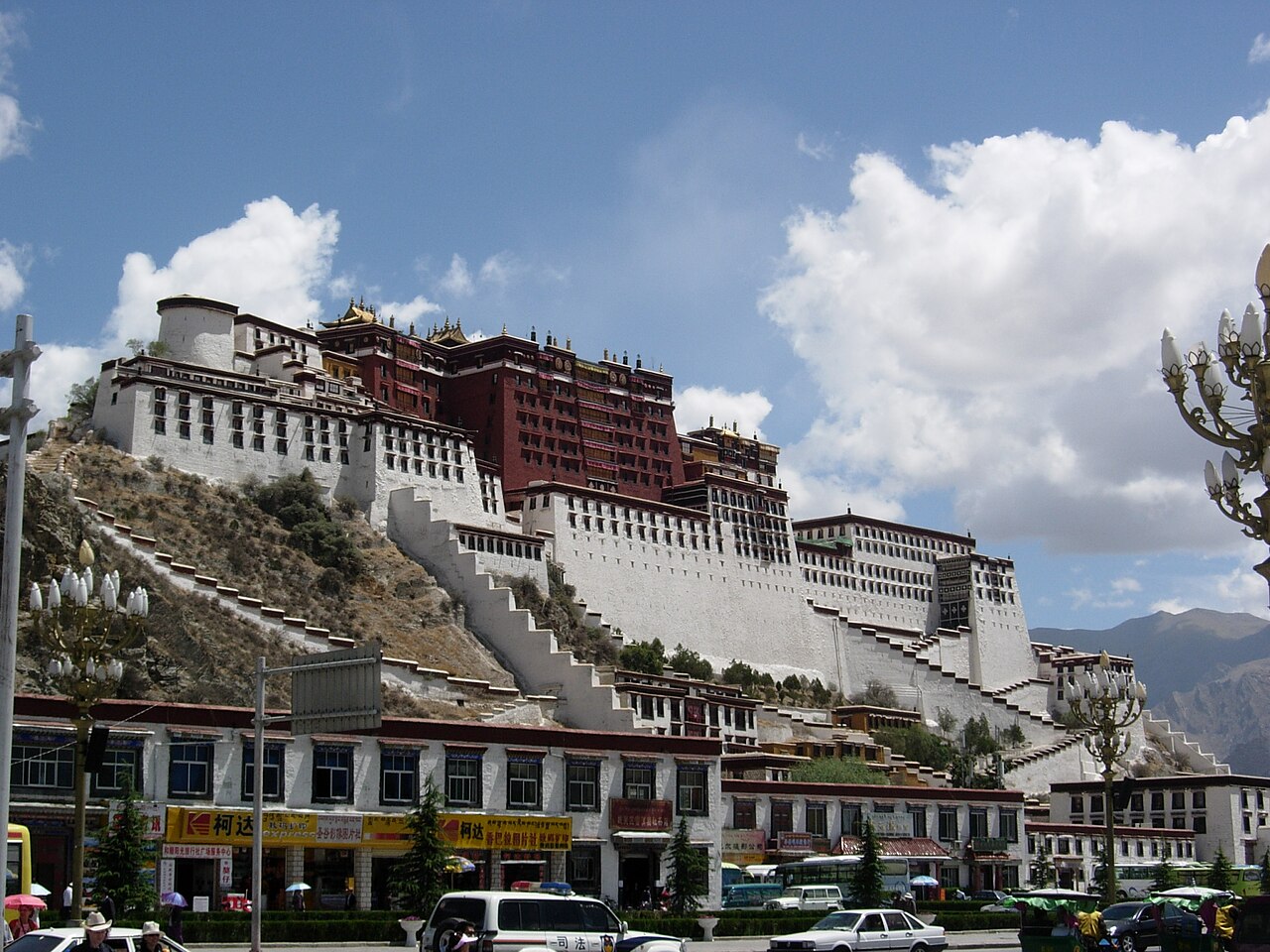
UNESCO includes Jokhang in the Historic Ensemble of the Potala Palace. Its description highlights the complex’s seventh-century foundation and architecture drawing on several regional influences. For a first visit, use that as an introduction to looking carefully, not as a requirement to memorise every date or image.
Ask the guide to explain how the entrance, courtyard and principal halls relate, which spaces are currently available to visitors and how their functions differ. Notice transitions in light and sound, the scale of doors and the way the building is used. Let the explanation guide your attention rather than searching for a photograph you saw online.
Follow the site’s instructions on hats, dress, photography and movement. Do not touch religious objects or painted surfaces to examine them more closely. Where images are prohibited, keep the camera away and take notes afterwards. The quality of a visit does not depend on obtaining an interior image.
Walk Barkhor as a shared route
Follow your guide and current local instructions, including the customary clockwise flow. Keep clear of people engaged in worship and give extra space to anyone prostrating or moving slowly. Do not stop a group across a narrow passage to compose a photograph. Move to a suitable edge before listening to a longer explanation.
Ask before taking close portraits. A long lens does not remove the need to respect a person’s wishes, and children or worshippers are not props for a travel photograph. Keep shopping conversations separate from religious activity. Avoid photographing police, military personnel, security arrangements or restricted infrastructure.
Some social posts describe the circuit mainly through attractive walls and outfits. Another architecture-focused diary paid attention to everyday buildings and materials. You can combine visual interest with a more considered visit by asking how a street is used, rather than treating every doorway as a background. Never enter a private courtyard because it appears in a post.
Leave a useful pause between walking and shopping
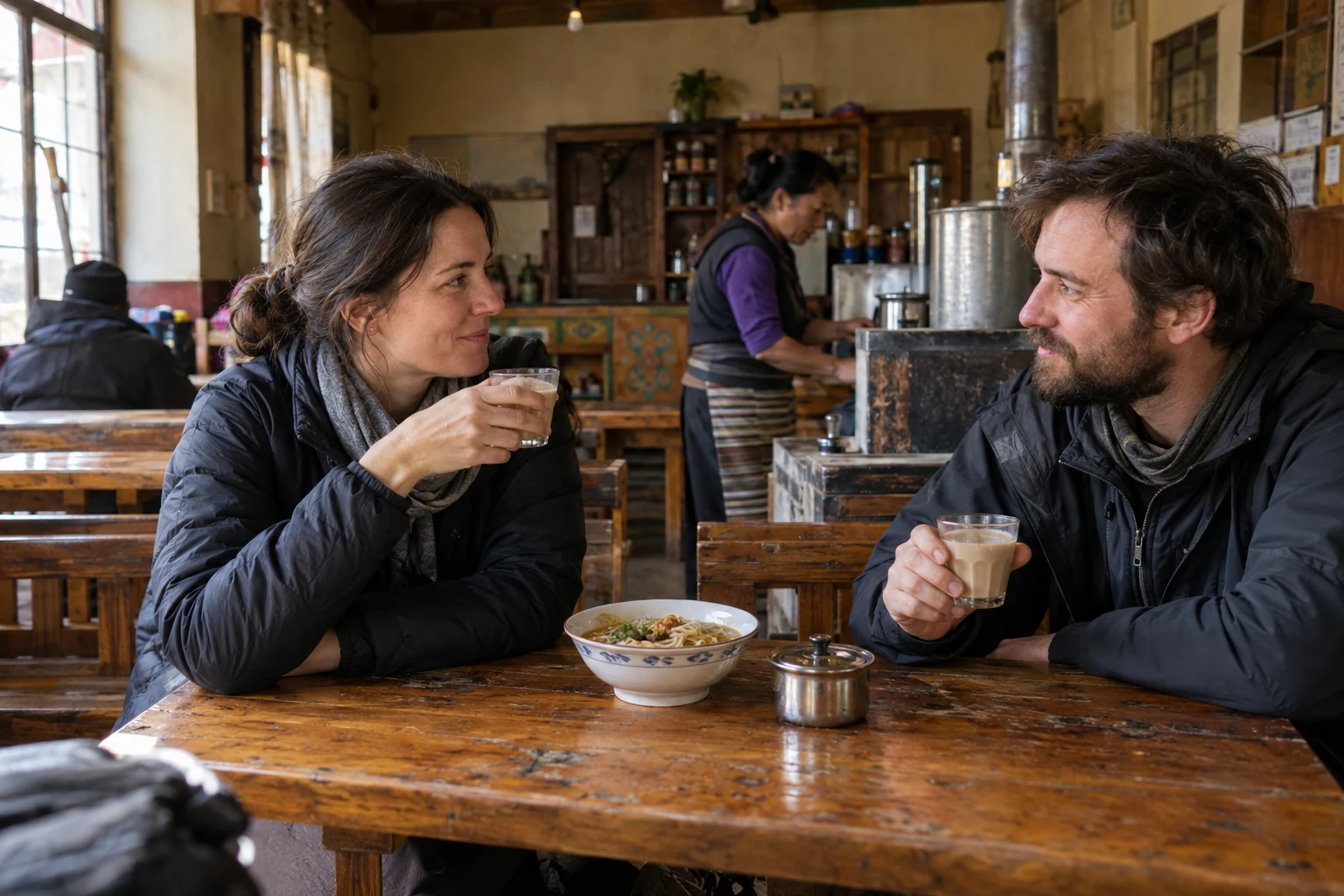
A tea break can be a conversation about the visit, not another compulsory venue. Ask whether drinks are ordered at the table or counter, whether food is separate and how portions are sold. Choose a quieter setting if smoke, noise or crowding affects a companion. You do not need to finish a large pot or try every unfamiliar dish.
For a small meal, clarify soup or dry noodles, meat, broth and chilli. A vegetarian-looking dish or beef on the menu does not establish dietary suitability. If you have a serious allergy or religious requirement, use the arrangements agreed with the organiser rather than relying on a visual guess.
Keep a little flexibility after the break. If the temple visit has been tiring, shorten the commercial-lane section. If you are enjoying an explanation and feeling well, drop a secondary shopping stop rather than rush to preserve a list. Any change should stay within your authorised programme and agreed guide arrangements.
Shop with a purpose and a carrying plan
Decide whether you want an inexpensive keepsake, a contemporary craft item or a work that needs provenance. These are different purchases. Ask about material, maker, dimensions and packaging; do not accept a religious or antique claim solely because an object looks old. For anything described as antique or culturally protected, confirm lawful purchase and export through appropriate official channels before proceeding.
For an everyday souvenir, establish the full price and what it includes before paying. Check the actual item, not only a display sample, and keep the receipt. Large or fragile purchases can be inconvenient during a multi-day road journey. Ask whether suitable packing or later collection is available, without assuming hotel storage or delivery is included.
Choose a shorter or longer version of the visit
| Your interest or condition | Keep | Reduce or arrange separately |
|---|---|---|
| Religious history | Jokhang explanation and a respectful circuit | Repeated photo stops at similar walls |
| Everyday architecture | An authorised lane walk and questions about building use | Unverified private courtyards and rooftop searches |
| Limited energy | The priority visit, a seated break and easy pickup | Additional lanes or distant shops |
| Shopping | One or two relevant businesses and time to inspect | A large loop of unrelated stalls |
| Photography | Public, permitted views with people’s consent | Any shot that blocks worship or ignores restrictions |
Avoid combining everything because it fits on a map
Potala, Jokhang and Barkhor appear together in many single-day plans. Some visitors can complete such a programme, but that does not make it suitable for an arrival day or someone with altitude symptoms. Potala adds a climb; Jokhang adds another significant cultural visit; the circuit and meals add further walking and standing.
Ask to see a version with the major visits on separate days. If your time is limited, identify the one you value most. Tell the guide promptly about headache, nausea or unusual exhaustion. A slower walk is not always enough; symptoms may require rest, medical help or a larger itinerary change.
Final details to agree
Confirm the Jokhang reservation, admission charges, guiding language, document requirements, meeting points, walk length and meal scope. Ask whether any optional workshop, rooftop venue or shopping detour needs a separate booking and permission. The plan should explain how you return to the hotel if the outing is shortened. That clarity gives you more room to notice the place itself.
Continue planning this journey
Use our Tibet route-planning guide to place this topic within the whole trip. The railway, Samye and Namtso planning guide explains how arrival and separate outings fit together.
Compare 4-day Lhasa city tour. These are existing route descriptions, not confirmation of a departure, present access or every optional stop discussed above. Ask for the exact permitted programme, accommodation, guiding language and itemised services for your dates.
Sources and research notes
Reviewed 29 October 2026. Practical perspectives were compared with original Xiaohongshu note bodies and initially visible comments: 519元,冬游西藏第一天; 🥢Solo trip 拉萨饮食篇; 在拉萨也建筑巡礼了. These individual experiences mainly concern domestic travellers; they are not evidence of foreign-visitor eligibility, present prices or medical safety.
China regional risks: Tibet; CDC Yellow Book: High-Altitude Travel and Altitude Illness; Lhasa government museum and monument reservation guidance, 28 September 2026; UNESCO: Historic Ensemble of the Potala Palace, Lhasa. Confirm operating notices and passport arrangements for the actual travel date.