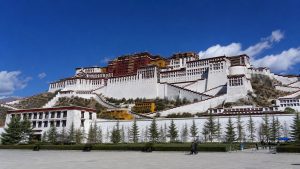
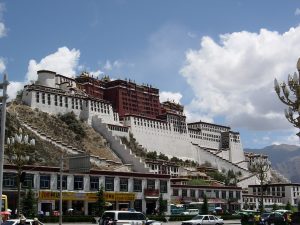
The best Lhasa room is the one that supports the days you have planned. A palace-view photograph, a familiar brand or a low nightly rate tells you little about the walk from the vehicle, room heating, noise at bedtime or breakfast before an early departure. Start with the itinerary and compare the actual room, entrance and services.
Match the hotel to the approved trip
Foreign visitors need the hotel and travel arrangements to fit their organised Tibet programme. Ask the organiser to confirm that the actual property can accommodate and register your party with the documents required. A booking platform accepting payment is not the same as checking those arrangements. Do not book one room on the assumption that you can choose every later night after arriving.
A local Xiaohongshu contributor emphasised actual route distance over a hotel’s name. It is a useful perspective, especially where “near Potala” describes a broad area. Measure the journey to your relevant pickup or visit entrance, including lane access and any crossings. Avoid treating a straight-line radius or the city-centre map label as a walking guarantee.
| Broad location choice | Why it may appeal | What to verify at the exact property |
|---|---|---|
| Old-city and Barkhor vicinity | Shorter access to some old-city visits and meals | Vehicle stopping point, pedestrian lanes, room noise and stairs |
| Potala vicinity | Convenient for some exterior views and city connections | Actual entrance distance and which side of the complex you use |
| A quieter area farther away | Potentially calmer room setting and easier vehicle access | Transfer time, meal options and extra transport cost |
| A hotel chosen within a group programme | A practical shared pickup and service arrangement | Final property, room type and any permitted upgrade |
These are planning areas, not a ranking of neighbourhoods. A quiet courtyard room and a street-facing room at the same address may provide very different rest. Ask about the allocated category rather than relying only on photographs of the building’s best room.
Put the entrance on the map
Ask where the transfer vehicle stops, whether it reaches the door and how far you carry luggage. Check for steps between the entrance, reception, lift and room. An elevator does not remove every stair, and a hotel on a level map can still have internal steps. If a companion has limited mobility, describe the limitation plainly and request the practical route to the room.
Keep the Chinese address, hotel name and the organiser’s meeting instructions available offline. For a city outing, agree the return point rather than assuming the driver can collect you from any lane. A short trip made confusing by access restrictions can be more tiring than a clearly arranged transfer from a slightly farther hotel.
Choose heating and sleep over a headline view
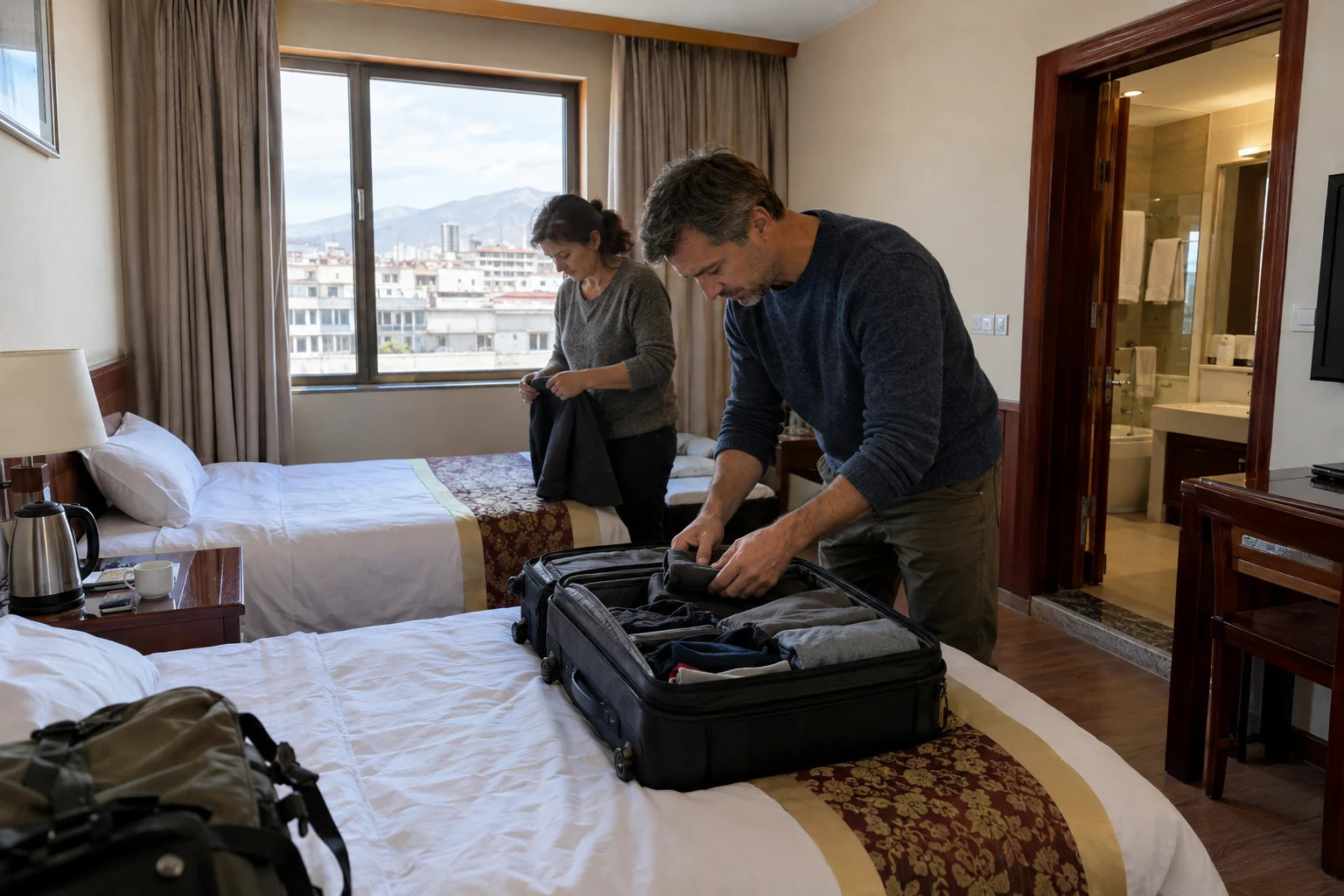
Ask what heats the room, whether it operates throughout your stay and whether temperature can be controlled. Check hot-water availability, bathroom heating if relevant, window seals and whether bedding suits the season. A traveller describing warm winter sunshine may still have needed substantial room heat after dark. Personal comfort reports from another year do not guarantee the facilities at your dates.
For noise, ask about room position, nearby construction, street traffic, lifts, communal areas and kitchen extraction. Request a quiet room within the booked category where possible, but distinguish a preference from a confirmed allocation. Light sleepers may value curtains and a calm corridor more than a room advertised for its view.
Read an oxygen-room claim carefully
“Oxygen available” may refer to equipment in a shared area, a device on request, a specific room system or an additional paid service. Ask which applies to the room you will occupy, the operating hours, any charge and who explains its use. If the equipment is unavailable, ask what support and medical assistance process exists. Do not accept an unqualified promise that the hotel prevents altitude illness.
Social hotel reviews sometimes present an oxygen concentration or a watch reading as proof of safety. Those individual observations are not a medical assessment of you, your room or the itinerary. Lhasa itself is high altitude. Hotel oxygen does not justify continuing to a higher sleeping place with symptoms, and worsening symptoms require appropriate medical help and descent rather than simply a room upgrade.
Discuss personal health concerns with a clinician before travelling. Ask the organiser about access to medical care and emergency arrangements as part of the trip, separately from the hotel amenities list. A property that provides a comfortable night does not automatically provide clinical monitoring.
Arrival and departure are part of the room decision
| Timing issue | Confirm before arrival | Why it matters |
|---|---|---|
| Arrival before normal check-in | Confirmed early room or a comfortable waiting arrangement | Luggage storage alone does not provide rest |
| Late arrival | Staff reception, registration and a suitable meal | A room booking does not guarantee restaurant hours |
| Early excursion | Breakfast timing or an agreed packed alternative | Avoid leaving without appropriate food |
| Late departure | Checkout, luggage storage and any paid extension | Keep the transfer and room access aligned |
| Returning after a regional trip | Whether stored luggage is accepted and secured | Avoid assuming several days of storage is included |
Add these details to the proposal before choosing between rates. An extra room night, a day-use arrangement or a paid late checkout may be worthwhile, but request confirmation rather than assuming it follows from the arrival time.
Compare the final price and room category
Check the currency, nightly or package basis, breakfast, occupancy, extra beds and single-room supplement. A low shared-room price is not directly comparable with a private room for one. Ask whether an upgrade changes the bed arrangement, floor, heating or view, and which benefits are actually included. A brand name does not settle those details.
For a group route, ask when the final property is confirmed and what standard applies if it changes. The alternative should address practical needs such as a lift, suitable bathroom and breakfast, not only an advertised star label. Request a photograph or written description of the relevant category where available, without treating a sample as a guaranteed room assignment.
Keep cancellations linked to documents and transport
Before paying for non-refundable rooms, understand when the Tibet documents and incoming transport will be confirmed. Ask what happens if permission is unavailable, a flight changes or a medical issue prevents continuing. Hotel cancellation rules, transport rules and the organiser’s service fees may be separate. Have their responsibilities stated in the booking terms.
For longer journeys, check the regional hotels individually. A favourable Lhasa room should not set expectations for an Everest-area village or remote western overnight. Ask for each settlement, its sleeping elevation and the actual facilities. A long trip with a different hotel every night makes small practical details increasingly important.
A short brief that helps the organiser choose
Send dates, party size, room sharing, bed preference, budget range, mobility needs, dietary requirements and the main city activities. State your priorities in order: for example quiet sleep, easy luggage access and breakfast before a tour, followed by a view if available. This helps identify a suitable real room instead of selecting accommodation only from a hero photograph.
Confirm the final property and service scope with the trip before travelling. This guide recommends a selection process, not a named hotel, current room price or a medical benefit. A well-matched room gives the rest of the Lhasa visit a more comfortable foundation.
Continue planning this journey
Use our Tibet route-planning guide to place this topic within the whole trip. The railway, Samye and Namtso planning guide explains how arrival and separate outings fit together.
Compare 4-day Lhasa city tour, 8-day Lhasa, Nyingchi and lakes tour. These are existing route descriptions, not confirmation of a departure, present access or every optional stop discussed above. Ask for the exact permitted programme, accommodation, guiding language and itemised services for your dates.
Sources and research notes
Reviewed 29 October 2026. Practical perspectives were compared with original Xiaohongshu note bodies and initially visible comments: 如果你想冬天去西藏; 与妈妈旅游之西藏拉萨美食; 拉萨住宿别看店名,看距离. These individual experiences mainly concern domestic travellers; they are not evidence of foreign-visitor eligibility, present prices or medical safety.
China regional risks: Tibet; CDC Yellow Book: High-Altitude Travel and Altitude Illness. Confirm operating notices and passport arrangements for the actual travel date.