Tibet cultural tours give Lhasa time to become more than a list of famous buildings. Arrival, sleep, walking, reservations and shared religious spaces shape the visit. Start with a manageable Lhasa stay, choose the cultural questions that interest you and only then decide whether a wider excursion belongs in the same holiday.
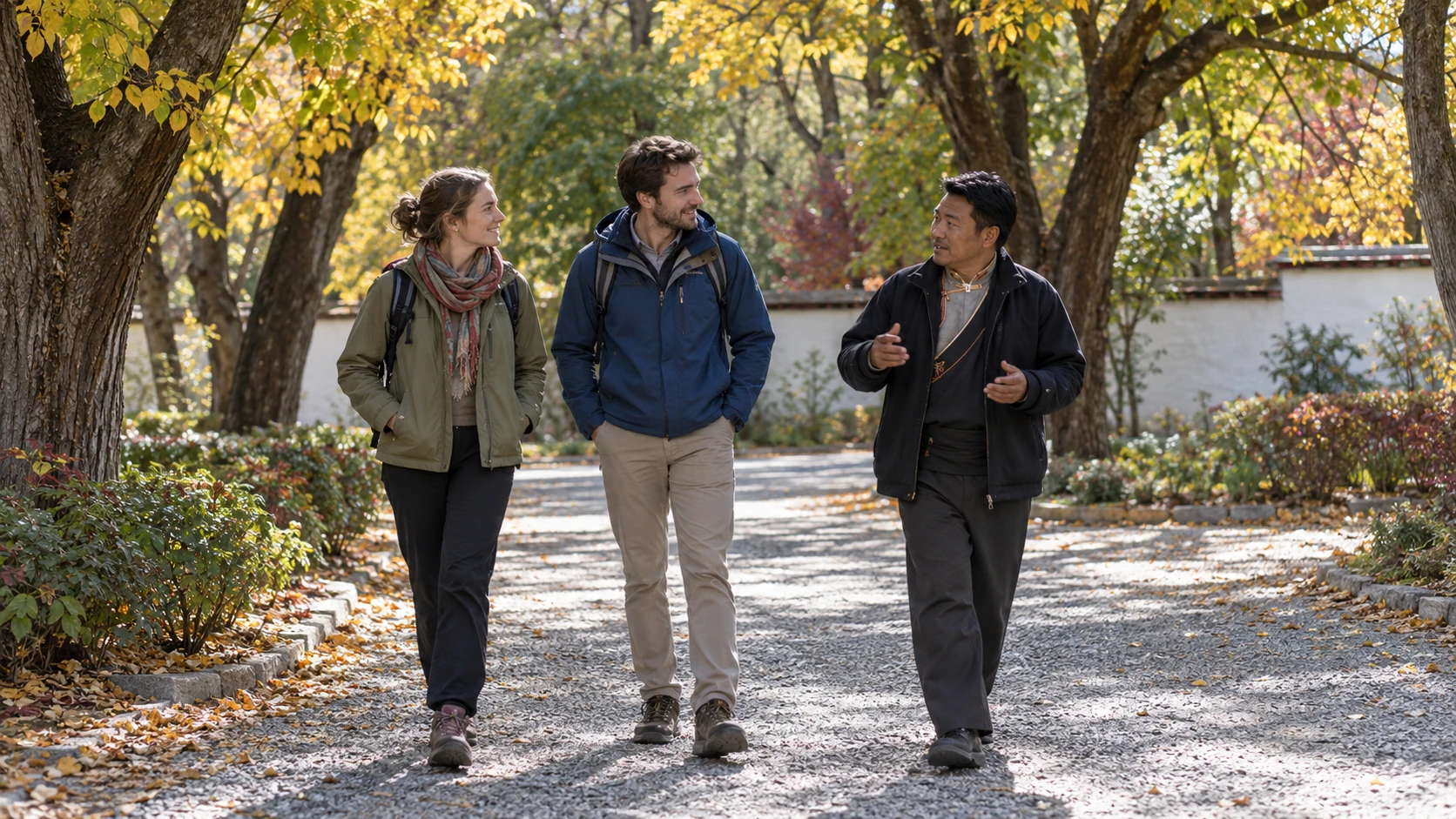
Cover illustration: AI-generated fictional travellers in a garden setting. It does not show Norbulingka, an identified Tibetan attraction, actual guests or an included guiding service.
Choose the cultural visit by the day you want
| Interest | A useful Lhasa choice | What changes the plan |
|---|---|---|
| Old-city life and worship | A selected Barkhor walk, with Jokhang as a separate admission decision | Crowds, religious practice, the spaces visitors may enter and the party’s walking pace. |
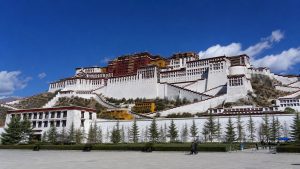
| Palace history | One main booked palace visit with time around it | Actual reservation arrangements and stairs; keep the rest of the day modest. |
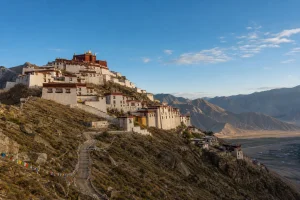
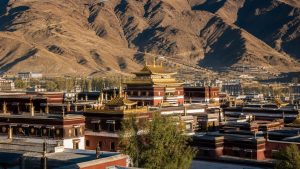
| Monastery architecture | A selected Drepung hillside visit | Approach, steps, uneven passages and the chosen stopping point. |
| Gardens and palace courtyards | A Norbulingka visit at a slower pace | Which buildings and paths are open and how far the whole party wishes to walk. |
| Regional history | A focused Tibet Museum visit | Document-based reservation, the calendar and one or two gallery questions. |
| Food and social life | A planned meal or tea stop near the day’s visits | Actual ingredients, seating, quiet and a useful return to the hotel. |
Protect the first part of the stay
A first cultural itinerary needs room to arrive and rest. Four calendar days may contain fewer than four sightseeing days once the flight, train and hotel transfer are counted. Avoid using the arrival period to recover a full sightseeing schedule on paper. Choose a hotel whose entrance, room conditions and surrounding streets support the visit you actually plan.
Altitude planning belongs to the individual traveller and the sequence of sleeping places. A short walk, a comfortable hotel or a train arrival does not establish that the next outing will suit everyone. Use the linked arrival and altitude guides when shaping the route, and obtain personal medical advice when relevant to your circumstances. The day’s programme should be adjustable when someone is unwell.
Arrange Tibet access before the transport purchase
International visitors need the appropriate Tibet permit and organised travel arrangements. The current regional travel advice explains that access can change. Have the specialist organiser confirm the actual passport, route and dates before fixing non-changeable transport. A China visa arrangement or a published route outline does not itself establish permission for Tibet travel.
The approved itinerary also affects the hotel, transfers and excursions. A name on a map is not enough to add a remote monastery or onward road journey. Keep the proposed cultural stay and any longer extension together in the request so the correct arrangement can be checked from the start. Do not treat Lhasa city visiting and a multi-day plateau crossing as interchangeable products.
Build a slower city sequence
| Part of the stay | Planning purpose | A useful limit |
|---|---|---|
| Arrival period | Hotel transfer, settling in and a simple meal | No compulsory major visit used to justify an early arrival. |
| First fuller city period | One cultural focus with nearby breaks | Shorten the walk if the party needs more rest. |
| Later reserved visit | The main palace, monastery or museum booking | Leave the surrounding day light enough for the booked visit to work. |
| Final period or extension | A flexible city choice or an approved onward journey | Protect the departure transfer and review the next sleeping place. |
Learn the individual visits before combining them
- Lhasa in Four Days: A Slower First-Visit Plan
- Lhasa Food and Sweet Tea: Ordering a Better Meal
- Where to Stay in Lhasa: Rooms, Streets and Rest
- Barkhor and Jokhang: Walks, Worship and Photography
- Getting to Lhasa: Flight, Train and the Hotel Transfer
- Tibet Altitude Planning: Arrival, Sleep and When to Stop
- Drepung Monastery: A Hillside Visit in Lhasa
- Norbulingka in Lhasa: Gardens, Palaces and a Slower Day
- Tibet Museum in Lhasa: Galleries and a Practical Visit
Observe a living place, rather than staging it
Barkhor and the monasteries are shared religious settings. Keep entrances and the paths used by worshippers clear, follow site instructions and ask before taking portraits or photographing inside. A person at prayer is not part of a staged travel experience. A smaller selection of places often gives more room to notice architecture, objects and daily practice than a rushed circuit through several large sites.
For journeys centred on longer road travel, compare Tibet overland tours. For a Tibetan cultural experience based in Yunnan or western Sichuan, use that destination’s own routes and access arrangements; Tibetan culture outside the Tibet Autonomous Region should not be presented as the same geographic itinerary.
Build the route around your party
Tell us the passport nationality, dates, arrival method, usable Lhasa nights and the cultural visits that matter most. Share the dates, hotel locations, usable sightseeing days, party size and any walking or dietary needs through Plan My Trip. The dated written proposal identifies the services and arrangements included.