Compare private Yunnan tours through Kunming, Dali, Lijiang and Shangri-La. Choose a classic circuit, a slower family trip or a special-interest journey.
Explore Yunnan with your own travel party, from the old towns of Dali and Lijiang to the highland landscapes around Shangri-La. Compare the routes below by length, travel pace and the places you want to visit. Choose a classic journey, a slower family trip or a holiday built around golf, hiking or Muslim-friendly travel.
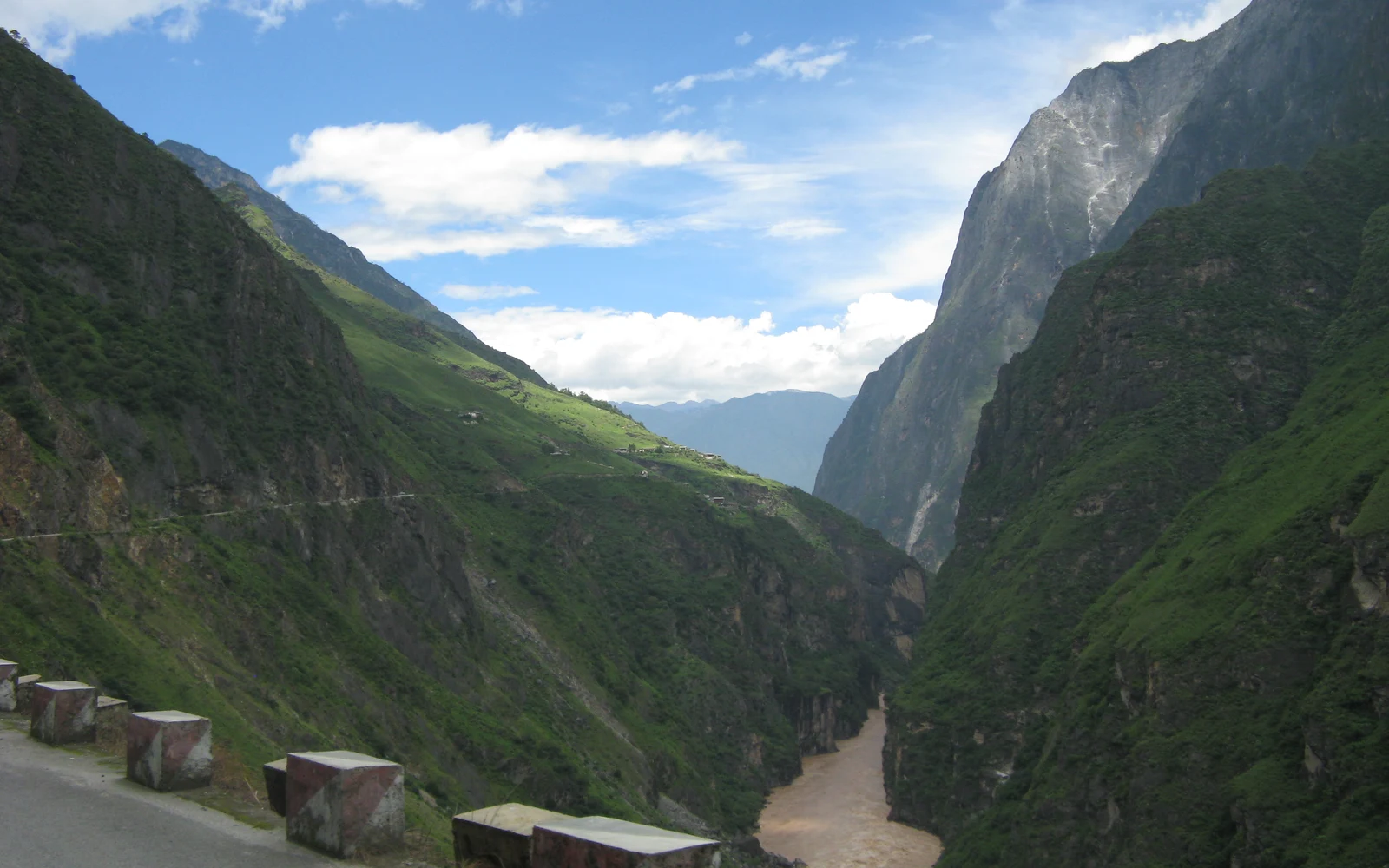
Tiger Leaping Gorge valley panorama Photo creditPhotograph by jm whalen; available on Wikimedia Commons; under CC BY 2.0. Cropped and resized for web use.
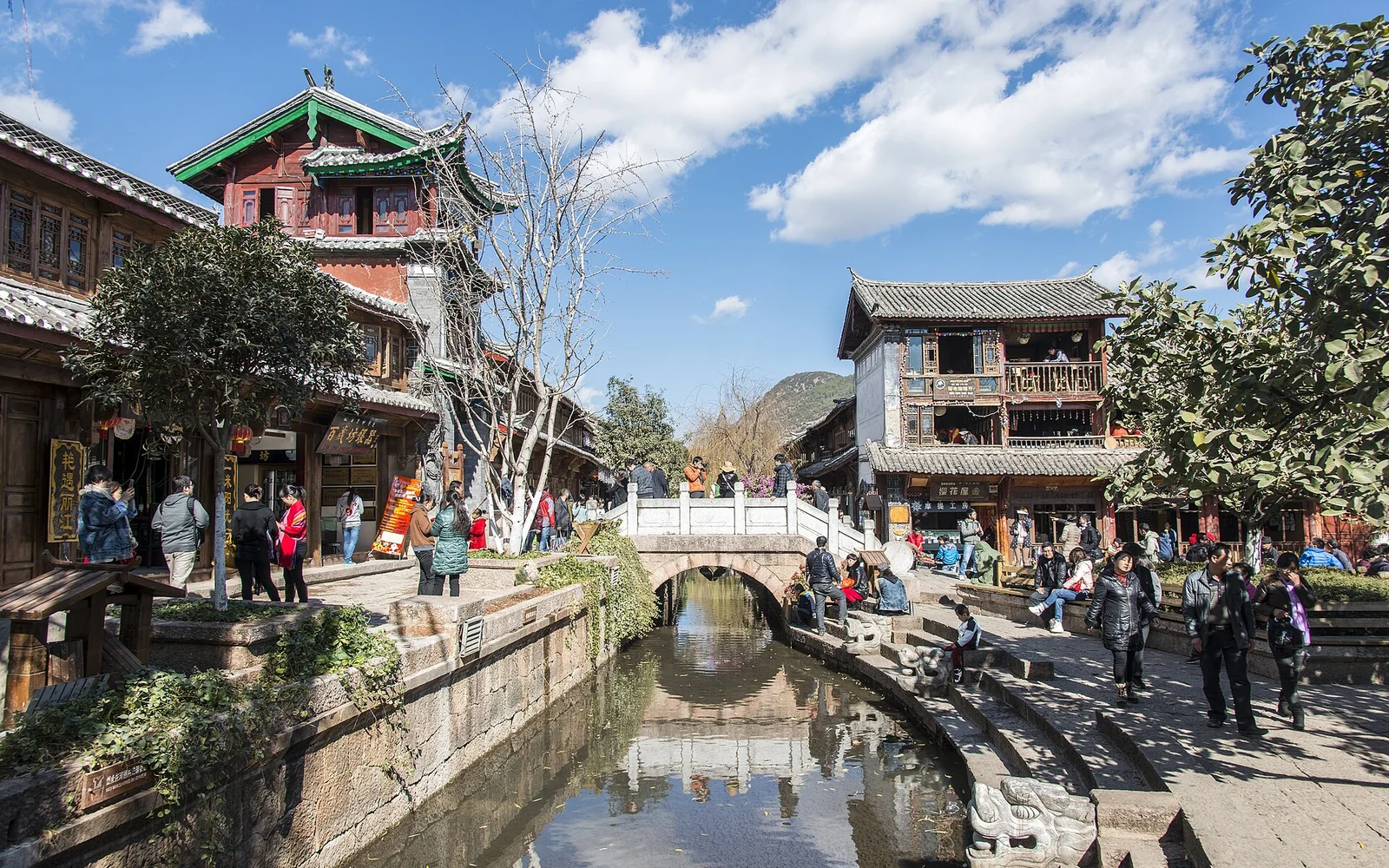
Canals and old streets in Lijiang Photo creditPhotograph by chensiyuan; available on Wikimedia Commons; under CC BY-SA 4.0. Cropped and resized for web use.
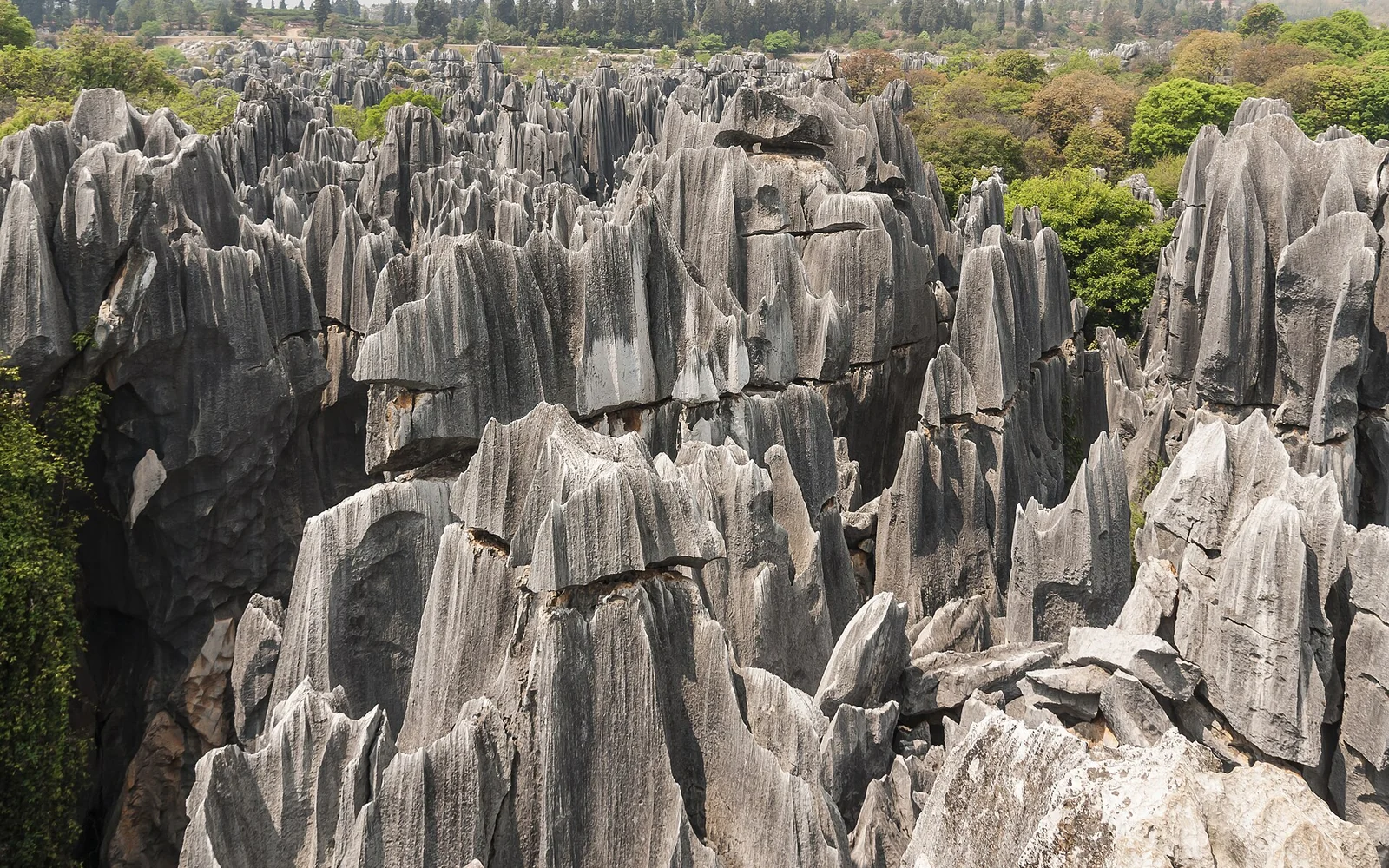
Limestone landscape of the Stone Forest Photo creditPhotograph by CEphoto, Uwe Aranas; available on Wikimedia Commons; under CC BY-SA 3.0. Cropped and resized for web use.
We can plan the Yunnan part of your holiday around your arrival and departure cities. Share your flight schedule before we arrange the first and last days. International airfare is separate from the local tour quote; your proposal will show the transfers, hotels, guiding and other services included in Yunnan.
Compare Yunnan routes by available days, transfer time and elevation.
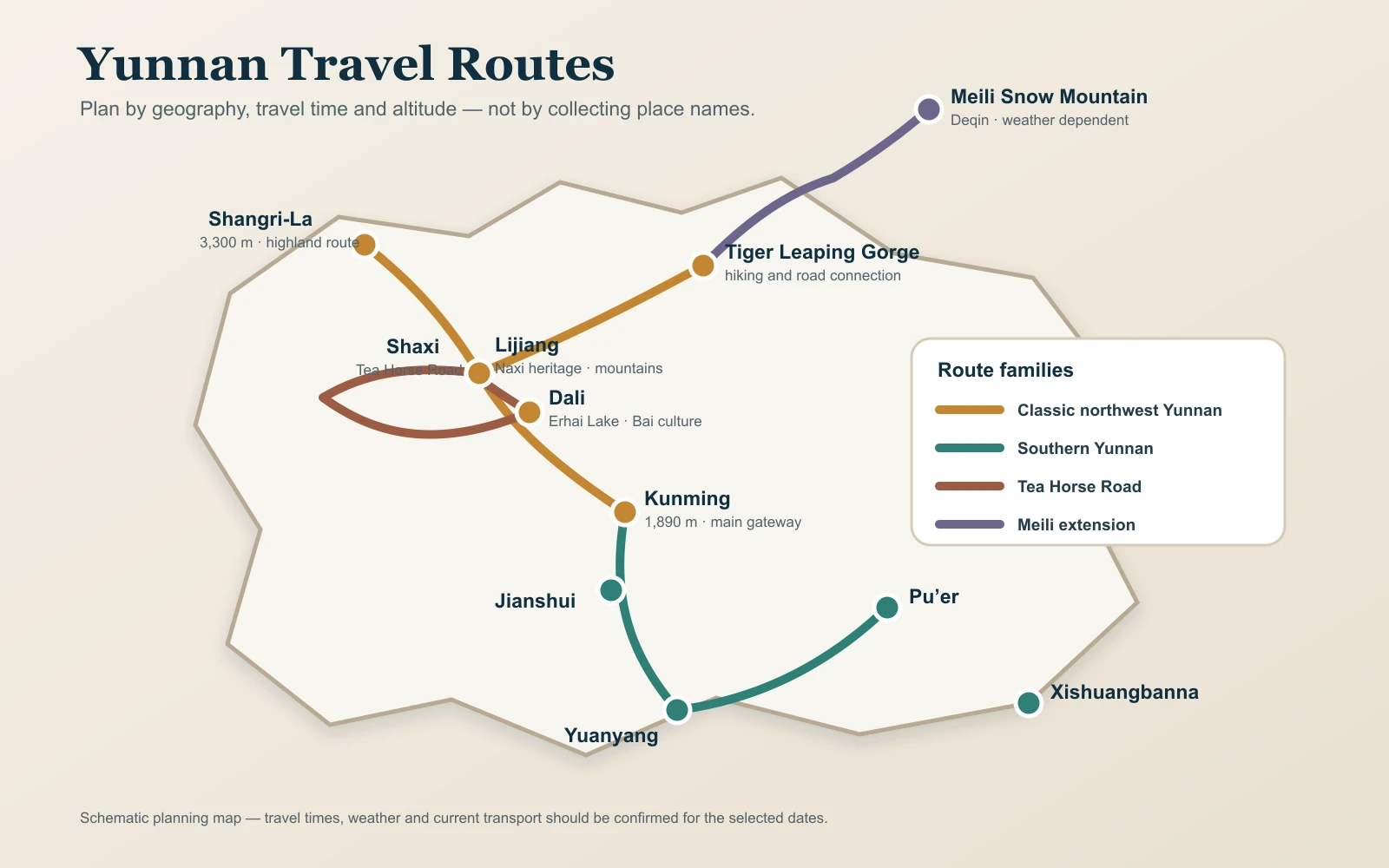
Start with the landscapes and travel pace you want. Northwest Yunnan links old towns, highland scenery and several cultural regions. Southern Yunnan has a warmer climate and stronger links to tea, tropical ecology and rice-terrace routes. These areas should not be combined casually: the transfer between route families takes time.
Route
Practical trip pattern
Good fit
Main trade-off
Kunming–Dali–Lijiang
Three connected bases
First visits, families and moderate pacing
Leaves out Shangri-La’s higher elevation
Kunming–Dali–Lijiang–Shangri-La
Classic northwest circuit
Travelers with enough time for a gradual rise
More hotel changes and altitude to consider
Dali–Shaxi–Lijiang
Slower Tea Horse Road route
Villages, food, crafts and heritage
More road time and fewer headline sights
Jianshui–Yuanyang–Pu’er–Xishuangbanna
Southern Yunnan journey
Rice terraces, tea, food and warmer landscapes
Different climate and longer regional sequence
Shangri-La–Deqin–Meili area
Highland extension
Active travelers and mountain scenery
Weather, road conditions and altitude shape the plan
Yunnan plus Beijing, Xi’an or Chengdu
Regional route inside a first China trip
Travelers with twelve days or more
Domestic connection days must be protected
The order matters. If you enter through Lijiang rather than Kunming, or continue to another province afterward, the best sequence may change. Your international flight times can also decide whether an arrival day is useful for sightseeing or should remain a recovery day.
How Many Days Should You Allow?
Five or six days works for two nearby bases or a focused regional trip. Seven to nine days is a useful range for Kunming, Dali and Lijiang, or for a slower Dali–Shaxi–Lijiang route. Eight to ten days can add Shangri-La when the arrival, departure and elevation sequence work. Twelve days or more allows a distinct extension rather than another rushed overnight stop.
Do not judge a Yunnan tour package only by the number of attractions. Count how often you change hotels, how many mornings begin with a transfer and whether important landscapes depend on weather. For more examples, compare our 5-, 7-, 8-, 10-, 12- and 14-day Yunnan itineraries.
Private Tour, Group Tour or Independent Travel?
A private tour gives your party more control over dates, hotel areas, walking pace and the mix of guided and free time. A Yunnan small group tour uses a shared timetable; ask which departures are confirmed and how the price compares for your party. Independent travel works well on the main rail corridor for confident travelers; private road support remains useful for places such as Shaxi, Yuanyang, mountain trailheads and rural areas.
A hybrid trip is also possible. You might take the train independently between major cities and arrange a guide or vehicle for remote sections. In that case, the handover points, tickets, luggage and emergency contact should be clear before the trip begins.
What Should a Yunnan Tour Package Include?
The word “package” is less important than the written service list. Confirm the entry and exit transfer, guide days, vehicle days, hotel room category, breakfast, train or flight class, named tickets and specified meals. Ask whether cable cars, performances, cultural activities and optional visits are included or separate.
For hotels, location can matter as much as category. Old-town lanes may be atmospheric but difficult for vehicles and large luggage. In Shangri-La and other higher areas, room comfort, heating and easy access may be more useful than a decorative address. If your group includes children, older relatives or travelers with mobility limits, discuss stairs, stone paving and walking distance before accommodation is selected.
How a Kunming-Based Planning Team Can Help
Station transfers, luggage and the order of overnight stops can make a large difference to a Yunnan holiday. A team based in Kunming can compare the whole hotel-to-hotel sequence and prepare a route around the actual arrival city, group size, luggage, hotel style and walking ability.
Local planning does not remove uncertainty. Weather, rail schedules, attraction access and accommodation availability still need to be checked for the selected dates. The useful service is a clear proposal that identifies what is included, what remains optional and which parts are date-sensitive.
Frequently Asked Questions
What is a good first Yunnan tour?
Kunming, Dali and Lijiang make a practical first route. Add Shangri-La when the trip has enough time for a gradual rise and at least two nights in the highlands.
Is eight days enough for Yunnan?
Eight days can cover three bases comfortably or four bases at a fuller pace, depending on flight times. Travelers who prefer village stays and free evenings should use the same time for fewer places.
Can I take trains between the main cities?
Rail works on the main Kunming–Dali–Lijiang–Shangri-La corridor. Station transfers and current schedules still need to be built into the daily plan. Many rural and mountain areas require road transport.
Are Yunnan tours suitable for families and older travelers?
They can be when hotel changes, walking, vehicle access and altitude are planned carefully. Share room, mobility, food and rest requirements before the route is confirmed.
Can a sample tour be changed?
Yes, before services are reserved. A large change to the route, dates or number of bases may require a newly designed itinerary rather than a small edit.
How do I get a current price?
Send the dates, group size, room requirements, arrival city, departure city, hotel level and must-see places. The reply should state the price basis, included services, exclusions and payment terms.
Plan a Yunnan Tour Around Your Pace
Tell us your dates, arrival and departure cities, group size, preferred hotel style, walking ability and the two or three experiences that matter most. Use Plan My Trip to request a route that shows real transfer days, sensible altitude progression and a clear included-service list.












.jpg)

