Quick answer: The best road trips in China for foreign travellers are not necessarily the longest or most famous roads. A first supported self-drive is often easiest in Yunnan; western Sichuan rewards mountain experience; the Silk Road suits long-distance drivers; Xinjiang requires careful seasonal and access planning; and Tibet should be treated as an organised overland journey rather than an independent rental-car holiday. Last fact-checked: 31 August 2026. Road openings, border controls, scenic-area reservations and weather can change. Every final itinerary needs a date-specific roadbook and local verification.
How we selected these China road trip routes
A scenic highway is not automatically a workable holiday. We compared each route on:
- Value of having a car rather than using high-speed rail.
- Road time versus time at the destination.
- Permit and foreign-passport complexity.
- Seasonal closure risk.
- Altitude and fatigue.
- Fuel, charging, toilet and medical access.
- Availability of hotels able to register foreign guests.
- Ease of building a shorter Plan B.
- Suitability for a locally rented car or need for an organised vehicle.
Before choosing a route, confirm your driving eligibility in our complete guide to driving in China as a foreigner.
China road trips at a glance
| Route | Good trip length | Best for | Main challenge | Recommended format |
|---|---|---|---|---|
| Kunming–Dali–Shaxi–Lijiang | 8–12 days | First supported self-drive | City parking and seasonal mountain sections | Local rental + support |
| South Yunnan | 9–12 days | Rice terraces, tea, coffee, rainforest | Long rural stages and hotel verification | Supported self-drive/private driver |
| Western Sichuan loop | 8–14 days | Alpine scenery and road experience | Altitude, weather and long wheel time | Experienced driver/support |
| Xi’an–Urumqi Silk Road | 14–18 days | Epic overland journey | Distance, fatigue and one-way logistics | Supported self-drive |
| Qinghai–Gansu loop | 9–12 days | Desert, salt lakes and corridor history | Elevation and long distances | Private driver/support |
| Xinjiang Duku and Pamir | 10–16 days | Highways, grasslands and border landscapes | Seasonal roads and controlled areas | Organised/private vehicle |
| Inner Mongolia grassland–desert | 5–8 days | Open landscapes and family pace | Sparse services and seasonal weather | Private driver or confirmed rental |
| G318 toward Tibet | 10–16+ days | High-altitude overland expedition | Tibet arrangements, altitude and closures | Organised overland tour |
1. Yunnan: Kunming, Dali, Shaxi and Lijiang
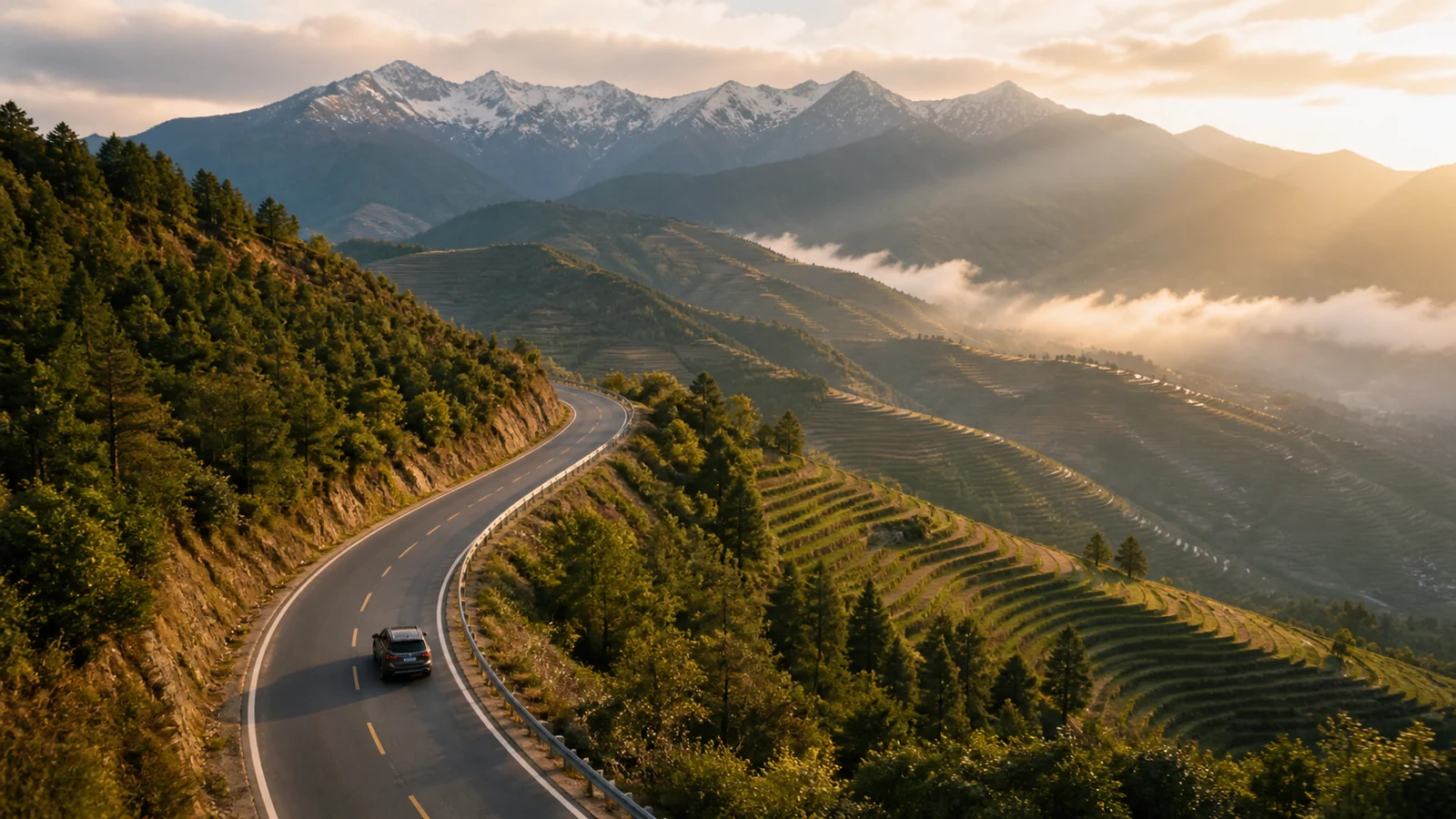
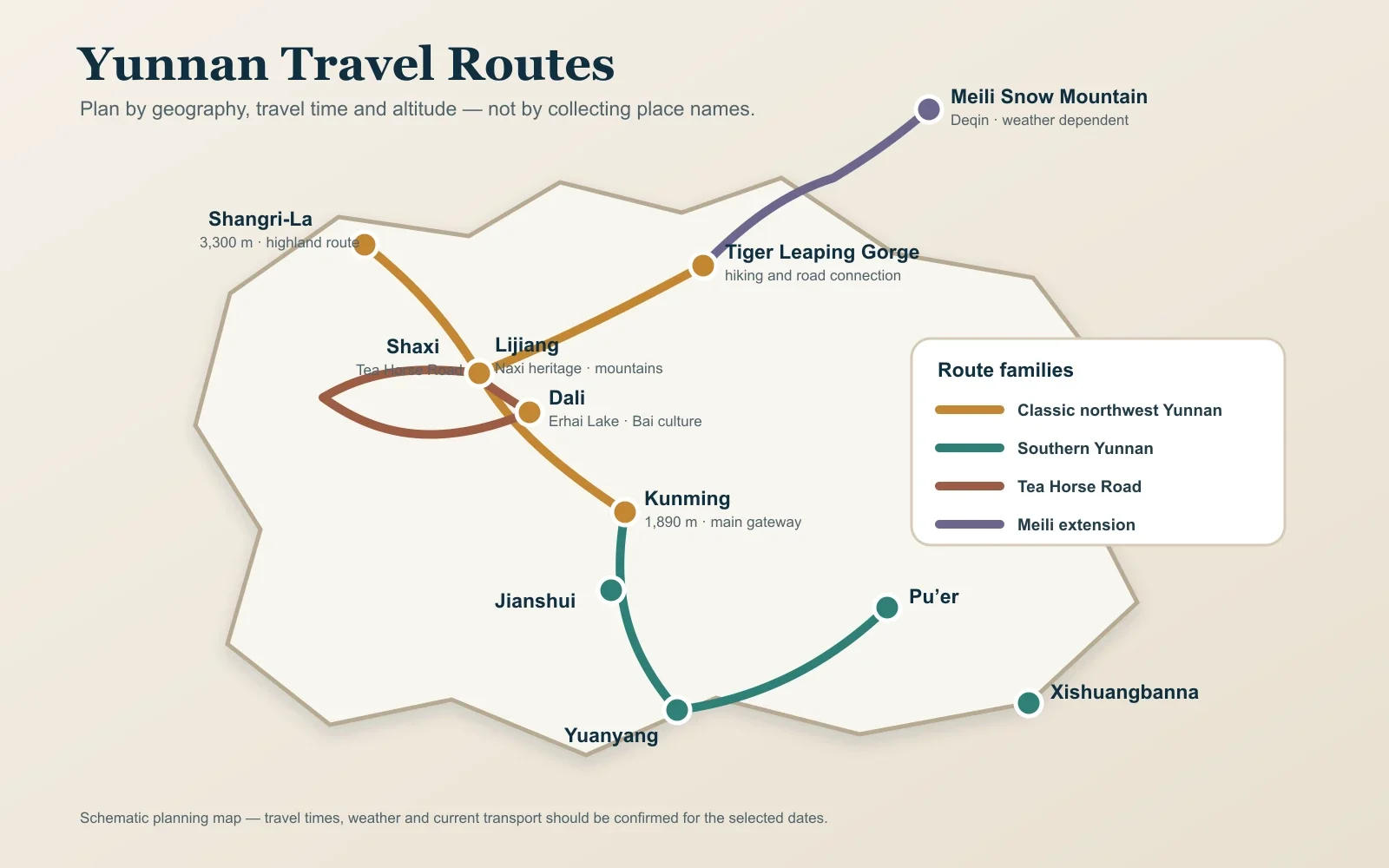
Best for: a first China self-drive tour with local support. Suggested time: 8–12 days. Typical season: spring and autumn are broadly comfortable; route-specific checks still matter year-round. Yunnan combines internationally familiar bases with rural road sections where a car provides real freedom. A balanced first route can move from Kunming to Dali, continue through Bai villages and Shaxi, then finish in Lijiang. Add Shangri-La only when the driver and passengers have enough time to increase altitude gradually. Why it works:
- Several gateway airports and rail alternatives make Plan B easier.
- Dali–Shaxi–Lijiang rewards private road transport.
- The route can be shortened without losing the entire trip.
- Local support is available for permits, branch handover and Chinese-language calls.
What to plan:
- Keep the first driving day light after permit and vehicle collection.
- Confirm old-town parking and hotel access rather than following the map to a pedestrian gate.
- Add real stopping time to mountain-road estimates.
- Do not combine Dali, Lijiang, Shangri-La and Meili Snow Mountain in an unrealistically short week.
See the custom Yunnan self-driving tour with local support. Travellers who decide not to drive can use the 8-day classic Yunnan private route as a pacing benchmark.
2. South Yunnan: Kunming to Xishuangbanna
Best for: terraces, old towns, tea, coffee and tropical landscapes. Suggested time: 9–12 days. Core route: Kunming–Jianshui–Yuanyang–Pu’er–Jingmai Mountain–Jinghong. This road trip earns its car on the sections between Jianshui, Yuanyang and tea/coffee regions. It should progress north to south rather than returning to Kunming after every stop. Key roadbook questions:
- Which terrace viewpoints are open, and where may the car park?
- How much fog or rain flexibility is built into Yuanyang?
- Which tea or coffee host is confirmed rather than merely listed online?
- Can the selected mountain hotel register the passport?
- Where is the last dependable fuel or charging stop?
Compare the 10-day South Yunnan route, which uses road transport only where it improves the journey.
3. Western Sichuan road trip
Best for: experienced mountain drivers and travellers who want the road itself to be a major attraction. Suggested time: 8–14 days. Main risks: altitude, construction, rain/snow, long wheel time and rapid weather change. Western Sichuan can include Kangding, Xinduqiao, Danba, Mount Siguniang, Litang, Daocheng or a connection toward Lugu Lake. These names should not all be forced into a short loop. Plan elevation as carefully as distance. A 250-kilometre day at altitude with passes, roadworks and photography stops is not equivalent to 250 kilometres of expressway. State the highest pass and sleeping altitude every day, and include a lower route or rest day. Use the 8-day Western Sichuan and Lugu Lake overland tour to understand the sequence. If a foreign visitor is not comfortable with high-altitude incident handling, a professional driver is the safer interpretation of “road trip.”
4. Xi’an to Urumqi: the Silk Road self-drive
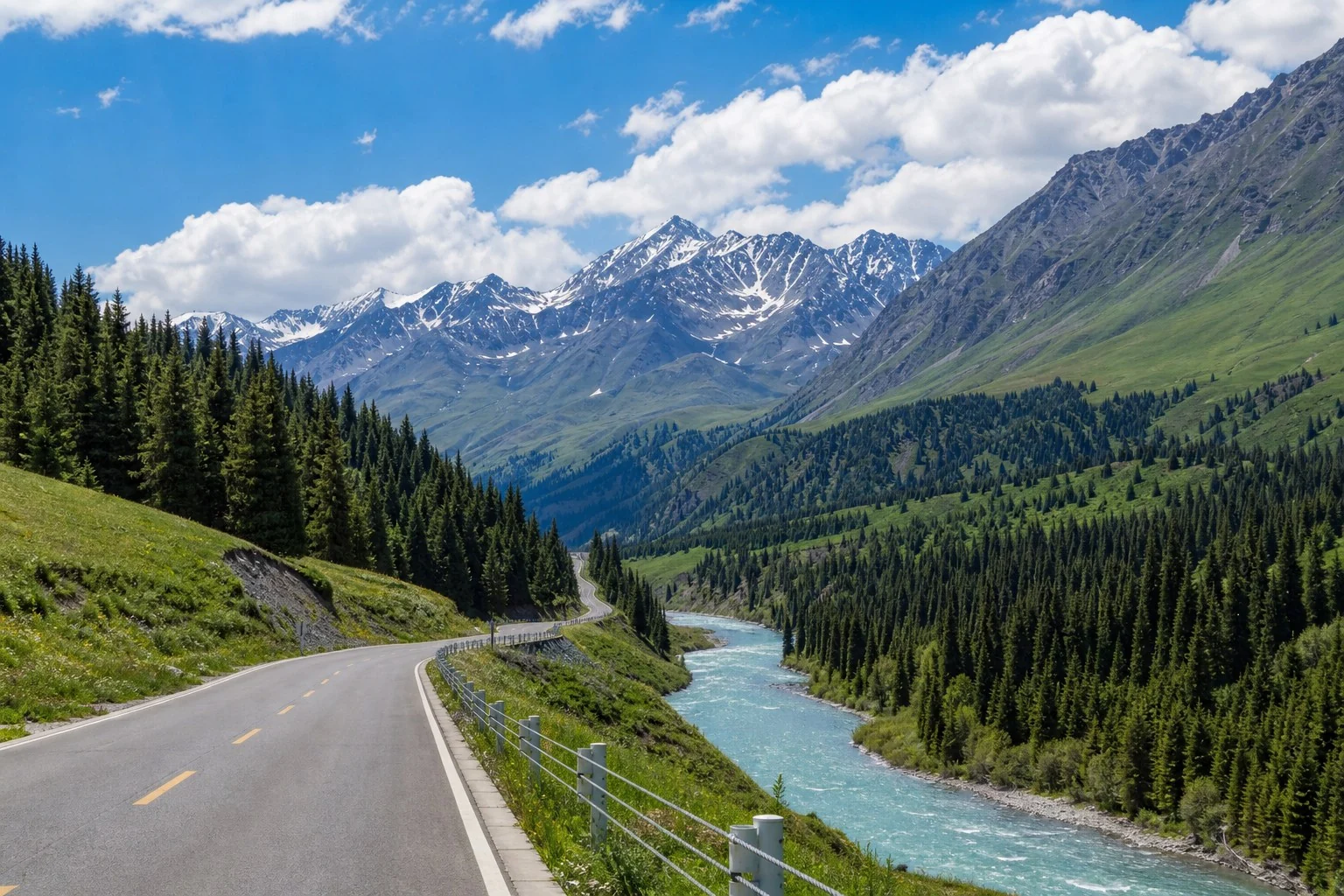
Best for: long-distance overland enthusiasts. Suggested time: 14–18 days. Core route: Xi’an–Baoji–Lanzhou–Zhangye–Jiayuguan–Dunhuang–Hami–Turpan–Urumqi. This is an epic China road trip itinerary, not a series of day tours. The reward is watching landscape and history change across the Hexi Corridor. The challenge is cumulative fatigue. Protect the trip by:
- Alternating longer driving days with full sightseeing days.
- Confirming one-way vehicle and support arrangements.
- Keeping a spare day for weather or mechanical delay.
- Scheduling fuel/rest stops before the sparse section starts.
- Avoiding late-night arrival after desert driving.
- Giving the driver real rest rather than using every stop as an attraction.
The 14-day Silk Road self-drive tour from Xi’an to Urumqi is the commercial route most directly connected to this guide.

5. Qinghai and Gansu road trip
Best for: salt-lake, desert and Silk Road landscapes with a driver or strong support. Suggested time: 9–12 days. Core route: Lanzhou–Xining–Delingha–Golmud–Dunhuang–Jiayuguan–Zhangye. The distance looks simple on a large map but includes high elevation and sparse stages. Build the roadbook around actual fuel/service locations and the time needed to reach a medical facility. This route can work as a private-driver journey when passengers want the landscape without managing rental, altitude and remote breakdown procedures. Compare the 10-day Qinghai and Gansu Silk Road private tour.
6. Xinjiang: Duku Highway and Pamir routes
Best for: travellers who value big landscapes and accept date-specific planning. Suggested time: 10–16 days. Main risks: seasonal road windows, very long distances, controlled/border areas and changing local access. Do not write “Xinjiang is open” or “foreigners cannot go” as a single permanent answer. Separate normal open travel corridors, border management areas, temporary controls, hotel registration and roads that are seasonally closed. A serious Xinjiang roadbook states:
- Which Duku Highway section is planned and its latest opening status.
- The hotel confirmed for foreign-passport registration.
- Fuel and rest intervals across long basin stages.
- Which stops require local or border documentation.
- A route that does not depend on one fragile mountain-road window.
The 10-day Xinjiang Duku Highway and Pamir private tour provides an organised alternative when independent self-driving would add more risk than value.
7. Inner Mongolia grassland and desert
Best for: open landscapes, families and travellers who prefer moderate altitude. Suggested time: 5–8 days. Core route example: Hohhot–Baotou–Ordos–Hohhot. Inner Mongolia can be a gentler road-trip concept, but “empty road” does not mean unlimited stopping. Stay off protected grassland, stop only where safe, and confirm seasonal accommodation and activity operators. The 5-day Inner Mongolia grassland and desert tour is useful for estimating a sensible pace before converting the idea into a supported self-drive.
8. G318 Sichuan–Tibet overland journey
Best for: travellers seeking a major organised expedition. Suggested time: 10–16 days or more. Format: organised overland travel for foreign visitors. The G318 is frequently marketed as a self-drive dream. For foreign travellers, the China driving permit does not replace Tibet travel arrangements. High altitude, road closures, landslides, snow and medical access also make this a poor route for improvisation. Compare two organised formats:
- 10-day G318 Sichuan–Tibet small-group overland tour.
- 12-day Sichuan–Tibet Highway private tour to Lhasa.
The longer route can create more acclimatisation and contingency time, but the final choice must reflect current permissions and road conditions.
How to choose the right route
Score each candidate from 1 to 5 on these questions:
- How much does a car improve access compared with rail?
- Is the driver comfortable with the road and traffic type?
- Can the permit and rental branch be confirmed before payment?
- Can every overnight hotel register the passport?
- Is the route still worthwhile if one road closes?
- Are fuel/charging, toilets and medical help identified?
- Does the plan allow a true rest day?
- Are Tibet, border or scenic-area permissions handled separately?
If the route scores poorly on three or more operational questions, switch to a private driver or redesign the itinerary.
Best season for a China road trip
There is no single nationwide self-drive season. Match the calendar to the route:
- March to May: generally attractive for central and southern routes, but mountain passes and high-altitude areas can still have winter conditions. Holiday traffic around early May needs separate planning.
- June to August: long daylight and green landscapes, together with heat, rain, landslide exposure and peak domestic travel in many places. Duku Highway and other seasonal roads must be checked after the actual opening announcement, not a historical average date.
- September to October: often strong for Yunnan, western Sichuan, Inner Mongolia and Silk Road landscapes. National Day traffic in early October can overwhelm an otherwise sensible route.
- November to February: suitable for selected southern Yunnan, Hainan, desert or winter products, but snow, ice, shorter daylight and EV range create additional roadbook requirements.
Every route page should show both the normal seasonal pattern and the date of the last live check. “Best month” is guidance, not proof that a pass, border road or scenic entrance will operate.
Foreign travellers, border areas and temporary restrictions
A driving permit does not replace immigration or border-management documents. China introduced an electronic border-area pass process in 2026, but eligibility, application channel and local implementation must be checked for the traveller and destination; see the National Immigration Administration’s electronic border pass FAQ. Temporary measures can also affect a specific destination. The National Immigration Administration has issued time-sensitive notices suspending electronic pass issuance for particular areas, which is why a route page must not present current access as a permanent fact. A responsible operator verifies the final county, road and travel date rather than saying that an entire province is simply “open” or “closed.”
Locally rented car versus bringing your own vehicle
These route ideas mainly assume a Chinese-plated rental or an organised vehicle. Driving a foreign-registered car or motorcycle across China requires a separate overland-entry plan that can include customs admission, inspection, temporary registration plates, Chinese compulsory insurance and an designated port/route. The Beijing government’s official road-trip guidance for foreign vehicles illustrates the additional vehicle documentation. Do not book an international ferry, border crossing or onward country based on a standard consumer-rental guide. Start with an operator who can document the vehicle import and exit process for the relevant border.
Family, senior and solo-driver route design
For children and older travellers, evaluate daily toilet access, meal timing, medical distance, hotel lifts, uneven surfaces and the ability to skip a pass without losing the trip. A “family-friendly” route should identify the correct child seat and short driving alternatives. For one-driver itineraries, cap consecutive long days and schedule a genuine non-driving day. Scenic stops do not count as driver rest if the same person is navigating, parking and handling every check-in. Two registered drivers improve resilience only when both hold accepted permits and are named in the rental and insurance documents.
What every daily roadbook should contain
- English and Chinese start/end names.
- Kilometres and realistic wheel time.
- Road type and toll method.
- Highest elevation and sleeping elevation.
- Weather/seasonal risk.
- Last reliable fuel or compatible charge.
- Toilets, hospital and repair point.
- Parking entrance and hotel confirmation.
- Restriction or permit note.
- Child/senior suitability.
- Shorter Plan B.
- Local support contact.
Do not depend on live mobile data for the only copy. Save each day offline.
Self-drive, private driver or train?
Choose self-drive when the road is central to the holiday and the driver wants the responsibility. Choose a private driver when the landscape matters but paperwork, fatigue or language would reduce enjoyment. Choose rail when the journey is mainly Beijing, Xi’an, Shanghai, Chengdu and other well-connected cities. Our China Self-Drive & Overland Tours collection includes both true self-drive and organised overland products. Read the operating description carefully so “self-drive” is not confused with “a tour that travels by road.”
Turn a route idea into a workable booking
After choosing the region, use driving in China as a foreigner to confirm whether self-drive is realistic for the travellers. Complete the China temporary driving permit and foreign visitor car-rental checks before paying a non-refundable vehicle deposit. Finally, save the China driving rules, Amap, toll and parking guide for the operational details that shape each day’s roadbook.
Frequently asked questions
What is the best road trip in China for a first-time foreign driver?
A supported Yunnan route is often the most manageable because it has strong gateways, established visitor infrastructure and road sections where a car adds clear value.
How many days do I need for a China road trip?
Allow at least 8–12 days for one region. Cross-country or Silk Road routes deserve 14 days or more. Reduce stops before reducing rest and contingency time.
Can I rent a car for a one-way China road trip?
It depends on the supplier, branch pair, vehicle and route. Obtain the fee and acceptance in writing; do not infer it from a map of branch locations.
Is a Yunnan road trip possible year-round?
Some Yunnan routes can operate in multiple seasons, but rain, mountain weather, high-altitude sections and attraction access change. Match the dates to the exact route.
Can foreigners do a Tibet self-drive tour?
Tibet travel arrangements are separate from the driving licence. Foreign visitors should use a compliant organised overland product for the relevant route.
Is Xinjiang safe for a road trip?
Safety cannot be reduced to one yes/no statement. Evaluate current road openings, border-area rules, long distances, weather, hotel registration and the final route with local support.