
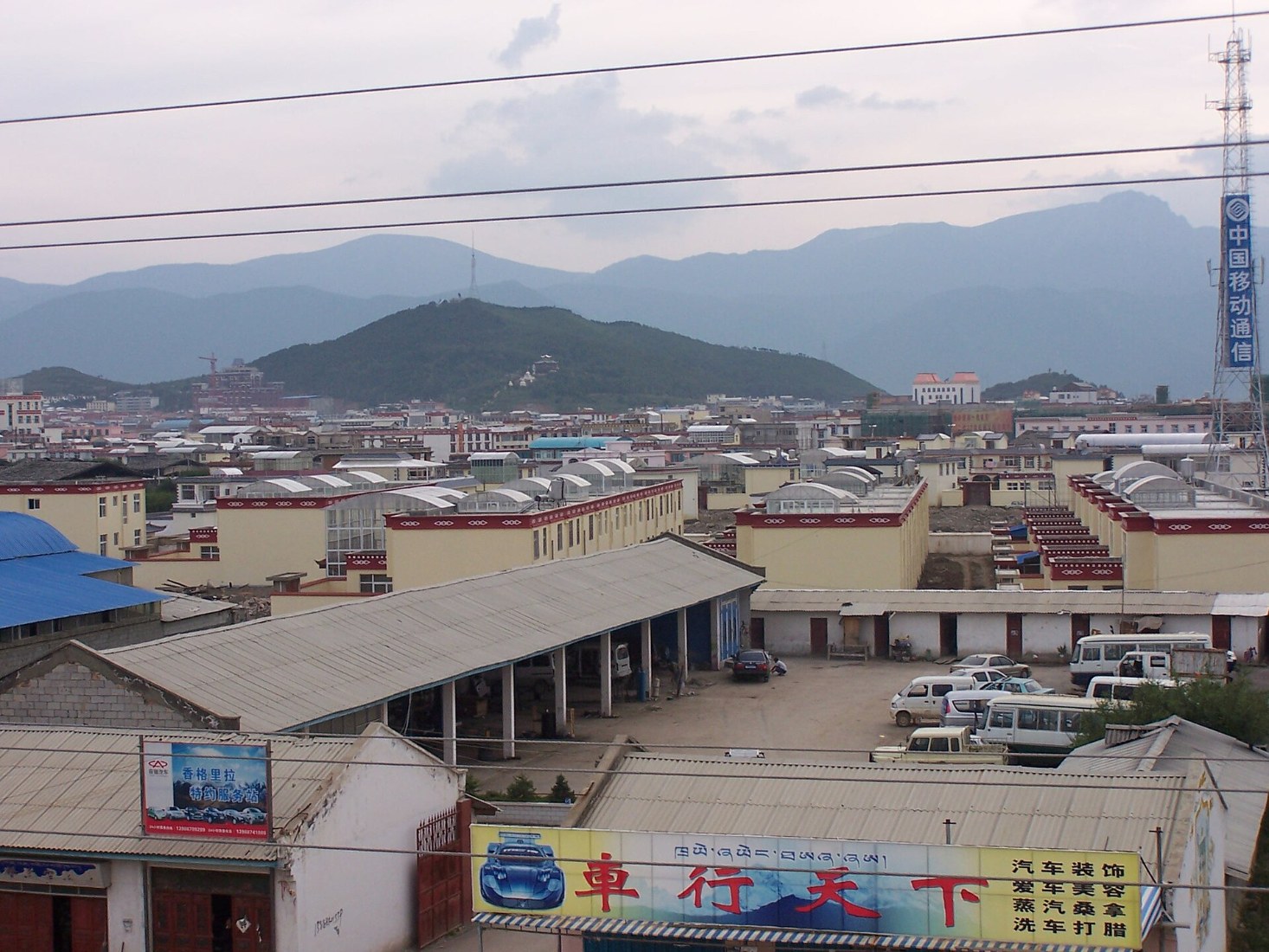
Yunnan travel is easiest to plan as a regional journey, not a collection of famous cities. A first visit usually needs seven to ten days for Kunming, Dali and Lijiang, with Shangri-La added when the route has enough time for altitude and a slower highland stay. Southern Yunnan and Meili Snow Mountain deserve separate extensions.
Yunnan Travel at a Glance
| Planning question | Practical starting point |
|---|---|
| How many days? | 7–10 days for a first northwest route; 12–14 days for a meaning |
| Best first route | Kunming → Dali → Lijiang; add Shangri-La with enough time |
| Best broad seasons | Spring and autumn for the northwest; winter for Yuanyang and warmer southern areas |
| Main transport | Trains between major cities, road transfers for villages, gorges and mountain areas |
| Altitude | Rises from Kunming and Dali toward Lijiang and Shangri-La |
| Best for | Landscape, food, living cultures, old towns, photogr |
Why Travel to Yunnan?
Yunnan brings together very different climates and cultural regions. A single journey can move from Kunming’s plateau city life to Bai villages around Dali, Naxi heritage near Lijiang and Tibetan-influenced highlands around Shangri-La. Southern Yunnan adds Hani rice terraces, Pu’er tea, tropical forests and Dai cultural traditions. The province rewards travellers who slow down. Old towns become more interesting in the morning and evening, regional food needs time beyond one signature dish, and mountain landscapes do not follow a fixed visibility schedule.
Best Places to Visit in Yunnan
Kunming
Kunming is the main gateway and a useful first base. Spend one or two nights for arrival, city food, Green Lake or a day trip such as the Stone Forest. It should not automatically receive three full sightseeing days when the trip is short. Read the Kunming travel guide.
Dali
Dali combines an old-town base with Erhai Lake, Xizhou, Bai cultural context and Cangshan. Two or three nights allows one regional day beyond the main pedestrian streets. Choose accommodation according to atmosphere, vehicle access and the next transfer. See the Dali guide.
Lijiang
Lijiang is more than its busy old town. Baisha, Shuhe, Naxi heritage, Black Dragon Pool and mountain options create different days. Three nights works well when a weather-sensitive mountain day is included. Read the Lijiang travel guide.
Shangri-La
Shangri-La sits above 3,000 metres and should not be treated as a quick photo stop. Allow two or three nights for acclimatisation, Songzanlin Monastery, the old town and highland landscapes. Current weather and individual health affect the plan. Use the Shangri-La guide.
Shaxi
Shaxi fits naturally on the road between Dali and Lijiang. Its value is the slower Tea Horse Road setting, not a long attraction list. Two nights gives more room for Shibaoshan and nearby villages. Read the Shaxi guide.
Yuanyang
Yuanyang is a living Hani agricultural landscape reached by winding road. Two nights provides alternatives for fog, sunrise and sunset. Pair it with Jianshui rather than forcing it into a northwest circuit.
Xishuangbanna
Xishuangbanna adds tropical ecology, Dai cultural context, regional markets and tea areas. Three or four full days is a useful starting point. Treat it as a southern segment reached by rail or air, not a day trip from Kunming.
How Many Days in Yunnan?
| Time | Route that fits | What to leave out |
|---|---|---|
| 5 days | Kunming–Dali or Lijiang–Shangri-La | A four-city circuit |
| 7 days | Kunming–Dali–Lijiang | Shangri-La unless the pace is intenti |
| 8 days | Classic four-city route or slower three-city route | Remote extensi |
| 10 days | Classic route plus Shaxi or deeper city stays | Trying to add both southern and northwest Yunnan |
| 12 days | Classic route plus Meili, Lugu Lake or a distinct cultural extension | Multiple distant extensi |
| 14 days | Northwest plus one southern chapter, or a deep regional journey | Claiming to cover the whole province |
Compare complete options in the Yunnan itinerary guide.
Best First-Time Yunnan Route
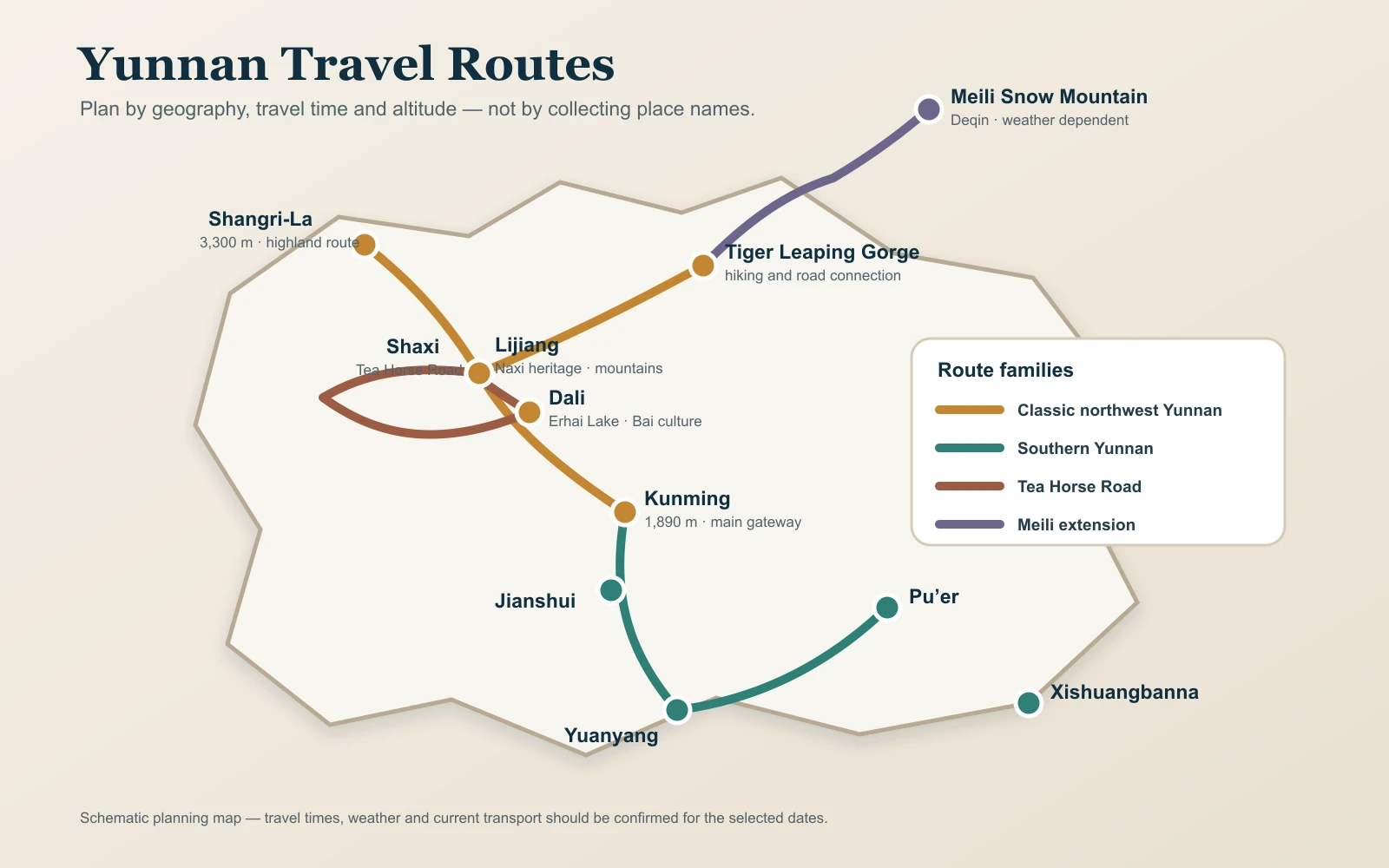
The cleanest structure is Kunming → Dali → Lijiang → Shangri-La. It follows the principal transport corridor and rises gradually in elevation. Travellers with seven days should usually stop in Lijiang. Eight to ten days provides more room for Shangri-La without removing all free time. An open-jaw plan can save backtracking: arrive through Kunming and depart from Lijiang or Shangri-La when the flight schedule supports it. International and domestic ticket decisions should follow the whole route.
Alternative Yunnan Routes
Tea Horse Road
Dali → Shaxi → Lijiang works for slower travellers interested in villages, regional food and heritage. Road transport replaces the direct train but makes the journey itself meaningful.
Southern Yunnan
Kunming → Jianshui → Yuanyang → Pu’er → Xishuangbanna can fill nine to thirteen days. A shorter version should choose Jianshui and Yuanyang or Pu’er and Xishuangbanna.
Highland Yunnan
Lijiang → Tiger Leaping Gorge → Shangri-La → Deqin/Meili is for travellers prepared for altitude, mountain roads and weather uncertainty. Hiking versions require separate luggage, fitness and safety planning.
Best Time to Visit Yunnan
Spring and autumn are broadly comfortable for Kunming, Dali, Lijiang and Shangri-La. Summer is green and brings wild mushroom season, but rain can affect roads, trails and mountain visibility. Winter suits Yuanyang’s water-filled terraces and warmer southern Yunnan, while northwest nights are cold. Month, elevation and region must be considered together. Read the complete month-by-month Yunnan weather guide.
Getting to Yunnan
Kunming Changshui International Airport is the principal gateway. Domestic flights also reach Dali, Lijiang, Shangri-La and Xishuangbanna. High-speed rail connects Kunming with major Chinese cities and the main Yunnan corridor. Choose the international ticket after the internal route. A slightly more expensive open-jaw ticket can save a domestic return journey and a hotel night.
Travelling Around Yunnan
Rail works well for Kunming, Dali, Lijiang, Shangri-La, Jianshui and Xishuangbanna. Private vehicles add value for Shaxi, Tiger Leaping Gorge, Yuanyang viewpoints, villages, tea areas and mountain roads. Count every sector from hotel door to hotel door. A two-hour train may need another two hours for checkout, transfers, security, waiting and arrival. Keep major sightseeing away from tight connection days. See the Yunnan train guide and route map.
Where to Stay
Old-town hotels provide atmosphere but may involve pedestrian lanes, stairs and distant vehicle drop-offs. Modern city hotels can offer better luggage access and early-departure convenience. Mix the two styles across the trip: character where evening walking matters, practicality before a flight or train. In highland areas, heating, hot water, quiet rooms and vehicle access can matter more than decoration. Compare bases in the Yunnan accommodation guide.
Yunnan Food and Cultural Experiences
Yunnan food changes by landscape and community. Useful experiences include rice noodles in Kunming, Bai flavours around Dali, Naxi food near Lijiang, Tibetan-influenced highland meals, Pu’er tea, Yunnan coffee and seasonal mushrooms. Dietary restrictions require ingredient-level communication; a broad label may not explain cooking oil, broth or shared equipment. Markets, family kitchens, tea gardens and craft visits should involve real local operators and enough time for context. Avoid turning communities into staged backdrops. Ask before close photography and follow local rules at religious sites.
Altitude and Health
Approximate elevations rise from Kunming and Dali to Lijiang and Shangri-La. Jade Dragon Snow Mountain, Meili areas and hiking routes go higher than the overnight bases. Individual response cannot be predicted. Travellers with relevant concerns should seek personalised medical advice before high-altitude travel. Plan a gradual route, stay hydrated, avoid a demanding first highland day and keep a lower-altitude alternative where appropriate.
Yunnan Tour Cost
For two international travellers, a comfortable private journey commonly begins around USD 180–350 per person per day as an initial planning range when hotels, private local touring and main domestic arrangements are combined. Four travellers can often lower the per-person figure by sharing guide and vehicle costs. Season, hotel level, remote roads, flights, room arrangement and specialist activities change the total. Read the full Yunnan tour cost guide.
Payments, Internet and Essential Apps
Mobile payment is widely useful, but keep an eligible card and some RMB cash as backups. Set up data access and official payment tools before relying on them. Keep hotel names, station names and important addresses available offline in Chinese.
What to Pack
- Layered clothing for large temperature and altitude changes
- Reliable rain protection in the wetter months
- Sun protection for plateau and mountain days
- Comfortable footwear for stone paving and uneven paths
- A small day bag and organised luggage for rail transfers
- Any personal medicines in original packaging
Private Tour, Group Tour or Independent Travel?
Independent travel is straightforward on the main rail corridor for confident travellers. A private tour becomes more valuable when the route includes remote roads, specialist cultural interpretation, family pacing or complex luggage and hotel access. Small groups reduce cost but fix the departure and daily timing. Compare current Yunnan private tours as starting points. If a materially different route is needed, request a new itinerary rather than changing the meaning of an existing published schedule.
Frequently Asked Questions
Is Yunnan suitable for a first trip to China?
Yes. It works particularly well for travellers prioritising landscape, culture and a slower regional journey, but practical apps and payments should be prepared.
Is Dali or Lijiang better?
Dali is stronger for Erhai, Bai villages and a more spread-out stay; Lijiang adds Naxi heritage and mountain access. They complement each other when time allows.
Is Shangri-La worth visiting?
Yes for highland scenery and Tibetan cultural context, provided the route has time for altitude and at least two nights.
Can I visit Yunnan without a tour?
Yes on the main rail corridor. Remote roads, trailheads and detailed cultural visits may benefit from local support.
How many hotel changes are reasonable?
For an eight-day trip, three or four bases is usually the maximum. Fewer changes create more usable time.
Is English widely spoken?
English availability varies. Translation tools and Chinese addresses help; a local guide is useful when detailed interpretation matters.
Do I need cash?
Mobile payment is widely used, but carry a cash and card backup rather than relying on one method.
How far ahead should I plan?
Plan earlier for Chinese holidays, summer travel, spring blossoms and limited boutique hotels. Confirm changing transport and entry information close to travel.
Plan a Yunnan Trip
Send your dates, arrival city, group size and preferred pace through Plan My Trip. A Kunming-based planner can turn these choices into a dated route with clear inclusions.
Continue Planning Your Yunnan Trip
Use these Yunnan resources to compare route length, season, transport, budget and private travel options before fixing the daily sequence.