For Yunnan souvenirs, start with something the recipient will actually use: tea or coffee that suits their brewing habits, a compact textile, or one carefully packed ceramic piece. Choose the product, then check its origin, materials, total price and practical journey home. Before buying food or plant-based gifts for an international trip, check your destination’s official import conditions.
You do not need a shopping detour in every city. Buy where the interest already fits your route: tea and coffee during a Pu’er stay, Bai tie-dye around Dali, or pottery when visiting Jianshui. A shop in a different city may still offer a suitable gift; a local address alone does not establish where an individual item was made.
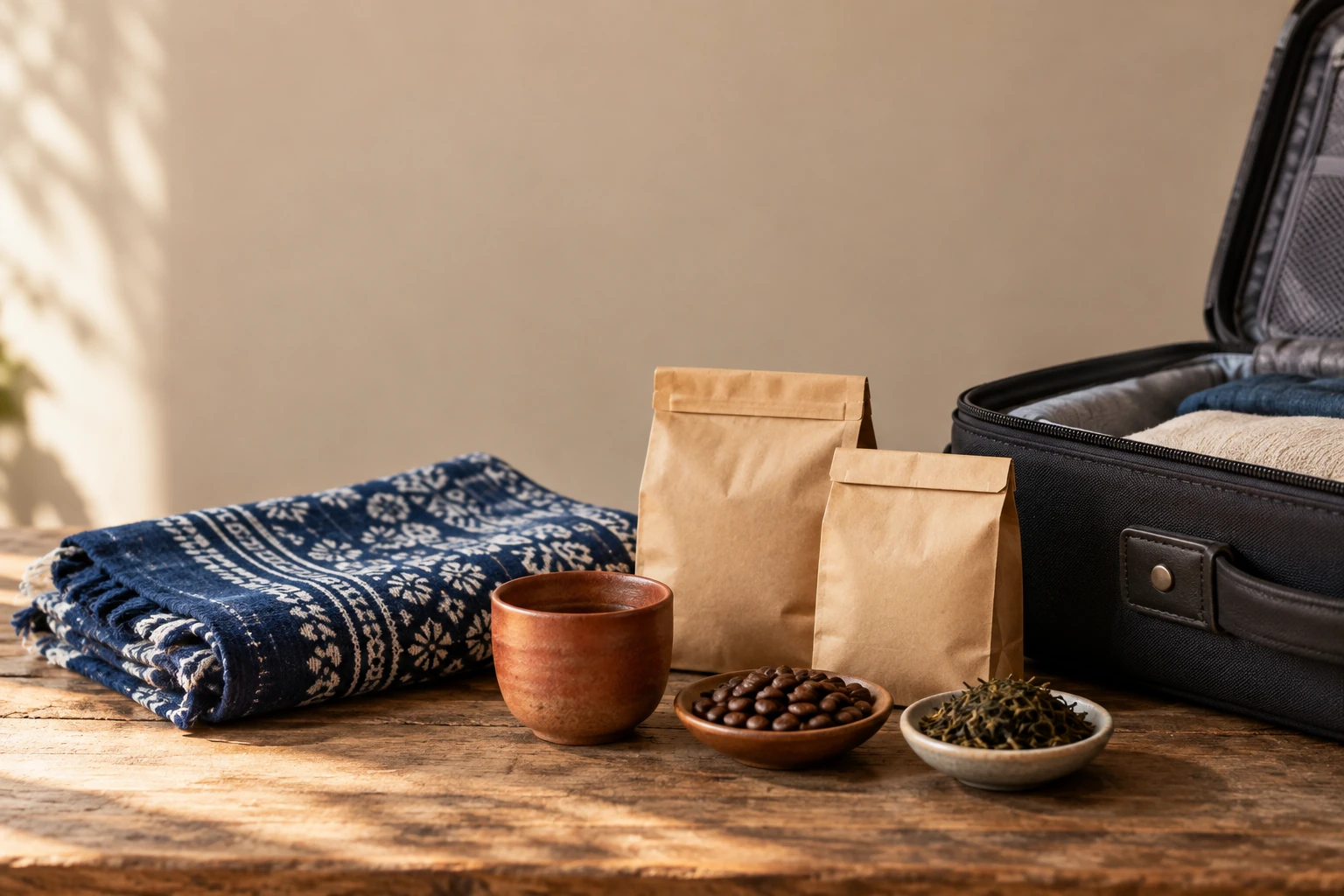
Updated 28 October 2026. The featured image is an original illustration of generic gift-packing ideas, not a photograph of actual purchases, certified heritage products or a supplier’s stock.
Four gift categories worth comparing
Use a small shortlist before browsing. The right choice depends on the person receiving it, your bag space and what you can take through the rest of the journey. A useful everyday object can carry more meaning than a large decorative box.
| Gift idea | Its Yunnan connection | The practical question |
|---|---|---|
| Tea | Pu’er and Ning’er provide a tea-culture context; compare the actual producer and product. | Which tea is it, how is it packaged, and will the recipient know how to brew it? |
| Coffee | Yunnan growing areas include Pu’er, Baoshan, Nujiang and Lincang. | Whole beans, grounds or drip bags—and what equipment does the recipient use? |
| Bai tie-dye textile | ZhouCheng in the Dali/Xizhou area is associated with the craft. | What fabric, production method and care instructions apply to this exact piece? |
| Small ceramic piece | Jianshui has a documented purple-pottery tradition. | Is it decorative or intended for use, and can you protect it in your actual luggage? |
The regional connections are starting points, not certificates for everything sold under a destination name. Ask the seller who made the item and which part of its description you can retain on the label or receipt.
Tea: choose the drink and the package together
The Yunnan agriculture department’s account of Ning’er tribute-tea craft describes loose and compressed forms within a specific local tradition. It offers cultural context; it does not mean every packet called Pu’er tea is made by that heritage process.
For a gift, ask the type, net weight, producer, stated origin and storage advice. Compare the tea you taste with the exact packet you will receive. A pleasant tasting helps establish preference, while the label and purchase record describe what you bought. If the recipient does not own brewing equipment, ask how that tea can be prepared with what they already use.
A compressed tea can be compact, but its gift box may occupy much more space than the tea itself. Ask to see the packed dimensions. For loose tea, choose a container that keeps the contents identifiable and contained. Retain the original information rather than transferring an international gift into an unlabelled pouch to save a little space.
Coffee: match the format to the recipient
A 2026 report by Yunnan’s commerce department identifies Pu’er, Baoshan, Nujiang and Lincang among the province’s coffee-producing areas and describes products including drip bags. That range gives you choices beyond buying a large bag of beans.
Check the stated growing origin, producer or roaster, roast date, package size and preparation instructions. “Sold in Yunnan” and “grown in Yunnan” are different descriptions. Ask what the package actually says if local origin is the point of the gift.
Whole beans suit someone with a grinder; ground coffee needs a grind appropriate to their brewer. Drip bags can suit a recipient who prefers a simple single-serving format. These are choices to discuss, not a claim that every shop stocks all three. If you taste coffee, identify the particular bag and roast you enjoyed before buying.
Prefer a size the recipient can realistically use, and include the brewing suggestion if available. A heavy gift set is less useful when most of its weight comes from packaging. Keep food ingredients and any added flavourings visible for the recipient and for the destination checks.
Tie-dye: look at the object, not only the pattern
The national heritage digital museum’s historical account of ZhouCheng Bai tie-dye describes cloth tying, dyeing, rinsing and drying, along with blue-and-white patterns and other colours. Use that background to ask informed questions; it does not establish the fibre or dye used in a piece on sale today.
A small cloth, scarf or textile accessory is easier to fit into a bag than a large wall hanging. Inspect the size, edges, stitching and intended use. Ask which parts were tied and dyed by hand, who made the piece and what fabric it uses. A regional pattern and a regional production origin are separate claims.
Request washing and colour-care instructions. Keep a newly made or recently rinsed item separate until the maker says it is ready to pack. If you join a workshop, establish drying and collection before your departure; taking a lesson and buying a finished item are different arrangements.
Jianshui pottery: decide how you will use and carry it
The national heritage register for Jianshui purple-pottery making links the craft to Jianshui county and describes forming, decoration, firing and unglazed polishing. It helps explain the place and process. It does not authenticate a particular shop item or establish its suitability for serving food.
Ask whether a cup, bowl or pot is sold for the use you intend, and request the maker’s care instructions. Inspect the actual piece you will receive, including its rim, base, lid and any existing damage, with the seller’s permission. Compare the finish and size rather than relying on a colour or a demonstration as proof of quality.
For a first small purchase, think about handling and packing before choosing a set. Ask the seller to show the protective box and how separate parts are secured. If the box will not fit the luggage you have, resolve that before payment rather than expecting a station or airport to solve it later.
Ask for comparable prices and a useful purchase record
Choose a budget before browsing and compare the same material, size, quantity and finish. Ask whether prices are fixed; bargaining practices differ between shops. Confirm the final amount and what it covers before scanning a payment code.
For a purchase that matters to you, retain the seller’s name and contact, the product description, quantity and total. Photograph the item and its packaging with permission. A payment screenshot alone may not identify the goods or any promised finishing, collection or delivery.
For a commission or workshop piece, write down the dimensions, design, completion date, pickup arrangement and any extra finishing charge. Ask about the seller’s return or damage terms rather than assuming all shops follow one policy. You can enjoy a demonstration or tasting without buying, provided any activity fee has been agreed.
Pack for the whole journey
Look beyond the flight home. Hotel changes, train journeys and daily sightseeing also affect what you can carry comfortably. Leave space for protective packing and include its weight in your decision.
| Purchase | Before it goes in the bag | The problem to resolve |
|---|---|---|
| Tea or coffee | Keep product information and ingredients with the sealed package; ask about storage. | An unknown blend or missing label makes both gifting and destination checks harder. |
| Textile | Follow the maker’s drying and care advice; pack separately from anything it could mark. | A damp workshop piece should not be folded straight into other clothes. |
| Ceramic | Wrap pieces separately, protect lids and handles, and use an appropriately sized rigid box. | Check whether the protected item fits and whether the airline accepts your intended baggage arrangement. |
| A posted purchase | Confirm the carrier, destination, contents declaration, tracking and delivery terms. | Seller dispatch does not itself establish import permission or responsibility for damage. |
Keep receipts and product details accessible. If shipping is offered, ask for the complete charge and how loss, breakage or an undeliverable parcel is handled. Do not assume an international delivery service is included in the purchase price.
Check destination rules before buying food or plant materials
For Australia, the Department of Agriculture’s bringing-or-mailing-goods guidance directs travellers to BICON for product conditions and explains declaration requirements for certain food, plant and animal products. Its conditions distinguish product types, ingredients and preparation. Use the exact product description; do not assume a Pu’er blend belongs to a particular plain-tea category.
That is an Australia-specific example, not clearance for every destination. Consult the official authority for the country you are entering, including any relevant transit or mailing requirements, before buying. Commercial packaging helps identify a product; it is not universal permission to carry it. If the rules or ingredients remain unclear, choose a different gift rather than relying on a seller’s reassurance.
Fit purchases into the route you already want
Let the visit give the purchase context. You do not need to add Pu’er, Dali and Jianshui to one holiday simply to buy one item from each. A focused local stop can be more rewarding than several shops squeezed between transfers.
| Your planned stay | A sensible focus | Keep separate |
|---|---|---|
| Dali and nearby villages | Explore Bai craft in the Xizhou/ZhouCheng area if it interests you. | A hosted lesson, a finished purchase and the drying/collection arrangement. |
| Pu’er/Simao | Choose a focused tea or coffee tasting and ask about the product you enjoyed. | Admission, teaching, transport, meals and optional purchases. |
| Jianshui | Connect pottery with a town or workshop visit already in your plan. | A demonstration, a personal commission and shipping. |
| Kunming or Lijiang only | Use the city guide for a compact shopping outing near your other activities. | Local sale location, manufacturing origin and destination import conditions. |
The Kunming shopping guide compares city streets and markets. The Lijiang souvenir guide focuses on Dayan, Shuhe, Baisha and local craft questions. This page helps decide between gift categories and carrying arrangements across the wider Yunnan trip.
Questions about buying Yunnan gifts
Should I wait until the final day?
Buy a particular maker’s item when the visit fits your route, once the packing and onward rules are clear. Leave generic browsing flexible. Waiting until the last hour can limit your ability to inspect, compare or collect finished work.
Does a heritage label guarantee that an item is handmade?
A craft tradition’s recognition and an individual product’s making are different matters. Ask about the actual maker, production process and materials, and keep the description that influenced your purchase.
Will a tour require me to shop?
Clarify the visit’s purpose and any experience fee before booking. Optional purchases should remain a separate decision. Ask which host, language support and activity are included in the written itinerary.
Plan a craft or tasting visit with Vero Trip
The existing Xizhou and ZhouCheng Bai craft route provides a Dali village framework; its host and any hands-on activity depend on the confirmed booking. The Pu’er coffee and tea tasting day is a local Simao-based option for comparing the drinks. Neither route makes a personal purchase or international shipping automatically included.
Send Vero Trip your route and interests, with dates, group size, preferred language, walking needs, dietary requirements and any fixed onward transport. Say whether you want to watch, taste, make something or simply browse. Request the host, visit format and inclusions in writing, while keeping your gift choice voluntary.
The featured packing scene is an original illustration. Its cloth, cup and packets are generic examples, not evidence of a particular artisan’s work, goods for sale or customs approval.