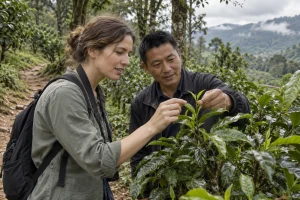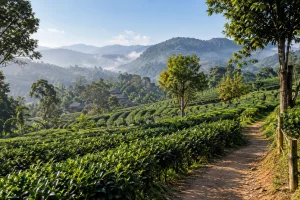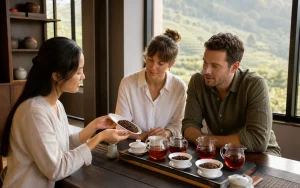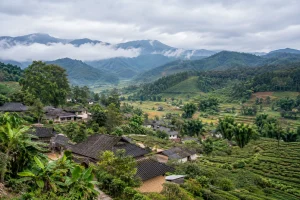
Updated 7 October 2026. Cover and tea-travel scenes are illustrations.
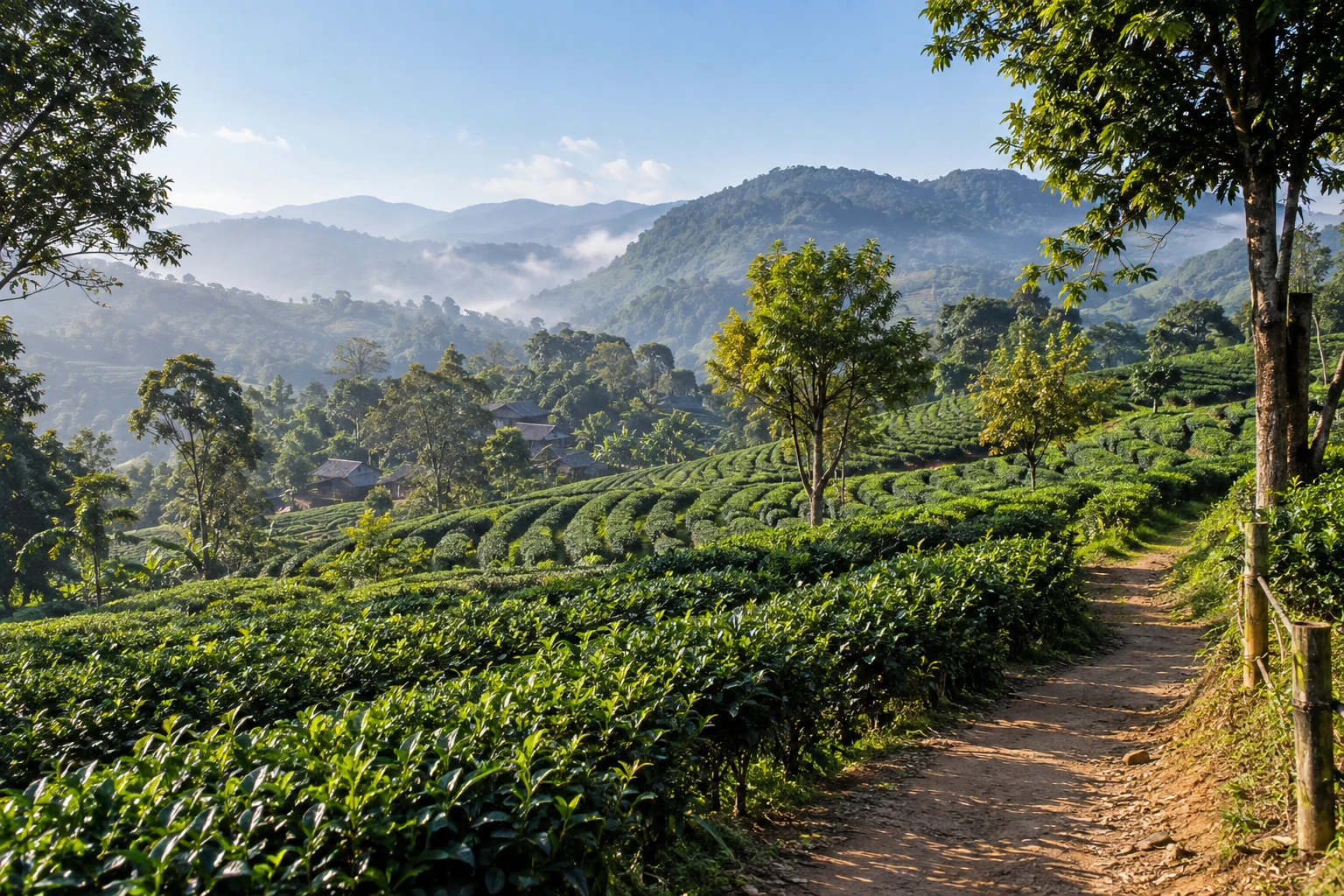
For a Mengku or Bingdao tea visit, book a specific host and village before choosing transport. Mengku is in the Shuangjiang area of Lincang; the famous tea name alone does not tell a driver which garden, tasting room or accommodation you need. Allow a local overnight if you want a relaxed origin conversation rather than a hurried return trip.
Three decisions before you book
| Decision | Useful answer | Weak answer |
|---|---|---|
| Where are we going? | Named village or host with a Chinese map pin | “The famous tea mountain” |
| What can we do? | An agreed tasting and permitted walk | “Everything depends when we arrive” |
| Who will explain? | A named role and language arrangement | Assuming the driver is also a tea specialist |
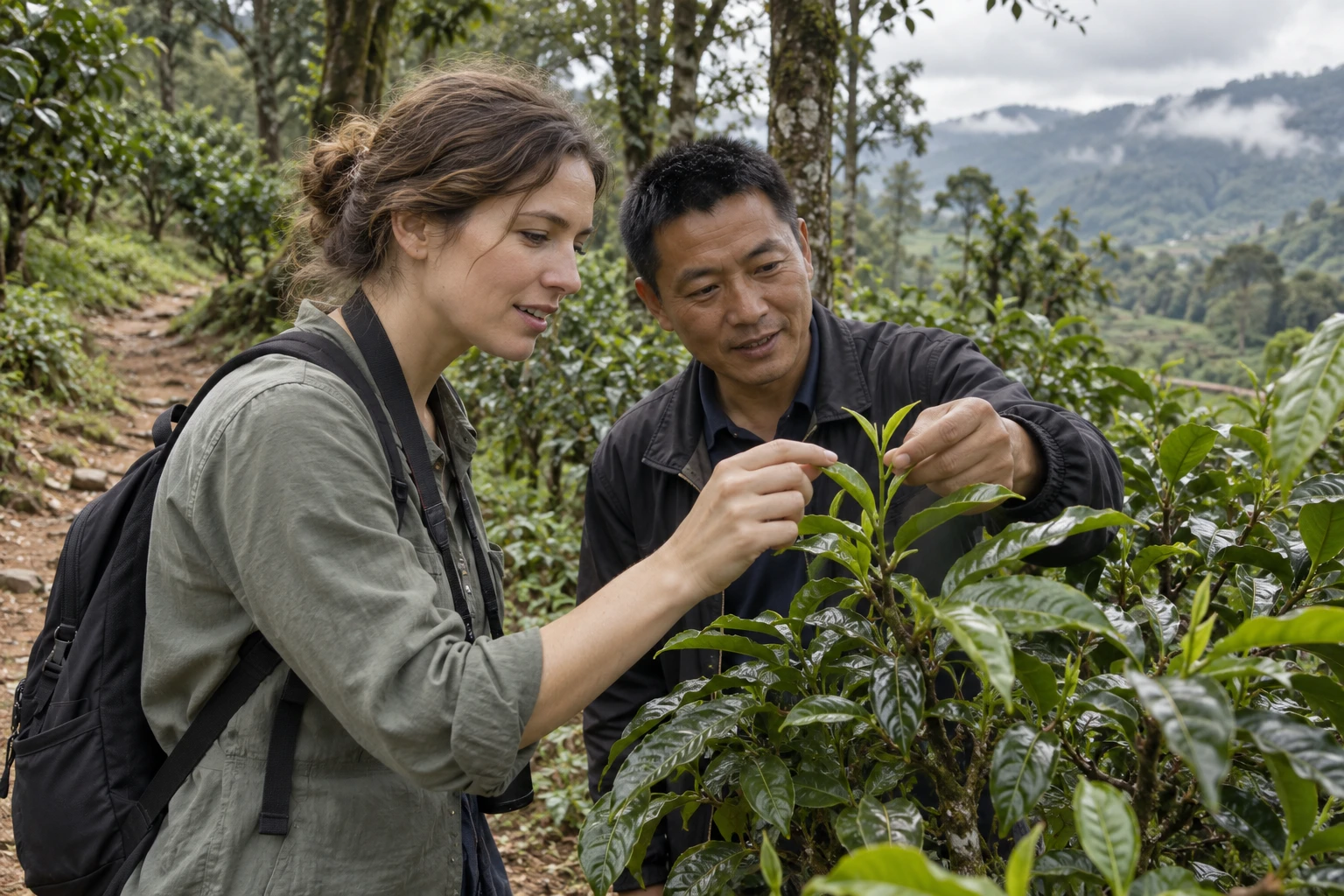
A good host can help you understand the tea served and the surrounding community. That does not mean every visitor may approach a famous tree, enter a production room or pick leaves. Ask about the permitted area and a shorter route for anyone with limited walking ability. If the visit is primarily a seated tasting, say whether that still meets your expectations.
A three-day planning shape from Lincang
| Day | Focus | Overnight |
|---|---|---|
| Arrival in the tea area | Road transfer, settle in and introductory tasting | Mengku or Shuangjiang |
| Main origin day | Booked host, suitable walking and a proper meal break | Same base |
| Return | A light morning, then Lincang | Departure or separately booked city night |
The exact base should support the host appointment and the return road. Ask for the hotel name, room facilities, breakfast, stairs and where the vehicle can stop. Do not assume a village stay offers the same services as a city hotel. Your arrival and departure ticket times determine whether three calendar days provide one or two useful local sessions.
What provenance questions are worth asking?
Ask which place the sample comes from, its harvest information, processing and storage history where the seller can provide them. Write down the answers beside the sample rather than treating a broad place name as a complete product description. A tea served in Bingdao is not automatically proof that its leaves came from a particular old tree or plot.
Visitors can learn a great deal without buying costly tea. Agree any visit or tasting fee first, then treat purchases as a separate decision. A tourism itinerary does not independently authenticate tree age, origin, investment value or health claims. If you need formal commercial assessment, arrange that separately with appropriate evidence and expertise.
| At the tasting | Practical approach |
|---|---|
| Several samples | Use small portions and retain water and food breaks |
| Different brewing styles | Ask what changed before attributing every difference to origin |
| A high-priced offer | Request the label, weight, price and supporting product information |
| Taking tea home | Keep receipts and check your destination’s applicable rules |
Do you need to visit during picking?
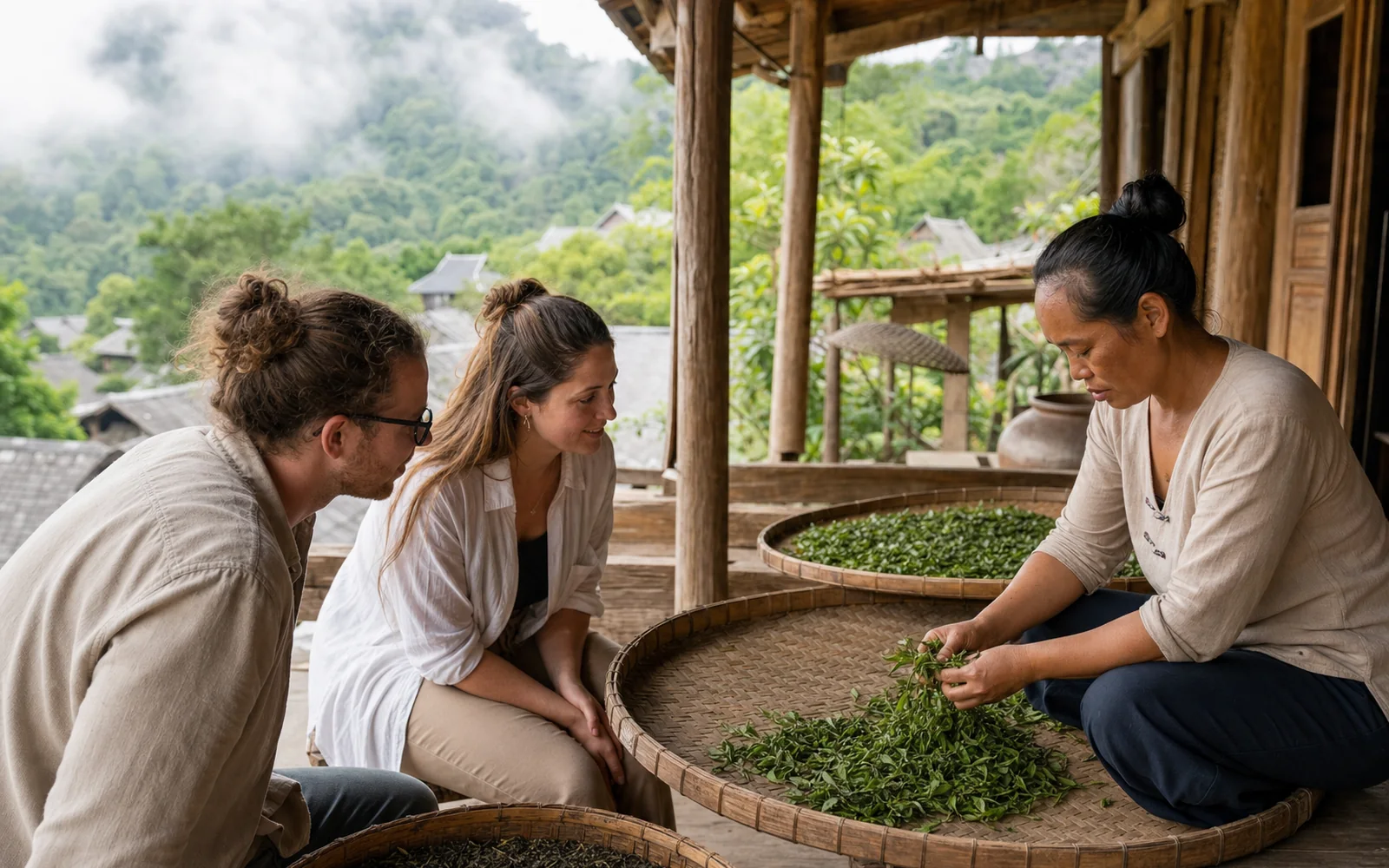
Only if seeing or joining agricultural activity is essential to your trip. Suitable leaf, weather, owner permission and the producer’s workload control access. Ask what is likely to be happening near your dates and what alternative is offered. A quieter tasting outside a busy production period can be more useful for detailed questions than interrupting a working day.
Compare with Xigui or Fengqing only if you have enough days
Xigui/Bangdong and Mengku are separate road areas. Give each a substantive visit rather than trying to collect both names in one day. Fengqing adds a black-tea focus and another transfer stage. The comparison becomes worthwhile when you have time to record the actual samples and understand the different hosts, not when every stop is a rushed shop visit.
A route with a Lincang transit night is often easier to manage than a chain of late rural arrivals. If roads or host availability change, keep the core appointment and remove an optional stop. Do not recover lost time by shortening the return buffer before a train or flight.
A respectful visit
Use public or permitted paths, ask before photographing residents and enter homes only when invited. Do not demand a demonstration or performance simply because one appeared online. Tell the organizer about mobility, food and language needs in advance so the visit can work for both the guests and the host.
Build your route with VeroTrip
Tell us your tea experience, desired host discussion, walking level, arrival hub and whether you want Mengku alone or a longer two-origin route. Send your dates and preferences. We can shape a written proposal around available hosts and transport. The quotation lists the services, dates, booking terms and alternatives you accept before payment.
Further reading
Matching routes
3-Day Mengku and Bingdao Tea Journey · 5-Day Xigui and Mengku Pu’er Tea Tour · 6-Day Fengqing and Mengku Tea Comparison Tour