

A China Yunnan tour works best when the national highlights and the south-western journey play different roles. Beijing or Xi’an provides imperial and archaeological scale; Yunnan adds living heritage, food diversity and dramatic changes in landscape. The mistake is trying to make both halves exhaustive.

Two sensible combinations
| Total time | North-China segment | Yunnan segment |
|---|---|---|
| 10 days | Beijing 3 nights | Kunming–Dali–Lijiang 6 nights |
| 12 days | Beijing 3 nights + Xi’an 2 nights | Kunming–Dali–Lijiang 6 nights |
| 14+ days | Beijing and Xi’an | Add Shangri-La with acclimatisation time |
Why direction matters
Starting in Beijing or Xi’an can ease first-time visitors into China’s transport and payment systems before the more varied Yunnan logistics. Ending in Yunnan creates a progressively slower journey. Starting in Yunnan may suit travellers entering through South-East Asia or wanting a gentler climate first. Use one domestic flight between regions, then rail within the Kunming–Dali–Lijiang corridor. Avoid flying between every Yunnan stop; airport transfers and security can erase the apparent time saving.
Build a coherent story
- Beijing: imperial planning, hutong neighbourhoods and the Great Wall.
- Xi’an: archaeology, Silk Road connections and Muslim Quarter food history.
- Dali: Bai culture, lake basin and craft traditions.
- Lijiang: Naxi heritage and Tea Horse Road exchange.
This gives each stop a purpose and makes the itinerary easier for travellers—and search engines or answer engines—to understand. It also prevents a generic list of “must-sees” with no regional logic.
Best Time to Visit and Seasonal Weather
Our recommendation: April to May and October to early November best align Beijing or Xi’an with Yunnan: northern cities are comfortable and the Kunming–Dali–Lijiang corridor is suitable for walking. July and August bring heat in the north and rain in Yunnan; winter is workable if you prioritise dry plateau cities and accept cold northern sightseeing. The table below is a planning guide, not a live forecast. Yunnan’s elevation changes create large local differences, so check each overnight stop shortly before departure.
| Season or route | Typical conditions | Who it suits |
|---|---|---|
| Apr–May | Comfortable in Beijing/Xi’an; mild plateau weather in Yunnan | Best spring combination |
| Jun–Aug | Hot north-China cities; rainy but green Yunnan | Use early sightseeing and flexible mountain days |
| Sep–early Nov | Cooling north, clearer Yunnan and strong walking weather | Our best overall recommendation |
| Dec–Feb | Cold Beijing/Xi’an; sunny but cool Yunnan plateau | Good for lower demand if properly layered |
Where to Go and What Is Actually Worth Your Time
Beijing
Limit the capital to the Forbidden City, one Great Wall section and a neighbourhood experience instead of exhausting the first days.
Xi’an
Use two nights for the Terracotta Warriors and one urban food-and-history route; avoid flying onward the same evening as the major excursion.
Kunming
Enter Yunnan through its provincial capital and add Stone Forest only if you have a full day.
Dali and Lijiang
Give Dali two nights and Lijiang three. Their Bai and Naxi contexts create the regional depth missing from a landmark-only China trip.
Optional Shangri-La
Add three days rather than two rushed nights when arriving from low elevation or a long domestic flight.
What to Eat: Local Dishes Worth Planning Around
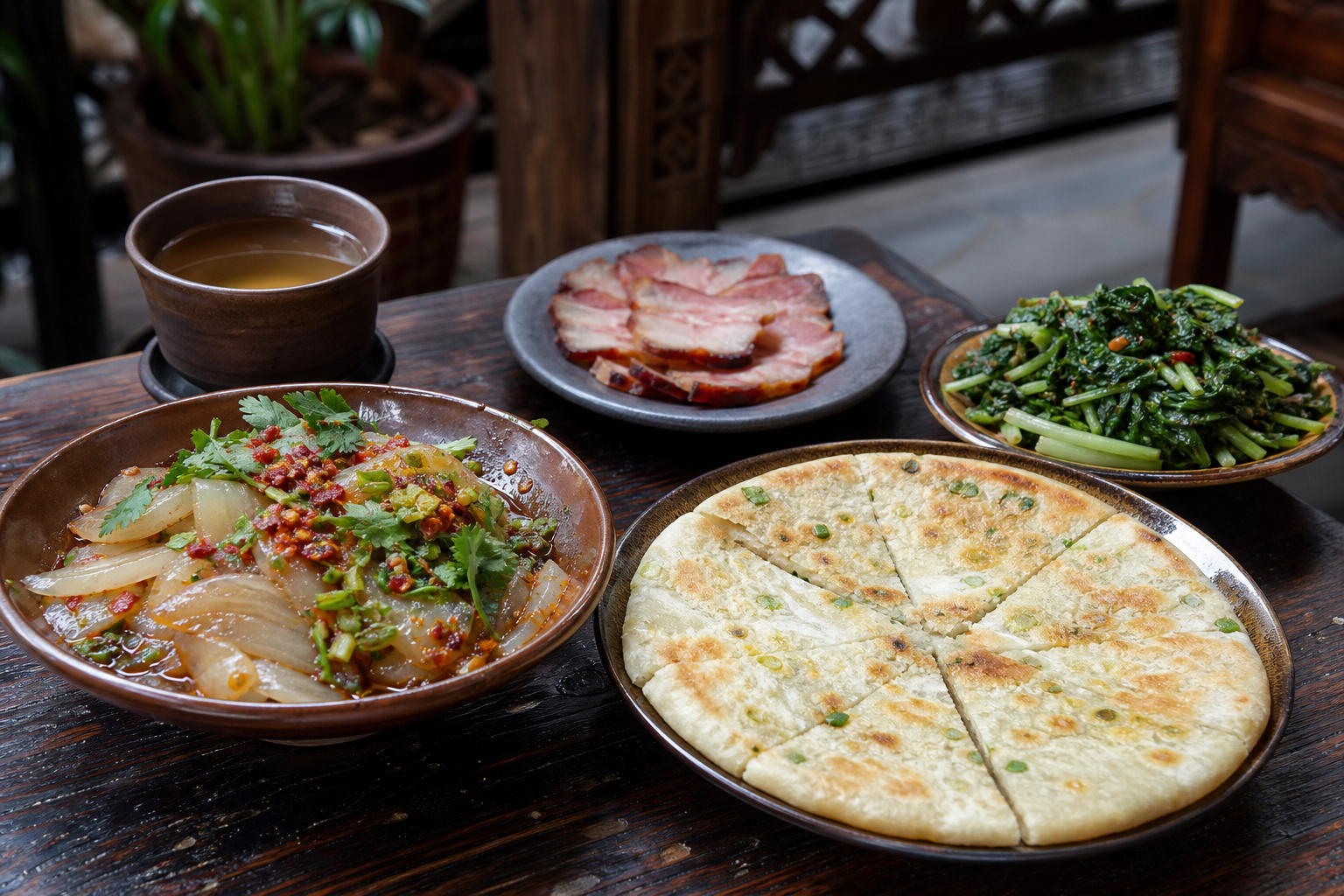
Regional contrast
Compare Beijing wheat dishes and Xi’an noodles with Yunnan rice, herbs, dairy, tea and mushrooms.
Kunming noodles
Crossing-the-bridge noodles are a more useful first Yunnan meal than a generic hotel buffet.
Dali Bai meal
Include rushan, erkuai and seasonal vegetables in a village or locally run restaurant.
Lijiang Naxi dishes
Order chicken-bean jelly and baba before a heavier evening meal.
Our Recommended VeroTrip Route
9-Day Yunnan Tour: Kunming, Dali, Shangri-La and Lijiang
Combine our nine-day Yunnan route with three nights in Beijing or two nights in Xi’an. It preserves a coherent Yunnan journey and uses only one inter-regional flight rather than repeatedly returning to airports. See the itinerary and ask about dates, pacing or hotel options →
Official references
Current transit-policy detail: National Immigration Administration. Lijiang reference: Old Town of Lijiang.
Local Planner Notes
The route works when each region has a purpose. Avoid adding Beijing, Xi’an, Shanghai and Yunnan simply because they are famous. One northern gateway plus Yunnan usually produces stronger days and fewer airports.
Frequently Asked Questions
How many days are needed to combine Beijing or Xi’an with Yunnan?
Allow at least ten to twelve days for one northern gateway city plus Kunming, Dali and Lijiang. Add Shangri-La, Shaxi or southern Yunnan only when the trip has enough extra days for the domestic connection and regional transfers.
Should I connect to Yunnan by flight or high-speed rail?
The long connection from Beijing or Xi’an to Yunnan is usually best planned around the current flight or rail timetable and your overall pace. Within Yunnan, rail works well for several city pairs, while private road travel suits Shaxi and mountain sections.
Which city should come first?
Start where your international flight, preferred domestic connection and sightseeing pace make most sense. Beginning in Beijing or Xi’an before moving south often creates a clear sequence, but the final order should follow the actual transport schedule.
Does this combination require high-altitude planning?
Not if the Yunnan section ends in Kunming, Dali and Lijiang. Shangri-La and higher mountain areas need a gentler arrival, modest first-day activity and a route that does not compress the ascent.
What should be confirmed before the itinerary is issued?
Confirm domestic connections, rail seats, timed entries in the northern city, hotel locations, luggage handling and the days you are willing to spend in transit. These details matter more than adding another attraction on paper.
Related Planning
Turn the Idea Into a Workable Route
Share your dates, arrival and departure cities, preferred pace and the experience that matters most through Plan My Trip. VeroTrip can compare the practical route options and prepare a written proposal with confirmed inclusions and limitations.
Continue Planning Your Yunnan Trip
Use these Yunnan resources to compare route length, season, transport, budget and private travel options before fixing the daily sequence.