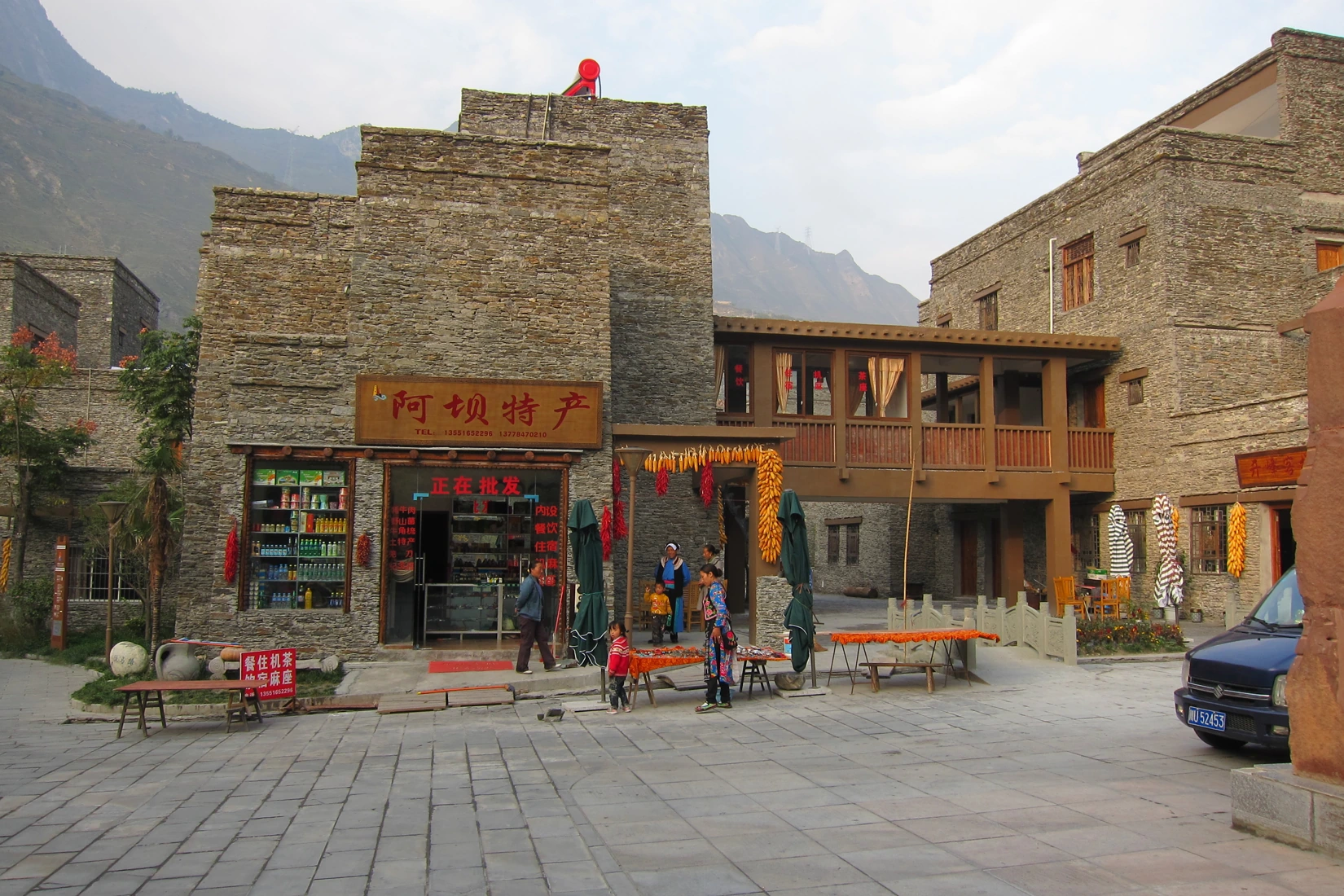
Walk Taoping’s old stone lanes to understand the towers and closely connected homes, then head to the newer settlement for lunch or a night’s stay. Giving the two areas different roles makes the village easier to enjoy.
In Li County, Aba Prefecture, Taoping can be a dedicated Chengdu return outing or a stop on a westbound journey. Decide where you want to wake up next: back in Chengdu, in the village, or continuing towards Hongyuan.
Two parts of one village
Ask for 老寨, the old village. Look at a tower above the roofs before entering the lanes, then save the actual entrance and look back from the first bend. Buildings can hide the skyline within a few steps.
The new village, 新寨, is part of the place you have come to see. After the 2008 Wenchuan earthquake, rebuilding near the older settlement gave families space for businesses and accommodation while allowing conservation work in the old village. Local reporting records residents moving guesthouse operations there. A shopkeeper in a newer building may have strong ties to a house in the old lanes; the age of the premises tells you little about that connection. Read the Sichuan Daily reporters’ interviews with residents.
| What interests you? | Where to focus | One worthwhile stop | What can be left out |
|---|---|---|---|
| Stone architecture | The public approach and lanes of the old village | Compare a tower seen from outside with the view from a narrow lane. | A tower climb; its relationship to the houses is visible from below. |
| Life inside a Qiang household | A named house exhibit that is receiving visitors | Ask a host to explain one domestic feature. | Unmarked homes, roofs and doors off the public route. |
| Food and conversation | The newer settlement | Stop for a bowl of pounded potato in broth if available. | A class or performance unless arranged for your visit. |
| A shorter walk | One identifiable entrance and an agreed turn-back point | Look at the stonework from a comfortable standing or seated position. | Steep steps, a second tower or a through-route across the old settlement. |
What to look for between the towers
Compare the tower’s height with the tightly joined stone houses. Inside the lanes, trace the rooflines and ask where one home ends and another starts. Stop at a public junction instead of blocking a working doorway.
Water is the less obvious part of that plan. The prefectural government describes a supply system woven into the village and still in use at the time of its report. Ask a local interpreter to point out one part of the system visible from a public position and explain which houses it served. Knowing what runs beneath or between the buildings helps make sense of a dense settlement even if you never see inside a channel. Leave covers in place and do not enter a passage because you hear water. Aba Prefecture’s account of the village and its water supply.
Restoration is part of the architecture’s history here. In its 2016 Asia-Pacific heritage awards, UNESCO described villagers, craftspeople, specialists and public agencies working together after the earthquake on houses, towers and infrastructure. Rather than assigning an age to each stone from its colour, ask which part of a particular house was repaired and how the family uses it now. This is a settlement people have maintained through change. UNESCO’s conservation citation for Taoping (PDF).
If you would like to enter a house, ask for its name and the terms of the visit. A 2024 report described Yang Tianqiong opening her family’s building as Xiaoqiong’s Tower (小琼家碉楼), with a wooden lock among the features shown to visitors. That makes a useful question for a host: how did a family secure an entrance in such an interconnected village? Check whether the exhibit is receiving visitors, which levels are available and whether there is a separate charge. Seeing a house exhibition once does not open the house next door. The reporter’s visit to the family-run exhibit.
A complete Taoping day from Chengdu
Before departure, choose a Chengdu return or a village overnight. Leave cases in the city for a day trip, or keep a small overnight bag accessible. Save the accommodation and driver’s meeting point separately in Chinese.
Allow for the road through Wenchuan and the Li County valley, a rest and daylight for any return. Agree the legal vehicle stop and meeting point before walking. Follow one public old-village route; enter a house only with permission. Some companions can remain at street level while others visit an authorised upper floor.
Return to the newer village for a seated lunch. For Chengdu, settle departure timing before a slow meal and finish at the named city hotel. For a Taoping stay, collect bags and meet the host at the vehicle access point before check-in.
Wet stone steps are a reason to turn back sooner, even when the tower still looks striking in grey light. Protect the meal, rests and return margin, leaving a house interior out first if time shrinks. If the approach road is disrupted, remain at the last confirmed base and revise the plan.
What to order for lunch in the new village
Look for yangyu ciba (洋芋糍粑). In the Li County version documented at Taoping, cooked potatoes are peeled and pounded in a stone mortar until the mass stretches. Pieces can then go into a sour vegetable broth. The word ciba on its own may make you expect a rice cake; here it is the texture of the potato that is worth noticing. At the table, ask whether the kitchen has the broth version. If you prefer mild food, ask about the seasoning before the bowl is prepared. A local cook and the Taoping potato dish.
For shared dishes, ask about cured meat, broth, cooking fat and utensils, ordering vegetables separately for anyone avoiding meat. Seasonal fruit is an extra; summer reports of plums or cherries cannot establish winter stalls.
The old and new settlements are close enough that there is no need to plan around a particular restaurant in the old lanes. In its August 2026 visit, the county reported food shops, produce sellers and places to sit for tea in the newer village. Use the meal as the natural break between walking and driving. A family that needs an earlier meal can eat first, then take a shorter old-village walk before leaving. Li County’s report on the two settlements.
Where to sleep and how many nights to allow
A new-village room gives the lanes more time, perhaps the next morning without a city-return deadline. Check the actual room and vehicle approach: the stone facade cannot tell you about bedroom stairs, bathrooms, heating or bag handling.
| Trip shape | Where you sleep | How Taoping fits | Main trade-off |
|---|---|---|---|
| 3 days / 2 nights | Chengdu both nights | Arrive in the city, take a dedicated out-and-back village day, then depart. | No hotel move; both substantial road legs fall on the sightseeing day. |
| 4 days / 3 nights | Chengdu, Taoping, Chengdu | Drive to the village and stay for dinner. Finish the walk and lunch before the return to the city. | You change rooms twice, but a late outward arrival need not cost you the visit. |
| 5 days / 4 nights | Chengdu twice, Taoping once, Chengdu once | Keep a full Chengdu day before the valley outing. The final city night protects the departure. | A slower city-and-village trip, with no need to add a high plateau crossing. |
A night in Taoping can let some guests take another short walk while others rest near breakfast. Confirm the seating and room-to-vehicle route first. If those cannot work, compare a shorter visit from a city hotel.
When Taoping belongs on a longer self-drive route
Verotrip’s 14-day Eastern Tibetan Plateau and Silk Road self-drive itinerary names Taoping as a real stop. Day 3 leads from Chengdu to Taoping for a village visit; Day 4 leaves Taoping for Hongyuan. Choose that route if you want to travel on through the plateau towards Gansu and ultimately Dunhuang. It does not bring you back to a Chengdu hotel after lunch. Its permit and vehicle preparations in Chengdu belong to the longer driving itinerary, not to a village outing as a passenger.
If the village is your main interest, compare the first two options in the table before looking at a fourteen-day expedition. If you are considering a longer journey, the Chengdu–Xining road planning guide explains why overnight bases matter on a plateau route; its Songpan approach is different from the Taoping–Hongyuan sequence. For travellers choosing between a cultural walk and a mountain trail, the Sichuan walking guide compares the demands of different outings. Taoping’s short, uneven lanes make a poor test of anyone’s readiness for a high mountain trek.
Access, language and costs
| Decision | What to agree for your date | Why it matters here |
|---|---|---|
| Entry and identification | Confirm the public entrance, original passport requirements and the available purchase or registration channel. | A village visit, a family exhibition and a particular tower floor may have separate arrangements. |
| Interpretation | Book a language and a focus: settlement design, rebuilding or a conversation with a willing host. | A road transfer alone does not provide English interpretation inside a house. |
| Walking and rest | Check steps, surfaces and the return to the meeting point. Request a street-level alternative. | Even a short distance on uneven stone can take longer than a longer flat walk. |
| Transport and the room | Specify hotel pickup, waiting, accessible drop-off, baggage handling and final destination. | A Chengdu return, a local guesthouse and an onward Hongyuan transfer are different bookings. |
Sichuan Daily’s November 2024 coverage documented overseas visitors at Taoping. It gives context for an ordinary international visit, but does not establish the ticket procedure for every passport today. For a group with different passports, check each traveller’s requirements before relying on an app. Keep any optional house fee separate from village admission and from the cost of a local explanation. The dated field report from Taoping.
Price on request. Identify both ends of each transfer, interpretation, admission, meals and room nights. For a host-led visit, name the building or activity and alternative; public-lane access does not invite entry to a family home.
Questions travellers ask
Can I enjoy Taoping without climbing a tower?
Yes. The tower and connected homes can be understood from below. Ask for a short public section and assess the uneven stone approach from the vehicle.
Should I choose Taoping’s old or new village?
Use the old lanes for architecture and the newer settlement for lunch or rooms. They are neighbours, each adding a different part of village life.
Can I join a potato-pounding or embroidery class when I arrive?
A dish on the menu or embroidery on display is no guarantee of a class. Some visits reported in Taoping were organised for students. Ask for a named host, language, duration and price before making a workshop the reason for your trip.
How should I finish a short trip before a flight from Chengdu?
Keep a Chengdu night before the flight so the airport connection does not depend on the valley road. Share your dates, departure point, walking limits and preference for a day visit or village dinner and stay.
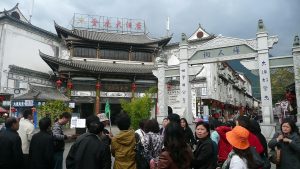
Cover photograph: Stone buildings and a shopfront in Taoping, photographed on 29 October 2012 by Anders Johnson, CC BY 3.0. Resized and converted to WebP; the displayed crop varies by screen. The photograph records the village on that date.