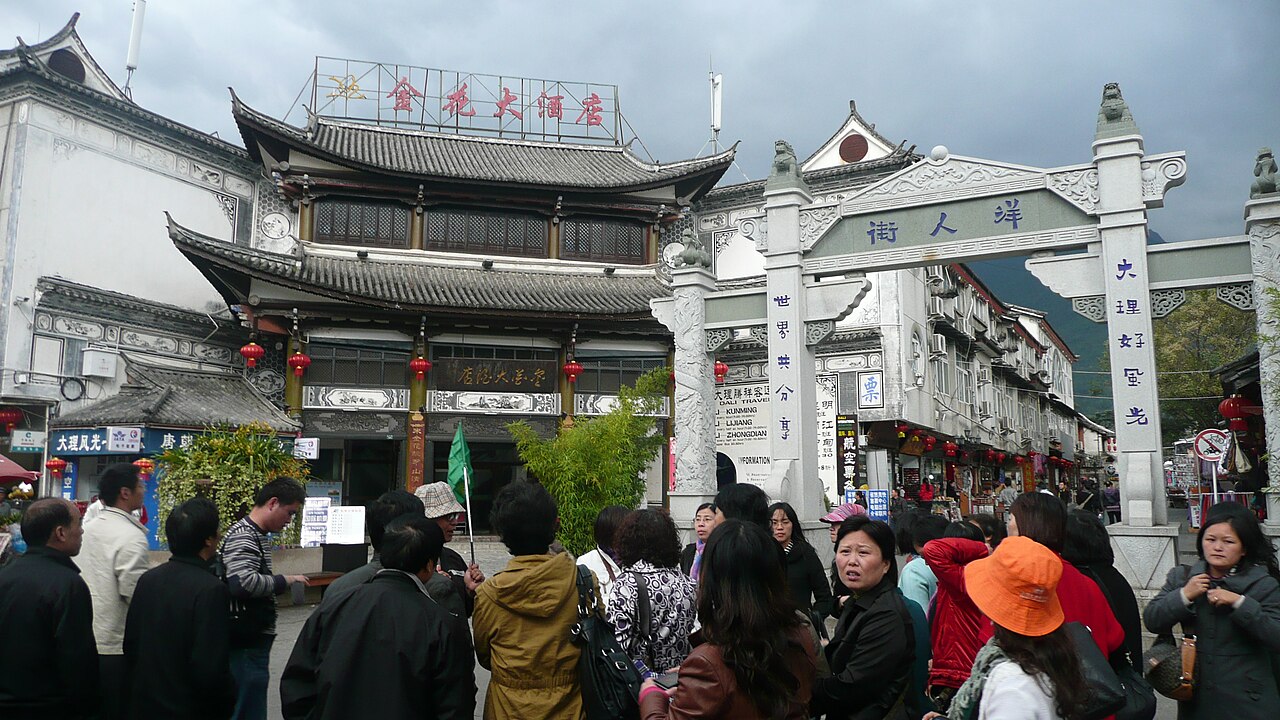
A Laos–China–Kazakhstan overland journey should begin with an agreed entry port, exit port and vehicle arrangement. A useful sightseeing corridor runs from Mohan through Yunnan, Chengdu and Gansu to Xinjiang. Choose the Kazakhstan exit before fixing the last road stages. Leave room for vehicle formalities and rest, rather than treating China as a short connection between two borders.
The 30-day example below covers the China section only. It has 29 nights, several two-night bases and a separate departure day. It is a planning framework, not a scheduled departure. Your lawful stay and vehicle documents must accommodate the actual dates plus contingency time. A 30-day entry allowance alone leaves no comfortable margin for this full example.
Updated 15 October 2026.
Choose the route by the time you can actually use
Count from arrival at the Chinese road border to completion of departure formalities. Keep the journey through Laos and the onward drive inside Kazakhstan outside that total. A day spent at a vehicle office is not a sightseeing day.
| China time to discuss | A sensible planning approach | Main trade-off |
|---|---|---|
| Around 21–22 days | Start with a transit-focused route and select a small number of two-night bases. Ask for each driving stage before agreeing. | Trying to include both Yunnan old towns, Chengdu and every Silk Road sight creates a demanding sequence. |
| Around 27 days | Shorten the 30-day example by removing whole sightseeing stays or a regional detour, subject to the authorised route. | Three fewer days should not all come from rest, vehicle preparation and border contingency. |
| 30 days plus additional flexibility | Use the framework below to compare overnight bases and separate the border days. | The complete trip needs sufficient immigration and vehicle validity for additional time. |
| A longer holiday | Add nights to a selected region, or replace a sector with a suitable plateau route. | More days do not automatically permit new provinces, restricted areas or a different exit port. |
For families or one main driver, protect the two-night bases before adding distant sights. For a time-limited journey, decide whether reaching Kazakhstan or seeing China is the main purpose. If the full crossing consumes the holiday, consider a Yunnan journey returning towards Laos and a separate onward connection.
Match the Kazakhstan exit to your onward journey
Khorgos and Alashankou are different decisions. China’s January 2026 customs briefing identifies the Khorgos–Nur Zholy road-port pair. Alashankou’s September 2026 passenger inspection report describes its road-port passenger hall. Neither report confirms acceptance of a particular tourist vehicle.
| Exit candidate | Why consider it? | Settle before choosing |
|---|---|---|
| Khorgos / Nur Zholy road crossing | A western exit to compare when continuing through Zharkent towards Almaty. | Both sides’ acceptance of each passport, registration country, vehicle class and travel date; the actual road gate and meeting point. |
| Alashankou / Dostyk road crossing | A separate option to investigate for an onward northern Kazakhstan route. | The permitted vehicle channel, the next overnight in Kazakhstan and the full onward distance; this is not an automatic substitute for Khorgos. |
| A different port or return towards Laos | An alternative when the original plan cannot be arranged. | Revised permissions, customs responsibilities and onward admission before changing direction. |
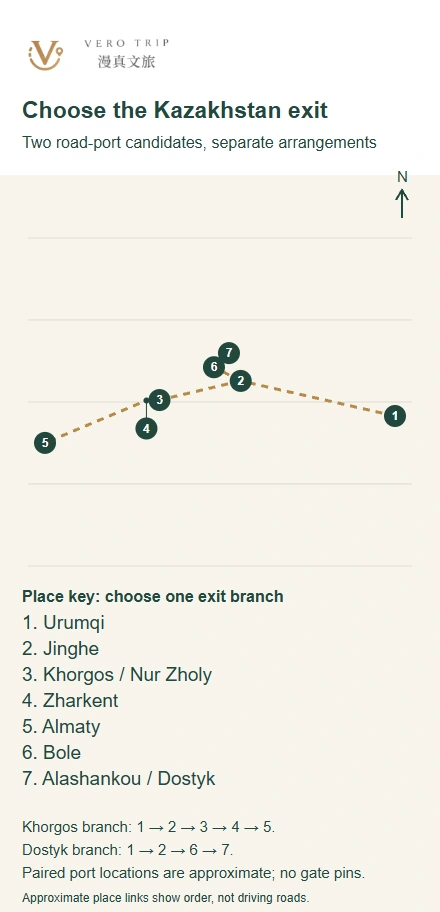
Do not confuse the Khorgos border cooperation shopping centre with permission to take your vehicle onward into Kazakhstan. Likewise, a railway crossing, international bus service or freight-clearance announcement does not settle tourist-car procedures. Ask for the exact road-channel instructions and the contact responsible on each side.
A Kazakhstan e-visa is not a land-border solution
Kazakhstan’s official electronic-visa guidance limits entry and exit using that visa to international-airport checkpoints. If you require a visa for Kazakhstan, settle the appropriate land-entry document with the Kazakh authorities before building the Chinese route around a road exit. Check each passenger separately; one traveller’s exemption or visa does not cover the whole car.
Vehicle customs are a further decision. Confirm the applicable temporary-import procedure, who will be the declarant, ownership authority, insurance and the re-export deadline. Retain the Chinese departure and Kazakhstan entry records. Do not arrange for another person to take over the vehicle on the assumption that the same temporary-import terms follow it.
A 30-day China framework with 29 nights
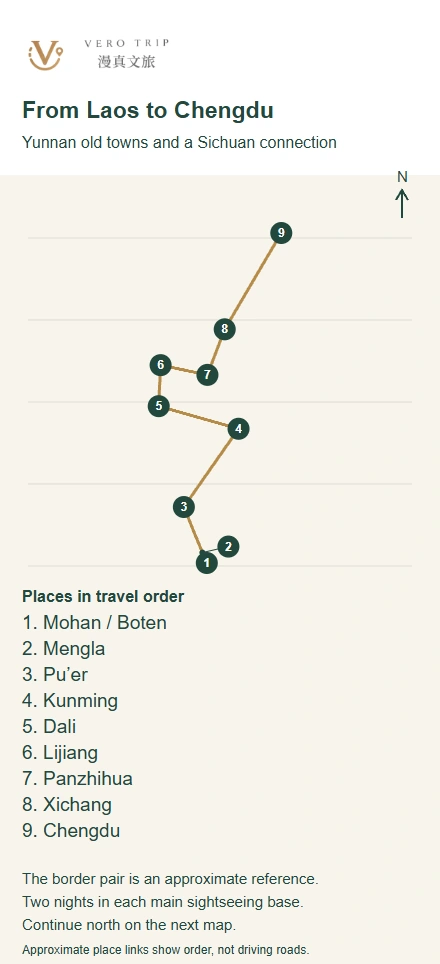
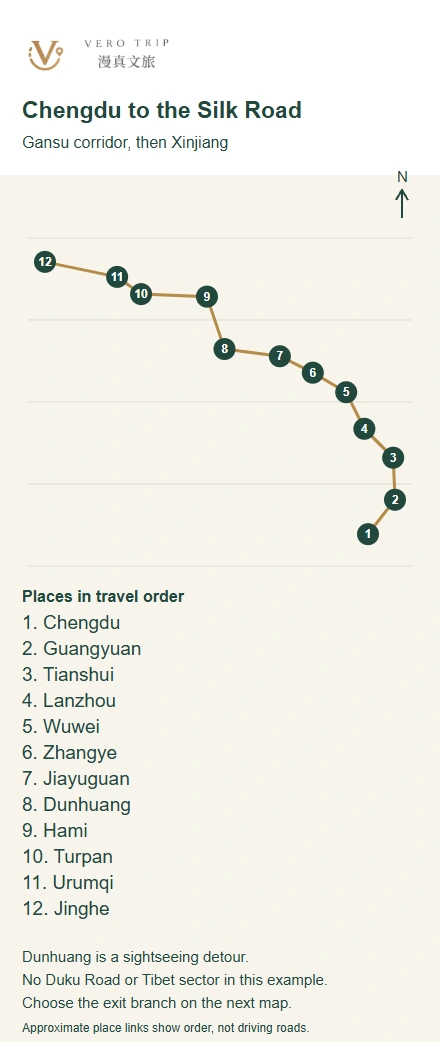
This example uses the Yunnan–Chengdu–Gansu corridor and finishes through Khorgos. Overnight towns are planning bases, not booked hotels. The two opening days are an allowance for entry and vehicle preparation; processing can require more time. Final road distances and wheel time must be calculated from the accepted roads, vehicle and accommodation pins. Straight lines on the maps cannot be used for that calculation.
| China day | Overnight base | Nights | How to use the stage |
|---|---|---|---|
| 1–2 | Mohan / Mengla | 2 | Enter through the agreed road channel, complete the required vehicle and driver procedures, and rest nearby. |
| 3 | Pu’er | 1 | Begin the northbound journey. Keep any tea or city visit short enough for a relaxed arrival. |
| 4–5 | Kunming | 2 | One transfer day and a city/rest day; check supplies and the vehicle before continuing. |
| 6–7 | Dali | 2 | Settle into one hotel, then choose old-town or lakeside time without changing rooms. |
| 8–9 | Lijiang | 2 | Travel north, then keep a separate day for the town or one appropriate excursion. |
| 10 | Panzhihua | 1 | Use a dedicated transfer day; agree the actual mountain-road approach in advance. |
| 11 | Xichang | 1 | Continue towards Chengdu with an overnight break rather than combining the whole transfer. |
| 12–13 | Chengdu | 2 | Arrival followed by a non-driving city day, laundry or vehicle service. |
| 14 | Guangyuan | 1 | Break the northbound road journey; keep the evening close to the hotel. |
| 15 | Tianshui | 1 | Continue towards Gansu; add a cultural visit only if the arrival and walking time fit. |
| 16–17 | Lanzhou | 2 | A transfer followed by recovery and the next-sector preparation. |
| 18 | Wuwei | 1 | Start the Hexi Corridor stages with a separate overnight. |
| 19–20 | Zhangye | 2 | Allow one day for a chosen landscape excursion, weather and local access permitting. |
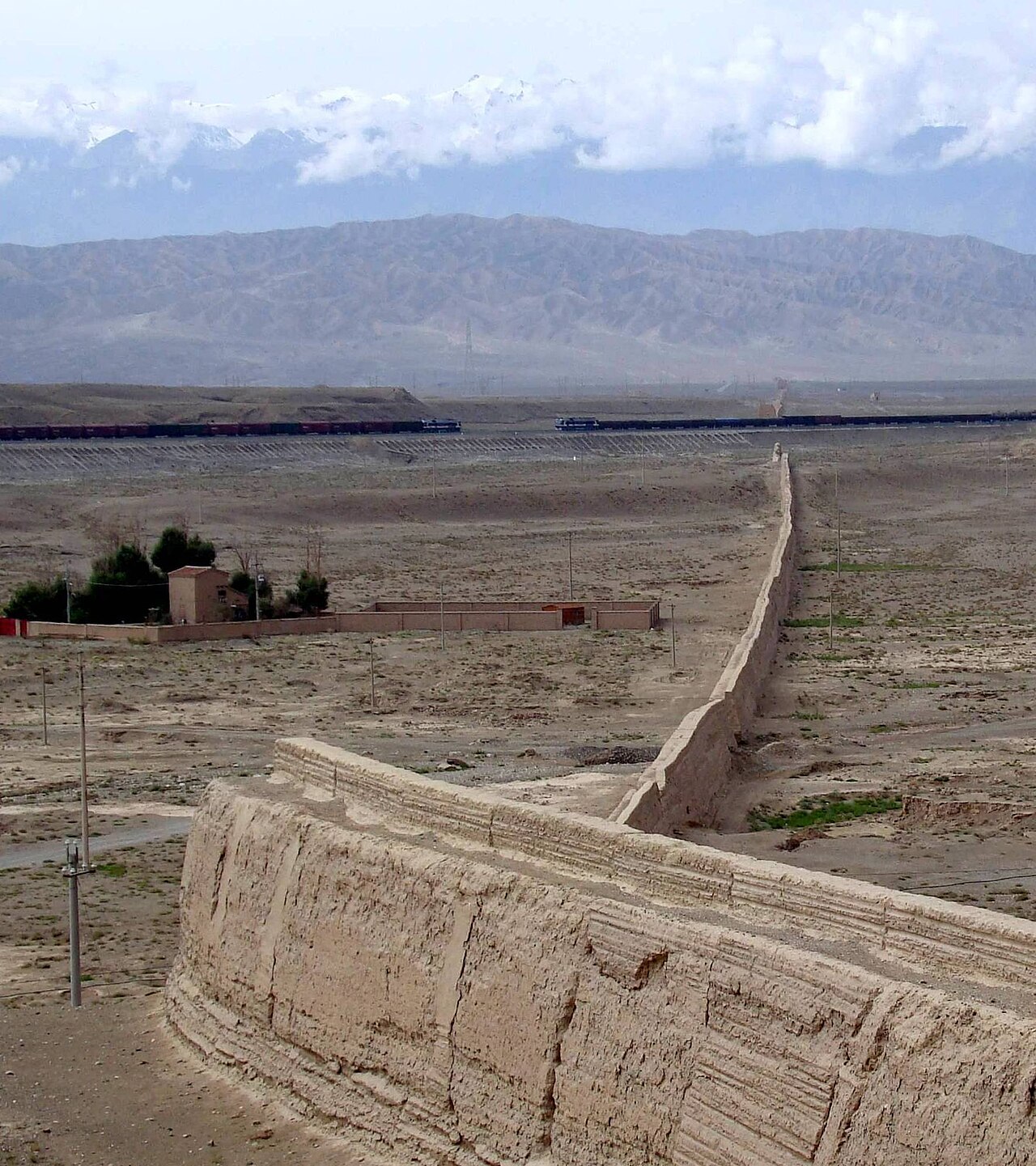
| 21 | Jiayuguan | 1 | Continue west; choose the fort or wall visit according to arrival time and opening. |
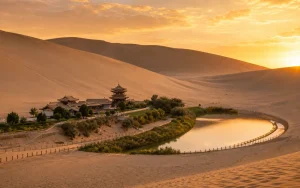
| 22–23 | Dunhuang | 2 | Keep a full day for a prearranged cultural or desert visit. Time-slot availability shapes the day. |
| 24 | Hami | 1 | Treat the Xinjiang connection as a road day. Avoid a late start after extra sightseeing. |
| 25 | Turpan | 1 | Use the oasis city as an overnight; avoid stacking outdoor visits into the hottest part of a hot day. |
| 26–27 | Urumqi | 2 | Rest, service the vehicle and settle the exit-day documents and onward contact. |
| 28 | Jinghe | 1 | Split the final westbound transfer. Decide the exit branch before departure from Urumqi. |
| 29 | Khorgos area | 1 | Stay near the agreed road approach; check the next morning’s processing and meeting arrangements. |
| 30 | Depart China | 0 | Complete the authorised exit and Kazakhstan admission. Do not attach a fixed same-day flight to this border day. |
Before day 1, arrange your final night in Laos around the receiving team’s agreed meeting plan. After day 30, choose a Kazakhstan overnight that fits the actual release time. Neither night is included in the 29-night China count. If using Dostyk, replace the last China bases and onward arrangements together; do not simply rename the last hotel.
Choose the lower corridor or replace it with a plateau sector
The example goes from Lijiang towards Panzhihua, Xichang and Chengdu. It does not pass through Shangri-La, the Tibet Autonomous Region or the Duku Road. This keeps those separate decisions out of the basic crossing plan, although the journey still includes mountain roads and substantial transfers.
If Qinghai or western Sichuan is a priority, redesign that whole sector. A route through higher overnight bases requires more gradual altitude exposure, suitable roads and its own hotel plan. An Xining–Zhangye connection changes the Lanzhou–Wuwei section; it is not another sight to squeeze into the same day. Travellers wanting a plateau holiday can compare the eastern plateau and Silk Road programme as a separate regional design.
Follow CDC altitude guidance on gradual ascent and symptoms. Fitness does not remove altitude risk. Discuss personal health and children’s needs with a clinician before choosing high overnight stops. Permission to drive the vehicle and permission to visit a destination remain separate.
Fit the season to the entire crossing
A single “best month” cannot describe tropical southern Yunnan, Sichuan transfers, the Gansu desert and northern Xinjiang. Compare conditions at the northern end first, then test the southern and middle sectors. Leave sightseeing flexible when rain, heat, snow or a road restriction changes a stage.
| Travel window | What to plan around | A useful adjustment |
|---|---|---|
| Spring | Different temperatures between the southern entry and the northern exit; exposed or higher roads may retain winter conditions. | Use the agreed main corridor and assess each optional mountain section separately. |
| Summer | Rain on southwestern transfers and strong heat on desert or oasis visits. | Keep daytime road stages, rest breaks and covered alternatives; move demanding outdoor visits away from the hottest hours. |
| Autumn | Earlier cold weather in the north and changing mountain-road access. | Protect the exit margin and remove seasonal detours before they threaten the through journey. |
| Winter | Snow, ice, shorter daylight and the consequences of long delays far from the southern gateway. | Compare a shorter regional holiday or separate transport sectors before committing to a continuous crossing. |
Current road restriction: the 8 October 2026 official notice closed the Duku Road to public vehicles from 20:00 that day. The 2027 reopening date will be announced separately. The framework above does not depend on Duku; do not add it from an older summer itinerary.
Keep five sets of permission separate
A border officer admitting a passenger does not also issue every document needed for their car. Put the passenger dates, vehicle dates and permitted route on one calendar before paying for fixed arrangements.
| Decision | Evidence or information to assemble | What needs to match |
|---|---|---|
| Each traveller’s entry and stay | Passport nationality, purpose, entry route, lawful stay and the next-country document. | Enough permitted time for the trip and contingency; a short transit exemption does not cover this 30-day framework. |
| Foreign vehicle admission | Registration, ownership authority, class, dimensions, seats and the applicable customs and receiving documents. | The exact entry and exit port, vehicle and China route; include any customs guarantee and release conditions. |
| Chinese temporary vehicle documents | Registration and translation, customs permission, required inspection evidence and Chinese compulsory motor insurance. | Approved area or route and validity. A general border-region arrangement is not permission for a trans-China journey. |
| The person driving | Original licence, accepted translation and the appropriate Chinese driving credential. | The class of the actual vehicle; a car category does not establish motorcycle entitlement. |
| Destination and onward requirements | Any area-specific permission, attraction booking, Kazakhstan admission and vehicle procedure. | Actual travellers, dates, destination and transport; the final booking should identify who handles each step. |
Beijing’s January 2026 vehicle checklist describes the registration, customs, insurance and receiving-plan evidence used for temporary vehicle documents. It is useful for understanding the paperwork, but its office times and processing period are not a Mohan appointment promise. The temporary-entry vehicle rules also require travel within the authorised area or route.
Use the foreign-car and campervan entry guide for the fuller checklist. Keep the temporary driving-permit requirements separate from vehicle validity. A longer driving permit does not extend the car’s temporary admission or your immigration stay.
Make the long route workable for your group
Choose hotels with an accessible parking entrance and room arrangements suitable for the whole group. Save the Chinese hotel name, parking pin and contact offline. Confirm the property can complete the required registration for every foreign passport. An old-town pedestrian lane can mean a further walk with bags; keep the luggage plan separate from the sightseeing map.
For children, agree a suitable restraint, regular breaks and luggage space before selecting the vehicle. For older travellers, check lifts, steps and walking distances. Keep a real rest day after repeated transfers. Laundry, repairs and a proper meal matter more on a month-long crossing than another late roadside photo stop.
Muslim travellers should specify their meal requirements and prayer needs at the enquiry stage. Confirm the actual restaurant, ingredients and preparation where required; a familiar dish name does not establish halal suitability. Keep a food backup and agree a suitable private prayer space when a mosque visit is impractical. Confirm access and local arrangements for the date instead of assuming every stop offers the same facilities.
Prepare mobile payments before the journey, retain another usable payment method and carry a practical cash backup. Read payment setup and cash alternatives. For fuel or charging, agree compatible stations and payment arrangements on the accepted road. Do not rely on a foreign charging account or a single remote station without checking it.
Compare a quotation by responsibilities, not a headline daily price
Request an itemised proposal for the actual registration, travellers and dates. Keep refundable security separate from fees and spending money. Another vehicle’s deposit or a social-media estimate does not establish your cost.
| Cost or service area | Ask for this in writing | Why it changes the choice |
|---|---|---|
| Entry, receiving and exit support | Named receiving entity; documents and port procedures handled; accompanying staff, language and support area where applicable. | Paperwork assistance, a tour guide, a mechanic and a support vehicle are different services. |
| Guarantee and insurance | Who holds any security, amount and basis, release evidence and conditions; territorial cover, excess and exclusions. | Compulsory motor insurance is not a promise of comprehensive damage, recovery or medical cover. |
| Road and accommodation costs | Fuel/charging, tolls, parking, hotels, staff travel expenses, attraction bookings and any separate third-country costs. | A route outline does not state that all meals, rooms, tickets or onward services are included. |
| Changes and disruption | Terms for extra waiting, changed ports, repairs, cancellation, reduced sightseeing and lawful vehicle removal. | A passenger flying home does not close the vehicle’s customs obligations. |
For regional inspiration, compare the Xi’an–Urumqi Silk Road programme and China self-drive collection. Those China-start itineraries do not include admission of your foreign-registered vehicle merely because some towns overlap.
Questions before committing to the crossing
Can I use the same journey in reverse?
The towns can inform a Kazakhstan-to-Laos plan, but the direction changes entry formalities, onward admission and the vehicle’s exit responsibilities. Obtain arrangements for that direction rather than relying on the south-to-north example.
Can I rent a Chinese car and take it into Kazakhstan?
Do not assume a domestic rental permits international export or cross-border driving. Obtain the rental company’s explicit terms and all relevant permissions. Otherwise, plan a lawful domestic return and separate transport into the next country.
Can a motorcycle use the car timetable?
Use the corridor as a starting question, then rebuild the daily stages for riding fatigue, weather, luggage, road restrictions and the correct licence class. A car or campervan quote does not establish motorcycle support.
What if the exit or a road stage becomes unsuitable?
Contact the receiving team before changing the authorised route. Confirm lawful overnight arrangements, remaining validity and the next decision point. Remove sightseeing first, but do not replace proper rest with an overnight dash to a border. A port change needs acceptance and paperwork on both sides.
What should I send VeroTrip?
Send your entry month, flexible date range, days available inside China, every passenger’s nationality, driver licence countries and classes, vehicle registration country and type, dimensions and seats, ownership situation, preferred exit and onward destination. Add children’s ages, mobility, food and prayer needs, and the places you most want to keep. Use the trip enquiry form to compare a route and the arrangements it would require before requesting a written proposal.