Updated 22 October 2026
Plan a family trip to China around the people travelling, then choose fewer bases and a daily rhythm that protects meals, sleep and ordinary breaks. For a first holiday of roughly a week, one region or two well-chosen cities is a useful starting point. Count hotel nights and complete transfer days before adding another destination.
A family itinerary should explain how the day works with your child, your luggage and any older relatives. It should identify the hotel approach, walking demands, transport, rooms and what happens when someone needs a quieter day. A route called “family friendly” still needs those answers.
Start with ages, interests and practical limits
Write a short description of every traveller. For children, give their age on the travel date, interests and usual rest pattern. For older relatives, describe actual mobility rather than assuming everyone of the same age needs the same pace. Include the person who will carry bags, push a stroller or help on steps.
| Travellers | Describe before choosing a route | A useful adjustment |
|---|---|---|
| Baby or toddler | Sleep pattern, feeding, stroller, lifting, luggage and suitable vehicle restraint. | Fewer hotel changes, a dependable meal and rest routine, and room to cancel an outing. |
| School-age child | Interests, comfortable walking time, attention span and the child’s own priorities. | One meaningful visit or activity, with play or free time between demanding blocks. |
| Teenager | Preferred activities, pace, time together and agreed independence. | Give them a real choice in the route; agree meeting points and contact arrangements. |
| Older relatives or anyone with mobility needs | Steps, standing, walking distance, bathroom access and any equipment. | Assess the whole approach and return, with seating and an alternative that actually works. |
| Several generations together | Which activities everyone shares and when the party might split. | Confirm supervision, rooms, meals and any additional vehicle or guide before splitting the day. |
Ask each child old enough to choose for one priority. A panda visit, a particular museum, a craft activity or simply time in a park can become a useful anchor. Do not promise every choice before checking age limits, availability and the time required.
For a multigenerational party, plan shared meals and a few shared visits, then decide where different interests can separate. An adult staying at the hotel with a tired child needs a workable room, food and contact arrangement. Separate outings may require extra transport or guiding; make that part of the proposal.
Choose a region or a small number of cities
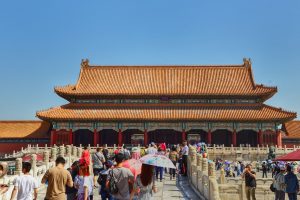
Start with the experiences that matter most. Beijing can anchor an interest in imperial history and a carefully chosen Great Wall outing. Chengdu can anchor pandas and time in the city. A Yunnan holiday can stay within a regional sequence instead of combining several distant national gateways.
Use the Beijing planning guide and Chengdu planning guide for those city decisions. For a regional alternative, the Yunnan family itinerary guide develops the specific Kunming, Dali and Lijiang choices. A national family guide helps you choose the pattern; the local guides supply the next level of planning.
More destinations are not automatically a better family holiday. Every hotel change involves packing, checking out, reaching transport, arriving and finding a meal. Remove the least important base before shortening every stay to a single night.
Book a room arrangement, not just a room label
List who sleeps in each bed before comparing hotels. Include all children in the booking, even when a child will share a bed. Ask the property to confirm the actual occupancy and bedding for the ages in your party, along with any breakfast or extra-bed charges.
| Requirement | Ask for a specific answer | Why the label alone is insufficient |
|---|---|---|
| Enough beds and permitted occupancy | Each bed’s size, extra-bed or cot availability, maximum occupants and children’s ages. | A family room can have a different layout from the one your party needs. |
| Two rooms together | Connecting internal door, adjacent rooms or merely the same floor; request the actual arrangement. | Adjoining and connecting are not interchangeable, and a request is not a confirmed allocation. |
| Easy access with children or older relatives | Vehicle stopping point, luggage walk, lift and any steps between reception and the room. | A transfer to an old-town entrance is not transport to the bedroom. |
| Rest and ordinary needs | Room noise, temperature control, private bathroom, breakfast times and laundry arrangements. | An attractive view or courtyard does not establish sleep quality or practical comfort. |
Get an essential connecting-room arrangement confirmed in writing; a general request in a booking note is not the same as a commitment. If it cannot be confirmed, decide whether a different room type, property or supervision arrangement works before payment.
Do the same with the arrival route. A village or old-town hotel may be beyond the vehicle stop. Ask for the reception pin, the walking surface and any luggage help, then check the route from reception to the actual room. A lift in one building does not establish step-free access throughout the property.
Keep passport reception and accommodation registration clear
Confirm the booking with the property using the nationalities and documents of everyone staying. China’s measures on accommodation for overseas guests say qualification requirements should not be used as a barrier to receiving them. That does not replace checking the room, document handling and arrival arrangements for your own reservation.
Hotels handle the required accommodation registration. Staying in a private home or another non-hotel residence is a different arrangement. The National Immigration Administration’s September 2026 guidance explains registration within 24 hours and the online service for non-hotel accommodation; the host assists with a first registration. Settle who will handle it before arriving at a private address.
Check entry requirements for every traveller, including each child, against their actual passport and route. When a child travels with one parent or another adult, check the relevant carrier and border authorities’ document requirements. A visa or entry arrangement for one family member does not establish the position of another.
Use nights to create rest and usable days
A four-night city stay normally gives three full local days between arrival and a move to the next base. A two-night stay may give only one. Count that plainly, then decide how many of those days should contain a demanding visit.
The example below uses seven nights: four in Beijing and three in Chengdu, with a flight transfer on day five. It is a planning pattern, not a confirmed flight route or package. Check suitable flights, passport reservations and your international arrival and departure before adopting it.
| Day | Plan | Hotel nights |
|---|---|---|
| 1 | Arrive in Beijing, reach the hotel and settle in. | Beijing night 1. |
| 2 | One prebooked imperial-city priority, with a meal and a shorter afternoon. | Beijing night 2. |
| 3 | A selected Great Wall outing only if its complete walking and access plan fits the party. | Beijing night 3. |
| 4 | A city or garden day, or a flexible day for rest and unavailable tickets. | Beijing night 4. |
| 5 | Transfer to Chengdu on an available suitable flight; count the whole day as a travel day. | Chengdu night 1. |
| 6 | The booked panda session and a lighter afternoon. | Chengdu night 2. |
| 7 | One cultural visit, tea or neighbourhood time chosen around the family’s interests. | Chengdu night 3. |
| 8 | Depart from Chengdu according to the actual flight schedule. | Departure; no eighth night. |
The Beijing day order must follow actual museum availability; the Palace Museum’s opening calendar matters more than the printed day number. In Chengdu, a panda session needs its own reservation. Neither a late international arrival nor an essential onward connection should depend on completing a major visit first.
If this feels too full, choose one region instead. If your family wants more cities, add real nights and travel days. Avoid disguising a long transfer as an extra sightseeing day simply because there is a possible photo stop along the way.
Compare door-to-door travel with the whole party
Compare the journey from one room to the next, not only the headline train or flight duration. A short train can still be inconvenient when both stations are far from your hotels. A private car can simplify luggage without making a long mountain-road day comfortable.
| Option | What to count | Confirm in advance |
|---|---|---|
| High-speed rail | Hotel pickup, station entry and security, the train, exit and the next hotel transfer. | Exact stations, every passenger’s documents, children’s ticket status, seating and luggage. |
| Domestic flight | Transfers at both ends, terminal processes, baggage and possible delays. | Correct airports and terminals, carrier child/baggage rules and whether the final day remains realistic. |
| Private road transfer | Real driving stages, suitable rest stops and the final hotel approach. | Vehicle capacity after luggage and child restraints, driver arrangements and any assistance. |
| Metro or other public city transport | Walks at both ends, changes, lifts, crowds and operating times. | A manageable route and a backup if the stairs or luggage make it unsuitable. |
Earlier parents’ accounts of journeys towards Lugu Lake described breaks, suitable hotel facilities and an intermediate rest night as important parts of the route. Another traveller described an exhausting single-day return. Those are individual road-trip experiences, not a timetable for another family; the useful lesson is to give long stages their own time.
Request a suitable child restraint for each child who needs one, with the type, availability and vehicle installation confirmed. Check the space left for adults, luggage, a folded stroller and any mobility equipment. The advertised passenger count alone does not tell you whether everything fits comfortably.
For rail or air travel, check the actual carrier’s current luggage and equipment rules before buying. Assign an adult to the children and another to the bags where your party allows it. Keep essential documents and the items needed during a delay accessible rather than buried in a large suitcase.
Arrange children’s train tickets and documents properly
China Railway’s explanation of children’s tickets uses age on the travel date: children aged six to under fourteen travelling with an adult need child-discount tickets, and those aged fourteen and above need full-fare tickets. Use the child’s own valid document; foreign passports are among the accepted documents.
Each ticketed adult may accompany one child under six without a separate reserved seat, subject to the railway’s free-child declaration requirements. A free child does not automatically have a seat. If a separate seat is wanted, or more children travel with one adult, arrange the appropriate tickets and declarations.
Keep every child’s original document available at the station, and seek the staffed channel if a gate cannot read it. Ask for seats together when booking, then check the issued allocation. A request for a group of seats is not a guarantee that inventory will provide it.
Check the complete walking route before bringing wheels
Ask about the entrance, the path through the visit, the exit and the final pickup. “Easy walk” can describe only part of a route. A recent Beijing outing was promoted as straightforward, while the author’s comments clarified that it was not a loop and was inconvenient with a stroller because climbing remained.
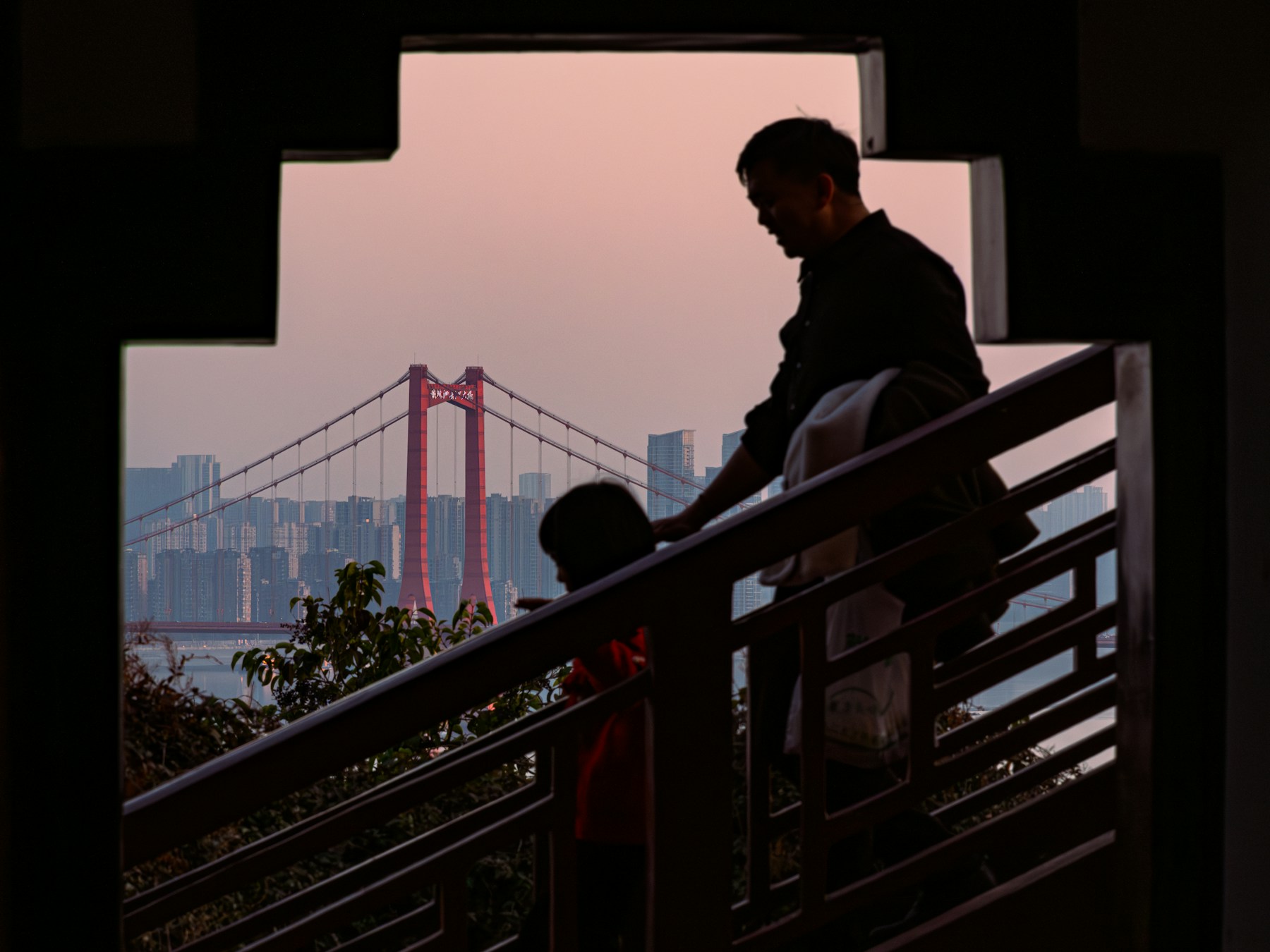
For a stroller, check surfaces, stairs, bridges and folded size on transport. For a wheelchair or a traveller who cannot use steps, request a separate access assessment: a path that two adults can lift a stroller across is not step-free. A scenic lift may remove one climb while leaving substantial walking at the top or bottom.
Agree a turning point before people become exhausted, and retain a way to finish early. If completing the route relies on repeatedly carrying both equipment and children, choose a different outing. A shorter visit with a pleasant meal can be a better day than the full advertised circuit.
Make meals and ordinary breaks part of each day
Choose the main meal stop before committing to an afternoon activity. Carry drinking water and a familiar snack for a transfer, and check how your usual feeding or food preparation will work at the hotel. Do not depend on finding the right meal at a remote stop precisely when a child becomes hungry.
Explain requirements specifically. Less chilli, vegetarian ingredients, a food allergy and halal preparation are different requests. Ask about broths, cooking fats, sauces and shared utensils where relevant. A mild dish is not automatically suitable, and a meal without pork is not automatically halal.
For allergies or individual health requirements, discuss the trip with your clinician and carry the information needed to obtain help. Tell the planner what practical arrangements the itinerary needs. A guide or driver should not be expected to make medical decisions for a child or older traveller.
Include toilets, seating and a quiet break in the plan. A full day should not mean continuous movement from breakfast to an evening performance. Leave some unstructured time when the family can stay in one place without feeling that a paid booking is being wasted.
Reserve the experiences that genuinely need a date
Start with the visits you would be most disappointed to miss. Check the official venue’s booking, age and document rules, then plan the surrounding day. A child may need an individual reservation even when admission is free; one attraction’s concession rules do not apply automatically to another.
For the Palace Museum or Chengdu Panda Base, use the official channels described in the city guides. Keep the booking confirmations with the passports used. If a provider handles reservations, ask what has actually been issued, and what changes if the desired session is unavailable.
For a craft workshop or hosted activity, confirm the host, language, duration, age suitability and what the child will actually do. Buying a ticket to a village or scenic area does not book a particular family activity, and a picture of another visitor making something does not establish current availability.
Agree a quieter-day option before it is needed
Give each major outing a useful alternative: an available indoor visit, a shorter permitted walk, a hotel afternoon or a different day. Rain, heat, fatigue and a missed reservation can all change the best choice. An alternative is only useful when its access, supervision and transport work too.
If one adult and a child stay behind, agree where the others will go, when they expect to return and how to make contact. Keep the hotel’s Chinese address with the adults who need it. Do not leave a child with a driver or guide on an assumption that sightseeing service includes childcare.
Before payment, ask which bookings and services can change and which costs are fixed. Confirm any extra charge for a second vehicle, a split party or a different hotel night. Good family planning gives you a clear response when the original day no longer suits the people travelling.
Request a proposal built around your family
Send Vero Trip your dates, gateways, nationalities, adult numbers and children’s ages. Add walking and standing limits, room and bed requirements, luggage, stroller or mobility equipment, child-restraint needs, food and prayer requirements, and two or three main interests. Include the usual rest pattern and the longest transfer your party is willing to consider.
Use the China family route collection to compare published outlines. Then request the actual hotel nights, vehicle and guiding arrangements, admissions, activities, meals and change terms. Private travel can offer flexibility when it is specifically arranged; a fixed small-group departure follows its confirmed schedule.
For a hillside-city stop, the Chongqing trip-planning guide explains hotel access, steps, luggage and the separate choice of a Dazu or Wulong excursion. Match the full route to the family before adding a distant day trip.
For a Shanghai family stop, the Shanghai trip-planning guide separates airport and station transfers, hotel bases, museum buildings and a dedicated theme-park day. Match each outing to the family before adding another regional transfer.
For a northern mountain stay, compare the Kanas and Hemu family logistics before choosing a cabin or resort room. Check heating, meals, the full bag-transfer approach, seasonal roads and an outside-mountain departure buffer rather than judging the stay from its exterior.
For a coastal city break, the Dalian planning guide explains hotel approaches, smoking-room choices, mixed coastal surfaces and the separate choice of Lüshun or Jinshitan. Build a shorter waterfront outing around the family before adding a hill viewpoint or resort transfer.
Related Journeys to Compare
These existing routes offer starting points for the region or travel interests discussed above. Read the full daily itinerary to see what is included. A visit described in this guide, a specialist session or an international border crossing is added only when confirmed in your own programme.