Updated 22 October 2026
Plan Kanas, Hemu and Altay as separate bases connected by mountain journeys, not one compact sightseeing area. Choose the season and your actual arrival point first, then decide where to sleep and how bags reach the room. For a first visit to both Kanas and Hemu, a selective five- or six-day local plan is a useful starting point when the dated access and connections work.
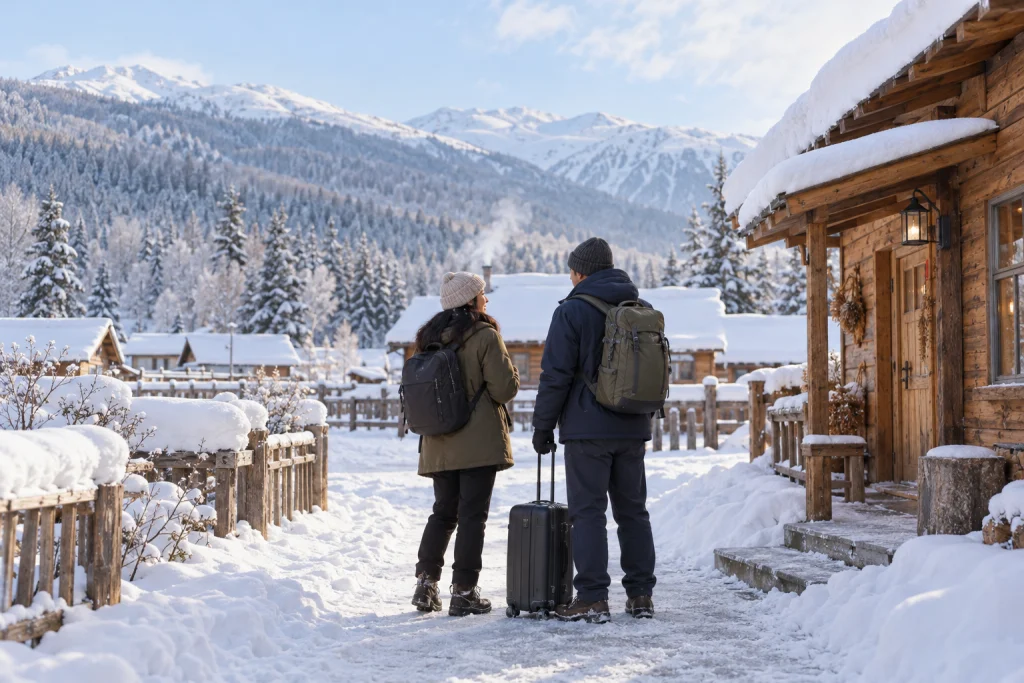
The main image is a village-arrival illustration. It does not show a particular Hemu guesthouse, real Vero Trip travellers or a confirmed service. The Kanas river photograph below shows a different season; neither image promises the conditions on your travel dates.
Understand the map before booking a room
Altay can mean the wider region or the city where you arrive. Hemu and Kanas require their own road and scenic-area arrangements. A search result headed Altay does not establish that its hotel is convenient for either village.
| Place | Its role in your trip | The important distinction |
|---|---|---|
| Altay city | An arrival or departure base and a separate city stay. | A room here is not a room in Hemu or beside Kanas Lake. |
| Burqin | A possible approach, supply or overnight stop. | Count the onward mountain journey rather than treating it as a scenic-village base. |
| Jiadengyu | The service-centre approach for Kanas. | Check whether the booked room is outside the scenic area and which daily transfers remain. |
| Kanas village / lake area | A base for selected Kanas scenery when the specific accommodation and access work. | Confirm the actual village, property and seasonal transport. |
| Hemu village | A separate village stay for local walks and time around the settlement. | Distinguish the old or new village from the visitor centre and Jikepulin resort area. |
Ask for the property’s Chinese name and map pin before comparing room prices. For Kanas, distinguish a Jiadengyu room from accommodation inside the scenic area. For Hemu, identify whether the room is in the village, near its visitor centre or in the Jikepulin ski-resort area.
Choose according to the experience you want. An overnight near village walks can make early or late local time easier. A resort hotel may better serve a comfort-focused or ski-focused stay, but still need transport to the village. Neither location is universally better.
Choose the season before copying a route
Summer greenery, autumn colour and winter village scenery require different plans. A recent publication can describe a previous trip, and an edited seasonal guide may contain advice from several months. Check the actual visit date and the current operating notice.
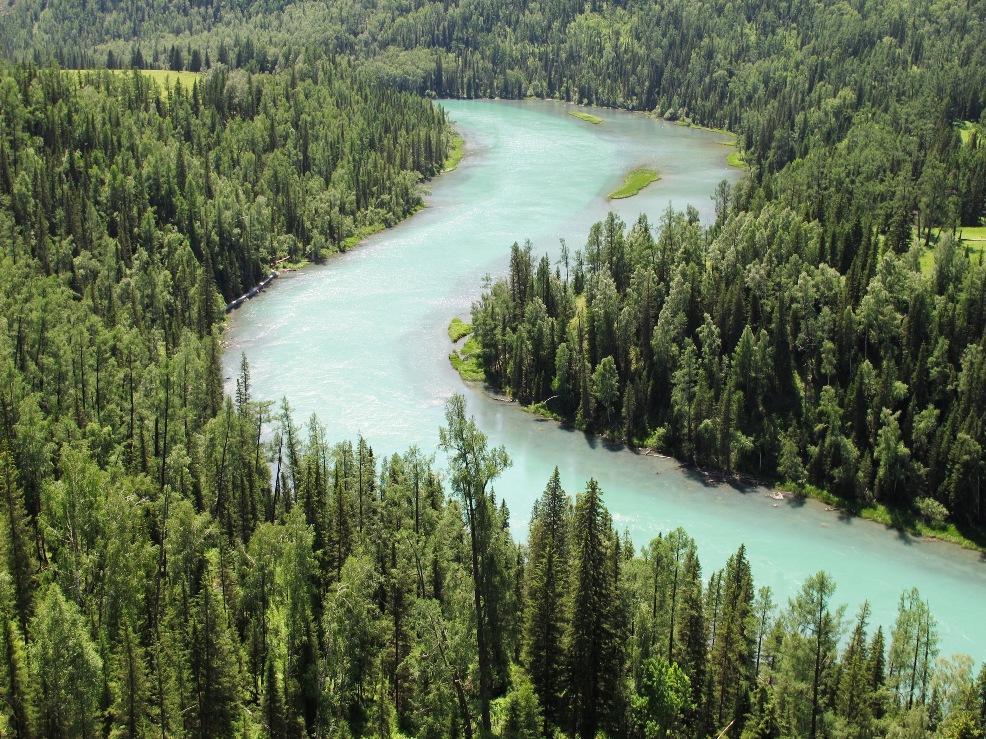
For a greener-season trip, establish the scenic shuttle, accommodation location and any repeat-entry arrangements on the dated ticket. A cabin inside the area can offer a different daily routine from a room outside it. Confirm which transfers and walking sections remain rather than assuming the entrance fare settles every journey.
For autumn colour, choose a trip you would enjoy even if leaves change sooner or later. A short peak-colour claim cannot guarantee the whole region will look the same. Avoid making one photograph or exact week the condition on which every non-refundable booking depends.
A winter-operating period is not a guarantee of deep snow, an open ski area or access to every viewpoint. Match the snow or skiing you want to a dated operating report, the actual road conditions and the facilities you intend to use.
What changes with the 2026–27 winter operation?
The scenic committee’s 10 October winter notice sets the period as 16 October 2026 to 30 April 2027. It lists a RMB100 three-day admission covering Kanas, Hemu and Baihaba, with advance purchase through the named official channels. Confirm the current order and separate transport inclusions; this is not an accommodation or all-transport price.
The notice requires a separate reservation for private-vehicle entry into Hemu, and four-wheel-drive vehicles fitted with snow tyres for self-driving into the scenic area. An unreserved Hemu vehicle uses the visitor-centre parking and the village transfer. Check the actual dated arrangements before committing to a rental or driver.
The same notice warns of weather-related controls and closed or undeveloped areas. Follow current local instructions. Do not infer that every winter shuttle has stopped, that every private car can drive anywhere, or that a paid hotel guarantees permission to pass a closed road.
Make the hotel-to-room journey explicit
A wooden cabin can be appealing, but the exterior is only one part of the stay. Compare the exact room, heating, bathroom and approach. A label such as upgraded cabin should identify the actual property and room category, rather than substitute atmosphere for practical details.
| Question | Why it changes the stay | What to request |
|---|---|---|
| Where is the property? | A village cabin, entrance-area hotel and ski-resort hotel serve different priorities. | Chinese name, map pin, entrance and complete transfer to the places you want. |
| How do bags reach the room? | A shuttle stop may leave a walk, snow-covered path or steps. | Pickup point, last connection, help available and bag allowance. |
| How is the room heated? | Comfort depends on the specific system and how it is controlled. | Heating operation, temperature control, hot water and a contact for problems. |
| What is the actual room? | A wooden exterior does not establish room quality or family suitability. | Dated room details, beds, bathroom, occupancy, noise and access. |
| What happens if roads close? | A delayed arrival can affect several prepaid nights. | Written change terms, evidence needed, whom to contact and possible extra costs. |
One recently read traveller described arriving on the fourth day of a Xinjiang trip and disliking a cabin stay, including the transfer with luggage. The property and travel date were not clear enough to generalise that judgement to all Hemu cabins. The useful lesson is to obtain the room specification and bag-transfer arrangement before accepting an upgrade.
Another author described staying at a Hemu hotel during changing road conditions and found the floor heating too warm after turning it up. That is one property experience, not a recommended temperature for every building. Ask how the actual room’s system works, especially when heating responds slowly.
For older relatives, children or someone with limited mobility, ask about the whole route from vehicle to bed. A lift inside a larger hotel does not remove snow or steps outside, while a ground-floor cabin does not prove an easy approach. Describe the actual assistance and room needs rather than relying on a general family-friendly label.
A ski-resort hotel is not a village cabin
As a concrete location example, Conrad Altay Hemu’s own page places it within Jikepulin International Ski Resort. Its Hemu address does not mean you can step directly from the room into every old-village walk. Ask for the specific village transfer and return.
The hotel’s Chinese property page says cancellation depends on the dated rate plan. Compare the actual terms alongside the room and transport. Do not assume a brand name, an empty-room display or a social recommendation establishes free changes.
Social accounts praised room space, dining and a possible ski stay, but some were promotional in tone and did not establish a completed dated ski trip. Treat them as questions to investigate, not proof of a free shuttle, an exclusive facility or a guaranteed ski opening.
If skiing matters, confirm the resort opening, the areas suitable for your ability, lessons, equipment and insurance scope separately. A village admission does not automatically include a ski pass or instruction. Give someone who does not ski a comfortable alternative rather than assuming they will spend the whole day waiting outside.
Choose days around the transfers and your priorities
Begin with the actual airport or railway arrival and departure. Altay Xuedu Airport, Burqin Kanas Airport, Altay railway station and Beitun City railway station are different locations. Check the dated flight or train before choosing the first hotel; do not assume a route operates simply because an old itinerary lists it.
| Time available locally | A practical starting choice | What to leave out |
|---|---|---|
| 3 days / 2 nights | Choose one mountain-area priority around the actual arrival and departure. | A promise to fully enjoy both Kanas and Hemu plus a long onward drive. |
| 5 days / 4 nights | A more selective two-area trip when the dated access and connections work. | Assuming the last mountain departure will always connect with a fixed flight. |
| 6 days / 5 nights | More space for village time, Kanas and an outside-mountain departure buffer. | Automatically adding another distant lake or border village. |
| Longer northern Xinjiang journey | Build road stages, seasons and hotel nights individually. | Treating Ili, Sayram Lake or the rest of Xinjiang as nearby extra stops. |
Send the arrival and departure service numbers, hotel pins, party size, luggage and any child-seat requirements to the transfer provider. Agree the meeting point, contact method and what happens if the service changes. Count the road stages and stops, not only the scheduled flight or train time.
A direct mountain arrival can work for a particular service and road condition, but it should not be the default after every late arrival. A town night can make the next stage more manageable. Equally, a town base is not a substitute for the village overnight if early local time is the main purpose of the trip.
Keep a workable sequence, not a race between villages
This six-day example protects arrival, selected scenery and departure. It is a planning pattern, not a locked tour or a promise that these roads and rooms will be available.
| Day | Purpose | Overnight / decision |
|---|---|---|
| 1 | Arrive and complete the first manageable transfer. | An outside-mountain base, chosen around the actual service and road conditions. |
| 2 | Transfer to the chosen Kanas base and take a modest local visit. | Kanas if the booked property and access work; otherwise adjust the sequence. |
| 3 | Selected Kanas scenery, with time for the planned transfers. | Same base; keep optional walks dependent on current openings. |
| 4 | Transfer to Hemu and enjoy the chosen village or resort setting. | The specific Hemu property you selected, with bags delivered by the agreed method. |
| 5 | A shorter local visit, then travel out of the mountain area. | A departure-side base; avoid placing an essential flight immediately after the mountain drive. |
| 6 | Complete the airport or railway transfer. | Use the actual service and an appropriate check-in margin. |
Reverse or shorten the two-area sequence when dated roads, transport or accommodation make that better. The three-day admission period and the overall holiday length are different planning matters: establish which days activate or use the ticket and what happens if a planned visit changes. Do not assume extra hotel nights extend admission.
A recent traveller described arriving in Hemu, extending a hotel stay when a road closed, then moving when it reopened and responding to another closure notice later. Their preference was to prioritise Kanas first. That is a useful example of how disruption changes priorities, not a rule that one sequence always prevents being delayed.
Decide which place is essential for your party and which can be dropped. If village time matters most, preserve that stay. If lake and river scenery is the priority, protect an appropriate Kanas base. Losing an optional stop is often easier than missing an essential departure.
Plan the response to a road closure before payment
Check the current scenic-area and local police notices before each mountain stage. Save the provider’s contact and the latest instructions offline. A social post announcing a closure does not establish that it remains in force, while a photograph of cars moving does not establish the whole route has reopened.
Ask what happens to the vehicle day, guide, meals and following hotels if travel is delayed. Who contacts the next property? Is an extra room payable? Can an unused visit move? Get the actual terms in writing rather than assuming every weather-related cancellation has the same financial result.
A Xinjiang Justice Department account describes a specific Hemu accommodation dispute resolved after bad weather prevented a family’s mountain trip. It illustrates the value of keeping the booking, conditions and communications. One resolved case does not establish an automatic refund outcome for every reservation.
Do not try to make a fixed onward connection by ignoring a road control. Contact the provider and adjust from a permitted place. Leave the last mountain night far enough from an essential departure to make the plan sensible for the season; discuss a larger buffer when the consequences of a delay are high.
Keep Baihaba conditional for foreign-passport travellers
Baihaba should not be added simply because its name appears on a combined admission. Confirm the exact place’s current access for each traveller’s nationality and the required permissions with the local authorities before arranging transport or a non-refundable room.
The Xinjiang border-management regulation distinguishes border-managed areas and the border belt, including document and approval requirements. A ticket purchase is not permission to enter every border location.
The National Immigration Administration’s 2026 electronic-permit announcement says foreign nationals use an in-person application at the relevant public-security exit-entry institution or designated police station. The online route described for eligible mainland Chinese residents should not be copied as a passport-holder’s procedure.
Ask 12367 or the competent local office about the actual destination, documents and application arrangements for your case. Keep Baihaba outside the core plan until those conditions are settled. There is no need to make an otherwise worthwhile Kanas and Hemu trip depend on an unconfirmed border extension.
Make short walks, food and rest part of the day
Choose a permitted local walk that fits the weather, surface and least mobile participant. A river viewpoint, a village path and a larger hill walk place different demands on the group. A photograph taken from a high position does not show the climb or the return.
Stay behind barriers and follow current closures. Do not walk onto frozen water, leave designated routes for a photograph or treat deep snow as an invitation to explore an unopened area. A shorter open visit and a warm break can be the better choice.
Ask the property what meals are actually available during your stay, including breakfast before an early departure. Travellers described limited choice at some quieter times; that does not mean every business is closed. Arrange suitable food for children and discuss allergies or dietary requirements before entering the mountain area.
For halal food, confirm ingredients, broths, fats, cooking alcohol and preparation with the actual provider. A meat name, a restaurant’s scenery or its location in Xinjiang does not settle that question. Include a practical prayer break when needed.
Ask for a proposal with the whole journey connected
Send Vero Trip your dates, nationalities, arrival and departure services, party size, children’s ages, luggage, room requirements and walking limits. Explain whether the priority is village time, Kanas scenery, skiing or photography, and how much flexibility you can keep.
Compare the Altay destination collection with the published nine-day winter outline. The longer outline also involves substantial travel beyond this local area; ask for the actual dated road stages, rooms, activities and included services rather than assuming it is the same as a short Kanas–Hemu stay.
For a family, the China family planning guide helps organise rooms, bags and rest. A useful written proposal should say where each night is, how you reach the room, what happens when conditions change and how you complete the departure. Those answers matter more than fitting another scenic name into the title.
Still choosing between Altay, Ili and the south? The Xinjiang north-and-south planning guide compares regional priorities, usable days, gateways and connections. Keep this Altay guide for the Kanas, Hemu and local overnight decisions.