Updated 31 October 2026
Plan a first trip to Chengdu around three or four hotel nights, one well-organised panda visit and time to enjoy the city at an ordinary pace. Four nights give three full days between arrival and departure: enough for pandas, city culture and either a separate excursion or more neighbourhood time. Keep one city base and choose the extra outing according to your interests.
Chengdu is also a gateway to much larger journeys. That does not make Jiuzhaigou, western Sichuan or Tibet quick additions to a city break. First decide whether this holiday is about Chengdu itself, city sightseeing with one excursion, or a multi-day route that starts here. The hotel nights and transport will look different for each.
For trips from November 2026: the Panda Base has announced winter entry windows from 1 November 2026 to 28 February 2027. Jinsha Site Museum is in a separately announced full-site closure, so it cannot be treated as a bookable city-museum alternative. The choices below keep a worthwhile Chengdu stay around the visits you can actually make.
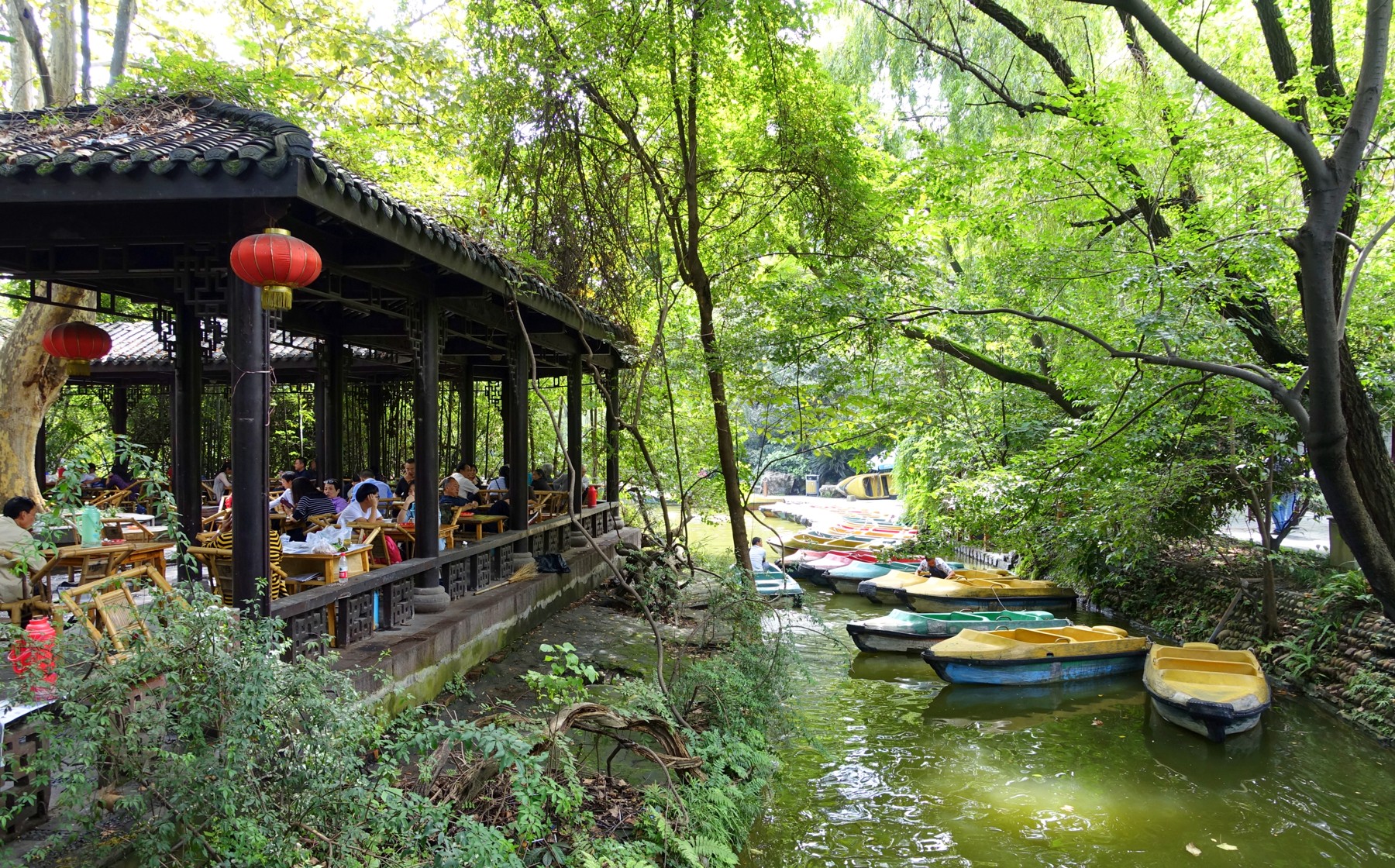
Cover photograph: People’s Park in September 2015, an archival city view. The seating, boats and vegetation shown do not establish today’s layout or any included tea service.
Choose the length by full days and one main priority
List your actual arrival and departure times before counting sightseeing days. A late arrival and an early departure can leave only one full day in a three-day stay. Give that day a clear purpose rather than assuming every headline attraction will fit.
| Stay length | Full days between travel days | What to keep |
|---|---|---|
| 3 days / 2 nights | One. | One priority outing and a little city time; a panda visit plus a modest afternoon can be enough. |
| 4 days / 3 nights | Two. | Pandas on one day, city culture and neighbourhoods on the other. |
| 5 days / 4 nights | Three. | Pandas, a city day and either another city day or one separate excursion. |
| A longer Sichuan journey | Count Chengdu nights separately. | Give mountains and distant scenic areas their own transfers and overnight bases. |
If pandas are the reason for the visit, arrange that session before adding a distant museum or mountain outing. If ancient Shu archaeology matters more, reserve a proper Sanxingdui day and leave a different city visit out. A trip can be complete without including every famous place within reach of the region.
For a mixed-interest party, agree one shared priority each day and keep some uncommitted time. Someone who wants tea and a slow walk will experience an itinerary differently from someone determined to photograph several neighbourhoods before lunch.
Keep one hotel base with a manageable final walk
Choose the hotel against your actual city activities and transfer needs. A central address can help, but station exits, pedestrian streets and room noise still matter. Save the hotel’s full Chinese name, address and telephone number rather than relying only on an English booking name.
| Base to compare | Why choose it | What matters at the actual property |
|---|---|---|
| Chunxi Road / Taikoo Li area | Shopping, restaurants and a contemporary central-city setting. | Noise, the walk to the right station exit, and the vehicle pickup point outside pedestrian areas. |
| Tianfu Square / People’s Park area | A central base for city culture and time around the older centre. | The full address, room comfort, lifts and the actual walk to transport. |
| Wenshu neighbourhood or another quieter city street | A stay that gives neighbourhood life more space. | Street and room orientation, evening food choices and access with luggage; atmosphere varies by property. |
| An airport or specific station hotel | A particular early departure or late arrival. | The correct airport, terminal or station and the hotel shuttle’s actual operating terms. |
Before booking, confirm reception for your passport, the required bed configuration, lift access and suitable heating or cooling. Ask where a vehicle can stop and how far you must carry bags. A lane-side property or apartment can have a very different arrival arrangement from a hotel lobby on a main road.
Staying beside the Panda Base is not necessary for an otherwise city-focused holiday. Compare the benefit of that one morning against the rest of the stay. Likewise, an airport hotel solves a particular flight-timing problem; it should not become a remote sightseeing base through an unclear location description.
Book the right Panda Base and match the winter session
The Chengdu Research Base of Giant Panda Breeding’s ticket page identifies the Chenghua District venue at 1375 Panda Avenue. Its admission does not include Dujiangyan Panda Valley. Save the complete venue name with the order so a transfer, ticket and meeting point all refer to the same place.
The official page allows reservations up to 14 days ahead and lists passports among accepted admission documents. Use the venue’s own booking channels or a platform it expressly authorises, then carry the original document used for the booking. If online payment fails, its stated on-site fallback depends on remaining tickets. Do not build the day around an assumed walk-in place or an unofficial paid fast-track offer.
The 16 October 2026 winter notice applies from 1 November 2026 through 28 February 2027: morning-ticket entry is 08:00–12:00, afternoon-ticket entry is 12:00–16:30, and park clearance begins at 17:30. These are entry windows, not guaranteed viewing periods or transport departure times. An afternoon ticket does not allow an early morning start.
| Your booking | How to organise the day | Keep separate |
|---|---|---|
| Winter morning session | Arrange the hotel departure around the actual 08:00 opening and chosen gate. Leave time for entry checks before selecting the visitor route. | A particular animal’s activity is not guaranteed. |
| Winter afternoon session | Have an unhurried meal first, then enter within the afternoon window with enough time for the chosen walk. | The final entry time is too late for every possible route. |
| Visiting outside the stated winter dates | Read the notice applying to your travel date before confirming the pickup. | Do not carry these dates forward to another season. |
For children or older companions, check the precise ticket category and document evidence rather than applying another attraction’s age rules. A discounted admission, an internal vehicle, a city transfer and an interpreter are different items. Ask for each part of a package to be identified before you pay.
Plan a panda visit around animals and your walking comfort
Choose a morning session if an early outing suits the party, then check the current opening time for your season. Avoid attaching a guarantee of activity to a particular hour: pandas can rest, and animal care or visitor management can change which areas you reach. Seeing one named panda is a different ambition from enjoying a broader visit.
Use the base’s current visitor map to choose the entrance, a manageable route and an exit. Agree the pickup gate precisely. A shuttle or private transfer does not remove walking and queues inside the grounds, and a ticket advertising transport should name its actual pickup and return conditions.
Follow staff instructions, keep voices low and do not feed, touch or try to attract the animals. Ordinary sightseeing admission should not be confused with volunteering, keeper activities or holding a panda. Any separately offered activity needs its own current, named operator and terms.
Leave the afternoon lighter unless you deliberately want a demanding day. A meal, hotel break or one modest city stop is a reasonable follow-up. Combining the Panda Base and Sanxingdui may appear in short itineraries, but it creates another transfer and another timed visit; it should be a conscious compromise.
Choose a cultural story before choosing another street
Chengdu’s museums, memorial gardens and shopping lanes do different jobs. Pick the subject that interests you, then give it an uninterrupted block. A city-history visit can explain the setting for the rest of the stay; Wuhou Shrine develops a Three Kingdoms interest, while Du Fu Thatched Cottage suits poetry and a garden setting.
| Interest | City choice | A useful way to visit |
|---|---|---|
| How Chengdu developed | Chengdu Museum, west of Tianfu Square | Follow one part of the historical sequence, then choose a smaller second subject. |
| Three Kingdoms history | Wuhou Shrine, with a separate Jinli stroll if wanted | Keep the museum visit distinct from browsing shops and food lanes. |
| Poetry and gardens | Du Fu Thatched Cottage | Allow time for interpretation and a slower garden walk rather than a brief gate photograph. |
| Ancient Shu at Jinsha itself | Jinsha Site Museum: unavailable during its announced full closure | Choose a different visit for its own merits; do not promise entry to the closed site. |
Chengdu Museum: a city-history afternoon with a clear focus
The museum’s ancient-history display introduces the development of Shu culture, including the Sanxingdui and Jinsha periods, before continuing through later Chengdu history. Begin with that sequence if archaeology matters to you. The museum also lists shadow-play and puppetry displays: choose one as a contrasting subject if the party still has energy. An exhibition of puppets is not a booked live performance.
The current visitor guide places the museum on the west side of Tianfu Square and lists Monday closure except public holidays. It identifies a first-floor information desk and bag storage in the south tower. Ask whether your particular case can be stored and when it must be retrieved before making the museum a departure-day stop.
A 2024 museum notice documented passport reservations and exchange at the staffed ticket window, with assistance for overseas visitors without local digital tools. It is useful evidence that foreign visitors have an official route, but its summer hours and booking terms are historical. Use the current reservation instructions for your date; carry the document matching the reservation and allow time for staffed checks. A dated admission confirmation is more useful than an old screenshot.
Jinsha closure: do not book around an assumed reopening
The Jinsha Site Museum’s own notice states that all areas are closed from 5 December 2025 to 30 April 2027 for comprehensive upgrades. Plan without an on-site visit during that interval. The end of an announced works period is not a promise of visitor admission the next morning: wait for the museum’s actual reopening arrangements before booking around them.
For a city-focused holiday, use a confirmed Chengdu Museum session to develop a broader Shu-history interest. It is a different collection and setting, not a substitute ticket to Jinsha or a guarantee that a particular Jinsha object is on display. An ancient-Shu excursion outside the city would require a separate day, admission and return plan.
For Du Fu Thatched Cottage, use the museum’s opening page and current notices. Special holiday extensions are date-specific. Choose a literary visit with time to look and listen, rather than trying to use an extended closing time to fit several unrelated attractions.
At People’s Park, tea can give the day a quieter middle. Look at the menu and understand the chosen seat, drink and any separately offered service before settling in. A park walk and a particular teahouse order need not be bought as one package.
Three city blocks for different kinds of afternoons
Use one of these as a flexible half-day shape, with a meal and a return that suit your hotel. They are independent planning ideas, not timed departures. Each leaves room to enjoy one part of Chengdu instead of repeatedly travelling across the city.
| City block | Suggested sequence | When to shorten it |
|---|---|---|
| History and tea | A confirmed Chengdu Museum visit, a meal around the centre, then People’s Park if walking and weather suit. | Keep the museum and a seated meal when rain or tiredness makes a longer walk unattractive. |
| Three Kingdoms and lanes | Wuhou Shrine as the cultural anchor, then a separate Jinli stroll and an agreed meal. | Finish after the main visit if the streets are too crowded for comfortable browsing. |
| Creative city | Eastern Suburb Memory as the main outing, then food or another nearby stop chosen around the return. | Choose the industrial setting and a café pause without relying on a particular temporary event. |
Eastern Suburb Memory, or Dongjiao Jiyi, offers a contrast to the temple and historical-museum day. A July 2026 government-published report describes international visitors exploring the converted factory setting, brick buildings and industrial features. Use that setting as the reason for going. A trade-week exhibition, demonstration or guest programme described in the report is not a standing activity included in an ordinary visit.
For the history-and-tea version, start with the confirmed museum slot and let the outdoor part move around it. Keep the visit selective: one historical period with time to understand its objects is preferable to racing through every floor. Use the information desk if you need help locating lifts or a suitable shorter sequence.
For the Wuhou version, give the historical material its own attention before entering the busier shopping lanes. A meal can be the finish rather than another transfer to a second famous street. If you have no interest in shopping, shorten Jinli and use the time for a quieter evening.
Choose between the creative-city block and another central shopping evening. They are different experiences and neither has to appear in every first visit. Check the actual exhibition or performance separately if that event, rather than the streets and buildings, is the main reason you want to go.
Allow time for an ordinary Chengdu evening
Choose one evening area rather than crossing the city to collect illuminated landmarks. Chunxi Road and Taikoo Li give a contemporary shopping setting; another night might be a meal and a short neighbourhood walk. Check the actual route back to your hotel before staying late.

For a Sichuan opera or face-changing performance, select the venue, date, start time and seating category. Confirm the show’s duration and whether tea or other extras are included. A short performance attached to another business is not necessarily the same experience as an evening theatre programme.
Keep photography considerate in parks, teahouses, religious sites and residential lanes. Ask before a close portrait, avoid blocking an entrance and respect a refusal. A place can be photogenic without being an unrestricted set for a staged shoot.
Use four nights without overfilling the middle days
This framework leaves three full days. The fourth day is a real choice: take one excursion that matters, or keep Chengdu as a city stay. Change the order around confirmed admissions, opening days, weather and the party’s energy.
| Day | Main choice | Night |
|---|---|---|
| 1 | Arrive, check in and settle into the hotel neighbourhood. | Chengdu, night 1. |
| 2 | The booked Panda Base session, a meal and a deliberately lighter afternoon. | Same base, night 2. |
| 3 | Choose a cultural anchor such as Wuhou Shrine or Du Fu Thatched Cottage, then a nearby neighbourhood or tea break. | Same base, night 3. |
| 4 | Choose one separately planned excursion, or keep a second relaxed city day. | Same base, night 4. |
| 5 | Depart according to the actual airport or railway schedule. | Departure; no fifth night. |
The published five-day Chengdu city and panda private tour keeps the main focus in the city, with pandas, cultural sites and neighbourhoods rather than a long intercity circuit. Compare its listed visits with your own priorities, then confirm the actual hotels, guiding, transport and admissions in the written quotation.
If you only have two full days, remove the separate excursion first. If you want several out-of-city visits, extend the stay or build an appropriate regional route. Keeping every attraction while shortening each stop is rarely the best way to get the slower holiday many people associate with Chengdu.
Choose one excursion and plan the complete return
Start with the subject you want to understand, then choose transport. A high-speed train covers only one stage: reaching the departure station, boarding, the final transfer and getting back all belong in the day. Save the exact station and attraction names in Chinese.
| Interest | Candidate outing | The decision before adding it |
|---|---|---|
| Archaeology and ancient Shu culture | Sanxingdui Museum in Guanghan. | Obtain the actual admission and plan station-to-museum transfers, interpretation and the return. |
| Historic water engineering and a town setting | Dujiangyan. | Decide which visitor area and how much walking you want, rather than adding every nearby attraction. |
| Daoist heritage or a mountain walk | A specified Qingcheng Mountain visitor area. | Front and back mountain plans differ; check the selected route, steps and any lift operations. |
| The monumental Buddha and a different city | Leshan. | Choose the actual viewing experience and transport; a boat view and a walking visit are different products. |
| More time for food, tea and city culture | Stay in Chengdu. | Choose this when an excursion would remove the part of the city you actually came to enjoy. |
For Sanxingdui, use the museum’s official visitor and reservation information. The museum is in Guanghan, not a central Chengdu neighbourhood. Confirm the current passport booking and entry procedure before booking the train around a particular session.
Make the return part of any excursion explicit: the exit you will use, where you meet the vehicle, any station connection and where bags are collected. If a museum is the priority, leave time to follow its story rather than treating the galleries as a race to a train. A separately confirmed out-of-city visit should not absorb the only relaxed Chengdu afternoon.
Check airports, stations, meals and weather
Chengdu Tianfu Airport, TFU, and Shuangliu Airport, CTU, are different airports. Use the actual flight number, date, terminal and code for a transfer enquiry. Do not make a connection between them on the assumption that “Chengdu airport” describes one building.
The airport operator publishes a guide to transfers between the two airports. Check current services for your date, luggage and connection requirements. A rail journey time is not the full time needed to collect bags, reach a platform, change terminals and meet check-in deadlines.
For trains, send the full station name from the ticket. Chengdu East and other Chengdu stations are not interchangeable pickup locations. Keep the hotel address available offline, and arrange a simple arrival option if the combination of late hours, luggage and transfers would be tiring.
Discuss meals in practical terms. Ask for less chilli if desired, but explain ingredients, allergies or religious requirements separately: a mild dish is not automatically suitable. For hotpot, confirm the broth, cooking fat, meat, sauces and shared utensils when these matter. Include a convenient seated meal in an excursion instead of hoping the station will have what the party needs.
Check the weather for the actual city or excursion area. Rain can favour an available indoor visit, but a museum substitute still needs its own opening and reservation check. Do not assume a mountain described online as “beginner friendly” has no steps or is suitable for every child. Ask about the full route, current access and the return before adding it.
Compare the complete city-day cost
Choose the day first, then compare like-for-like quotes. A private vehicle is useful for some trips, while a central museum-and-park day may work with public transport and a short final walk. The cheapest-looking bundle can still leave several important parts to buy separately.
| Cost or service | What the quote should name | Why it matters |
|---|---|---|
| Admission | The exact attraction, date, session and eligible ticket category. | A city transfer does not secure admission or permit a closed venue. |
| Local transport | Pickup and finish, vehicle capacity, waiting and any internal park transport. | The city car and an attraction’s own vehicle are different services. |
| Interpretation | The language, duration and places covered. | A driver, an audio device and a private guide are different arrangements. |
| Tea, meals and evening entertainment | Actual inclusions, dietary arrangements, show and seating if booked. | Browsing a lane or entering a park does not include every purchase. |
Price on request for a Vero Trip arrangement. Confirm the dated service list, room basis, exclusions and change terms in writing. If one visitor wants a slower day, ask for that version before paying for a second timed attraction.
Questions that change a first Chengdu itinerary
Can I visit Jinsha during a 2026 Chengdu stay?
Leave the site out during the announced all-area closure. Choose a confirmed city-history visit for a different collection, or plan another available activity. Do not travel to the gate expecting access to the grounds while the museum is closed.
Should I take a morning or afternoon Panda Base ticket?
Choose the session that works with your actual arrival, energy and transport. The November–February winter windows above start on 1 November 2026. A morning can suit an early outing, but no session guarantees a particular panda’s activity. Keep the afternoon light after a substantial walk.
What if the only city-culture day is a Monday?
Move Chengdu Museum to an operating day if that visit matters. Its published regular guide lists Monday closure except public holidays. Otherwise choose an independently open alternative; rain does not make a closed museum available. Confirm the actual operating day before buying the rest of the programme.
Is the five-day example a trip with five hotel nights?
No. The example has four Chengdu nights and three full days between arrival and departure. Add another hotel night only if the travel dates or desired programme require one. A late first arrival is not an additional full sightseeing day.
Keep Sichuan and Tibet extensions separate
Jiuzhaigou and Huanglong, western Sichuan mountain routes, and a journey to Lhasa need their own planning. They involve different transfer stages, overnight places and, where relevant, access and health considerations. A Chengdu city booking does not establish permission or readiness for those journeys.
If your next stage is the southern route towards Yunnan, use the separate Chengdu to Lijiang road-trip guide. Keep those overnight stages distinct from the full days you want in Chengdu. Let a longer journey begin with a worthwhile city stay rather than an exhausted checklist day.
Send Vero Trip your dates, flight or train details, party size, nationalities and children’s ages. Add your main interests, walking needs, hotel and room preferences, luggage and food or prayer requirements. The Chengdu route collection provides published outlines to compare; a dated proposal should identify the actual services and admission arrangements before payment.
For a longer holiday, the Sichuan regional planning guide compares Chengdu, Emei and Leshan, Jiuzhaigou and western highlands by usable days, hotel bases and transport.