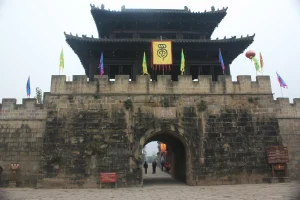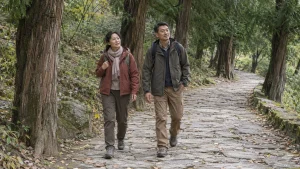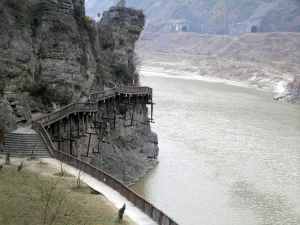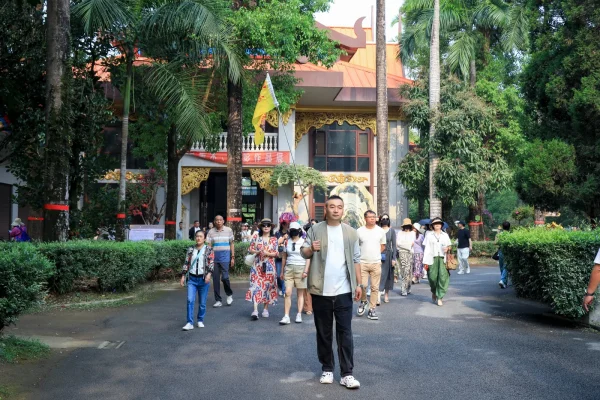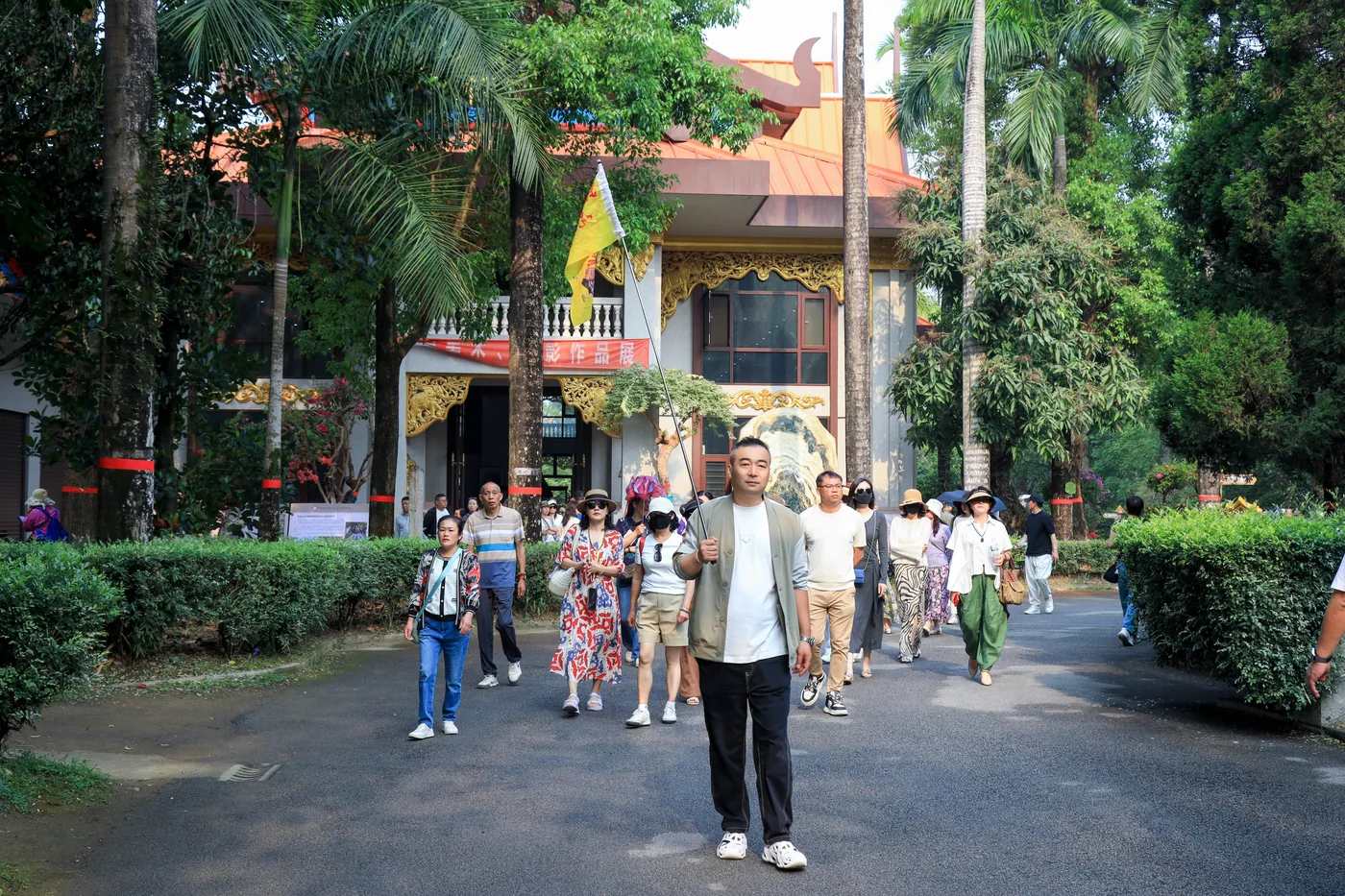
Start a visit to Qingxi Ancient City with one gate and one street. In this former garrison settlement in western Qingchuan County, you can see how an entrance controlled movement and how the main streets drew people in toward the center. Stay at street level for a short visit, then sit down for a copper hotpot or a simpler local lunch. For a second day in the area, arrange Tangjiahe separately and use Qingxi as your overnight base.
Find the right Qingxi before setting out
Save 青溪古城,四川省广元市青川县青溪镇 on your phone. The attraction is in Qingxi Town, within Qingchuan County. Guangyuan city, the Qingchuan county seat and Qingxi Old Town are different places. If arriving by train, share the exact station printed on your ticket with your driver. Ask for a confirmed transfer to an old-town drop-off suitable for your group, including the last part of the journey to your accommodation. A name in a route app does not settle where a driver can wait or how far you will walk with luggage.
Qingxi occupied a strategic spot on the historical Yinping Road and grew within a fortified outline. Its street plan is still a useful way to understand the town. The important thing to look for is how each street joins the next, even where bricks or buildings have been repaired. An old alignment can remain legible through newer materials. Dates attached to the settlement’s history should not be treated as the age of every building or wall you see.
Read the gate and the streets
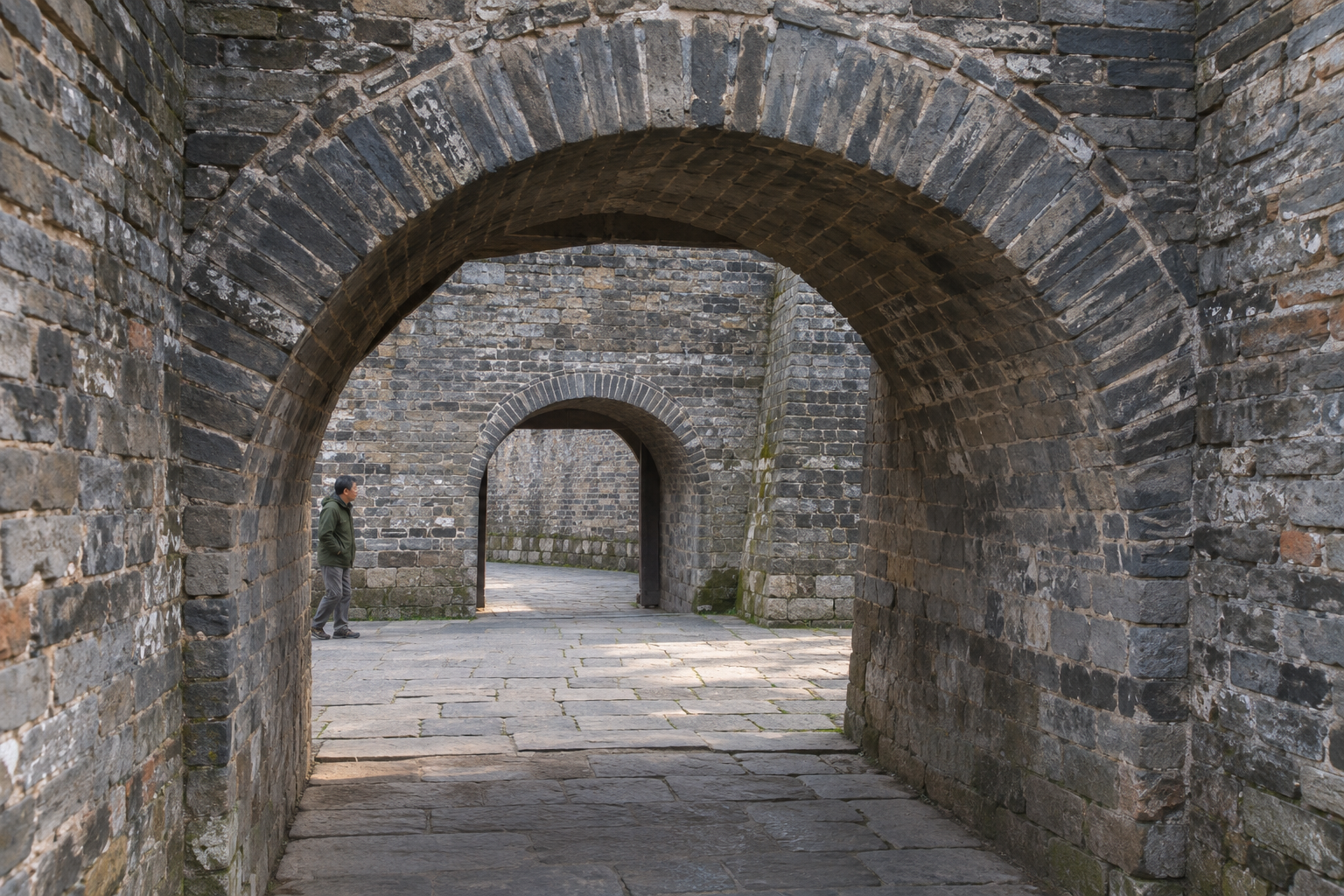
The east and west entrances are associated with a wengcheng (瓮城), an enclosed space in front of a main gate. From whichever entrance is open and close to your drop-off, look for the relationship between the two openings and the space between them. Notice what you can see straight through and what comes into view only as you move. You can understand why a layered entrance was easier to control without climbing stairs or making a complete circuit of the wall. Keep any picture-taking stop to one side of the passage.
Continue along one main street toward the middle of town. At the central crossing by the Bell and Drum Tower, turn and look down the other axis to see how the relatively short east, west, north and south streets fit together. Watch for a change from an active shopfront to an ordinary doorway or side lane. If an upper wall segment is open and everyone wants to climb, check the stairs and exit first, and make it a short addition. If the ground is wet or you cannot verify a return by stairs, use the street below.
| Route choice | What to notice | How to finish |
|---|---|---|
| Gate and approach | Look for the line of sight between outer and inner openings. | Stay at street level and return to your confirmed pickup. |
| One main street to the crossing | Compare the four directions and stop at a wide spot to see the street plan. | Turn back at the crossing or arrange lunch within a short walk. |
| A short open wall segment | Check whether an upper view shows the rooflines and town outline. | Find the steps and their return first. Skip if wet or closed. |
The district has Hui as well as other local cultural traditions. Treat a religious building as a community place and ask before going inside or taking pictures. If there is a history display or a performance on your date, you can choose it in place of a long walk. Plan a day that still works if a specific building or event is closed. Overseas groups have visited Qingxi and a published travel account describes ordinary sightseers walking the town and its walls. Ask about passport acceptance and the actual entry channel for a paid venue or a performance on your particular date.
Make lunch the mid-point of the visit
Qingxi is associated with copper-pot hotpot (铜火锅). It makes sense for a group that wants a long, seated meal and time to ask about the broth. If you prefer a shorter stop, ask about cooked dishes with local black wood-ear mushrooms (青川黑木耳) or have a simpler meal in town. Ask whether the kitchen can provide a mild dish and whether broth, lard, shared utensils or chili are already part of it. If halal preparation matters to you, verify the kitchen and the actual dish. Signs or the style of the vessel cannot tell you how a particular meal has been prepared.
| Part of the day | Plan | What to settle |
|---|---|---|
| Arrival and main walk | Use the agreed pickup from your hotel or the station named on your ticket. Choose one approach and street. | Drop-off pin, weather, luggage and the walking surface. |
| Lunch | Choose a copper hotpot with time to sit, or a quicker cooked dish in town. | Seating, ingredients and how long your group wants to stay. |
| Complete return | Meet at a vehicle-accessible point. Collect bags if needed, then go to the agreed hotel or station. | Driver waiting, final drop-off and a buffer for the last connection. |
Have your driver collect you from an agreed road-accessible point after lunch, or walk back to your hotel if staying in Qingxi. If you need to retrieve bags, set a short route that returns to the hotel before the onward transfer. A train later in the day works only if there is room for the meal, road conditions, bag collection and station entry. If the remaining margin feels tight, give yourself a night in Guangyuan or travel out the next morning.
In rain, shorten the visit to an open lower lane, a gate exterior and lunch. Smooth paving and steps deserve particular care. Comfortable shoes and a small bag make the return easier. If someone needs an entirely step-free morning, check the surfaces from drop-off through the gate, access to toilets and the restaurant entrance. Plan a shorter version your group can finish in both directions.
Choose between a town stay and a Guangyuan base
Stay in Qingxi if you want to see the streets without watching the pickup clock, or if you plan a separate day at Tangjiahe. Confirm dinner, passenger drop-off and check-in with all original passports at the particular property. Guangyuan is a better logistical base if you want easier access to city sights or an early train. The road day still needs a real return leg, all the way back to the agreed hotel or terminal. Plan to store bags at your hotel or confirm safe luggage room in your vehicle.
| Trip length | Suggested order | Hotel nights |
|---|---|---|
| 3 days / 2 nights | Arrive in Guangyuan. Use day two for a Qingxi road day with lunch, then return to Guangyuan. Depart on day three. | 2 Guangyuan nights. |
| 4 days / 3 nights | Arrive in Guangyuan, transfer to Qingxi on day two and walk the old town after lunch. Return to Guangyuan on day three and depart on day four. | 1 Guangyuan, 1 Qingxi, then 1 Guangyuan. |
| 5 days / 4 nights | Arrive in Guangyuan, go to Qingxi on day two. Use day three for a confirmed Tangjiahe visit or a second town day. Return to Guangyuan on day four and leave on day five. | 1 Guangyuan, 2 Qingxi, then 1 Guangyuan. |
Tangjiahe is a separate protected-area visit. Confirm its current visitor entrance, transport arrangements, public routes and practical ticket procedure before making it the focus of day three. Keep to open routes and give wildlife space. If you would rather spend that day closer to Guangyuan, compare Zhaohua’s gates and courtyards, the historic road landscape at Jianmen Pass and the Cuiyun Corridor, or the gorge crossing at Mingyue Gorge. Use the Guangyuan destination guide to look at bases and other regional trips.
Price on request. Tell your Verotrip travel consultant your arrival station, hotel, walking needs and the place you need to reach at the end. Ask for a written proposal covering driver waiting, all road legs, bag storage, meal arrangements, language assistance, and any hall, performance or separate nature visit you want. Build a return plan even when those extras are still undecided.
Questions about Qingxi Ancient City
Do I need to climb the wall to see the old defenses?
Start at street level. From an open east or west gate approach, look for the outer and inner openings and where you can stand to read their alignment. A wall walk is optional and depends on actual access and footing.
Are Qingxi and Tangjiahe in the same place?
Qingxi is the town. Tangjiahe is a separate nature visit reached by road. You can sleep in Qingxi and plan Tangjiahe for another day, after confirming entrance, transport and the current public route.
Where should I arrange lunch if there is a late train?
Choose a restaurant close to your pickup point, agree on a suitable meal, then return for bags before leaving for the station. Check the final ride before adding any hall or wall steps. A longer copper hotpot is better when the afternoon is flexible.
Can I travel with a foreign passport?
Historical visits by overseas travelers are documented. Carry your original passport and confirm what the hotel and any separately ticketed site will accept, including the actual channel. An old town walk and entry to a separate venue have different arrangements.