Start Lijiang Museum with one Dongba manuscript page. Shapes may seem familiar before their meaning is known: what did a reader need to remember or recite alongside the marks? Follow that question to one painted or carved object, then leave time for lunch and the hotel return.
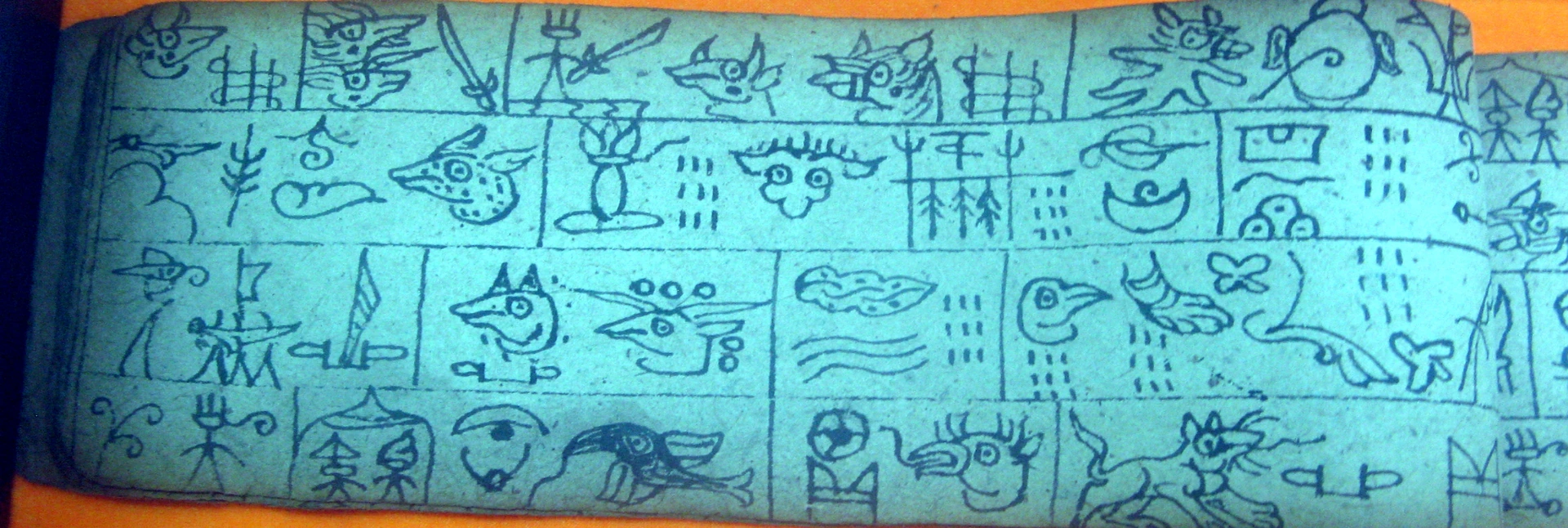
Save 丽江市博物院 (Lijiang Museum) and 东巴文化博物馆 (Dongba Culture Museum) to distinguish the museum from a performance venue or a shop. The cover is a local example of the script: it shows a codex photographed at Wenchang Gong, Lijiang, in 2007. It is a useful page to practise looking at before your visit; it is not a photograph of the museum’s current displays.
Choose a small number of things to understand
A good museum visit does not require reading every label. Choose two or three kinds of material that interest you, and allow enough time to compare them. In a 2021 lecture, the museum’s deputy director described Dongba holdings in four broad groups: documents, paintings, carving and sculpture, and ritual implements and clothing. Those are collection categories, not a promise that every example will be displayed during your visit. Southwest University published the curator’s lecture report.
| Interest | Look for, if displayed | Useful question | Common misunderstanding |
|---|---|---|---|
| Writing and storytelling | Manuscript pages and explanations of pictorial writing | How did the written marks work alongside spoken knowledge? | A recognisable picture gives you a complete translation. |
| Images and materials | Painted paper or wooden cards, scrolls and carved objects | What changes when the image is carried, worn or displayed? | A similar-looking object in a souvenir shop has the same age or purpose. |
| Ritual clothing and implements | Headwear, clothing or tools identified by the museum | Who used this object, and in what setting? | A display guarantees a live demonstration or performance. |
| Local context | The current introductory panels and any relevant temporary exhibition | How does this material relate to the wider history of Lijiang? | An exhibition advertised several years ago is still installed. |
Pair manuscripts with one object group for a manageable introduction. Drawing interests can stay longer with painting; cultural-history interests may follow captions linking objects and use. Today’s open displays should set the actual route.
Start with the manuscript, then ask what the page cannot tell you
Picture-like signs make Dongba manuscripts visually approachable, but an appealing page is not a phrasebook. The relationship between writing, recitation and knowledge passed between practitioners matters. A 2015 National Museum of China exhibition of loans from Lijiang included manuscripts alongside painted cards, wooden printing blocks and other objects. Its explanation connected the documentary material with oral transmission. That exhibition took place in Beijing; its object list is historical context, not a current Lijiang display checklist. Read the National Museum’s exhibition announcement.
Practise looking with the cover: trace a ruled row, find its divisions and notice repeated clusters or pointed forms without assigning meanings. At an available museum page, repeat the exercise and then read what kind of document it is.
If interpretation is a major reason for visiting, arrange it before the day. Tell your travel consultant that you want help understanding the exhibits, rather than simply an escort to the entrance. An English-speaking driver, English booking assistance and an English museum explanation are different services. Confirm which one the written arrangement provides.
Read the object label before judging its age
Establish original, later work, reproduction or explanatory reconstruction before describing an object. Each answers different questions. A copy can reveal a fragile page without becoming its original, while an old photograph proves neither current display nor age.
The curator’s examples range from a land deed to ritual manuscripts, painted cards and a five-panel crown. If comparable items are visible, ask how an image was carried, displayed or worn. Their intended audience may be less obvious when everything lies in a flat case.
Compare support as well as picture: paper, wood and cloth change presentation and handling. Follow the museum’s identification rather than treating colourful images as one art form. Photograph permitted labels for context without touching or entering a closed area.
This is also a different visit from the Baisha murals. Choose the museum for a collection-led introduction to Dongba material culture; choose Baisha for its own heritage setting and the wall paintings that are accessible on your date. Doing both can be worthwhile across separate days, but neither should be described as a substitute display of the other’s originals.
Check the programme without building the whole day around an old exhibition
Lijiang’s official media described the museum in 2020 as a window into local culture for Chinese and international visitors. Its account discussed a Dongba culture exhibition and a separate presentation connecting Lijiang’s different forms of heritage. The report also included temporary exhibitions, so its full programme should not be carried forward as today’s schedule. Read the dated Lijiang museum report.
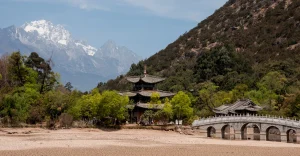
The setting offers something to look for before reading a label. In May 2026 the old-town cultural tourism authority described the museum’s arrangement as san fang yi zhao bi (三坊一照壁): three wings around a court, with a screen wall on the fourth side. It placed the building by Black Dragon Pool. Use the museum name to confirm the visitor entrance for your date; a map pin for the lake may lead you to the start of a park walk instead. The local authority’s illustrated museum account, published by Yunnan Net.
Before setting out, confirm that the museum and the part most important to you will be accessible. If a particular manuscript, painting or room is essential, ask about that item specifically. General opening information does not confirm that every gallery is available. When an important display is unavailable, decide whether the remaining material still justifies the journey or whether another day would work better.
Workshops, school activities and festival programmes need their own confirmation. They may have limited places, a defined audience or a short run. Do not build a family day around a craft session merely because a past visitor photographed one.
A complete museum half-day from your Lijiang hotel
Start at the hotel. Have breakfast, leave large bags at the property if storage has been agreed, and carry only what you need for the visit. Confirm the museum’s current arrival point in Chinese with the driver or travel consultant. If your accommodation is inside a pedestrian lane, identify the meeting point you can actually reach with your group.
After orientation, give the selected manuscript or art thread measured attention and pause before another gallery. Small print and close looking can tire a group despite little distance. Agree the reunion before companions follow different interests.
Finish with a real seated lunch instead of depending on an unverified museum cafe. A shorter understood selection and meal can work better than hungry looking followed by another rushed attraction.
Return to the hotel, or make one deliberate addition. If the weather and your energy suit it, consider a separate visit to Black Dragon Pool. Confirm its entrance, access and any applicable admission independently. Otherwise, return to the hotel for a rest. A museum transfer does not automatically include waiting time, a park visit or a later hotel return; put the whole sequence into the transport arrangement.
Food and the best accommodation base for this visit
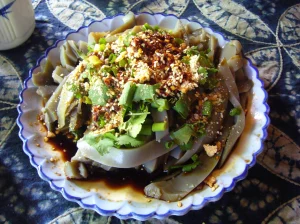
For lunch, choose a meal that matches your appetite and dietary needs rather than trying to sample every local speciality. Lijiang baba can be a small bread-based option; chickpea jelly is another local dish, but its sauce matters as much as the main ingredient. A shared hotpot is a more substantial meal and takes longer. Ask about meat stock, lard, chilli and other ingredients where relevant. Our Lijiang food guide explains these choices in more detail.
A museum half-day does not require moving hotels. A road-accessible edge of Dayan can make hotel transfers and luggage handling simpler while retaining access to the old town. Shuhe can suit a stay already centred on that area, but include the transfer to and from the museum in the day’s plan. Do not select a property solely because an online description calls it close to an attraction.
Check the actual room and access: steps, the walking distance from the vehicle, noise, heating or cooling for your dates, and luggage assistance. A courtyard photograph does not answer those questions. Use the Lijiang accommodation-area guide to compare bases before choosing a named property.
| Length | Suggested rhythm | Hotel nights | Reason to choose it |
|---|---|---|---|
| 3 days / 2 nights | Arrive and settle in; museum, lunch and optional park; depart. | Two nights at one Lijiang hotel. | A short city stay with one clear cultural focus. |
| 4 days / 3 nights | Add a separate Baisha visit with its own lunch and hotel return. | Three nights at the same base. | Compare museum objects with a different heritage setting without combining everything in one day. |
| 5 days / 4 nights | Add a quieter old-town or village day, with time to rest and change plans. | Four nights at one base unless a specific move is agreed. | More flexibility for mixed interests, weather and a slower pace. |
These are suggested arrangements, not fixed departures or lists of included services. Arrival and departure days depend on your actual train or flight. Use the broader Lijiang travel guide when combining the city with other destinations.
Access, weather and the cost of a planned visit
| Detail | What to settle before travel | Practical effect on the day |
|---|---|---|
| Entry and identification | Current entrance, booking or registration process, and the accepted process for your original passport. | A general report of international visitors does not test every passport or online channel. |
| Walking and standing | Steps, available seating, access to the chosen displays and your comfortable standing time. | Allow breaks; a museum is not automatically a step-free or seated activity. |
| Rain and cold | Outdoor approach and transfer arrangements, plus a shorter return option. | Indoor displays do not remove the journey between the vehicle, entrance and hotel. |
| Language | Whether an English explanation is arranged, for how long and with what focus. | Do not assume every label or staff interaction will be available in English. |
| Transport and luggage | Meeting point, vehicle waiting, final hotel return and agreed bag storage. | Keep large luggage out of the sightseeing plan unless its handling is specifically arranged. |
| Fees and inclusions | Any applicable admission, interpretation, transport, meals and hotel costs as separate items. | Compare the complete written plan, not an isolated old ticket price. |
Frequently asked questions
Can I visit the museum and Black Dragon Pool together?
They can form a practical cultural and park combination if both are accessible on your date and the transfers work for your group. Plan the museum first if its displays are your main interest, keep lunch in the schedule, and treat the park as a separate visit with its own entrance and access requirements.
Will I see someone writing Dongba script?
Do not assume so. A photograph of a demonstration or a dated event report does not establish a daily activity. If a live explanation or demonstration is important, confirm the specific arrangement before including it in your plans.
Is the museum suitable for visitors who cannot read Chinese?
Objects and images can still be engaging, but understanding their context may require additional interpretation. Choose a small number of interests and confirm language support. Ordinary international-visitor context is documented; your actual entry and identification process still needs checking for the travel date.
Does a suggested Verotrip itinerary include all tickets and services?
No inclusion should be assumed from this guide. Price on request: admission arrangements, interpretation, transport and waiting, meals and accommodation must be itemised in the written proposal. A suggestion is not a confirmed departure.
Plan a Lijiang stay around what you want to understand
Tell your Verotrip travel consultant your dates, hotel area, group size, walking and standing limits, and whether your priority is manuscripts, painted material or wider local history. Include any dietary needs and the language support you want. That makes it possible to discuss a complete museum day with lunch and a clear hotel return, then connect it sensibly with the rest of your Lijiang stay.
Cover photograph: Dongba codex at Wenchang Gong, Lijiang (2007). Photograph by G41rn8, via Wikimedia Commons, CC BY-SA 4.0. Resized and converted to WebP; displayed crops use the same license.