
Updated 6 October 2026
If you are deciding where to stay in Lijiang Old Town for a short first visit, start with a hotel near Dayan’s road-accessible edge and check the actual walk to your room. Choose Shuhe when you want to spend more time in that northern old-town area, or Baisha when village visits are the reason for your stay. For heavy luggage, limited walking or a late arrival, a confirmed vehicle stopping point and suitable room access matter more than a pretty courtyard photograph.
The booking decision has three parts: the neighbourhood, the exact building and your arrival arrangements. This guide helps you compare all three. For sightseeing days and excursions, use the separate Lijiang travel guide; for your other overnight stops, see where to stay across Yunnan.
Compare Dayan, Shuhe and Baisha before choosing a hotel
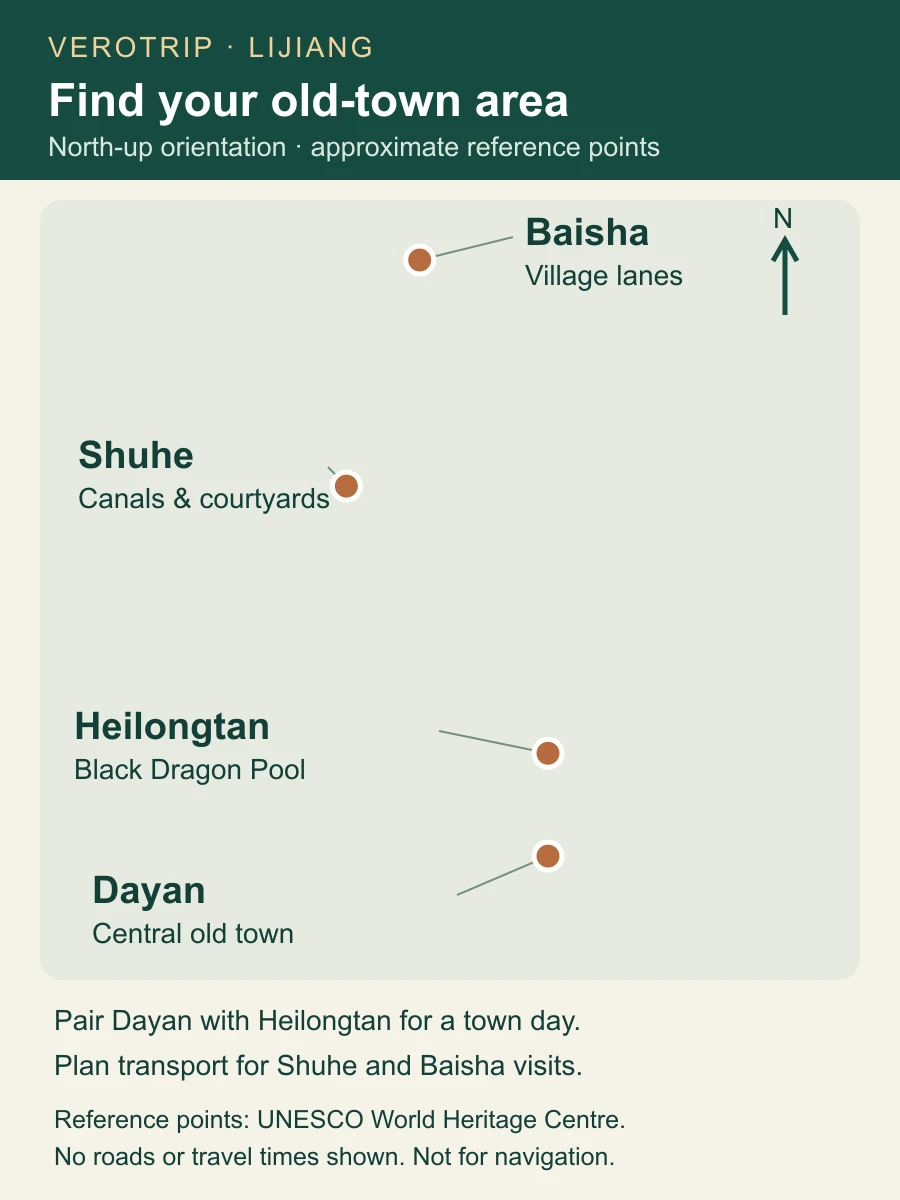
Dayan is the central old-town base, while Shuhe and Baisha are separate areas to the north. The UNESCO component locations make that separation clear. Staying in one does not put all three on your doorstep. Pick the area that suits your evenings and most frequent outings, then investigate the property itself.
On a phone, swipe the table sideways.
| Base | Best reason to choose it | Check before booking |
|---|---|---|
| Dayan road-accessible edge | A first short stay with central old-town walks and straightforward meeting arrangements. | The real route from the stopping point to reception; an “edge” listing may still have stairs. |
| Inside Dayan’s lanes | You want to return directly to a courtyard setting after an evening walk. | Luggage handling, nearby evening activity, room position and the route after dark. |
| Shuhe and its surroundings | You plan to enjoy Shuhe locally and are happy to travel separately to Dayan. | Whether the address is inside Shuhe or on an approach road; arrange the last part of each transfer. |
| Baisha village area | Village lanes and nearby cultural visits are central to a longer, slower stay. | Meal options for your arrival time, heating or cooling, and a booked return ride after outings. |
| A modern hotel outside the historic lanes | Practical access is your priority, especially with bags or specific mobility needs. | Confirm vehicle access, the actual lift route and room facilities; modern does not guarantee step-free. |
Should you sleep inside Dayan or just outside?
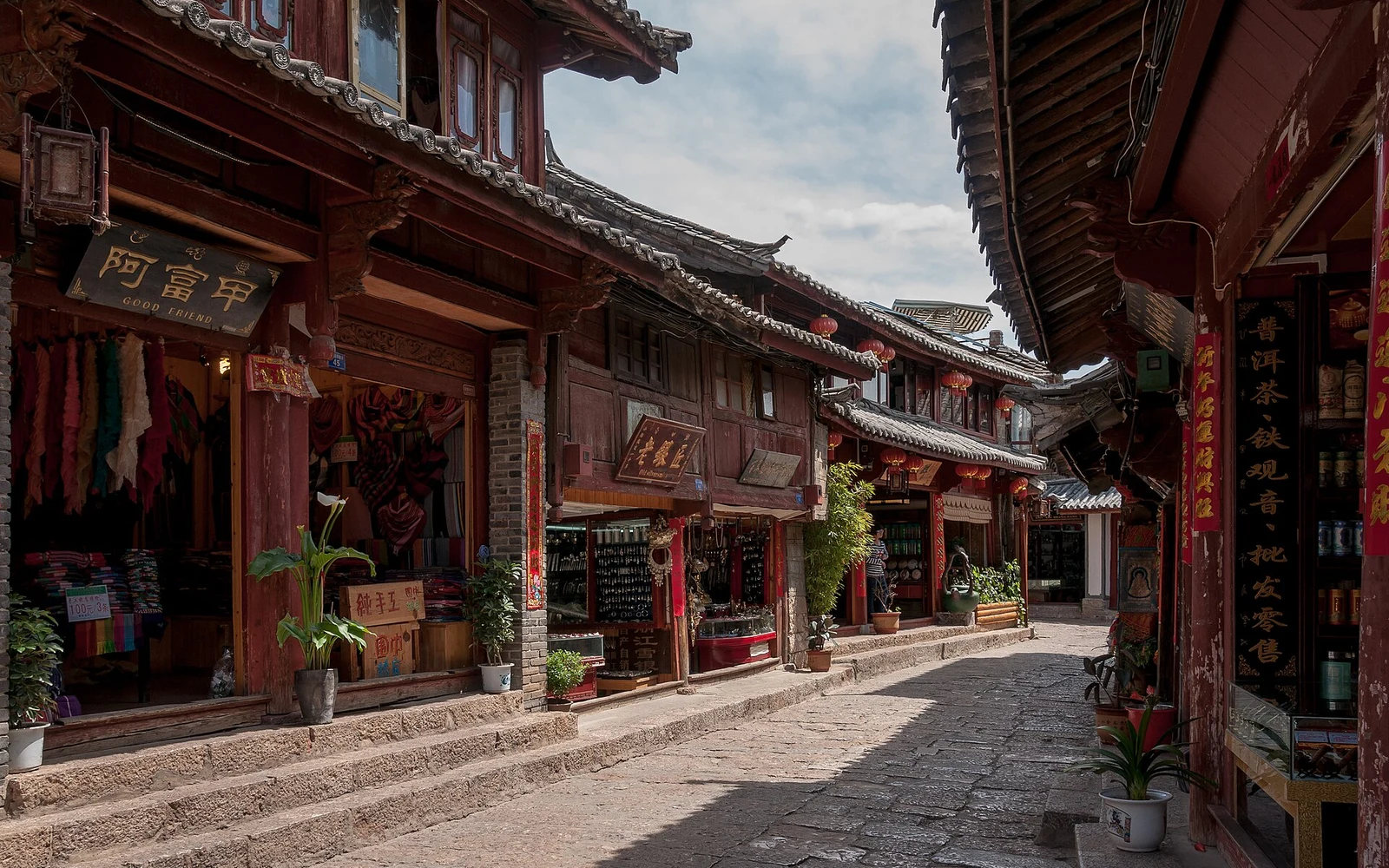
Inside can work well if you travel light and want the atmosphere immediately outside your door. Near an accessible edge is a useful starting point if you expect frequent pickups, have large suitcases or need to leave early. Ask for the name and location of the usable entrance: “five minutes from the old town” may describe a different point from your hotel’s actual door.
Do not assume every courtyard is quiet or every central lane is noisy. Ask whether your room faces a busy lane, an internal courtyard, a restaurant or a service area. If sound matters, request the specific room position in the booking notes and read recent, property-specific feedback. A general neighbourhood label cannot promise a quiet night.
When does Shuhe or Baisha make more sense?
Choose Shuhe because you want to spend time there, not because a hotel listing calls every northern location “Old Town.” If you expect to eat or explore Dayan most evenings, include those repeated transfers when comparing room prices. Moving to a new hotel for just one night can add packing, waiting and another luggage handover.
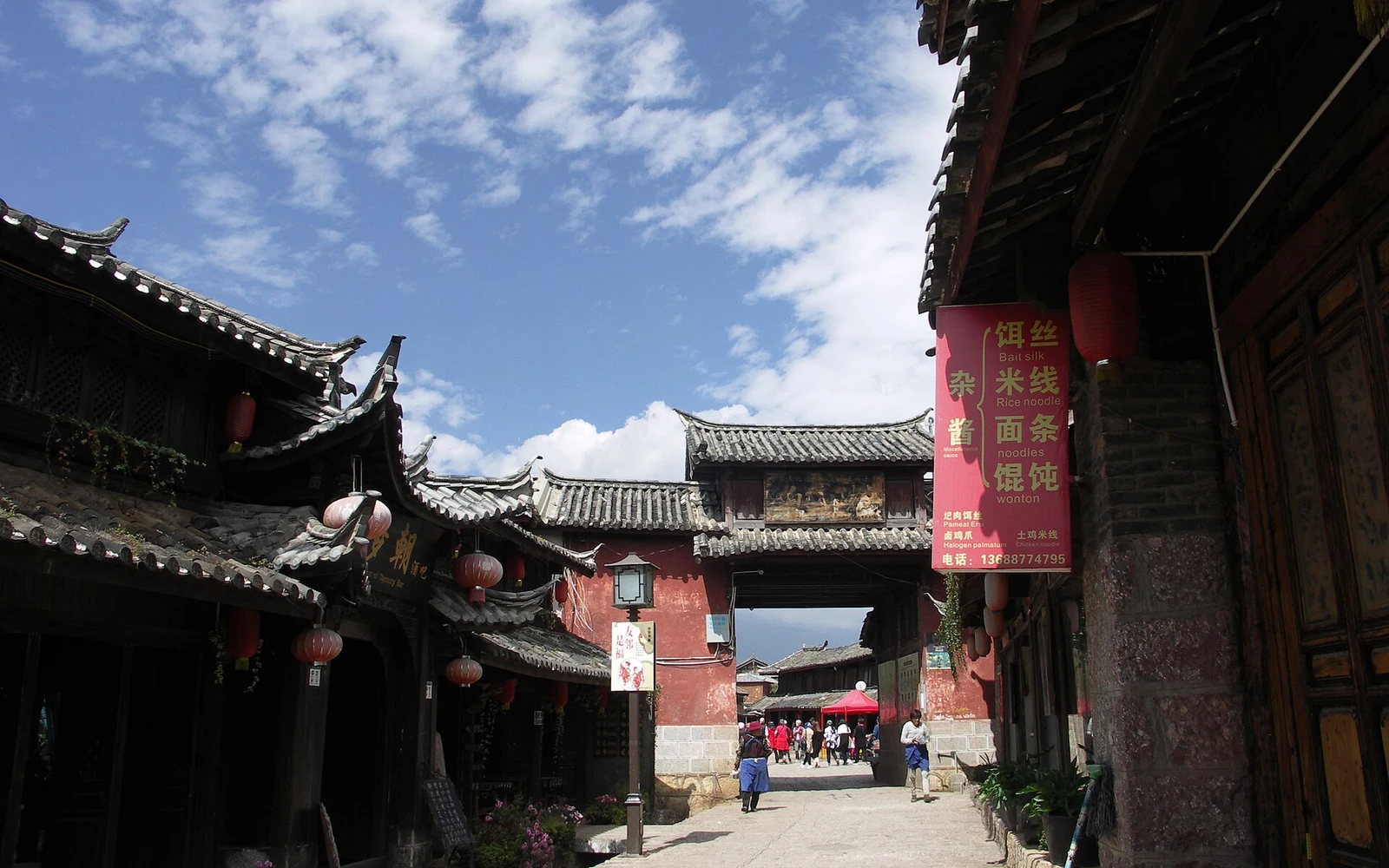
Baisha can suit a deliberate village stay, especially when your plans include local heritage visits. Establish what you will do for dinner and how you will return after dark. Mountain views depend on the room’s outlook and the weather; choose a stay you would enjoy even on a cloudy day.
Check the building and room, not just the hotel category
A courtyard inn, resort and city hotel can solve different problems. Before a non-refundable booking, ask for practical details about the room category you will actually receive. “Ground floor” is not enough if there are steps between the road, reception, courtyard and bathroom.
On a phone, swipe the table sideways.
| Your priority | Ask for this detail | What the answer helps you decide |
|---|---|---|
| Avoiding a long luggage carry | Walking distance and surface from the agreed vehicle stop; who handles bags and at what cost. | Whether the arrival is manageable with your suitcases. |
| Limited mobility or a wheelchair | A continuous route from vehicle to room, doorway widths, thresholds, bathroom layout and any lift. | Whether this exact room suits your needs; request photos or a short video. |
| A quieter night | Room position, nearby activity and whether the requested room location is confirmed. | Whether the property can meet your sleep priorities. |
| Children or several adults | Actual bed sizes, occupancy limit, extra-bed or cot availability and any connecting-room arrangement. | Whether everyone has a suitable, confirmed sleeping place. |
| Comfort in your travel season | Heating or cooling in the room and bathroom, hot water and any extra charge. | Whether attractive photos hide facilities that matter to you. |
| An early start or late arrival | Reception arrangements, breakfast times, luggage storage and after-hours contact. | Whether the hotel fits your train, flight or day-tour schedule. |
Hotel names from a search list are only a starting point. For example, Amandayan describes a hilltop setting and transfers on request, while Pullman Lijiang lists an address on Shuhe Old Town Entrance Road. These are different locations, not interchangeable “Lijiang Old Town hotels.” Use the property’s current information to ask better questions; neither example means a particular room or transfer is included in a VeroTrip booking.
Plan all three stages of an airport or railway arrival
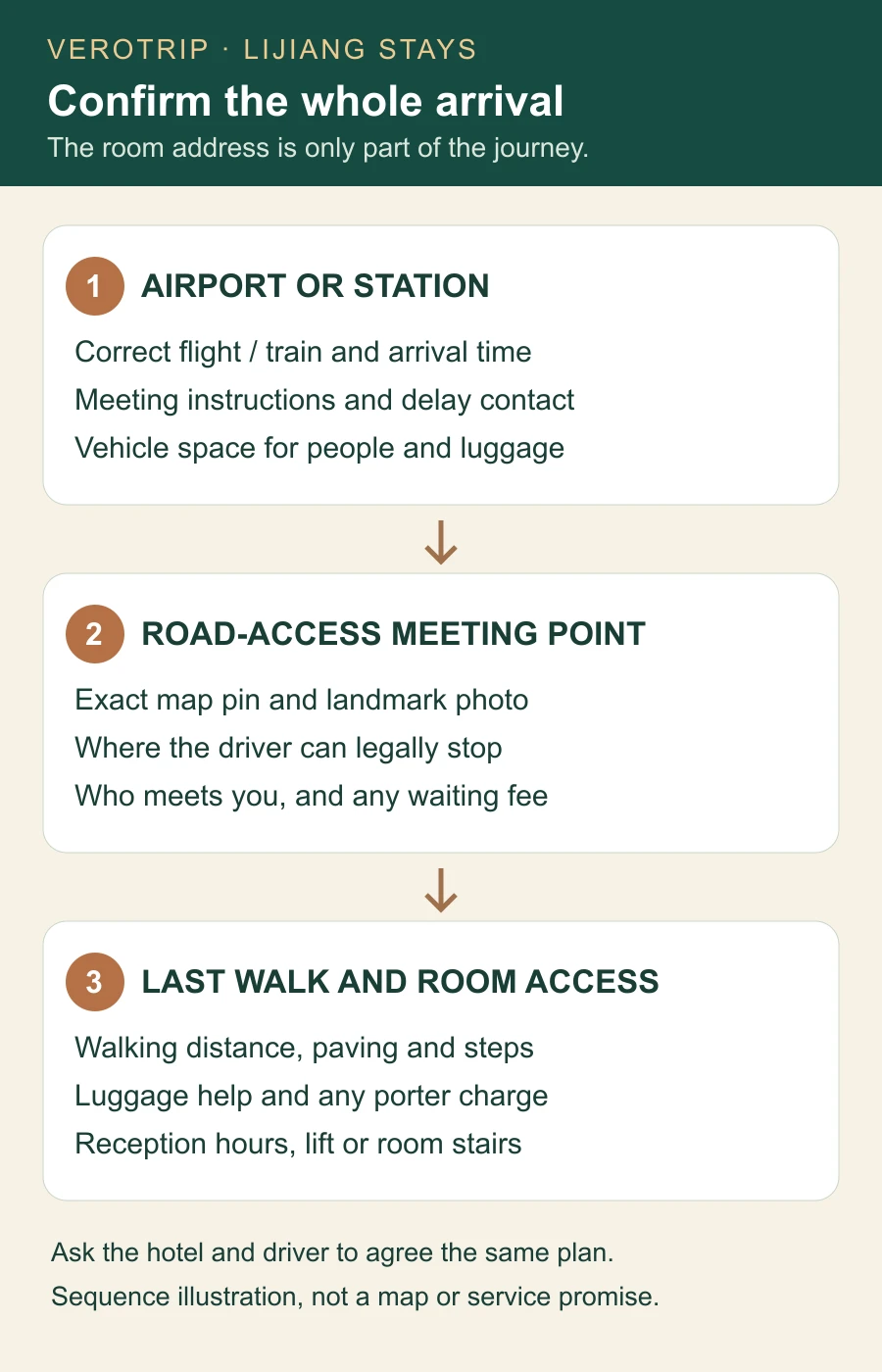
Confirm the arrival pickup, the legal vehicle stopping point and the final access to your room. A transfer ending at an old-town entrance may leave a walking section. A hotel collection service may start only at that entrance. Make the driver and hotel agree who meets you and who handles the bags.
On a phone, swipe the table sideways.
| Journey | Information to send | Agree before travel |
|---|---|---|
| Lijiang Sanyi International Airport (丽江三义国际机场) to your hotel | Flight number, arrival date, passenger count and luggage size. | Actual arrival terminal, meeting instructions, delay contact and the final hotel approach. |
| Lijiang railway station (丽江站) to your hotel | Train number, date, arrival time and the hotel’s Chinese name. | The station exit or meeting landmark, vehicle details and luggage handover at the hotel end. |
| Another Yunnan city to Lijiang | Origin, route, planned stops and the exact Lijiang hotel address. | Whether the quoted service is door-to-door and what happens if the vehicle cannot reach the door. |
| Your hotel to an early train or flight | Departure details plus your hotel’s access route. | Pickup time recommended for that service, meeting point, luggage assistance and breakfast arrangements. |
Save the hotel’s Chinese name, phone number and two clearly labelled pins: hotel entrance and vehicle meeting point. Ask for a photo of the meeting landmark if the location is unfamiliar. Keep an offline copy of the instructions, and use the exact pin the hotel confirms instead of sending a driver to the centre of the ancient town.
For ticket and station procedures, use the Yunnan train booking guide. For airport assistance, a May 2026 provincial transport report places the overseas visitor service centre in the international terminal’s arrivals area. It describes help with transport, payments and communication. Domestic arrivals should ask airport staff for the appropriate assistance point instead of assuming they can use that location directly.
What if you arrive late, your flight changes or it rains?
Send a delay update to both the transfer provider and hotel, then obtain a revised meeting plan. Confirm how long the driver waits and whether extra waiting is charged. If reception is not staffed late, establish the key handover and luggage arrangements before travel. Do not rely on finding an unbooked porter after reaching a pedestrian lane.
In rain, protect luggage and confirm where the hotel representative will meet you. Ask whether the last walk involves slippery stone, stairs or uncovered sections. If that route does not suit your party, choose a more accessible property before booking rather than expecting a driver to solve the building’s access limitations on arrival.
Compare the total stay cost, not only the room rate
Room prices and transfer charges depend on dates, room types and booked services. Instead of treating a low advertised price as the whole cost, compare the same items across your shortlist. Keep cancellation and payment terms with the booking confirmation.
On a phone, swipe the table sideways.
| Item | What to establish | Avoid assuming |
|---|---|---|
| Room and occupancy | Named room category, beds, guests, child policy and any extra-bed charge. | A family can use any standard double room. |
| Meals and comfort | Breakfast for each guest, serving time, heating or cooling and included facilities. | An early takeaway breakfast or every facility is included. |
| Transfers and luggage | Airport/station transfers, waiting allowance, final walking section and porter charges. | A free collection means the whole airport-to-room journey. |
| Payment and cancellation | Total payable, deposit, accepted payment method and the exact cancellation deadline. | An international card, late checkout or date change is automatically accepted. |
| Sightseeing or a package | The services itemised in the dated itinerary, with optional activities listed separately. | A room booking includes mountain tickets, guiding or day trips. |
Passports and accommodation registration
Bring each traveller’s valid passport or other accepted identity document for check-in, and contact the hotel beforehand about any unusual document situation. The national authorities’ response on foreign guests says hotels should not reject overseas travellers solely because they lack a claimed foreign-guest reception qualification. This does not replace a room reservation or the required identity checks.
Hotels handle their foreign guests’ accommodation registration. For a stay in a private home or another non-hotel residence, the guest or host must register within 24 hours of arrival. The NIA’s 21 September 2026 notice extends online registration nationwide while retaining the in-person channel. Ask the host which arrangement applies; a listing labelled “homestay” does not by itself tell you how the property is registered.
For a first non-hotel registration, NIA’s guidance advises host assistance with the address details and gives 12367 as a help channel. Keep this separate from your sightseeing booking: a tour reservation does not complete accommodation registration.
A message to send before booking
Replace the bracketed details and send this through the property’s booking channel:
We are [number] guests arriving on [date] by [flight/train], with [luggage details]. Please send the hotel’s Chinese name, the exact vehicle stopping point and the walking route to reception. How many steps are there from the vehicle to our proposed room and bathroom? Is luggage assistance available at our arrival time, and is there a charge? Please confirm the room’s bed arrangement, heating or cooling, breakfast times and our late-arrival instructions. Our main access or dietary requirement is [details].
A reply tied to a room category and arrival date is more useful than “no problem.” If the answer is unclear, request an entrance-to-room video or compare another property before committing to a restrictive rate.
Frequently asked questions
Should I split a short stay between Dayan and Shuhe?
Usually choose one base for two or three nights and visit the other area. Split the stay when you specifically want two different hotel experiences and have enough time for checkout, bags and the next check-in.
Does a hotel near the railway station make sightseeing easier?
It can solve a particular early departure, but it is a different decision from choosing an old-town base for several nights. Compare the transfer saved on departure with the extra journeys during your stay.
Can my bags stay at the hotel after checkout?
Ask the property to confirm storage, collection hours and any charge. Keep documents and valuables with you, retain any collection receipt, and allow time to retrieve the bags before your next transfer.
Match your Lijiang hotel to the whole itinerary
VeroTrip’s eight-day relaxed Kunming, Dali and Lijiang itinerary includes hotel nights and local transfers as described in the trip; the final proposal names the hotels and room types. For a local village extension, compare the two-day Baisha and Yuhu tour. Families can also browse China family tours before selecting the pace.
Send your dates, arrival and departure details, hotel shortlist, number of rooms, bed preferences, luggage and specific access needs. VeroTrip can help match the hotel area and transfers to the services in your confirmed journey. Ask VeroTrip to plan your Lijiang stay.