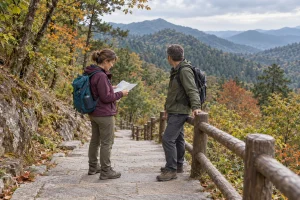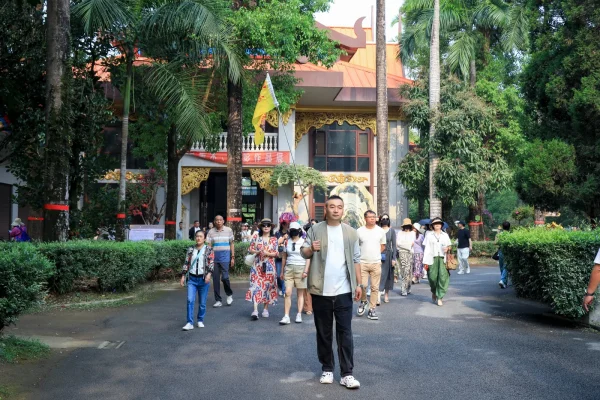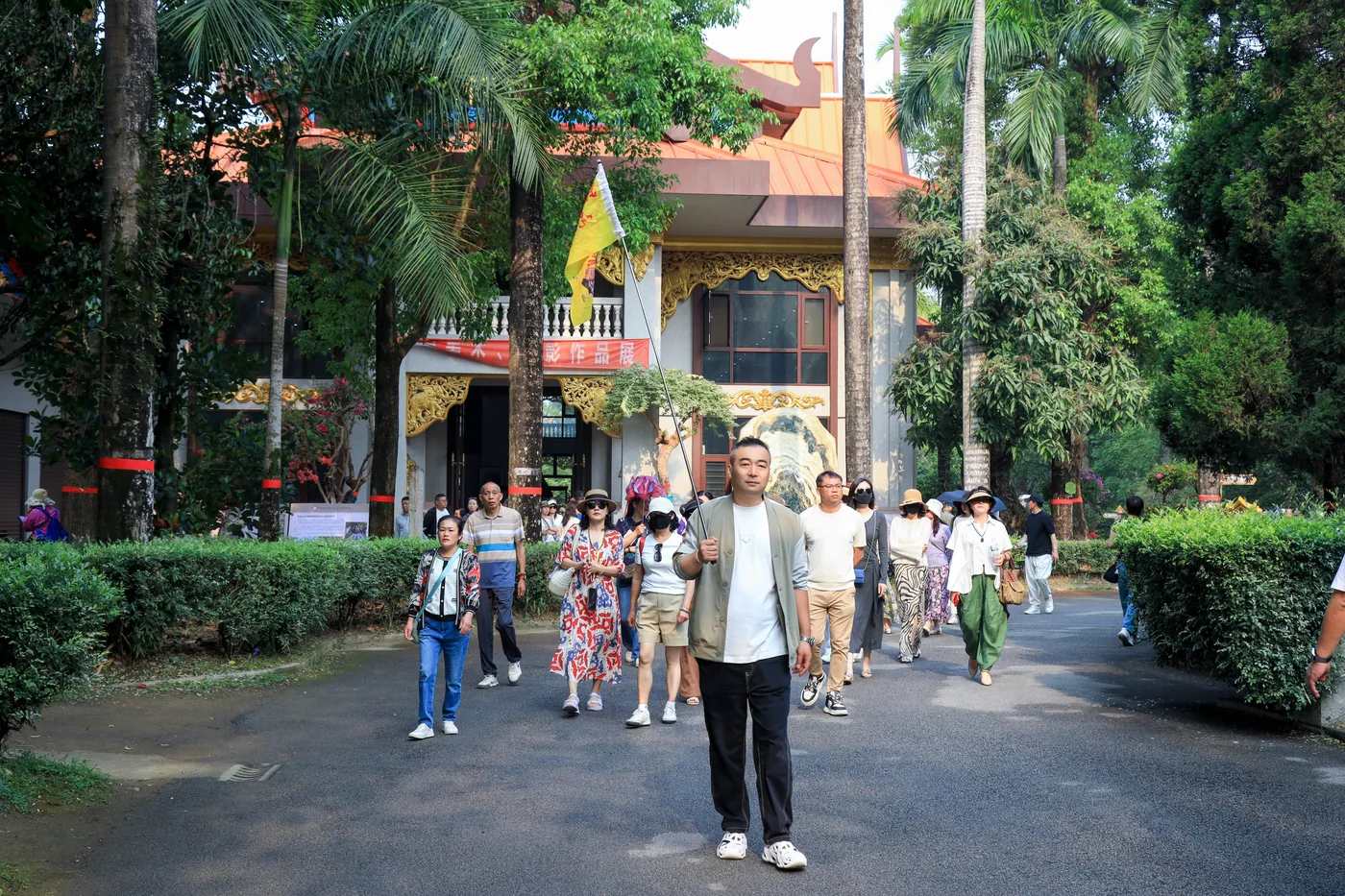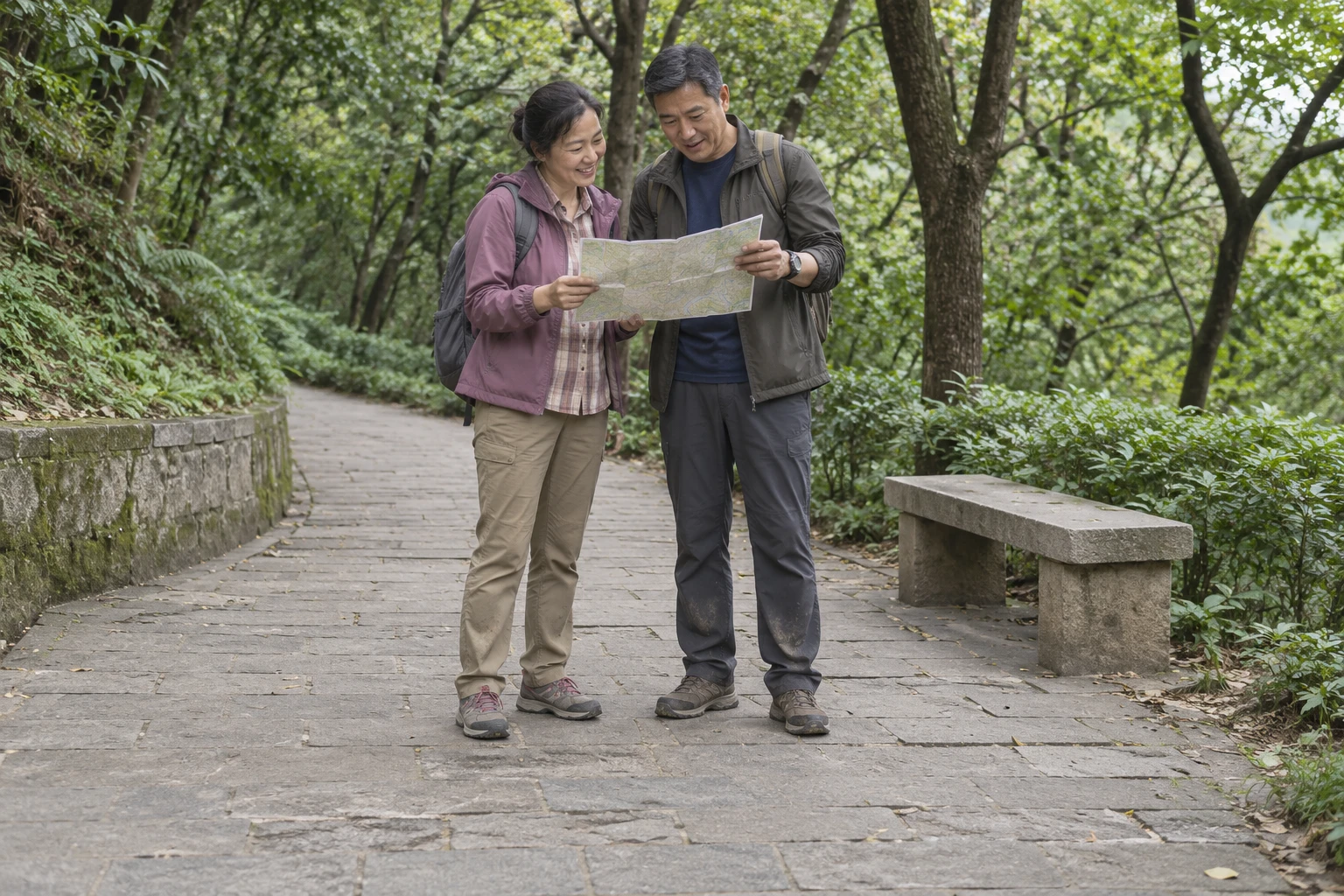
Use Fule Mountain for a wooded Mianyang walk and Three Kingdoms stories. Choose a short cultural stroll or the additional climb towards Fule Pavilion before setting the route. Lunch and the full hotel return keep the half-day comfortable even with fewer steps.
Save 富乐山公园 for the park, 富乐阁 for Fule Pavilion and 绵州碑林 for the Mianzhou Stele Forest. These names describe different parts of the visit. A car journey to the park does not mean a car reaches every cultural stop, and a pavilion photograph does not tell you how much climbing remains.
The choice at a glance
| Priority | Focus | Leave optional |
|---|---|---|
| Three Kingdoms stories | A selected accessible sculpture group and time to understand its title. | Climbing and additional garden areas. |
| Calligraphy and a cultural walk | The available stele area, with a few translated passages. | A pavilion interior visit. |
| An uphill outing | A permitted approach towards Fule Pavilion, with a firm turnaround. | Extra floors, long outlook stops and another attraction. |
Make a shorter shared route the default for mixed walking abilities. One subject understood well can be enough without every garden or pavilion interior. A climb-led visit needs a flexible meal and collection so the descent has room.
Read the Three Kingdoms story in the landscape
Fule Mountain is on the eastern side of Mianyang. Its cultural identity centres on the meeting of Liu Bei and Liu Zhang, remembered in local tradition as the Fucheng meeting. The park interprets that story through sculpture and garden settings. Treat the familiar naming anecdote as a story attached to the place, rather than an exact quotation you can independently recover from the landscape.
The Japanese consulate’s visitor introduction identifies sculptures of the meeting, the Five Tiger Generals and four prominent Shu Han figures. These are commemorative representations. A bronze general or a dramatic meeting scene is not an object left behind by the person it portrays.
Ask how a park makes a political encounter into a story. At an accessible labelled group, compare gestures, scale and position before reading the title. You can notice welcome, advice or command without naming every general.
Children can choose a figure, describe its body language and compare that impression with the label. Enthusiasts can separate historical people from later storytelling. A scene begins a discussion rather than proving the episode happened as the artist depicts it.
Choose one cultural focus before climbing
A 2023 first-person account published by Sichuan’s local-history office describes a meeting sculpture at Fule Hall, a large relief at the Mianzhou Stele Forest, and calligraphy there. It also places Fule Pavilion above the stele area. Use this to understand the relationship between subjects, while following today’s signs and staff directions for access.
For sculpture, spend time with one scene and its title. For calligraphy, choose a few inscriptions and compare shape, spacing and movement. A short translated passage can reward more than photographing the whole stele area without explanation.
Do not expect a guide to translate the whole stele collection during a short walk. Agree a few themes beforehand: the meaning of the place name, the meeting story, or how writers describe the surrounding landscape. Photograph only where permitted, without touching, climbing on or making rubbings of carved surfaces.
Fule Hall and Fule Pavilion are different names, so show the Chinese characters when agreeing a meeting place. Keep a return point that everyone can recognise. If a section is unavailable, choose another signed public path rather than relying on an old account’s shortcut between cultural areas.
Fule Pavilion: an optional extension with its own effort
The pavilion gives the uphill version a clear objective, but reaching its surroundings and entering its building are separate decisions. The 2023 account describes multiple floors of Three Kingdoms interpretation, including sculpture and pictorial storytelling. It does not establish today’s open floors, displays, performances or multimedia operation.
Before climbing, decide whether the pavilion exterior and an available outlook meet the purpose. Confirm an essential interior first. A historic-looking roof is no Three Kingdoms date, and a staged weapon display is not automatically an excavated ancient object.
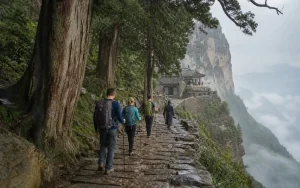
Reserve energy and time for the descent as well as the climb. Repeated downhill steps may be harder than ascent. Choose a turnaround that protects daylight and collection rather than aiming to reach the top just before closing.
Views depend on visibility. On a hazy day, shorten the outlook stop and let the cultural walk carry the visit. A photograph showing distant buildings or rivers is not a promise of the same view during your stay. Keep to managed paths, and do not search for a clearer angle beyond barriers.
A complete half-day from a Mianyang hotel
After breakfast, carry water and a small bag to the agreed entrance. Find the current map and begin with orientation and one selected cultural subject. Reassess comfort before taking the uphill extension or shorter return.
Keep lunch as an actual seated break. You can plan it after returning from the park rather than depending on a particular hillside stall. Tell the planner whether you prefer an earlier meal, a longer rest or a simple snack during the walk. A meal stop in an itinerary does not mean its food is included in the price.
After the descent, leave time to reach the agreed collection point. Confirm whether the driver waits, returns at a set time or is booked only for one transfer. The final destination should be your actual hotel entrance or another named address, with time to retrieve stored bags before any later departure.
After the longer route, a hotel rest and meal can be a satisfying afternoon. A second Mianyang attraction needs its own entry and transfer decision. Appearing on the same city map does not make it an automatic addition.
Arrive in Mianyang before counting park time
For a rail arrival, use the exact station printed on your ticket and arrange the onward trip to the hotel or park. A train journey is only one stage. Station exits, luggage collection, the road transfer and reaching the chosen visitor entrance all use time. Check current services for your travel date before fixing the visit around a particular connection.
If coming from Chengdu for the day, choose the return train before deciding how far uphill to go. Include both station transfers, a meal and an allowance for slower walking. If this creates a rushed park visit, use a Mianyang overnight or keep the day in Chengdu instead. The Chengdu planning guide helps compare that city-focused alternative.
A through journey with suitcases needs a different plan from a hotel-based half-day. Confirm storage at a named hotel or other actual facility, including collection hours and responsibility. Do not rely on unverified lockers at the park. Keep your passport, medication, phone and valuables with you.
Choose a Mianyang stay and count the nights
| Stay | Full local days | A workable rhythm |
|---|---|---|
| 3 days / 2 nights | One between arrival and departure. | Park, lunch and a flexible afternoon. |
| 4 days / 3 nights | Two between travel dates. | One park day and a separately planned city day. |
| 5 days / 4 nights | Three between travel dates. | A slower stay or weather margin; count Chengdu nights separately if needed. |
For three days and two nights, arrive and settle on day 1, use day 2 for the park, lunch and a flexible afternoon, then leave on day 3. Both nights are in the same Mianyang hotel. This gives the walk one complete local day without pretending that a late arrival provides extra sightseeing time.
Four days and three nights provide two full local days between travel dates. Use one for Fule Mountain and keep the other for an independently planned city interest or a quieter day. Five days and four nights provide three full local days; add depth or a weather margin rather than repeating the same hillside route.
These examples start and finish in Mianyang. If the larger trip must begin and end in Chengdu, count those transfers and nights separately. For example, five days and four nights can use one opening Chengdu night, two Mianyang nights and one final Chengdu night, with the park on day 3. That leaves one full Mianyang day; it does not provide three.
Choose a hotel for its real arrival and evening needs. Check the address, room configuration, lift access, vehicle stopping point and reception arrangements for each traveller’s passport. A property with “Fule” in its name is not automatically the park entrance, and a hillside location may add steps with luggage.
The Sichuan regional planner helps place this stop within a wider journey. Keep Mianyang as a deliberate part of the route, rather than an extra name inserted between already full travel days.
Walking comfort, weather and seasonal displays
Describe your limits in practical terms: repeated stairs, standing to read labels, uneven paving, downhill discomfort or needing frequent seated rests. “Easy walk” is too broad. Ask about the selected path’s surfaces and the current way back, especially if a wheelchair or pushchair is involved. A park’s public setting does not establish a continuous step-free route to the pavilion. The Sichuan walking guide helps compare different levels of effort before adding a mountain extension.
Wear shoes with grip and carry a layer and rain protection. Damp paving, fallen leaves and exposed steps can change the day’s effort. In persistent rain, choose a shorter suitable open section or move the walk to another day. An indoor replacement needs its own availability check; the pavilion should not be treated as a guaranteed all-weather shelter.
A 10 October 2026 park report recorded holiday flower displays and activities at Fule Mountain. That is a dated account, not a daily programme. Do not plan the visit around the same decorations, a particular chrysanthemum display, available sightseeing vehicles or regular performances without current confirmation.
Stay out of planted beds and keep food for yourself rather than feeding wildlife. Carry what the party needs for the agreed walk. If weather or tiredness changes the plan, return by the permitted route while the transfer remains workable. A shorter outing with time to talk about what you saw is preferable to completing a list in discomfort.
Passports, language and the cost of the complete day
The consulate’s destination introduction is useful international visitor context, but it is not a test of every current passport booking channel. Ask about the actual date, park entrance and any separately requested building or paid activity. Carry the original passport where required, and obtain the relevant admission arrangement before making an interior visit essential to the day.
Language support makes the biggest difference when you want to understand sculpture titles or a few inscriptions. Specify whether you need an English-speaking companion throughout the park, a shorter interpretation session, or help only with transfers. A driver, a translated map and a guide able to discuss Three Kingdoms stories are different services.
| Part | Written detail |
|---|---|
| Route and admission | Date, entrance, open path, turnaround and any separate pavilion admission or paid activity. |
| Transfers and luggage | Hotel pickup, collection point, waiting, bag storage and complete final address. |
| Interpretation, meals and rooms | Actual language support, meal payment basis, hotel property and itemised nights. |
Price on request. A Verotrip proposal should identify the actual transfers, waiting or collection arrangement, language support, admission scope and any separately priced services. Meals, accommodation and the final hotel or station journey should each be clear in writing. An enquiry outline does not establish a confirmed departure, fixed price or included service.
Explain allergies, halal requirements or other dietary needs before choosing the meal. A mild dish is not automatically suitable, and a meat-free appearance does not establish the stock or cooking fat. Where appropriate, agree a suitable packed alternative and a practical prayer break around the hotel or meal stop.
Questions before a Fule Mountain visit
Do I need to climb to Fule Pavilion?
No. Choose a shorter public-path cultural walk if the meeting story, sculpture and a manageable outing are your priorities. The uphill extension is optional. Check today’s permitted route and keep a clear way back before choosing how far to go.
Are the sculptures and pavilion original Three Kingdoms remains?
The sculptures interpret historical people and stories. Do not treat them as objects made by those people or assume a historic-looking building is an untouched structure from their lifetime. Read the labels and distinguish commemoration, artistic storytelling and any specifically identified original material.
Can I rely on a pavilion interior visit or a flower exhibition?
Confirm each for your date. Historical accounts of indoor displays and seasonal events do not establish today’s rooms, activities or flower condition. Keep the public walk worthwhile on its own, or change the date if a specific confirmed exhibition is the reason for going.
Can Fule Mountain fit into a day from Chengdu?
Assess the complete rail or road day, both local transfers, lunch and the return connection. Choose a shorter park visit when time is limited. A Mianyang overnight is useful if the desired uphill walk would otherwise become a race back to the station.
Plan the walk around your interests
Send Verotrip your travel dates, arrival and departure details, party size, passport nationalities and hotel preferences. Say whether you care most about the Three Kingdoms story, calligraphy, the uphill outlook or a shorter leafy walk. Add stair limits, language needs, luggage and food requirements so a dated proposal can connect the visit to a comfortable meal and a complete return.