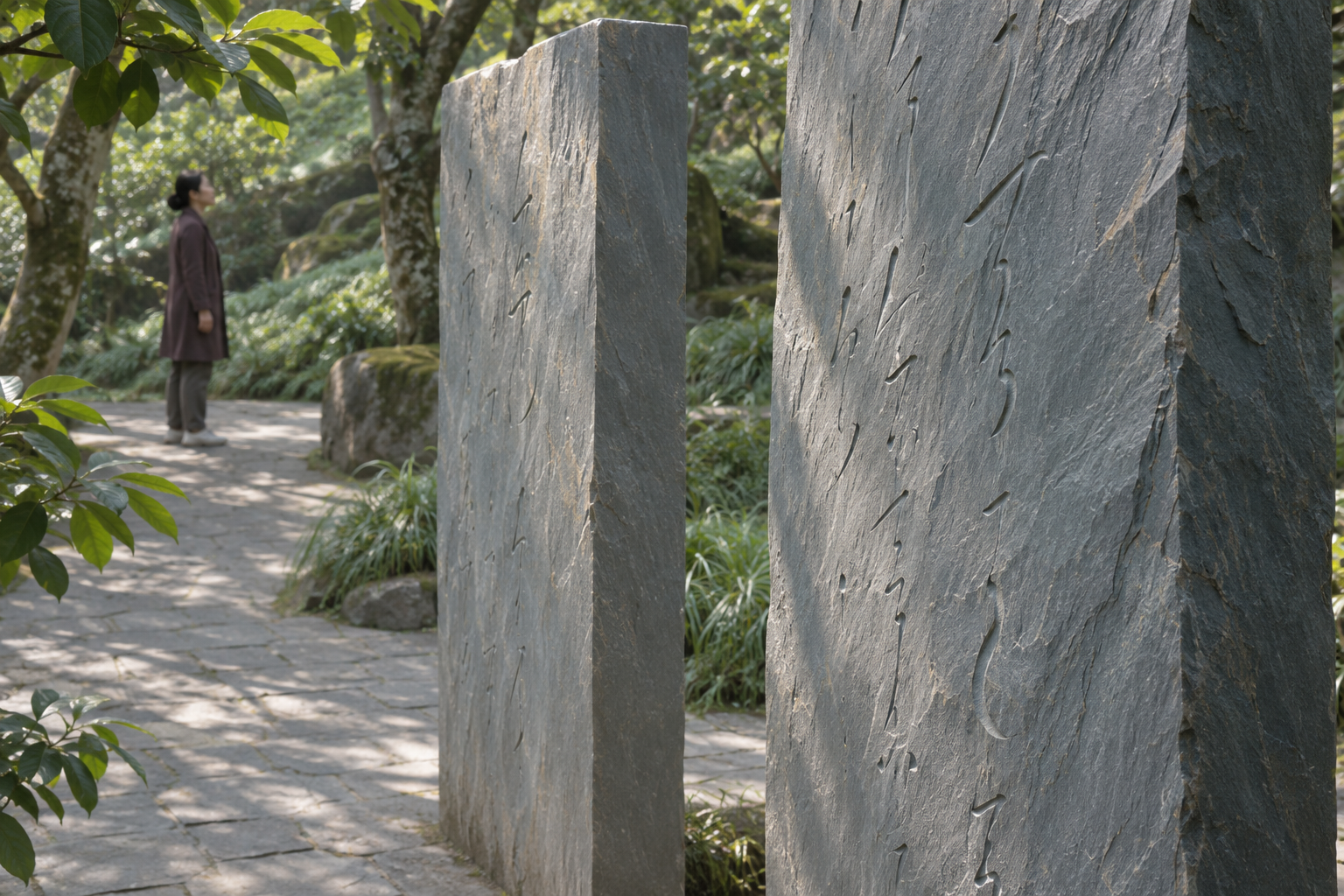
In Qinglian, visit Longxi Courtyard for the local tradition of Li Bai’s early years and the Taibai Stele Garden to see how later generations carved and displayed his poetry. These are two stops in a town outside central Jiangyou. For a first visit, choose one main stop and leave time to read a few lines closely. Add the other only if its public route is open and you still have time for lunch and your return.
Save 江油青莲李白故居 for the former-residence area and 太白碑林 for the stele garden. The Li Bai Memorial Museum in central Jiangyou has a different address and collection. If you are travelling by train, Qinglian Station and Jiangyou Station are separate stops. Make sure your outward and return tickets fit the outing you actually want.
Start at Longxi Courtyard or the poetry steles
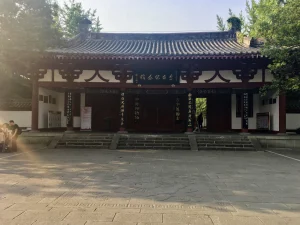
Longxi Courtyard (陇西院) is associated with Li Bai’s former home. This is a good starting point if your interest is in the poet as a person. Look for the entrance, the arrangement of the halls and the way the buildings face an enclosed space. Later rebuilding is part of what you see. Read the dates on the interpretation and treat stories about his birth, his names and his childhood as traditions with their own history. The present compound can tell you how a place remembers Li Bai without settling every biographical question.
The Taibai Shrine (太白祠) is a useful second stop if its public rooms are open. Compare what a commemorative hall emphasizes with what a family courtyard emphasizes. One asks you to think about later remembrance and the other about the setting of the local early-life story. Jiangyou’s museum authority included repairs to the shrine and Longxi Courtyard in its 2026 work plan. Check what is accessible on your date before making either structure the sole reason for the drive.
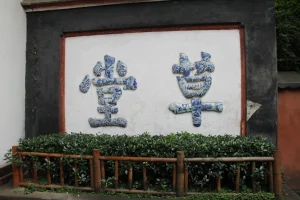
Taibai Stele Garden (太白碑林) is the stronger choice if you want to focus on the poetry. The hillside collection was built in modern times and brings together wall inscriptions, standing stones and inscriptions set low. The poems are associated with Li Bai. The lettering and the stones you see carry the work of later calligraphers and carvers. Look at the label for the poem title and calligrapher separately. This gives you a way to read the display even when you cannot identify the script.
Choose two surfaces to compare. An upright face can show how spacing changes from the top of a line to the bottom. A broader panel may make it easier to see where the strokes open out and contract. Look from the path with light falling across the face, and give other readers room. Use a permitted photo for later reading if the signs allow it. Leave the stone surfaces alone and skip any unconfirmed uphill continuation. The upper tower can be a separate decision once you have checked access and steps.
| Stop | What to see | What to verify |
|---|---|---|
| Longxi Courtyard | A compound associated with Li Bai’s early life and its later restoration. | Open entry and rooms. Read the dates on site. |
| Taibai Stele Garden | Later incised displays of the poems on wall, upright and low stone. | Open public path, steps and a comfortable turning point. |
| Qinglian Li Bai Culture Museum | Indoor context for a visit or a rain alternative. | Which galleries are open and what interpretation is available. |
Bring one poem and choose your second stop
Read a translation and a copy of the Chinese before leaving your hotel. Quiet Night Thought (静夜思) works well for a first visit because its movement is easy to remember. The speaker notices moonlight, lifts his head and then lowers it as his thoughts turn home. If there is an open display with the poem you chose, compare that change in the poem with the arrangement of the characters on the stone. An October 2026 report describes a family reading it beside the inscriptions during the holiday. Consider that an example of how to approach the setting, with no need to find the very same panel.
For context under cover, check the separate Li Bai Culture Museum in Qinglian (李白文化博物馆). Find out which rooms are open and whether any interpretation suits your language needs. For old editions, collections and a city museum visit, use the Li Bai Memorial Museum guide instead. It covers the city venue on Wenfeng Street. Qinglian’s Shiguangli commercial streets are another possible stop for a meal or a short look at a newer themed quarter. Holiday performances and organized classes belong to specific dates or bookings.
For a longer Sichuan poetry trip, Du Fu Thatched Cottage in Chengdu provides a separate poet’s setting. In Mianyang, the Yuewang Tower guide is better for visitors who want views of the city alongside its literary associations. Put the two poets or two cities on separate visits when you can. You will have more time to read a display and to eat without watching the clock.
Allow for Jiangyou lunch and the full trip back
Jiangyou feichang (江油肥肠) is a substantial local lunch if you are comfortable eating pork intestine. Ask whether the dish is spicy before ordering. Travellers avoiding organ meat can arrange a sit-down lunch around noodles or another dish in advance. The Mianyang rice noodle guide explains broth choices and gives a separate plan for a Mianyang morning. If you need to avoid pork, animal stock, chilli or a specific allergen, have the kitchen confirm ingredients and shared equipment as needed. Avoid relying on the commercial quarter’s holiday food stalls for a meal on an ordinary day.
From a Jiangyou hotel, agree on a pickup for the Qinglian stop, visit one or two open areas, have lunch and return to the hotel. For a rail day from Mianyang or Chengdu, search both Qinglian and Jiangyou and compare the return as well as the outward trip. A confirmed Qinglian stop can serve the town directly. A Jiangyou ticket needs a separate road transfer. Keep the station name in Chinese and allow time to get from lunch to the correct door, clear checks and find the platform. On arrival back in your base city, leave time for the final ride to your hotel.
| First leg | At Qinglian | Final leg |
|---|---|---|
| Jiangyou hotel pickup | Named gate, one main stop and lunch. | Complete road return to your Jiangyou hotel. |
| Train to Qinglian | Agree how to reach the first gate from the station. | Use the booked return and arrange the last transfer to the hotel. |
| Train to Jiangyou | Arrange the road leg between the station and town. | Return to the actual booked station and onward hotel. |
A road transfer in both directions makes more sense when the booked rail times leave little room to visit. Ask the driver where to meet if you leave through a different gate and how long the vehicle will wait. If it rains, keep one confirmed covered stop and sit down for lunch before returning. Stone, slopes and steps can limit a short visit, so choose your turning point before you start climbing. On a trip with luggage, use a confirmed hotel hold or arrange custody with the vehicle operator. Keep your passport and valuables on you.
Choose a Jiangyou, Mianyang or Chengdu base
Stay in central Jiangyou if you want a morning in Qinglian and a separate visit to the city museum. It also gives you time to pick dinner and return to the same room. A Qinglian stay suits travellers who have confirmed a specific property and their dinner and next-day transport. Ask whether the car can reach the property entrance and whether the booking accepts your passport. Mianyang works for a trip that includes city food and Yuewang Tower. Keep Chengdu as your base if that is where you already have a hotel and your booked trains or road transfers fit a full day.
| Trip | Hotel nights | Sequence |
|---|---|---|
| 3 days / 2 nights | Jiangyou × 2 | Day 1 arrive. Day 2 Qinglian and lunch, then return to the same hotel. Day 3 use the city museum if your departure allows. |
| 4 days / 3 nights | Mianyang × 1, Jiangyou × 2 | Day 1 arrive in Mianyang. Day 2 breakfast and transfer to Jiangyou. Day 3 Qinglian and a full hotel return. Day 4 depart from your booked station. |
| 5 days / 4 nights | Chengdu × 1, Jiangyou × 2, Chengdu × 1 | Day 1 arrive. Day 2 transfer to Jiangyou. Day 3 Qinglian. Day 4 city museum if open, then transfer to Chengdu. Day 5 onward departure. |
Price on request. If you would like a private itinerary, tell your Verotrip travel consultant your dates, starting hotel, expected final stop and which Qinglian site matters most. Take your original passport and check the current method for admission to each venue. Ask about the open sections, the booking route that accepts your document and any separate event charge. Confirm vehicle waiting, the final drop-off, English-language interpretation, meals and lodging in writing. Let your consultant know if standing time or stairs will set the length of the visit.
Questions about visiting Qinglian
Which place should I enter on the map?
Use 江油青莲李白故居 for the former-residence area or 太白碑林 for the hillside poetry steles. Use 江油市李白纪念馆 only if you want the separate city museum.
Are the poetry steles from Li Bai’s own lifetime?
The hillside stele garden is a modern project displaying poetry in later calligraphy and carving. Look for separate dates for a literary text and for its inscription. The Jiangyou city museum covers older objects and editions through a different collection.
What if my train only stops at Jiangyou?
Arrange the road transfer from Jiangyou Station to Qinglian, and arrange the way back before the visit. Return to the exact station on your booking rather than assuming you can start the return from a nearer station.
Do I need to read Chinese to enjoy the garden?
One poem in translation and its Chinese title are enough for a first look. You can also compare the size and rhythm of the carved strokes. Ask separately for English interpretation if you want a fuller discussion of the poems.