Give Du Fu Thatched Cottage a proper city sightseeing slot rather than treating it as a quick stop on the way back from somewhere else. Allow roughly two to three hours for selected memorial halls, the reconstructed cottage setting, a garden walk and some interpretation. That is a planning allowance, not an official visit duration.
Chengdu Du Fu Thatched Cottage Museum — 成都杜甫草堂博物馆 — combines a literary memorial with gardens and exhibitions. It suits travellers interested in poetry, architecture and a slower cultural visit. You do not need to read Chinese to enjoy it, but a little explanation makes the buildings and names much more meaningful.
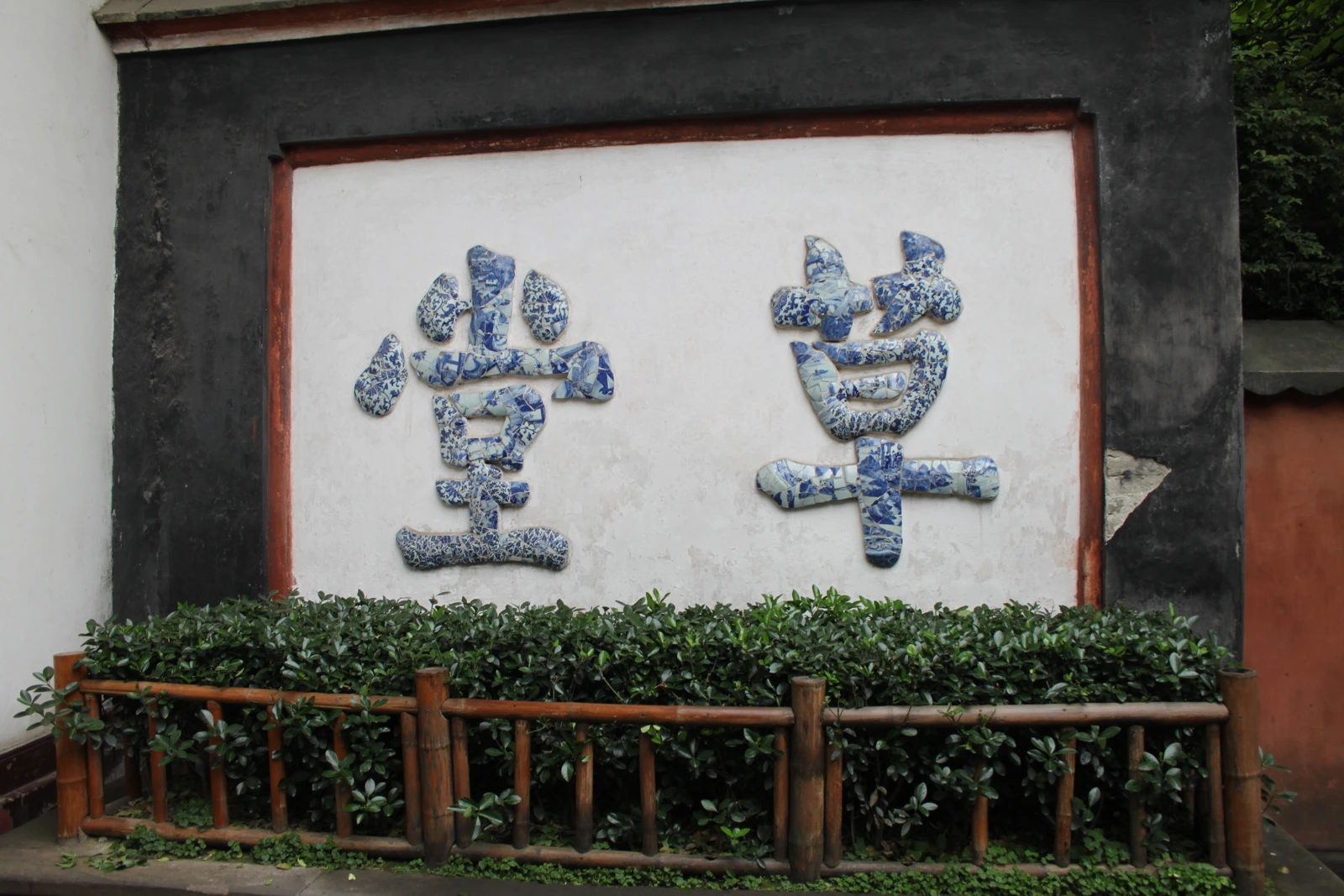
Checked 1 November 2026. Header: the Caotang screen wall, photographed by Gary Todd on 25 April 2010, CC0. It is an archival site photograph, not a record of current conditions or a Vero Trip customer visit.
What you are coming to see
The museum commemorates the Tang poet Du Fu’s life in Chengdu. Its official scenic introduction distinguishes the memorial buildings from the restored cottage setting. The thatched house seen today should not be described as Du Fu’s original surviving Tang house.
Think of the visit in three parts: the formal memorial axis, an evocation of the poet’s domestic surroundings, and the garden-and-exhibition spaces around them. That structure helps you choose a route without trying to enter every building.
Before arriving, read one short introduction to Du Fu or one of his poems in translation. Themes such as home, separation and the lives of ordinary people can provide a useful thread. On site, connect one or two details with that thread instead of treating each inscription as another photo requirement.
Tickets and hours: the current published position
The museum’s general ticket regulations, checked on 1 November 2026, list a full-price ticket at RMB 50 per person per visit and normal hours of 09:00–18:00, with ticket sales ending at 17:00. Holiday extensions are announced separately. Check the calendar for your date before travelling.
The sales cutoff is not a sensible target arrival for a leisurely visit. Keep the museum’s closing time in view when choosing a morning or afternoon slot, and distinguish ticket-sales information from any separate entry instruction attached to your booking.
| Decision | Published information checked for this guide | How to use it |
|---|---|---|
| Standard admission | Full-price ticket: RMB 50 per person per visit | Budget for each visitor; do not assume an age-based concession applies to every passport holder. |
| Normal operating window | 09:00–18:00; ticket sales stop at 17:00 | Leave a useful sightseeing window and check any date-specific notice. |
| Advance booking | The museum lists booking up to 14 days ahead through its official WeChat service account | Availability for a particular day still depends on the actual booking calendar. |
| Metro arrival at the north gate | The museum’s transport page lists Line 13, Du Fu Thatched Cottage station, Exit C2 | Confirm your arrival gate and follow current station and museum signs. |
Buying or collecting a ticket with a passport
Carry the original passport used for the visit or booking. A museum notice published in April 2026 explicitly lists passports among the documents accepted for purchases at the comprehensive service window — 综合服务窗口 — with a paper admission credential issued for entry.
The museum’s current reservation page identifies the official WeChat service account as 杜甫草堂博物馆. It also distinguishes identity-card entry from paper-credential exchange when an original Chinese identity card is not presented. Do not assume an instruction to swipe a Chinese ID applies to a foreign passport.
- Choose the correct museum, date and ticket category. If booking online, use the document type and details accepted by that channel; do not invent a Chinese identity number.
- Keep the order and its entry instructions available on your phone, and bring the original passport.
- If the order requires exchange or the passport cannot be processed at the gate, use the museum’s service window and follow staff instructions before joining the admission queue.
An online QR-code instruction does not establish that every passport booking can bypass a manual check. If a form, payment method or document field does not work for you, resolve it through the museum’s normal ticket service rather than buying an unsuitable ticket category.
Concessions need their own document check. The Chinese ticket regulations distinguish some categories by nationality or residence status, while the shorter translated summaries do not reproduce every condition. For foreign children, students or older visitors, confirm eligibility with the museum before relying on a reduced or free ticket.
Choose the gate before arranging the transfer
The official transport page lists the north-gate address as 37 Qinghua Road — 青华路37号. It identifies 28 Caotang Road — 草堂路28号 for the principal gate. Use the actual gate and street address when arranging a taxi or driver.
For a metro approach, the same page names Line 13’s Du Fu Thatched Cottage station and Exit C2 for the north gate. It also lists walking approaches from Caotang North Road station on Line 4 and Qingyang Gong station on Line 5. Choose the connection from your real hotel rather than treating all three approaches as equally convenient.
Save your entry gate and the intended exit or collection point. A driver waiting at a different gate can add an unnecessary walk at the end. If using public transport for the return, check the station or stop you intend to use before leaving the museum.
A selective poetry-and-garden walk
Take a photograph of the current visitor map and find the memorial axis. Your entry may be at the north gate, so the architectural sequence below is a way to understand the complex, not a demand to leave and re-enter through another gate.
The memorial axis and Poetry History Hall
The official introduction describes a sequence of the principal gate, Daxie — 大廨 — Poetry History Hall — 诗史堂 — Chaimen — 柴门 — and Gongbu Shrine — 工部祠. Follow the currently admitted route through the parts you want to see.
At Poetry History Hall, consider why Du Fu’s writing is connected with the history of his time and the lives of ordinary people. The hall’s name provides a starting question for an audio explanation or a guide. You do not need to decipher every inscription to leave with a clearer sense of the poet.
At Gongbu Shrine, distinguish the later commemorative space from the poet’s domestic life. Slow down for a few architectural details rather than trying to turn the whole axis into a checklist of entrances.
The reconstructed cottage setting — 茅屋景区
The museum explains that this restored setting draws on descriptions in Du Fu’s poetry and historical accounts. It evokes a living environment; it is not an untouched house preserved from the Tang dynasty.
This can be a useful part of the visit for children or a companion who finds long text displays tiring. Compare the domestic scale with the formal memorial buildings, then decide whether to continue through more exhibitions or take a garden pause.
Flower Path, the screen wall and one exhibition
The red-walled Flower Path — 花径 — and the Caotang screen wall — 草堂影壁 — are distinct features identified by the museum. At the wall, look at the blue-and-white ceramic characters as a detail of the memorial landscape. Keep the route clear for other visitors while taking photographs.
If you want more literary context, consider the poetry display at Daya Hall — 大雅堂 — where open, rather than adding every exhibition. A current temporary show is another possibility, but a listing for an old event does not establish what will be on display during your visit.
| Your main interest | A focused choice | Where to shorten the visit |
|---|---|---|
| Du Fu and literary history | Selected memorial-axis stops, Poetry History Hall and an interpretation option | Choose one further exhibition instead of trying to read every display. |
| Gardens and architecture | A few memorial buildings, the reconstructed cottage setting and Flower Path | Take a seated pause and leave additional halls optional. |
| A mixed-age family | One short explanation, the cottage setting and a manageable garden section | Use the group’s energy and the route back to the exit to decide when to finish. |
English interpretation: separate the options
The museum’s interpretation-services page lists free Chinese-and-English audio for individual sights through its official WeChat account, under 参观指南 and 游览攻略. It separately lists paid devices, QR-based audio products and human interpretation.
Try the option that suits your phone and preferred language before committing to a paid product. Bring earphones so you can listen without disturbing others. Free spot commentary does not mean every device, complete audio tour or human guide is free.
If requesting a guide, confirm the language, meeting point, duration, price basis and a museum-compliant arrangement. A foreign-language service appearing on a page does not promise an English-speaking person will be available whenever you arrive. Vero Trip has not reserved one merely by publishing this guide.
Make it a half-day city slot
A morning visit followed by lunch is an easy starting point. An afternoon visit can work too, provided the arrival leaves enough time before closing. Keep the principal museum visit together rather than exiting for lunch and expecting to continue on the same ticket.
The museum’s visitor rules state that re-entry after leaving requires a new ticket. That affects meal planning, bag retrieval and a companion who wants to step outside. Complete the part you want to see before leaving the paid area.
| Part of the outing | Suggested rhythm | What to settle |
|---|---|---|
| Before entering | Hotel breakfast or a meal, then travel to the correct gate | Ticket or counter procedure, original passport, interpretation choice and bag storage. |
| Museum visit | Selected memorial axis → cottage setting → Flower Path or one display, adapted to the visitor map | Keep a pause and the route to your chosen exit within the available time. |
| After leaving | Lunch, tea or a return to the hotel; another city visit only if wanted | A new destination needs its own transport and admission decision; re-entry is not included. |
Walking, rain and large bags
The museum warns about wet or mossy ground. Choose shoes with grip and allow time around thresholds, bridges and garden paths. A garden museum still involves outdoor movement between buildings; it should not be treated as an entirely indoor rainy-day alternative.
For a wheelchair, stroller or powered mobility device, check the actual entrance and route with the museum. Its published rules restrict electric mobility equipment, so do not infer permission from a photograph of a broad path. Explain the specific device and access needs before travelling.
Large luggage should be deposited under the museum’s visitor rules. Confirm the available storage arrangement and whether it can accept your actual bag before arriving with cases. Leaving large luggage at the hotel may be easier when you are returning there later.
In light rain, shorten outdoor sections and spend more time in an open exhibition. If warnings or local instructions make travel or the visit unsuitable, change the day. Follow barriers and staff directions, keep flash switched off where required, and do not climb or touch displays for a photograph.
Budget and itinerary choices
Budget separately for admission, transport, any paid interpretation and meals. If a proposal includes a guide or tickets, it should name the actual service and party size. Current museum fees and a Vero Trip quotation are different things.
Price on request. Send your dates, hotel, number of travellers, preferred language, walking limits and whether you want a museum-focused half-day or a wider Chengdu plan. The dated written proposal should identify the actual services, price and exclusions. This page confirms no booked guide, vehicle, meal, admission or insurance package.
The existing five-day Chengdu, Dujiangyan, Qingcheng and Leshan itinerary lists Du Fu Cottage as a conditional city visit after Leshan. If poetry and gardens are priorities, ask to give the cottage its own city slot or add time. Do not assume a long Leshan day leaves a full, relaxed museum visit before closing.
Use the Chengdu planning guide for the wider stay. The Wuhou Shrine and Jinli guide covers a different history-and-street outing. Those places need a separate transfer; they are not another entrance to this museum.
Questions before visiting
Can ordinary foreign visitors enter?
Yes. The museum’s published 2026 ticket notice explicitly includes passports for counter purchases. Bring the original passport and follow the current order or window procedure; do not assume Chinese-ID instructions or concessions apply to every passport holder.
Is the cottage the poet’s original house?
No. The museum describes the cottage setting as restored and reconstructed. The wider site commemorates Du Fu through later memorial buildings, gardens and interpretation.
Can I enjoy it without knowing the poems?
Yes, especially if gardens and architecture interest you. Choose a short introduction or the museum’s available English audio, then focus on a few places. Someone wanting object-rich galleries alone may prefer a different museum day.
Can I leave for lunch and come back?
The visitor rules require another ticket for re-entry. Plan lunch before or after the main visit, or confirm any specific arrangement with the museum before leaving.
How should I arrange the outing?
Use Plan My Trip with the date, hotel, party, language and onward departure details. Mention whether literary explanation, gardens or a shorter accessible route matters most.
Header: Gary Todd’s real photograph of the Caotang screen wall, taken 25 April 2010 and released under CC0. Resized from 4,752 × 3,168 to 1,600 × 1,067 pixels and encoded as WebP without enlargement or alteration of the scene. Archival site image, not current conditions or an operated Vero Trip tour record.