The Li Bai Memorial Museum in Jiangyou suits a slow cultural half-day: learn the shape of the poet’s life, look closely at how later artists pictured and wrote his poetry, then sit down to a local lunch. Give it a place in a Jiangyou stay if poetry, calligraphy or garden architecture interests you. A visitor seeking a large archaeological collection or an action-packed excursion should choose a different focus.
Build the visit around a few readable displays rather than every room. For an English-speaking visitor, a short translated poem and an explanation of one artwork can be more rewarding than a long procession of untranslated labels. Leave room for lunch and the return to your hotel; the museum should not become a hurried stop between trains.
Start at the city museum, not the Qinglian former residence
Use the Chinese name 江油市李白纪念馆 and the address 文风街1号 when arranging the destination. This is the memorial museum in Jiangyou’s urban area. Qinglian’s Li Bai former residence is a separate place; an institution’s management responsibilities do not make its different sites one walkable attraction.
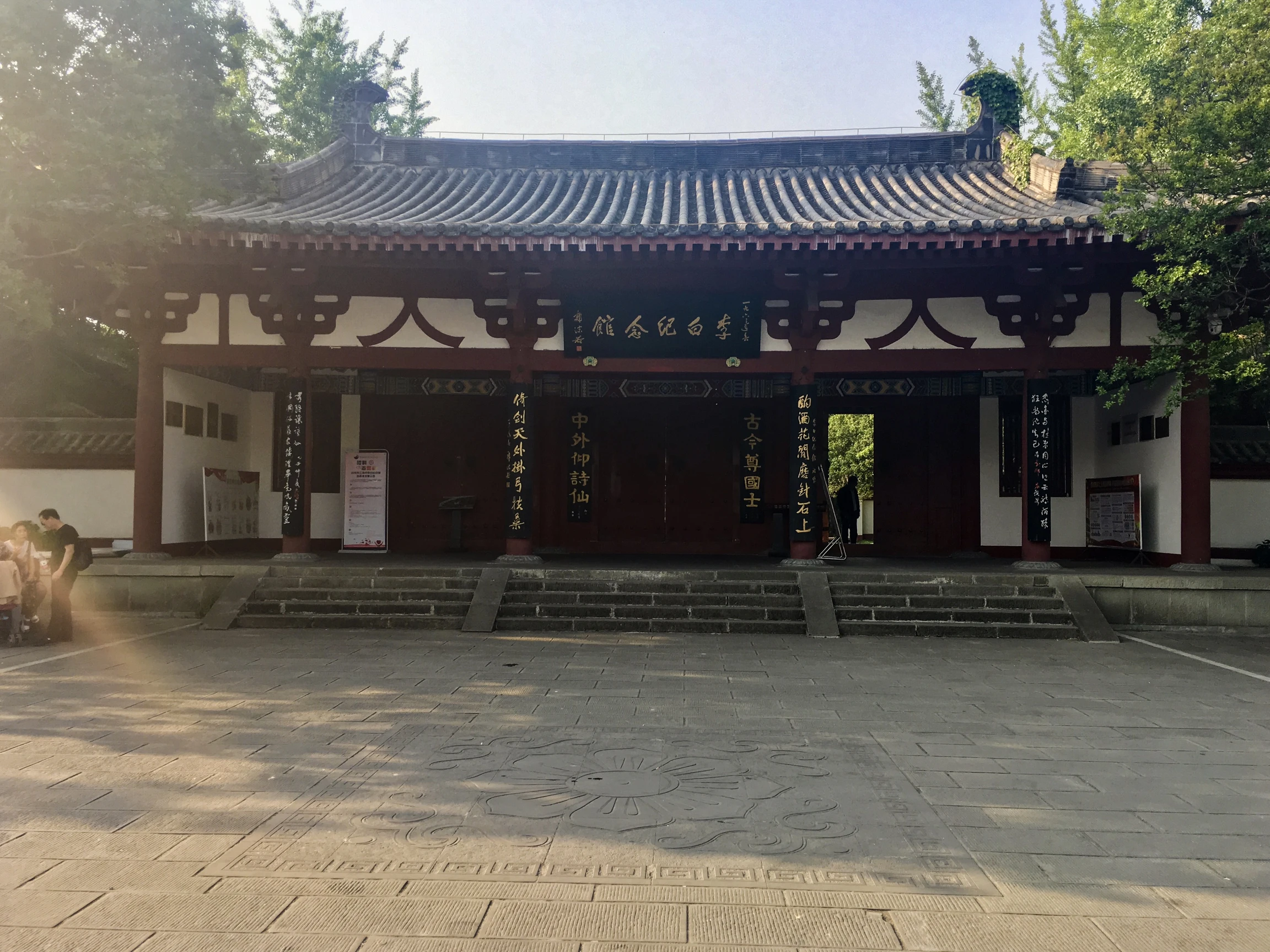
The museum opened in 1982 and was rebuilt after the 2008 earthquake, retaining a garden setting with Tang-inspired architecture. Its formal overview describes both domestic and overseas visitors. Read the buildings as a later commemoration of the poet, rather than an intact Tang-dynasty home. These distinctions come from the museum’s own overview.
Before travelling, check that the map pin, admission arrangement and vehicle destination all name the city museum. A booking or description headed only “Li Bai’s hometown” is too broad for a useful pickup instruction. Keep a screenshot of the exact Chinese name and your hotel address available offline.
Read the poet through biography, art and stone
Begin with the biographical material. Establish where an episode fits in the poet’s life, then choose a poem to accompany it. You do not need to remember a sequence of dates: the useful question is how travel, friendship or separation changes the way you read the poem. Bring a translation you can comfortably discuss, rather than relying on a phone to translate every panel.
Taibai Shuwu covers the biography; Shiyuan displays painting and calligraphy. The official overview also lists Jiangyou history and Du Fu sections. Choose one additional subject, checking current access at arrival.
Calligraphy is another person's reading of a poem
A page of poetry and a piece of calligraphy invite different kinds of attention. First find the text’s title and meaning. Then look at the spacing, density and movement of the writing. A later calligrapher’s work can express admiration for Li Bai without being an autograph by Li Bai himself.
The museum’s collection introduction includes Zhu Zhishan’s calligraphy of “The Hard Road to Shu,” paintings by Qiu Ying, and works by artists including Zhang Daqian. It also describes historical editions of the poetry. Treat these as collection examples, not a promise that those specific objects will be on display during your visit. Check the label for the maker, date and whether you are looking at an original, reproduction or interpretive panel. See the museum’s collection introduction.
If a painting attracts you, spend time on its subject before trying to identify every figure. Ask what connects it to the literary theme and whether the relationship is stated on the label or is your own interpretation. Two carefully examined works are enough for a satisfying art-focused visit.
A stone inscription is also a historical document
The same collection introduction identifies Song-period steles associated with Li Bai’s commemoration. Their value includes what later generations chose to record. The date of a stone, the date of the text it carries and the lifetime of the person commemorated can differ. Look for those distinctions instead of assuming an old-looking inscription was carved during the poet’s life.
The museum’s online stone catalogue also includes a work titled “Early Departure from Baidi City.” That gives you a useful poem to prepare, but does not establish its current position or guarantee an encounter with it. The catalogue entry is a reference for the title, not a complete walking map.
Choose a focus that fits your visit
Allow a flexible half-day including local transfers and lunch. The time inside should follow your reading pace and energy. A visitor who wants detailed interpretation will spend longer at fewer objects; someone enjoying architectural rhythm can keep the gallery portion shorter.
| Visit focus | A useful sequence | What to leave optional |
|---|---|---|
| First encounter with Li Bai | Biography, one translated poem, one artwork and a garden rest | Additional galleries when reading becomes tiring |
| Calligraphy and painting | Brief biography, a small selection of labelled works, then discussion over lunch | A checklist of famous artists whose works may be in storage |
| Mixed-interest family or companions | One story, one visual comparison and a short open garden section | Requiring everyone to read every panel |
Use the garden as a change of pace between concentrated looking and lunch. Stop where an open public path allows a comfortable rest, then return through the confirmed visitor route. This suggestion does not depend on every garden section, pavilion or connected park path being accessible.
For children, an observation task can help: find one repeated shape in the roofline, then compare two styles of writing. Keep the task short and follow the gallery’s photography and behaviour rules. Do not touch inscribed surfaces or move beyond barriers to obtain a better photograph.
Make lunch part of the Jiangyou experience
Jiangyou feichang is the obvious local food to consider if your party eats pork offal. Sichuan Online’s reporting from a provincial government press briefing identifies the dish with Jiangyou and describes its pork and seasoning supply chain. It supports the local food connection, not a recommendation for a particular restaurant. See the 2023 Jiangyou food report.
Choose a seated lunch after the museum, when there is time to read the menu and explain preferences. Ask what meat and offal a dish contains, how it is prepared and whether a less spicy version is possible. Order a small portion first if the texture is unfamiliar; a shared meal need not make feichang compulsory for everyone.
For companions who avoid it, look for a restaurant willing to confirm simpler vegetable, rice or noodle choices. Ask about stock, lard, sauces and cooking utensils where these matter. “No visible pork” is not the same as vegetarian or halal preparation, and removing a topping may not change the broth.
Do not schedule lunch as a standing snack swallowed before a fixed train departure. A proper break gives you somewhere to sit, use facilities and review the next transfer. Restaurant availability, dietary handling and payment arrangements should be checked for the actual day; no named restaurant or included meal is promised here.
Complete the day from hotel door to hotel door
For a Jiangyou-based visit, leave large bags at the hotel by prior arrangement and take only what you need for the museum. Confirm the entrance or drop-off point before departure. On arrival, establish which galleries are open and where the return meeting point will be, then follow your chosen focus.
After the museum, make the agreed transfer to lunch. Finish with a return to your Jiangyou hotel, or a separately planned station transfer if you are leaving the city. Those are different endings: a vehicle booked for a short city outing should not be assumed to include waiting, baggage collection and an onward railway journey.
If travelling from Chengdu, choose the actual rail or road arrangement before fixing the museum slot. Check the station printed on the ticket and both local transfers. Reserve enough margin for collecting luggage, reaching the correct station and completing boarding procedures. This guide does not promise a particular direct train, journey time or same-day connection.
| Starting arrangement | A complete proposed day | Detail that needs settling |
|---|---|---|
| Jiangyou hotel base | Hotel departure, museum, seated lunch and the same hotel return | Vehicle waiting, meal location and the final meeting point |
| Arrival in Jiangyou with luggage | Station arrival, agreed baggage handling, museum if time allows, meal and hotel | Hotel acceptance of bags and whether arrival leaves a worthwhile visit window |
| Chengdu day excursion | Chengdu departure, Jiangyou arrival transfer, museum, lunch, return transfer and Chengdu finish | Both intercity legs, both city transfers and a realistic late-return margin |
For a late arrival, move the museum to the following morning. That is usually a better plan than sacrificing lunch or rushing through the biography to fit an optimistic connection. Avoid adding Qinglian simply because both places concern Li Bai; it needs its own travel time and access arrangements.
Where to stay and how many nights to allow
A Jiangyou city hotel is a practical base when the museum and a local meal are the main reasons for coming. Compare the actual location with your arrival station, the museum and the evening meal you expect to have. Confirm a lift, room access, breakfast arrangements and luggage storage according to your needs; a central map pin does not answer those questions.
A station-oriented hotel may suit an early departure, but it changes the city transfers and evening food choices. If you prefer to sleep in Mianyang, calculate the full journey to and from Jiangyou before treating the museum as a small add-on. These are separate city bases, and the museum’s Jiangyou address matters more than a broad regional label.
The following are suggested pacing patterns, not fixed departures or confirmed packages. Count the nights explicitly so arrival and departure days do not disguise additional sightseeing time.
| Length | Overnight allocation | How the museum fits |
|---|---|---|
| 3 days / 2 nights | Jiangyou 2 nights | Day 1 arrival and dinner; Day 2 museum, lunch and rest; Day 3 departure |
| 4 days / 3 nights | Chengdu 1 night, Jiangyou 2 nights | Day 1 Chengdu arrival; Day 2 transfer and settle in Jiangyou; Day 3 museum day; Day 4 departure |
| 5 days / 4 nights | Chengdu 1 night, Jiangyou 2 nights, Chengdu 1 night | Add a separate return to Chengdu on Day 4 before onward departure on Day 5 |
The extra Chengdu night in the five-day pattern is useful when your onward journey deserves a buffer. It is not a reason to pack another distant attraction into the museum day. If you prefer fewer hotel changes, ask for a plan built around one base and compare the resulting transfer burden.
Standing, steps, weather and language
This is a cultural visit, but reading displays still involves standing. Tell your travel consultant if someone needs frequent seats, avoids steps or uses a mobility aid. Confirm the actual accessible entrance and open route; an entrance photograph or a general description of a garden does not verify a continuous step-free itinerary.
In wet weather, shorten outdoor sections and allow extra time at thresholds and on paving. In heat, reduce the garden portion and keep a drink and rest break available. An indoor exhibition provides a different activity, but it does not eliminate the exposed journey between your vehicle, buildings and lunch.
English interpretation should be arranged as a specific service. Establish whether you want an accompanying English-speaking person, written translations for selected poems, or both. Do not assume the person arranging transport will provide literary interpretation or that a suitable staff member will be available without notice.
Ask before photographing gallery objects, and respect restrictions even when you can photograph the exterior. A translation app can assist with a short label, but it should not be treated as reliable evidence for an artist’s identity or an object’s date when the result is unclear.
Opening information and what to confirm
Checked on 18 November 2026, the museum’s service page lists normal opening as 09:00–17:30, extended to 18:00 on statutory holidays, with entry ending 30 minutes before closing. It also says exceptional closures will be announced. Use the current visitor information page when planning, and check date-specific notices again before departure.
The service page does not settle every international visitor’s admission channel. Confirm what is required for your original passport, party size and visit date, including any booking or payment step. Do not assume that an online system designed around another identity document will accept yours, or that a general museum visit includes every exhibition.
For a proposed Verotrip arrangement: Price on request. The written plan should identify the museum visit, any separately charged exhibition, the vehicle and waiting time, English assistance, lunch, hotels and the final return. Tickets, meals, accommodation and transport are not included merely because they appear in these suggested schedules.
Combine literary interests without rushing between cities
If you want another Sichuan literary visit, compare the museum with Yuewang Tower in Mianyang, where poetry and a city-view outing shape a different experience. Treat the journey between the two as a real transfer, not a walk between neighbouring sights.
For the Su family’s literary history and courtyards, consider Sansu Shrine in Meishan on a different part of the trip. Use our Sichuan trip-planning guide to decide which city bases belong together before adding individual museums.
To plan your Jiangyou visit with Verotrip, send your arrival and departure cities, dates, preferred reading pace, dietary needs and hotel requirements. A travel consultant can then discuss a proposed sequence and which services need confirming.
Questions about visiting the Li Bai Memorial Museum
Is this the same place as Li Bai's former residence?
No. This guide concerns the city museum at Wenfeng Street 1 in Jiangyou. The former-residence site at Qinglian needs a separate destination check and travel arrangement. Do not rely on a generic “Li Bai hometown” label to distinguish them.
Is it worthwhile if I cannot read Chinese?
It can be, especially if you prepare a translated poem and arrange help with selected labels. Focus on the biography and a few visual works. Without language preparation, a long sequence of text-heavy displays may be less rewarding than a shorter, carefully chosen visit.
Can I visit from Chengdu and return the same day?
Consider it only after checking the actual intercity journeys and local transfers. Keep the museum, a seated lunch and a complete return as the core day. An overnight in Jiangyou offers more flexibility if arrivals are late or reading and walking take longer.
Does a suggested museum day include tickets, lunch and a guide?
Only the services named in the accepted written plan are included. Ask separately about admission arrangements, English interpretation, dietary handling, transport waiting time and the final destination. A visit outline and a quoted package are different stages of planning.
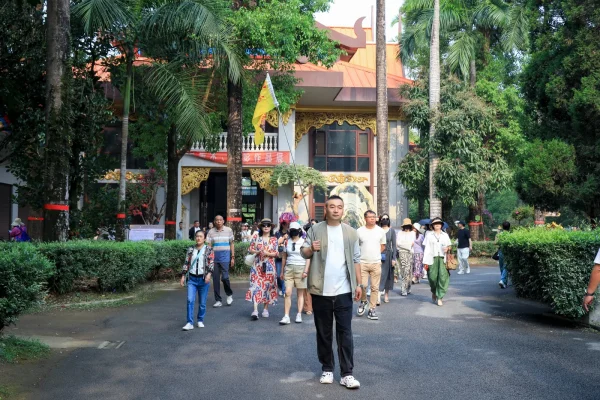
Entrance building at the Li Bai Memorial Museum in Jiangyou. Photo by 来斤小仓鼠吧, 29 April 2018. Original photograph, CC BY-SA 4.0. Resized and converted to WebP under the same license. Historical view.