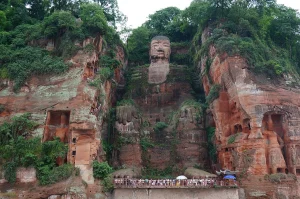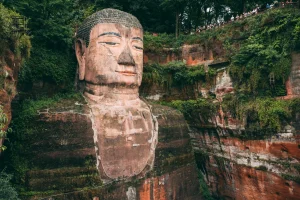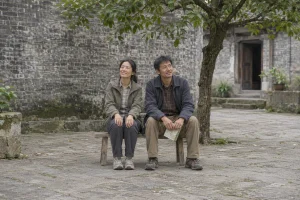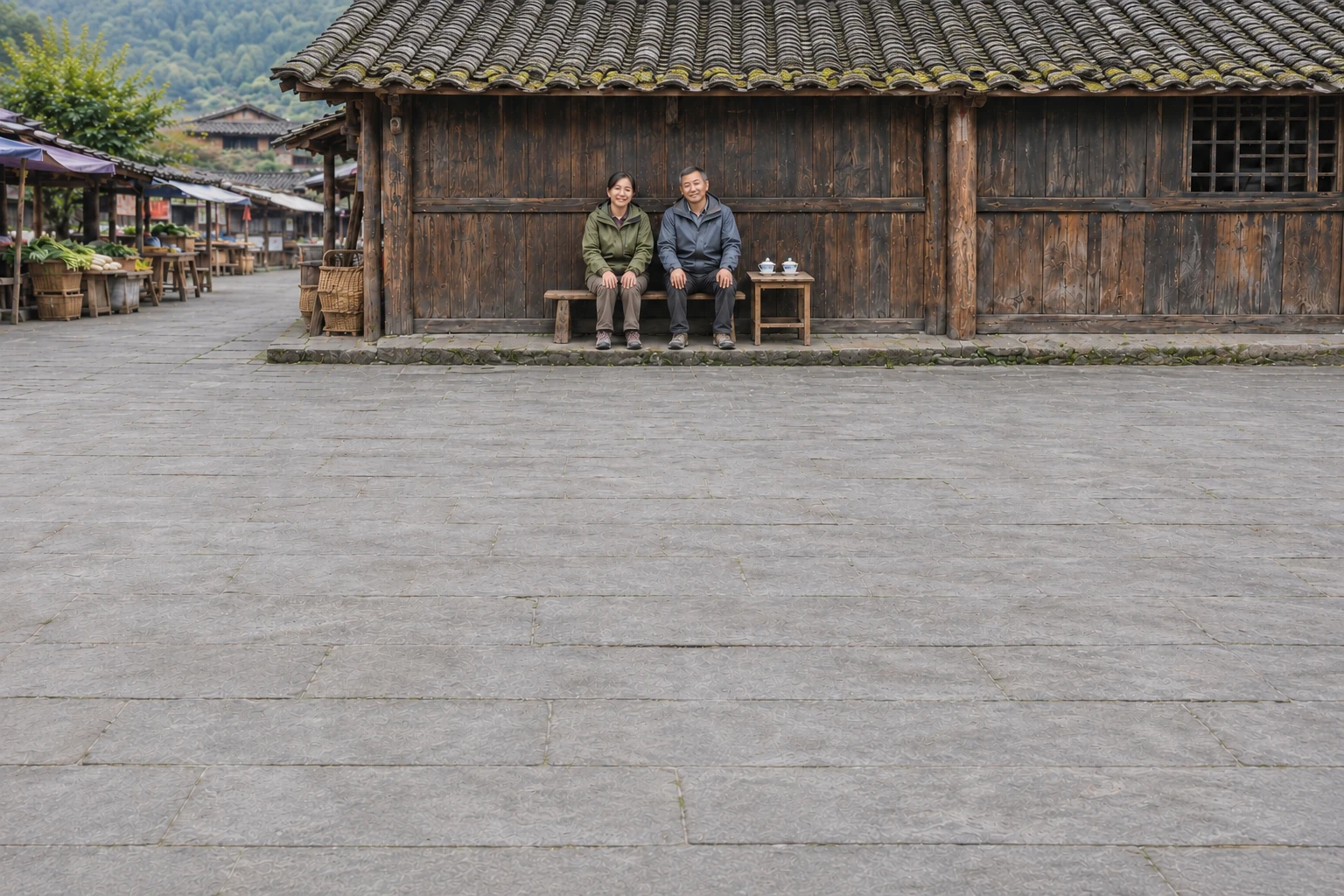
Give Luocheng’s Boat Street a Leshan-based town day, with covered timber galleries, an old stage and time to sit for tea. Select a public section, lunch and the same-hotel return. The stage can anchor architectural looking without a scheduled show.
This is Luocheng in Qianwei County, Leshan, Sichuan: 四川省乐山市犍为县罗城古镇. Use that full name when arranging a car or searching a map. It is a different place from the Luocheng names found elsewhere in China. For a holiday continuing to Mount Emei, start with the Emeishan and Leshan planner and give each main excursion its own usable day.
What makes this a worthwhile town day?
| Interest | A useful core visit | Do not assume |
|---|---|---|
| Street architecture | Look at the changing width of Boat Street and its covered galleries. | A public balcony, rooftop viewpoint or access to every old house. |
| Tea and local life | Choose an open tea shop, agree the charge and sit for a while. | A reserved seat, smoke-free interior or English tea ceremony. |
| Theatre and living culture | Observe the old stage from the public street. | A daily show, backstage entry or a participatory martial-arts lesson. |
Choose Luocheng for the scale of a working market street: roof, shopfront, shared space and tea table. That is different from a monumental Buddha or railway ride. The wider Leshan label does not make these interchangeable experiences.
A compact old core does not make the complete excursion a brief stop. Reaching the town, finding the agreed walking start, eating and returning all use time. Travellers who mainly want a performance should secure the actual event before choosing the day. Those seeking a quiet architectural walk should allow for residents, deliveries and the changing use of a working street.
Read the boat shape from the street
Recognise Liangting Street (凉厅街), or Boat Street (船形街), as a hilltop arrangement of buildings and space, not a canal or vessel to board. At street level, watch the public space widen and narrow between shopfronts.
The Qianwei local-history office’s account describes the traditional timber construction and the long covered galleries known as liangtingzi (凉厅子). The galleries connect trade, shelter and everyday movement. Looking from the middle of the street towards a covered frontage reveals a different relationship from walking beneath its eaves.
From the agreed access, walk a manageable public stretch towards the stage, then decide between continuing and a suitable gallery return. That creates a clear short option without a loop through unfamiliar lanes.
The boat outline in an aerial image grants no rooftop or upstairs viewpoint. Leave private rooms, roofs and walls out of the visit. Timber posts, shop openings and eaves give ample street-level detail to examine.
Historical descriptions place the town’s formation across the late Ming and Qing periods. That broad background is more useful than treating every visible timber member as the same age. The street has also been maintained and restored. A traditional-looking frontage does not prove that every element is an untouched original, and a historical building name does not make its interior public.
Look at the old stage without depending on a show
The old theatre building creates a focal point along the street. A China Tourism News writer’s 2023 visit describes a passage below the stage level and the projecting roof above it. From an appropriate public position, notice how a building used for performance also shapes the movement and gathering space around it.
At the stage, compare frontage, visible carving and audience space with the covered galleries. Keep the passage and entrances clear. Exterior observation does not include stage, backstage, upper-floor or religious-premise access.
Reports of opera, folk arts and martial-arts events show that this is a living cultural setting. They do not establish a programme for every visiting day. The same writer happened to encounter a cultural event in 2023; its lively evening cannot be promised to someone arriving now. The town can be visited for its street and architecture without purchasing or waiting for a show.
A November 2026 report described an Austrian choir visiting Boat Street for a specific cultural exchange. That is evidence of a dated event, not a recurring concert or a class available to every visitor. If a performance matters, identify the event, location, date, access conditions and language support before arranging the rest of the day.
Make tea a pause rather than another appointment
After the first walk, choose an operating tea shop, establish seats, tea and charge, and settle in. A simple cup can be the purpose of the pause, without a formal tasting, workshop or shopping commitment.
China Daily’s 2023 reporting described tea drinking, games and market activity along the street. Use that as a picture of how the place has been lived in, rather than a guarantee of today’s stalls or a quiet table. Some visitors enjoy a busy room; others prefer a more open, well-ventilated position. Look at the actual setting before committing to a long break.
Ask before photographing people, their games or a shop interior. A person resting at a tea table is not an attraction scheduled for your camera. Keep conversations and foot traffic flowing, and do not join a game or handle someone’s belongings without an invitation. A small purchase does not confer access to a family’s private rooms.
Qianwei is associated with jasmine tea, and a jasmine-scented cup may be an appealing choice when offered. Confirm what is being served and the price. A tea-house visit does not include a plantation, seasonal picking, processing instruction or a claim of health benefits. English explanation depends on the person actually accompanying you, rather than the menu having a familiar name.
Keep market days and side lanes flexible
Let market activity shape expectations rather than an unverified calendar. More trade may mean less space to examine a facade; quieter streets may mean fewer stalls. No particular vendor, barber or dish is guaranteed.
Add only a modest, clearly public side lane if footing, crowds and return suit. Doorways and stairs can lead to homes. Where access is unclear, return along the known street instead of completing a supposed loop through private space.
The boat-shaped historical core and newer tourism projects should also be distinguished. A description of a restoration scheme, planned waterside development or new walkway does not show that every part is operating now. This visit centres on the confirmed public old-street section, with no boat trip, temple interior or newly advertised viewing facility required.
A complete day from a Leshan hotel
Start with the hotel’s full Chinese name and address, then establish the actual road pickup and town drop-off. A room near Leshan Railway Station and one in the older city create different first journeys. The walking starts where the vehicle may legally stop; the town name alone does not identify a practical meeting point.
Use the first block for selected architecture and tea if wanted, with the stage as orientation rather than compulsory entry. A tired companion can share a shorter known return and seated break instead of finding another route alone.
Plan lunch as an actual meal before the return. Choose a restaurant around the collection route and agree whether you pay directly or the meal is itemised. Snack stalls can be interesting, but several standing tastings do not automatically provide suitable seating or a balanced break for the party. Menus and opening days need checking with the business selected.
Explain allergies, vegetarian or halal needs before ordering. Ask about broth, cooking fat and sauces as well as the visible main ingredient; a tofu dish is not necessarily prepared without meat stock. A town with different religious and cultural communities does not make every restaurant suitable for every diet.
After lunch, take only the additional street time that fits the party and conditions. Rejoin the vehicle at the agreed point and return all the way to the same Leshan hotel, including any final pedestrian connection. If a car is requested, its waiting, luggage capacity and full return must be included in the written arrangement. An outward drop-off is not a return service.
Choose a base and count the nights
| Stay | Suggested use of the days | Hotel nights |
|---|---|---|
| 3 days / 2 nights | Arrive in Leshan; one dedicated Luocheng day; depart. | Leshan 2. |
| 4 days / 3 nights | Arrival; Luocheng day; separate Buddha or another confirmed local day; departure. | Leshan 3. |
| 5 days / 4 nights | Arrival; Luocheng day; separate main excursion; an easier city or rest day; departure. | Leshan 4. |
Two nights in the same Leshan hotel give one complete day between arrival and departure. That can be enough when Luocheng is the purpose of the stop. A third night creates a separate day for the Giant Buddha and Lingyun cultural visit, with its own admission and walking choices.
The Jiayang railway and Bagou guide describes another excursion in the wider area. Its train arrangements, road approach and complete return deserve a different day. Sharing a county or appearing on the same regional map is not a reason to place the railway and every part of Luocheng into one hurried sequence.
A Qianwei overnight can be considered when it serves your onward route, but identify the actual hotel, passport registration and journeys first. A historical article mentioning an inn does not establish that it is open or suitable for your booking. This guide’s examples use a Leshan base rather than promising a room inside a heritage building.
For a Chengdu-based holiday, consider whether adding Leshan nights improves the trip. A long outward and return road day is different from visiting from a local base. The Sichuan planning guide helps connect those city nights and regional moves without treating arrival or departure as a full sightseeing day.
Transfers, passports and the written scope
If using rail, copy the actual station name from the ticket into the pickup instructions. Qianwei Station (犍为站), Leshan Station (乐山站) and the tourist railway’s departure point are different places. An intercity ticket does not include the final road connection to Luocheng or the return from the town. Reserve an onward service only after those stages and baggage collection are accounted for.
The public street is the core of this visit. Shops, performances, religious buildings and any separately managed attraction have their own access and payment arrangements. Published international visitor promotion and reports of overseas visitors establish a general visiting context; they do not test every passport through every current ticketing or payment channel.
| Part | Detail to settle | What remains separate |
|---|---|---|
| Public walk and visits | Current access point, open street section, walking limit and any specifically requested interior. | Private homes, upper floors, religious access and a promised show. |
| Tea, lunch and language | Named accompanying language, meal basis, dietary needs and tea or seating charge. | English-speaking shop staff, a workshop or a particular menu. |
| Transport, bags and room | Hotel meeting, vehicle waiting, collection, complete return and accepted storage or room. | Rail or flight tickets, station transfers and an extra hotel night unless listed. |
Price on request. Ask Verotrip for a proposal based on your date, hotel, party size, preferred language, dietary requirements and walking needs. The accepted written plan should identify the actual services and change conditions. Guiding, tea, lunch, vehicle waiting, admission to a separately selected venue, accommodation and insurance are not automatically included in a public-street outing.
Carry the valid original passport needed for any separately arranged admission, accommodation or rail journey. If a specific venue or booking form is requested, have the actual document and payment process confirmed before paying. Do not substitute invented Chinese identity-card details or assume a driver’s reservation secures every other service.
Walking comfort, weather and belongings
Stone paving, changes of level, steps and thresholds deserve attention even on a short walk. The town occupies a hilltop setting; compact does not mean uniformly flat. Tell your travel consultant how long you can comfortably walk and stand, and whether descending or getting into a vehicle is difficult.
For a wheelchair or pushchair, ask for the specific usable section, kerbs, toilets, resting opportunities and vehicle approach to be checked. The whole old core is not promised step-free. Keep the group’s shorter return option clear and avoid extending into a narrow lane merely because another visitor described it as easy.
The covered galleries offer useful shelter, but the road approach, crossings and open street are not entirely protected. In heavy rain, watch the stone surface and shorten the outdoor part; in heat, add rest and water. A show or indoor substitute is useful only when its access and suitability have been established. Particular light, flowers, empty lanes or a seat beside the stage cannot be guaranteed.
Leave the larger suitcase with your hotel under an agreed storage arrangement when returning there. Carry a manageable day bag with water, documents and ordinary weather protection. If checking out before the excursion, settle bag custody and collection separately. Neither a tea shop nor a waiting car should be treated as secure luggage storage without agreement.
Questions before choosing Luocheng
Is Boat Street a water-town or boat excursion?
No. The name describes the street and building layout on a hilltop. The core visit is a public walk, architectural observation and an optional seated tea break. No canal ride or cruise is needed.
Can I rely on seeing Sichuan Opera?
Only when an actual event for your date has been confirmed. Historical and recent reports document performances, but do not establish a daily programme, reserved seat or backstage access. The old stage can still be an architectural focus without a show.
Should I combine Luocheng with the Jiayang train?
Give each a separate day when possible. Both need their own road connections, visiting time, meal and complete return. A train reservation can make an already busy town day inflexible; compare the actual route before combining anything.
Is a Leshan overnight useful?
Two Leshan nights protect one full local excursion day between arrival and departure. Add a third night for a separate main visit rather than squeezing it into the return margin. Confirm the actual hotel address, luggage storage and final station transfer.
Plan a town visit with time to sit
Send Verotrip your dates, actual arrival and departure, hotel location, party size, walking limits and preferred language. Say whether the priority is architecture, an unhurried tea break or a particular confirmed cultural event. A useful day connects that interest with a real meal, a clear collection point and the complete return, leaving the town’s everyday life room to continue around you.