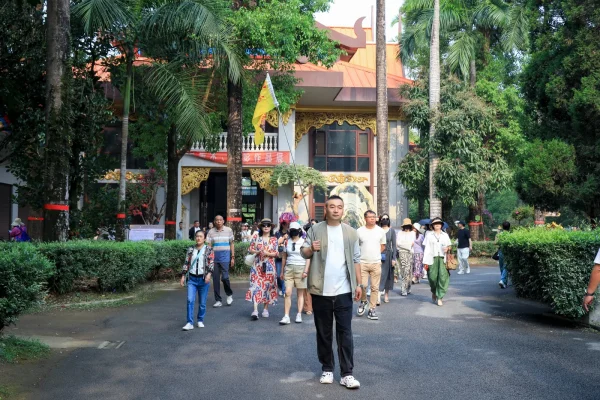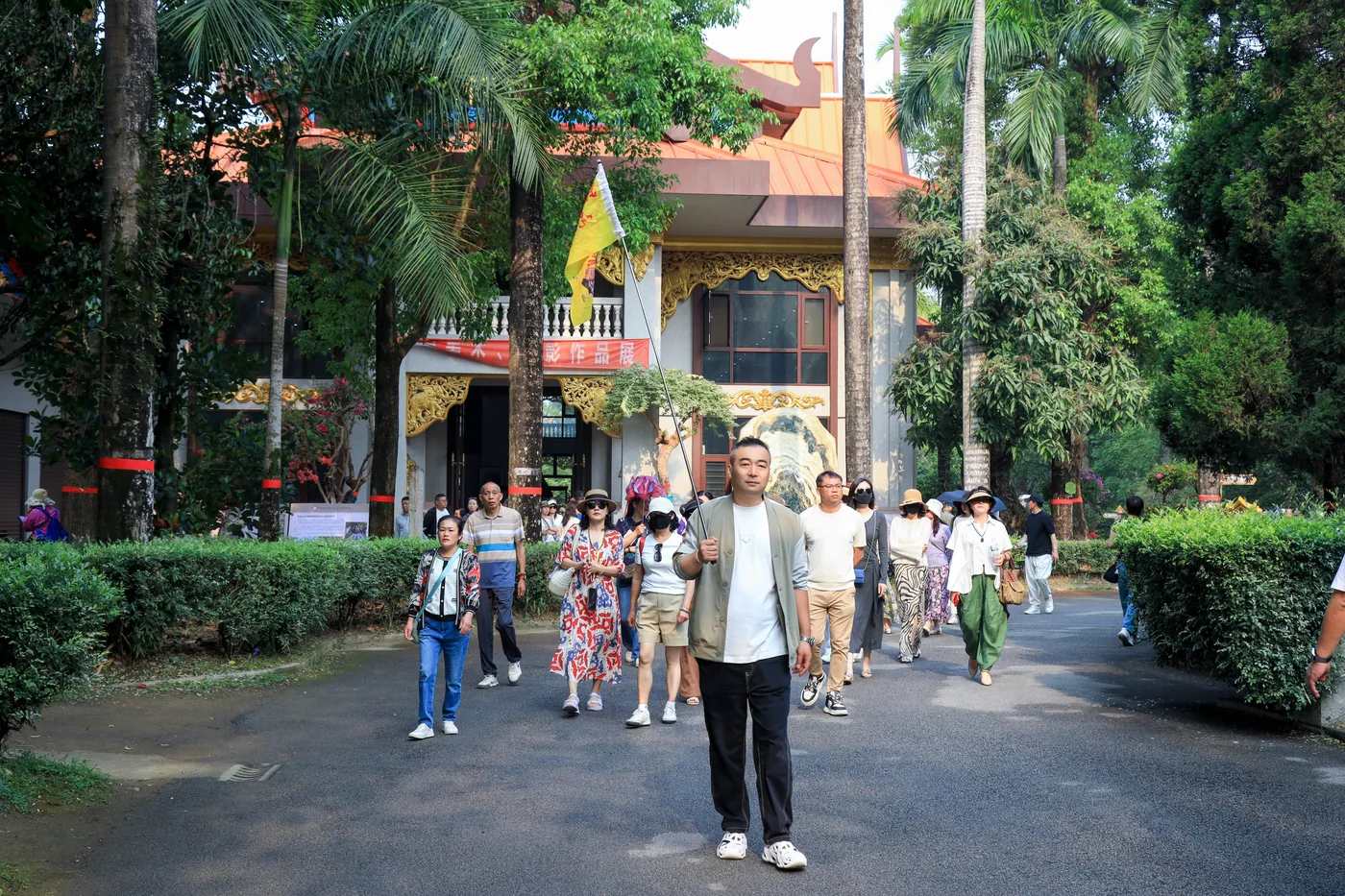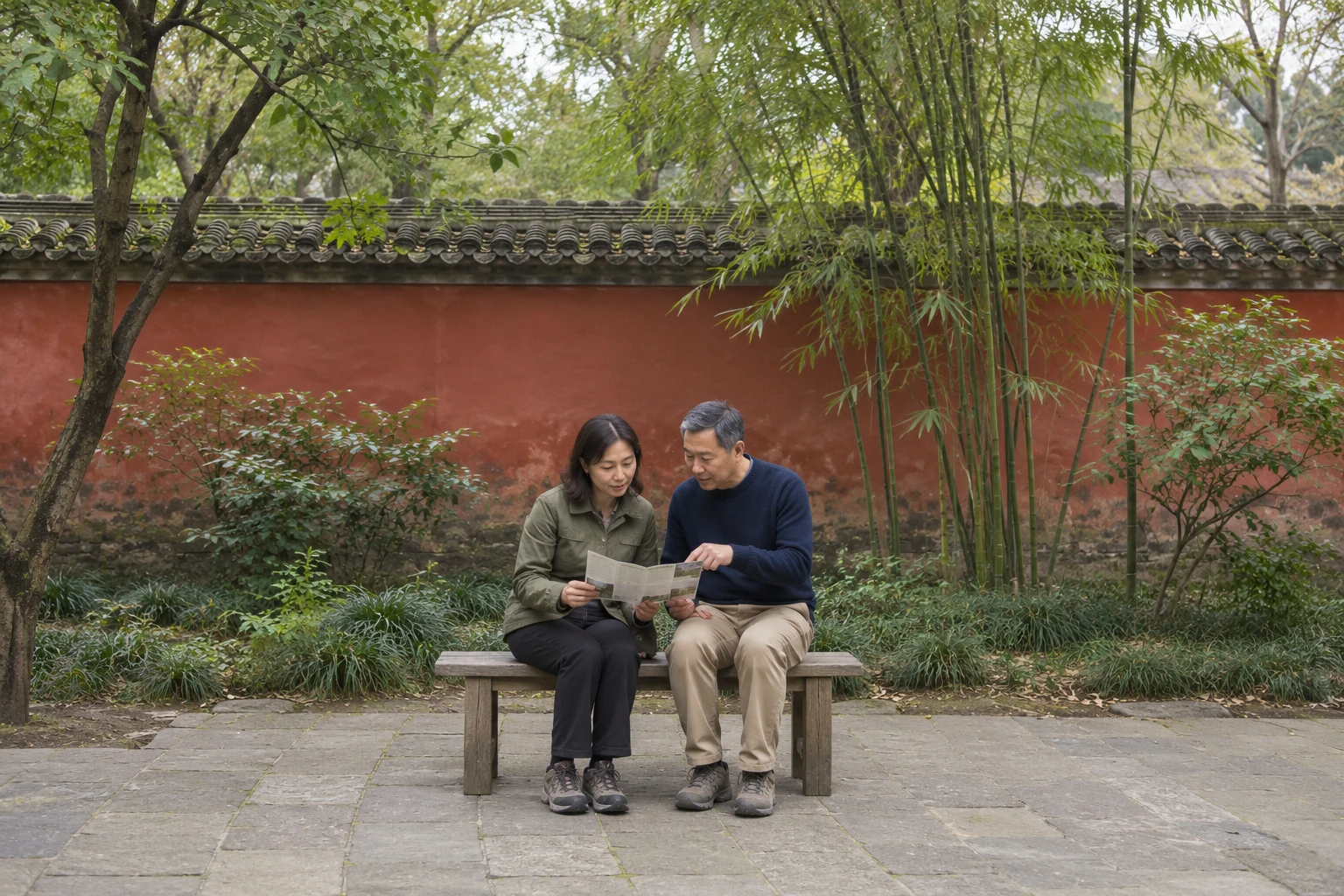
At Sansu Shrine in Meishan, meet Su Shi through family, memorial halls and garden rather than another mountain viewpoint. Make the cultural visit the main purpose, with one exhibition if wanted, lunch and the complete return. Prior knowledge of Chinese poetry is not required.
The useful choice is between a shorter courtyard-and-garden visit and a more interpretive day that includes a confirmed exhibition. For a day trip from Chengdu, give Meishan its own outward and return journeys. For an overnight, use the extra time to slow down instead of automatically adding distant attractions.
Meet the three writers before choosing the route
The museum’s introduction identifies the site in Meishan’s Dongpo District, on Shahuhang, as the former home associated with Su Xun and his sons Su Shi and Su Zhe. Su Shi is also known as Su Dongpo. The three writers give the shrine its name; this is a place of literary remembrance and family history.
The same account records destruction in the late Ming period and rebuilding on the site in 1665. The association with a Song-dynasty family does not mean every building you see is an intact Song residence. Ask your interpreter to distinguish the family’s life here from later generations’ acts of commemoration.
Ask how a family home became a memorial for later readers. Figures, halls and garden can answer in different ways. Poetry enthusiasts may want one work explained; architecture-minded visitors can follow the courts without a long recital.
Use three halls as the cultural spine
Use the open route through Xiangdian, Qixiantang and Laifengxuan as the cultural spine. These are interpretive priorities, not a promise of entry to every side room. Let the current map and staff instructions set the actual path.
The museum’s Xiangdian description identifies it as a Qing-period hall housing images of the three writers. Notice how the statues are placed within the hall and how its front and rear verandas connect to the surrounding space. This makes a useful starting point for explaining who is being commemorated.
At Qixiantang, the operator distinguishes a southern section from the Mujiashan hall to its north. Its account describes a wooden rockery placed in the nineteenth century. If that part is accessible, ask why an object resembling a landscape belongs within a literary memorial. It should not be presented as a surviving object from Su Shi’s childhood.
Laifengxuan forms the last building of the memorial’s central axis. The museum associates its site with the brothers’ sleeping and study rooms while explaining the later rebuilding and changes of name. Look at the courtyard and connecting covered passage as a spatial sequence, rather than treating the present structure as a furnished reconstruction of the brothers’ daily lives.
Finish this sequence once the three stops are understood. Reading every inscription belongs to a more specialist visit. For calligraphy, specify the examples and whether they are originals, later inscriptions, rubbings or reproductions. Holding a work in the collection does not place it on display.
Let the garden change the pace
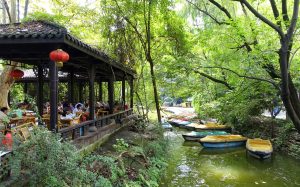
The operator’s garden account distinguishes the eastern area associated with the former residence and Qing buildings from the western garden area. Water, bamboo and the relationship between formal and more natural layouts are central to its description. Use that contrast to choose a slower second part of the visit.
From public paths, compare a framed court with a more open waterside view. Notice roofs above planting and passages revealing another garden section. An approved short loop or return can explain that changing atmosphere without reaching every pavilion.
Pifeng Waterside Pavilion is one named architectural focus to discuss if the current route reaches it. The museum describes a later rebuilding and a two-level structure beside the western Ruilian pond. Looking at it from a public path is different from having permission to use an upper floor. Do not make that access essential to the visit.
Enjoy the cultural garden without making flowers, golden leaves or a quiet bench the promise behind the visit. Seasonal photographs preserve one moment. Protect trees and water edges, remain outside restricted planting and rest without obstructing narrow passages.
Choose an exhibition, not every available building
The museum’s own site distinguishes the shrine, the Sansu Memorial Hall and Dongpo Academy. Its Memorial Hall description develops the writers’ lives and literary achievements. The academy is a separate cultural component; do not assume ordinary sightseeing includes a class or access to every room there.
For a family-history emphasis, the operator describes the China Has the Three Sus exhibition in Shisuxuan. Its 2023 introduction connects family teaching with the writers’ public lives and wider cultural setting. Use that subject to decide whether the exhibition interests you; its old list of loans and multimedia features does not establish today’s complete display.
Give one exhibition enough attention for its story. With children, one question about learning or family responsibility can focus a few exhibits. A short shared conversation may serve them better than every case in quick succession.
Hands-on sessions, a digital experience, a lecture and a festival performance need separate dated arrangements. A website photograph or course announcement is not proof that an activity runs during an ordinary visit, in English, or for an individual visitor. Leave it out of the core day unless the specific session is confirmed.
The choice at a glance
| Interest | Keep as the main visit | Add only if wanted |
|---|---|---|
| Literary family history | Xiangdian,Qixiantang and Laifengxuan on the permitted route. | One confirmed exhibition for biographies or family teaching. |
| Garden and architecture | Courtyard sequence and a manageable garden section. | A named pavilion reached by the open path. |
| A short cultural excursion | Selected halls,garden pause,lunch and full return. | A longer exhibition block with separate access checks. |
Share the courtyard sequence if companions divide between architecture and biography, then add one agreed exhibition. Keep a gentler finish for someone who has had enough standing, reading or walking.
Plan arrival, lunch and the full return
Use the full destination name 眉山三苏祠博物馆 when arranging transport. Confirm that the visit is to Meishan in Sichuan. Other memorials connected with these writers are not interchangeable destinations, and a driver needs the actual entrance or legal drop-off point for this booking.
From Chengdu, compare a complete road outing with a rail journey plus local transfers. For rail, check the exact departure and arrival stations on the actual service, the hotel-to-station journey, boarding and the final approach in Meishan. A short train ride does not measure the entire trip from your hotel.
For a road proposal, agree the pickup address, passenger and luggage capacity, waiting, legal stopping and the final Chengdu return. If continuing to a Meishan hotel, write that different finish explicitly. Reaching the shrine is only the outward half of the transport arrangement.
Let the day move from actual arrival and admission to halls, garden pause and Meishan lunch. Add the selected exhibition only when open and while the party still has energy, then return to the confirmed hotel. This framework supplies no fixed operator timetable.
Choose lunch around the actual menu, seating and dietary needs. Explain allergies, vegetarian ingredients, halal preparation and cooking fats separately. A restaurant’s Dongpo-themed name does not establish its suitability or make a meal part of admission. A seated lunch can be the comfortable finish of the cultural programme.
Do not attach a mountain summit to the remaining afternoon merely because both places belong to the Meishan region. A regional label does not remove driving, another admission, walking or the descent. If you want a mountain day, plan it separately and protect its overnight base.
Choose Chengdu nights or a Meishan overnight
Keep the Chengdu room for a single excursion. Choose a Meishan night when the slower evening or onward route justifies moving hotels. Neither version should rely on a promised night opening at the shrine.
| Stay | Suggested pattern | What the choice means |
|---|---|---|
| Four days,three Chengdu nights | Arrival;city day;Meishan excursion;departure. | Only two full visiting days, so select city priorities. |
| Five days,four Chengdu nights | Arrival;two city days;Meishan day;departure. | One stable hotel with three full days between travel. |
| One Meishan night within a longer trip | Arrive;selected shrine visit;local evening;onward journey. | Count the hotel change and next transfer separately. |
The Chengdu trip-planning guide helps allocate the city days before adding an excursion. For a four-day, three-night stay, putting Meishan into one of only two full days means deliberately giving up another major visit. A five-day, four-night stay leaves more room for pandas, city culture and one separate outing.
If you continue towards Leshan or Mount Emei, count that transfer and the next accommodation independently. The Emeishan and Leshan planner gives those visits their own days and walking choices. The wider Sichuan guide helps keep a manageable regional route rather than a chain of rushed additions.
For either hotel base, confirm reception for the party’s passports, room and bed arrangement, lift access and the real luggage approach. Leave larger cases at an agreed hotel when the day returns there. Storage and collection hours should be known before setting an onward train.
Check the shrine and exhibition calendars separately
The Chinese visitor instructions distinguish the wider shrine visit from the Sansu Memorial Hall and Shisuxuan, naming Monday maintenance closure for those two exhibition areas except statutory holidays. This should not be simplified into a claim that the entire shrine always closes on Mondays.
If the exhibition is your main reason to come, choose a day when that named space is confirmed available. If your priority is the courtyards and garden, establish their own dated admission and permitted route. A holiday exception, last entry and the time needed to finish are different details.
A previously announced summer extension does not set a late-autumn timetable. Keep the current visitor instructions with the booking and allow time to leave the grounds, collect bags and meet transport. Entering just before a cutoff is not a sensible way to fit the whole cultural visit into a departure day.
Passports, language and the service boundary
The museum’s English visitor page expressly lists passports among valid documents. That provides an official basis for planning an overseas visitor’s admission. It does not show that every online booking form or automatic reader handles every passport without assistance.
Before payment, establish the legitimate channel, name entry, original document and any collection or staffed check required for the actual ticket. Keep the order information accessible offline. Ask separately about eligible concessions and evidence; an English translation of a general rule is not a tested booking for your party.
For interpretation, request an agreed language, subject and duration. A driver, a written English page and an English-speaking cultural guide are different services. Tell the planner whether you want the three writers’ biographies, a selected poem, architecture or family-history interpretation, so the visit has a clear purpose.
| Part | Written detail to establish |
|---|---|
| Admission | Date,original passport channel and named exhibition or courtyard access. |
| Interpretation | Language,subject,duration and actual accompaniment. |
| Transport and bags | Hotel pickup,waiting,bag responsibility and complete return or onward finish. |
| Meal and room | Dietary arrangements,payment basis and exact overnight property if chosen. |
Price on request applies to a tailored Verotrip proposal. Ask for admission, transport and waiting, interpretation, meals and any hotel night to be itemised, with exclusions and change terms. This guide is a planning resource, not confirmation of an operating departure or of an included course, performance or private visit.
Make the walk comfortable in rain or heat
The courtyard-and-garden choice includes outdoor movement. In rain, shorten the garden section and use an available exhibition only after checking that it is open. Covered passages are part of the historic setting, rather than a promise of an entirely dry route. Avoid wet edges, hurried photography and unauthorised shortcuts.
For limited mobility, ask about the actual entrance, thresholds, bridges, surfaces, toilets and any lift serving the chosen exhibition. A city museum with garden paths is not automatically step-free. Explain equipment and standing limits before selecting the route, and leave time to rest where permitted.
In warm weather, carry water and plan the meal before fatigue becomes the main experience. Follow the museum’s restrictions on smoking, hazardous items and leaving visitor paths. Permission for organised performance or another activity should not be inferred from ordinary admission.
Questions that change the day
Do I need to understand Chinese poetry?
No. Start with the relationship between the father and two sons, then notice the memorial halls and garden. A brief explanation of one subject can give the visit focus without requiring a specialist lecture.
Is everything closed on Monday?
Check the named spaces. The Chinese visitor page identifies Monday closure for the Memorial Hall and Shisuxuan except statutory holidays; do not extend that statement to every part of the site. Confirm the courtyard route separately.
Can I see a particular famous work or join an activity?
Only when the actual display or dated session is confirmed. A collection record, old exhibition loan list or festival photograph does not guarantee that work, course, performance or interactive device during your visit.
Is a Meishan overnight necessary?
No. A complete Chengdu return can suit a focused excursion. An overnight is useful when the slower local stay or onward route matters enough to justify another hotel arrival and luggage transfer.
Plan a literary day that suits your interests
Send Verotrip your dates, starting hotel, nationalities, group size, children’s ages, walking needs and preferred cultural subject. State whether you want the shrine alone, one exhibition or a Meishan overnight. Request the dated admission, actual English accompaniment if wanted, meal basis and full return or onward hotel transfer in writing.