At Huangze Temple, choose Wu Zetian’s memorial story, Buddhist cliff sculpture or a balance of both. A selective Guangyuan half-day leaves time for halls, one carving interest and a meal. It need not turn into a mountain walk or a race through every niche.
Save the Chinese name, 皇泽寺, with the actual visitor entrance in Guangyuan, northern Sichuan. The temple stands by the Jialing River below Wulong Mountain. Qianfoya, 千佛崖, is a separate protected cliff-carving site; a reference to both places in one announcement does not mean that one entrance serves both.
The route shapes below are Verotrip planning suggestions. Use the currently open visitor route to select the order, and confirm access to a particular hall or carving before making it the purpose of your trip.
The choice at a glance
| Your interest | Main focus | Keep optional |
|---|---|---|
| Wu Zetian and commemoration | Two-Saints Hall and Zetian Hall | A lengthy specialist carving visit afterwards. |
| Buddhist sculpture | One currently viewable grotto group and its composition | Every niche and exhibition room. |
| A short introduction | One hall theme, one carving interest and a rest | Qianfoya or a mountain outing on the same visit. |
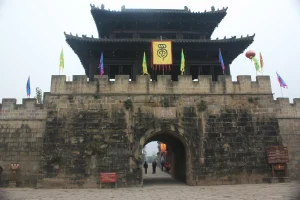
Huangze works particularly well when you want a focused cultural outing within a Guangyuan stay. The Zhaohua Ancient Town guide offers a different local interest: streets, gates and selected county-town interiors. Choose separate days if you want substantial explanations at both.
Wu Zetian: read the halls as a story of commemoration
In Two-Saints Hall (二圣殿), compare Gaozong and Wu Zetian; in Zetian Hall (则天殿), see the empress take the central role. Look at how this memorial presents authority and Buddhism rather than focusing only on a photograph of the main image.
A 2021 China Tourism News account describes these halls and the stone image traditionally presented as Wu Zetian’s likeness. Treat that description as an introduction to the objects and their later treatment. A commemorative image is not a photograph of the historical person, and restoration is part of the story visible today.
Carry one question into the halls: imperial power, Buddhist imagery or Guangyuan’s remembrance of Wu Zetian? For children, comparing the two figures’ roles in Two-Saints Hall can open the subject more readily than a list of officials.
Consider the Empress Culture Exhibition Hall (女皇文化陈列馆) if its current presentation suits that question. Establish open rooms and language support before allocating a whole visit. Its name guarantees no specific display, English explanation or special activity.
Grottoes: choose shape and composition over a carving count
A 2022 first-hand Sichuan Daily report describes the Central-Pillar Cave, 中心柱窟, with its square central pillar and carved arrangement. If this section is accessible on your visit, look at how the pillar organises the small space and where the figures sit in relation to it. This gives you a clear subject without needing to identify every figure.
At the Great Buddha Grotto and building (大佛窟、大佛楼), compare the dominant figure, surrounding carvings and the structure sheltering the cliff. The same report distinguishes old carving from later building work; a roof above an ancient image need not be equally ancient.
Five-Buddha Pavilion (五佛亭) and other reliefs can extend a specialist visit, while remaining optional for a first introduction. Spend time understanding a smaller group instead of pursuing numbered niches after attention or energy fades.
Do not make a close-up photograph the test of a successful visit. A barrier, viewing distance or conservation cover may limit what you can see. Ask which features can currently be viewed from public areas and whether a guide can help distinguish original stone, later repairs and modern presentation. Old inspection photographs cannot establish today’s visitor position.
A half-day with a clear beginning and finish
Before leaving the hotel: eat breakfast, take a small day bag and agree the actual entrance and return meeting point. Carry the required original identity document, water and a light weather layer. Tell the planner how long you can comfortably stand and whether stairs or descents are a problem.
At entry, check the open route and viewable subjects before putting the main interest first. The memorial halls can lead a Wu Zetian visit; sculpture enthusiasts can establish which grotto section is visible before adding interiors.
After a pause, choose one secondary subject. Pair halls with an accessible carving group, or shorten the memorial exhibition after a carving-led visit. This follows interests rather than a measured circuit and promises no entry to every named space.
Finish with the exit, vehicle and a seated lunch, then return to the agreed city address. Rest or a cafe near the hotel may complement the morning better than another long explanation at a second major sight.
On an arrival day, use this shorter version only when the real train or road timing leaves room for check-in, food and the visit. On a departure day, include baggage collection and the full station or airport transfer. “Half-day” describes the shape of the outing; it is not a guaranteed door-to-door duration.
Keep a Guangyuan base and count the nights
| Pattern | Suggested sequence | What the nights provide |
|---|---|---|
| Three days, two city nights | Day 1 arrive and settle in; day 2 Huangze plus meal and rest; day 3 depart. | One full local day without moving bags. |
| Four days, three city nights | Day 1 arrive; day 2 Huangze; day 3 a separate Zhaohua outing; day 4 depart. | Two distinct local sightseeing days with their own transfers. |
| Two days, one night | Keep the visit short and place it around the actual connections. | Useful only when arrival and departure leave genuine visiting time. |
Choose the hotel’s exact location for the whole stay. A station-area room can be useful around an early train; a city base may suit meals and downtime better. Compare the actual route between the property, visitor entrance and departure point instead of relying on a label such as “near Huangze.”
Ask about the room itself: lift access, stairs, bed setup, heating or cooling, breakfast and street noise. Confirm registration for the passports in your party. The last walk with suitcases matters, especially if the lawful vehicle stop is different from the reception door.
Keep the large bags at an agreed hotel or storage point during the outing. Do not assume temple reception accepts suitcases or that a parked car is suitable storage for valuables. If your driver waits, specify the waiting period; if you are using separate rides, establish how and where you will arrange the return.
When to add Qianfoya, Zhaohua or Jianmen
Add Qianfoya only for a genuine wish to see a second cliff-carving site. Check both routes and allow an exit, meal, transfer, separate entry and return. A combined-ticket advertisement removes none of those stages and proves no area open.
For a mixed-ability party, Huangze alone may be enough. Someone keen on sculpture can spend longer at one accessible group while others prefer a shorter common route, but splitting up only works with a clear reunion point and communication plan. Do not assume staff can provide supervision for a traveller who remains behind.
Zhaohua gives a different theme and can justify an extra city night. Jianmen Pass and Cuiyun Corridor require a larger walking and transport decision. Read the Jianmen and Cuiyun walking guide before adding a mountain or ancient-road day. A temple half-day does not establish the fitness or route access needed for those outings.
Keep Guangyuan Railway Station and Jianmenguan Railway Station distinct in messages and bookings. Choose the station named on the actual ticket and allow for its road approach. For a longer Sichuan journey, the Sichuan regional planner helps decide whether Guangyuan earns a separate stay rather than a rushed stop between cities.
Read conservation and crowd notices by their dates
The official July 2026 conservation project plan identifies cliff-stability and water-damage work in the area between the Five-Buddha Pavilion and the Empress Culture Exhibition Hall. A procurement plan is not a visitor closure notice or a schedule of areas open today. It is a reason to ask specifically about the viewing sections that matter to you.
Similarly, the operator’s 2 October 2026 crowd notice recorded temporary changes to ticket sales and entry control during the holiday. It illustrates why buying online or arriving at a window cannot be treated as a standing guarantee of immediate admission. Check the current notice for your travel date and follow staff routing.
The city’s cliff-carving protection regulation, effective from 1 January 2026, gives the management body responsibility for open areas, visitor routes and capacity. Its visitor rules prohibit touching or climbing protected objects and facilities, unauthorised rubbing or copying, and burning incense, paper or candles within the protected area. Follow the site’s signs rather than assuming that practices allowed at another temple apply here.
For photographs, check the rules at the particular hall or grotto. Respect barriers, keep paths clear and ask before making close portraits of other visitors. A photograph of a person inside a conservation area does not establish permission for you to enter it.
Steps, rain, meals and language
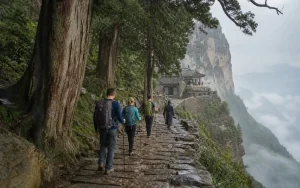
The hillside setting and raised halls make the actual route more useful than a general “easy temple” label. Wear shoes with grip and leave energy for the descent. For a wheelchair, stroller or walking aid, request a specific route assessment covering surfaces, steps, rest points and toilets; this guide does not certify an accessible circuit.
In light rain, shorten the outdoor portion if the route remains suitable. A roofed hall does not make the links between buildings weatherproof. Heavy rain, storms, slippery stairs or a conservation restriction can justify a different day. Never use a side track or climb around a barrier to reach a carving.
Make lunch a proper pause and check the actual ingredients and preparation for your diet. A noodle, tofu or vegetable dish is not automatically suitable for every allergy, vegetarian requirement or halal preference. Carry a suitable snack if a child may need food before the planned meal.
Decide how much interpretation you want before booking. A driver, remote translation, an on-site Chinese explanation and an accompanying English-speaking guide perform different roles. If the history is central to the visit, specify the language, subjects and duration in the written arrangement. Do not infer a complete English visit from one translated sign.
Tickets and the complete day budget
| Component | Confirm in the written plan |
|---|---|
| Admission | Huangze, any second site, date, ticket channel and document check. |
| Interpretation | Language, subjects, meeting point and actual accompaniment. |
| Transport and bags | Hotel or station pickup, visitor entrance, waiting, final address and storage. |
| Meals and rooms | A meal stop is not an included meal; identify any hotel nights and room category. |
For an overseas passport, establish which purchase channel accepts the document, how the name is entered and where it is checked. Bring the original document required for the booking. Do not substitute a Chinese identity number to make a form work, or infer a concession from a domestic student or senior category.
Ask for the total in a stated currency and on a per-person or per-party basis, with change and cancellation terms. A combined ticket, an interpretation session, a waiting vehicle and lunch are different cost components. No named hotel, guide, ticket or departure is reserved by this article.
Questions before choosing your Huangze visit
Is Huangze only interesting for Wu Zetian’s biography?
No. The halls provide the memorial theme, while the grottoes offer a distinct art and conservation interest. Choose the balance you want instead of treating every room and carving as compulsory.
Should we visit both Huangze and Qianfoya?
Only if a second carving site suits your interests, stamina and usable day. Check separate entry, current viewing routes and both transfers. A selective Huangze visit is a complete choice in its own right.
Can we count on every grotto being open?
No. Conservation work, capacity and weather can affect viewing. Confirm the specific section you want and keep a shorter version available. Historic descriptions and project documents are not today’s access notices.
Is a Guangyuan overnight necessary?
It depends on your arrival and departure. One night can work for a short visit with generous connections; two nights give a full local day without using transfer time as sightseeing time. Add another night when a separate Zhaohua day matters.
Plan the visit around your main interest
Send Verotrip your Guangyuan plans, including dates, actual arrival and departure, hotel needs, party size, bags, comfortable walking and stair limits, and whether Wu Zetian or Buddhist carving is the priority. Price on request; the accepted written proposal must identify the visits, document process, vehicle and waiting, language support, meals, rooms and any other services. An enquiry does not confirm them.