Updated 1 November 2026
For a first Bipenggou visit, use the scenic bus to reach the upper visitor area, then choose a lake-focused outing or a longer permitted valley walk. Electric carts can reduce the connecting distance, but the bus, carts and walking are different parts of the day. A local overnight before the visit gives you more flexibility than fitting the whole valley between two long Chengdu transfers.
Bipenggou (毕棚沟) is in Li County, northern Sichuan. This guide covers the managed sightseeing valley: lakes, forest, mountain views and designated visitor paths. It does not recommend the cross-mountain trek between Changping Valley and Bipenggou, summit climbing or entry into protected areas outside the open visitor circuit.
Understand the bus-to-cart change before choosing your walk
The first transport stage starts at the visitor centre. The scenic bus takes visitors into the valley to Shanghaizi (上海子), where the upper walking and electric-cart choices begin. Your road vehicle from Chengdu and the internal scenic bus are separate services; agree where your driver waits outside and where you meet after leaving.
Li County’s published visitor information describes two upper electric-cart sectors: Shanghaizi–Panyang Lake and Moon Bay–Yanziyan. That December 2024 page is useful for understanding the layout. Use the current boarding signs and dated ticket instructions for the stops, operating links and return arrangements on your visit.
| Place or transport stage | What it means for the visit | Decision to make |
|---|---|---|
| Visitor centre → Shanghaizi | The scenic bus approach into the managed valley. | Check admission, bus scope, boarding and the final return before setting off. |
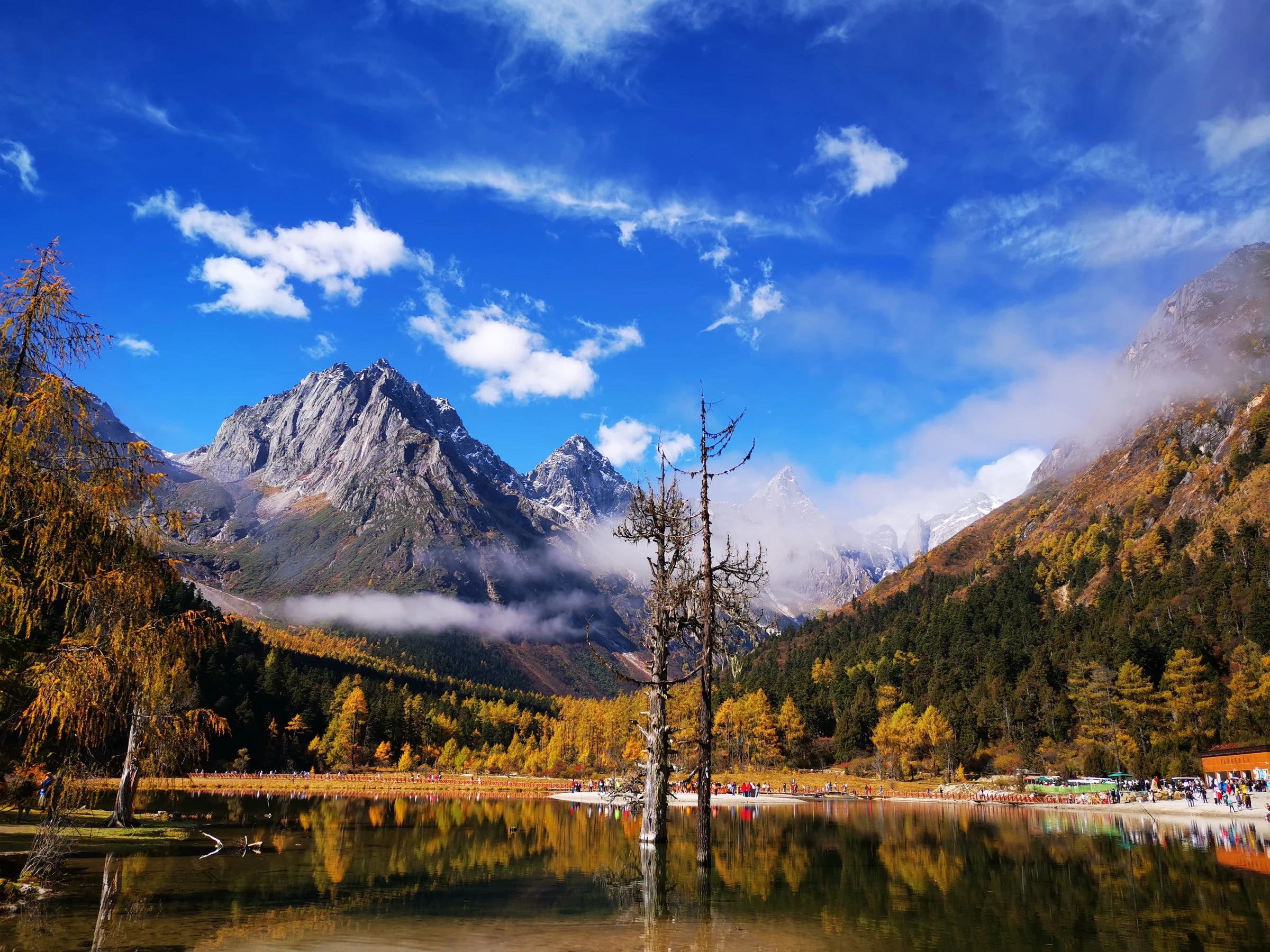
| Panyang Lake / 磐羊湖 | A lake-focused objective reached beyond the bus interchange. | Allow time for a selected permitted lakeside section; identify the cart return point. |
| Moon Bay / 月亮湾 → Yanziyan / 燕子岩 | A further upper-valley sector, rather than another stop automatically included in a short lake visit. | Continue only when the open route, weather, effort and return allowance suit everyone. |
| Walking between viewing areas | A different commitment from getting off a cart for a short view. | Name the permitted start, end and distance with staff before replacing a vehicle sector on foot. |
Longwanghai (龙王海), lower in the valley, offers a different lake-and-forest view from the higher stops. Follow the bus’s actual permitted stop pattern. Do not assume that every outbound stop is repeated on the return or that you can leave the bus between designated stops.
At Shanghaizi, decide how far to continue before buying the next sector. Ask where the vehicle finishes, whether the return boards at the same place and what walking connects the stops. “All-inclusive” can describe one ticket bundle; it does not establish that a Chengdu transfer, meals or every winter activity is included.
Choose a lake outing, a longer walk or a shorter day
For a party wanting scenery with modest walking, make Panyang Lake the main objective and use the appropriate operating vehicles. Enjoy the changing reflections, forest edge and mountain setting from the permitted visitor route. Add the upper sector only if the day remains comfortable; reaching every endpoint is optional.
| Your preference | A suitable plan to discuss | What to avoid |
|---|---|---|
| Scenery with shorter walks | Scenic bus, the needed cart sectors and selected viewing areas around the chosen lake. | Calling the whole outing step-free without checking boarding, paths and toilets. |
| A substantial managed walk | Choose one open link between named stops, with a clear return boarding point. | Replacing both cart sectors with walking because another traveller called it easy. |
| Limited time, cold weather or mixed abilities | Keep one agreed objective and turn back early enough for the bus and road pickup. | A compulsory upper endpoint followed by a rushed descent. |
A shorter route still reaches a high mountain environment. Do not judge suitability only by the minutes spent walking. Standing in a queue, getting in and out of vehicles, icy surfaces and the return journey can matter as much as distance.
For companions with different abilities, choose the shorter shared programme first. If splitting, each subgroup needs a clear route, meeting point and way to communicate. A quiet lakeside corner is not a reason to cross a barrier or wait in a place where the next vehicle cannot collect you.
Separate the Chengdu road journey from the park day
A Chengdu return outing is possible only when the dated transport leaves a worthwhile visitor window. Count the hotel-to-pickup journey, road travel, admission, internal buses, walking and the final city drop-off. A driving estimate alone does not tell you how long you have beside the lake.
The county’s road guidance describes a G4217 approach through Putou toward the visitor centre. Its public-transport description uses Chengdu’s Chadianzi station, Li County and a final local connection. These are planning starting points from an older notice, rather than a current bus timetable or a promise that each road is clear.
Before purchasing, obtain the actual service for your date, its boarding point, park stop, luggage arrangement and return seat. If using a connection at Li County, confirm the onward leg and the last workable return separately. A ticket to the county town does not complete the journey to the scenic entrance.
For a private vehicle, agree passenger and bag capacity, waiting hours, the park-exit meeting point and the final Chengdu address. English guiding, ticket assistance and extra stops need their own scope. Keep an onward flight or train for another day if a mountain-road delay would make that connection difficult.
Choose an overnight that improves the next morning
A property near the Bipenggou entrance can simplify the morning approach. A Guergou-area stay offers a different base, while Li County town has its own road connection to the park. Get the exact Chinese property name and pin; “near Bipenggou” does not describe the final drive or the height at which you sleep.
Ask about passport registration, room heating, hot water, stairs, breakfast timing and dinner access. For any advertised hot-spring stay, confirm the actual pool access and whether it is included in your room arrangement. A resort label does not establish a private pool, a particular room or a health benefit.
Three calendar days and two nights at the same local base give a clear arrival–visit–return shape. The table is a proposed allocation for travellers whose approach and health needs suit the region. Add approach time or change the sleeping sequence where needed; two hotel nights are not a medical assurance of acclimatisation.
| Day | Main purpose | Overnight and return |
|---|---|---|
| Day 1 | Travel from Chengdu to the selected local base. Settle in and confirm the next morning’s entrance transfer. | Local hotel, night 1; keep the arrival afternoon flexible. |
| Day 2 | Use the selected Bipenggou visitor route, with time for the scenic bus, carts, chosen walk and return pickup. | Same local hotel, night 2; return to the room after the park day. |
| Day 3 | Check out, retrieve luggage and make the agreed road return to Chengdu. | No third local night in this outline; book any Chengdu room separately. |
With only two days and one night, the park visit and Chengdu return share the second day. That can work for a shorter, coordinated visit, but offers less flexibility after walking. Decide the park-exit target and who handles the return before paying for the compact version.
Keep large bags at the agreed hotel or in the booked vehicle, with the collection stop explicitly included. Carry your passport, medication, warm and waterproof layers, water, food and a charged phone in a daypack. Collecting a suitcase from a different hotel can add a road detour after the park exit.
Use passport tickets and compare the actual inclusions
Ordinary foreign-passport visitors can visit the managed scenic area. The current ticket-provider instructions describe presenting the original passport or travel permit at the visitor-centre ticket office. Use the document details and redemption instructions attached to your own confirmed order.
A July 2026 prefecture report also describes Malaysian and Thai visitors at the lakes and growth in inbound visits. This supports the destination’s international visitor context; it does not establish that every hotel, group departure or guiding language is available for your party.
Check the admission date, visitor names, original documents and order status before committing to transport. If the booking form does not accept your document, resolve that with the provider instead of inventing a domestic identity number. Keep the confirmation offline and allow time for any required ticket collection.
| Item | Check in the selected purchase or quotation | Keep clear |
|---|---|---|
| Admission and scenic bus | Whether both are included and which return bus journey the purchase covers. | A headline admission price is not the full visitor day. |
| Upper electric carts | The exact sectors, direction and return entitlement. | Admission-plus-bus and a package including upper carts are different purchases. |
| Road transport | Meeting place, waiting, luggage, return destination and any hotel detour. | A scenic bus inside the valley is not your Chengdu transfer. |
| Hotel and food | Named property, room arrangement, nights and any included meals. | A planned lunch break does not mean a meal or dietary requirement is included. |
| Guiding, activities and insurance | Language, hours, individual activity scope and policy coverage. | Driver accompaniment, winter entertainment and medical or evacuation cover are separate questions. |
Ticket packages and seasonal offers can change. Compare the total for the actual visitors, rather than applying an old winter tariff or a promotion mentioning only domestic identity documents. Check each concession’s evidence and eligibility separately. The final itinerary and quotation should state the current components and change terms.
Allow for high altitude and changing mountain conditions
The higher visitor area reaches above 3,800 metres. Vehicle support reduces some walking; it does not remove exposure to altitude. Tell the planner about recent high-altitude stays, earlier problems and the actual hotel elevation you are considering.
The CDC recommends gradual ascent and explains that fitness does not protect against altitude illness. Discuss relevant health conditions with a qualified clinician. Do not continue higher with symptoms; worsening symptoms require descent and medical help. Confusion, loss of coordination or breathlessness at rest need urgent assistance. Portable oxygen is not a clearance to continue.
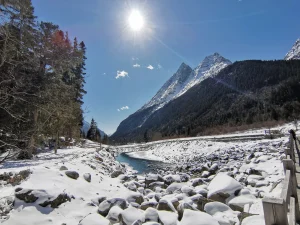
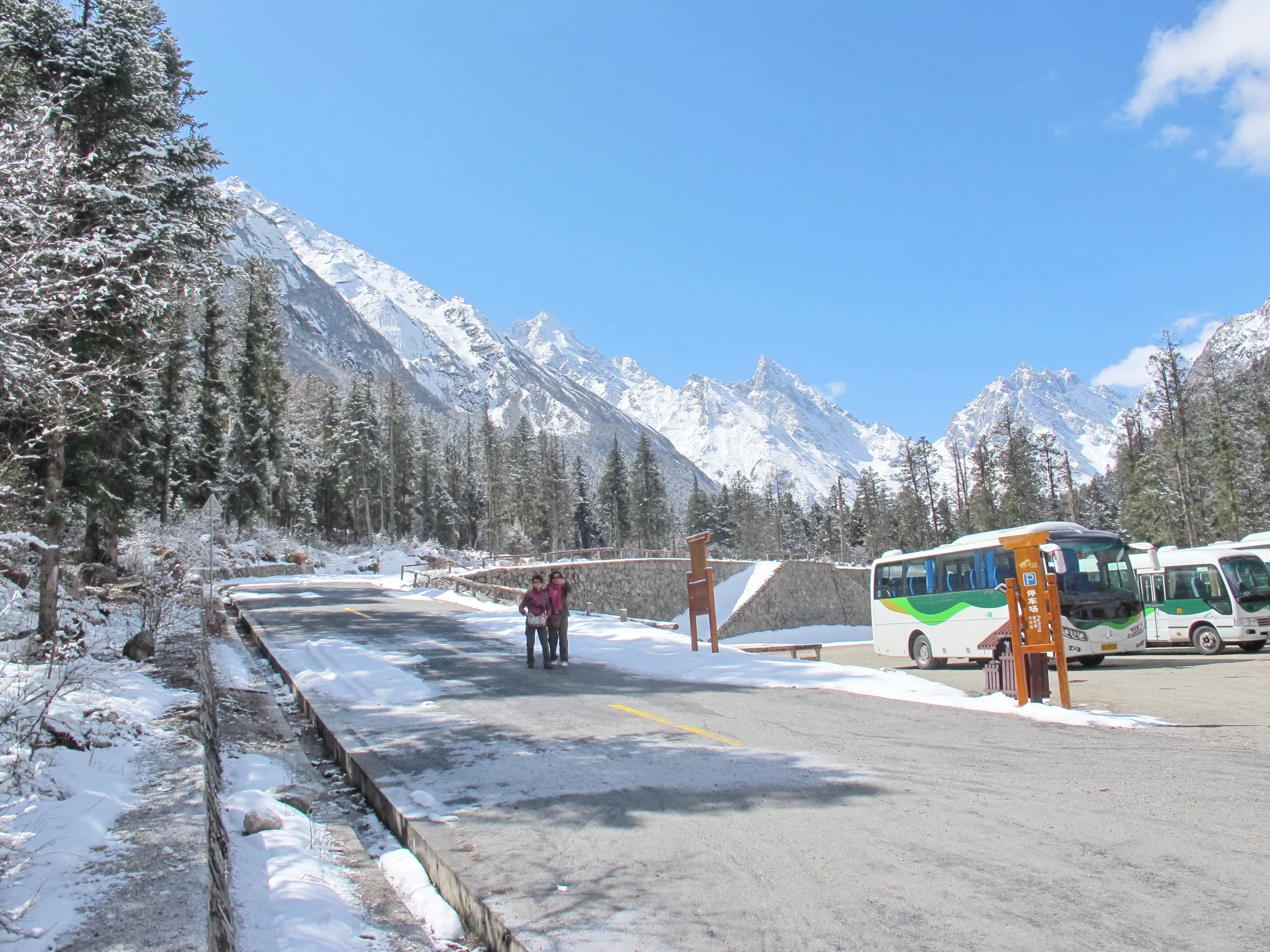
Snow can arrive during autumn. The county reported snowfall during the October 2026 holiday, alongside cloud that hid some peaks. That is a dated example, rather than today’s forecast. Autumn colour, snow cover and clear mountain views cannot all be promised for a chosen date.
Use footwear with grip, warm layers and rain protection. Ask about the walking surface and each vehicle’s last usable return, then shorten the visit before conditions force a hurried exit. If the outing becomes unsuitable, retain the hotel or return day. If still in Chengdu, an unhurried city culture day can be a better alternative than chasing an unverified mountain route.
Keep the visit within the managed valley
A Bipenggou sightseeing ticket is not authorisation for a Changping–Bipeng traverse, off-path camping or a summit climb. Stay in the visitor areas operating on the day and follow staff instructions. A map, online track or room reservation does not give permission to enter a closed or undeveloped sector.
For a different managed valley, compare the Shuangqiao and Changping day-visit choices. Travelling between the two scenic areas is a road-planning decision, not a walking link across the mountains. The Sichuan walking guide compares the wider effort and overnight choices.
Questions that change the plan
Do I need to walk the entire upper valley?
No. Choose an open lake-viewing objective and the vehicle sectors that support it. For a longer walk, agree the actual link, surface and return boarding point first. Do not commit to every connection on foot simply to save a cart fare.
Can I drive my own vehicle to the upper lakes?
Plan to use the visitor-centre scenic transport for the managed sightseeing route. Your road journey ends at the appropriate visitor parking and entrance arrangements. Do not assume a private transfer lets you bypass the internal system.
Does a snowy photograph mean winter activities are running?
No. Check the activity, opening, equipment and separate charge for the date. A historical photograph or an old winter-festival announcement does not reserve a ski session or establish that every entertainment area is open.
Which existing journey can I compare?
The two-day Bipenggou and Mount Siguniang journey combines both scenic areas with one Guergou- or Bipenggou-area night. It is a busy shared road trip using Lixiao Road when open. Scenic tickets, internal transport and meals are additional in its published scope; driver accompaniment is different from English sightseeing guiding. Request the actual date and participation conditions.
That two-valley route differs from the slower Bipenggou-only plan above. Use the Sichuan regional planner before adding more destinations. Send Vero Trip your dates and priorities, party size, passport nationalities, available nights, walking limits, recent altitude stays, luggage, room and food requirements. Price is on request; the written proposal identifies the actual services and inclusions.
Photograph credits
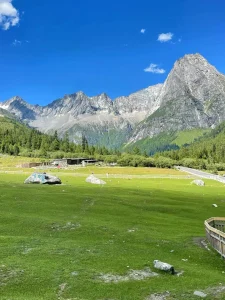
The lead photograph shows Bipenggou on 6 October 2019, by geoff leng, licensed under CC BY-SA 2.0. It was proportionally resized and converted to WebP under the same licence. Both photographs are historical real scenes, rather than current conditions or records of Vero Trip guests.