Updated 31 October 2026
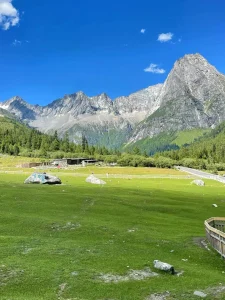
Choose Shuangqiao Valley for mountain scenery with a scenic bus between selected stops. Choose Changping Valley when walking through the forest is the main purpose of the day and everyone is happy to return along the same route. With only one full local day, visit one valley well. To see both without squeezing a walk around a long transfer, give them separate days.
Mount Siguniang, or Siguniangshan (四姑娘山), is a high-altitude destination in western Sichuan. A bus-supported outing can reduce walking considerably, but it does not remove altitude exposure. This guide covers the developed visitor areas and short, permitted day walks. It helps you choose a valley and a return plan; a summit, overnight camp or cross-mountain traverse needs a separate assessment.
Choose the valley by the day you want
The useful comparison is how the day works between the entrance and your return vehicle. Shuangqiao (双桥沟) offers a series of separate viewing and walking stops. Changping (长坪沟) starts with a shuttle approach, followed by walking from the Lama Temple area. In Changping, every extra outward section also increases the return commitment.
| Your priority | Better starting choice | Plan the limit |
|---|---|---|
| Mountain views with shorter optional walks | Shuangqiao, using the scenic bus and selected open stops. | Skip a stop when tired; agree which boarding point reunites the group. |
| A quieter-paced forest walking day | Changping, with an agreed out-and-back route after the shuttle. | Choose the turnaround using the surface, weather and slowest walker. |
| Companions with different walking abilities | Usually a shared, shortened Shuangqiao programme. | Check steps and boarding access; bus access does not establish wheelchair access. |
| Two different valley experiences | Separate Shuangqiao and Changping visitor days. | Keep the return-to-Chengdu day available for the road journey. |
Haizi Valley is another choice with different walking and outdoor arrangements. Do not add it simply to complete a three-valley list. For a first visit with limited days, the decision between Shuangqiao and a selected Changping walk is more useful than counting how many entrances you can reach.
Shuangqiao: build a day from selected stops
The scenic authority’s Shuangqiao page describes a bus ride to Hongshanlin, followed by visits at stops on the way back. It places the valley entrance at about 2,900 metres and Hongshanlin at about 3,840 metres. Tell staff if you feel unwell before continuing higher; a short walk at the upper stop is still a high-altitude visit.
Choose a few contrasting stops instead of getting off at every opportunity. Hongshanlin offers an upper-valley forest setting; the lake and meadow stops provide different views lower down. The following is a selection menu, not a promise that every stop or path operates on your date. Follow current signs and staff instructions about where buses stop and where visitors may walk.
| Stop or area | What to make time for | How to keep the day manageable |
|---|---|---|
| Hongshanlin (红杉林) | A short look around the upper forest visitor area, if comfortable at the elevation. | Assess how you feel before extending the walk. Use the designated return boarding point. |
| Sigunacuo (四姑娜措) | A lake setting with trees and surrounding mountain forms. | Views depend on cloud and wind. Stay on the open visitor path rather than approaching the water for a photograph. |
| Longzhucuo (隆珠措) | Lake scenery; ask whether the signed ecological corridor is open. | The authority describes an 800-metre corridor toward the science area. Confirm its endpoint and return boarding arrangement first. |
| Renshenguoping (人参果坪) | A lower meadow landscape to contrast with the upper forest. | Treat it as a choice, rather than a compulsory final walk when the group is already tired. |
The place descriptions above come from the authority’s valley guide. The practical sequence should still be settled locally. Before leaving a bus stop, identify the route back to a permitted boarding point. Do not walk along the vehicle road to improvise a connection, and do not arrange for a private driver to meet inside the scenic area.
Leave room for a seated break and food. Carry a simple lunch or substantial snacks appropriate to your needs instead of making the whole day depend on an unconfirmed restaurant. For photography, one unhurried stop in useful light can be more rewarding than several rushed stops. Cloud cover can make the forest and river the main subject; clear peaks and reflected mountains are never guaranteed.
Changping: decide where to turn before you start
The official Changping description places the scenic shuttle’s walking start at Lama Temple (喇嘛寺). Start by asking staff which visitor path is open, how far the group can comfortably walk and where the return shuttle boards. A short forest outing can be a complete visit.
Kushutan, or Dead Tree Beach (枯树滩), is a possible named objective only when the route and return allowance suit the day. Its open riverbed and standing dead trees offer a different scene from the shaded forest. The authority’s site description places it at roughly 3,470 metres. Ask for distance from your actual walking start: a distance measured from a valley mouth is not automatically the distance from the shuttle terminus.
Choose a turnaround time as well as a place. If progress is slower than expected, turn earlier. Allow for walking back, a toilet or food stop, boarding queues and the shuttle journey to the entrance. You should not reach the turnaround just as you need to be leaving the valley.
Muluozi appears on many longer itineraries. The official general page describes a much longer approach with both boardwalk and dirt-road sections. It is not a sensible default target for someone asking for a short introductory walk. Horse availability, a distant meadow photograph or an old trip report should not determine your endpoint. This guide does not propose continuing beyond the open managed visitor route.
How many days and nights should you allow?
For one valley, a useful scheduling starting point is three calendar days and two nights at a suitable local base. For both valleys, compare four calendar days and three nights. These are planning structures, not an acclimatisation prescription. Depending on the approach, medical advice and previous altitude experience, you may need more gradual ascent or a different destination.
| Calendar day | One-valley stay: 3 days / 2 nights | Two-valley stay: 4 days / 3 nights |
|---|---|---|
| Day 1 | Travel from Chengdu, check in and settle. Overnight locally. | Travel in and settle. Overnight locally. |
| Day 2 | Visit the chosen valley. Overnight at the same base. | Shuangqiao visitor day if conditions and health allow. Overnight at the same base. |
| Day 3 | Pack and return to Chengdu. Sleep in Chengdu before onward travel. | A selected Changping out-and-back walk. Overnight at the same base. |
| Day 4 | Outside the mountain stay; keep for onward plans. | Pack and return to Chengdu, retaining a city night before a fixed connection. |
Keeping the same room avoids carrying a suitcase between two walking days. Ask for the hotel’s exact location, sleeping elevation, heating, hot water, stairs or lift and breakfast arrangements. Confirm passport registration and room availability in advance. A broad “Siguniang hotel” label does not establish the distance to either visitor centre or the room conditions you need.
Use the arrival afternoon for settling in and checking the next day’s arrangements. Do not add a high viewpoint or demanding walk just because the transfer arrived early. Equally, do not regard the second night as a reason to continue when someone is unwell.
Chengdu transfers, local pickups and luggage
Agree the exact valley entrance in Chinese as well as English. A drop-off at 四姑娘山镇, the town, is different from 双桥沟游客中心 or 长坪沟游客中心. Keep the hotel location and driver’s meeting point saved offline. On the return, establish whether pickup is at the visitor centre, a parking area or your hotel.
For the road approach, ask whether the proposed route uses the Wolong–Balang Tunnel side and what the current alternative would be if controls interrupt it. Obtain an actual date-specific departure plan for any public coach or scenic direct bus. This guide does not publish an unverified departure time or assume that a route shown on a map is operating that morning.
A private road transfer and the park’s scenic bus are different services. Confirm responsibility for each stage, including the short hotel-to-entrance journey. Keep the return vehicle booking separate from the park’s last bus: leaving the walking path on time is only one part of getting back to your room.
Leave large cases in agreed hotel storage or with the booked road vehicle, with a clear handover time. Carry your original passport, medication, layers, rain protection, drinking water, food and a charged phone in the daypack. Keep essential items with you when cases are stored. For shared transfers, confirm luggage limits before paying rather than discovering at pickup that a large case does not fit.
Passport tickets, admission windows and the last bus
Ordinary foreign visitors can book the developed scenic visits: Klook’s current ticket listing explicitly describes original-passport redemption for foreign visitors and offers Shuangqiao and Changping ticket options. This verifies that booking channel’s stated process; it does not establish access to an expedition route or a Vero Trip departure.
Use the passport name and number exactly as required by your selected ticket channel. Confirm the date, valley, included scenic transport and redemption point, and carry the original document. If an app cannot accept your passport type, resolve the booking through an appropriate supported channel before travelling; do not enter a fictitious domestic identity number. The authority also describes its official mini-programme booking route.
The 25 March 2026 admission notice, effective from 1 April, gives entry windows of 08:00–15:00 for Shuangqiao and 08:00–14:30 for Changping and Haizi, with later changes to be announced. The general Changping attraction page displays a different cutoff, so use the dated notices and confirm your actual visit date. Check the current notice list before booking.
An entry cutoff is not a recommended starting time, a walking finish time or the last downhill bus. Establish those separately at the visitor centre. Start a full visitor day in the morning and set your return margin around the confirmed transport, rather than planning to enter near the cutoff.
Weather, altitude and a useful shorter alternative
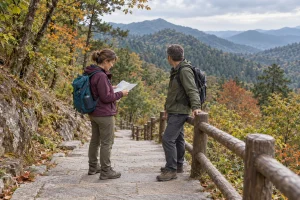
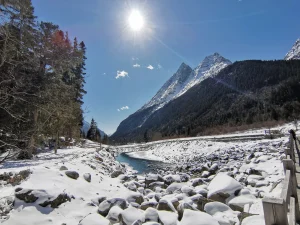
A shorter bus-supported visit remains exposed to mountain weather. Carry footwear with grip, warm layers, a waterproof outer layer, sun protection and gloves appropriate to the season. Ice or heavy rain may make an otherwise short boardwalk unsuitable. Follow staff closures; a ticket is not permission to move beyond a barrier.
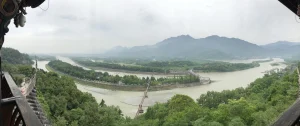
If cloud hides the peaks but visitor areas remain open, shorten the stop list and concentrate on the accessible forest, river or lake setting. If the path is closed or the weather warning makes the journey inappropriate, change the day or return plan. Moving from Shuangqiao to Changping does not by itself solve ice, rain or altitude concerns. For a lower-altitude alternative in a wider trip, compare Dujiangyan and Qingcheng while still based near Chengdu, allowing for the different transfers and walking demands.
CDC altitude guidance recommends gradual ascent and individual medical advice where appropriate. Do not travel higher with altitude-illness symptoms. Worsening symptoms at the same height require descent and medical help; confusion, loss of coordination or breathing difficulty at rest need urgent assistance. A bus, hotel oxygen claim or portable oxygen can should not replace an appropriate health decision and dependable descent arrangements.
The authority’s September 2026 outdoor safety notice prohibits entering undeveloped or closed areas and sets separate requirements for organised high-risk outdoor activities. Stay within the currently open visitor paths. A published track or a scenic ticket does not authorise a traverse, wild camp or summit.
Budget for the complete visit
Compare a quotation by valley, nights and transport stages. Avoid an attractive headline price that leaves the necessary bus or hotel connection unexplained. Ticket charges, seasonal arrangements and optional services should be checked for your date; no precise current fare is asserted here.
| Budget item | Make the quotation specific | Service boundary |
|---|---|---|
| Admission and scenic buses | Named valley, date, passenger eligibility and each included transport stage. | An outside vehicle does not replace compulsory park transport. |
| Road transfers | Chengdu pickup, local entrance transfers, return destination and waiting arrangements. | A city hotel, airport transfer or extra stop is included only when specified. |
| Rooms and luggage | Number of nights, named room category, registration and storage or vehicle handover. | Heating, sole occupancy and a particular view need explicit confirmation. |
| Guide, meals and changes | Guide language and hours, meal needs, closure and cancellation terms. | Do not assume English guiding, food, insurance or medical support is bundled. |
Common planning questions
Can I visit both valleys in one day?
It would mean two entrance processes and transfers with less time in each valley. For the unhurried visitor days described here, choose one. Use separate days when the contrast between a bus-supported valley and a forest walk is part of the reason for travelling.
Is Shuangqiao suitable if I do not want a long hike?
Its bus-and-stop format gives you more control over walking than a long out-and-back route. Check the actual steps, boarding access and open paths for your needs. It remains high-altitude travel, and suitability cannot be decided from a low walking-distance label alone.
Should I book a Chengdu day trip?
Compare the full road day, time inside the valley and return before choosing. A local stay separates the road journey from the visitor day. If your available time forces a very early departure and late return, decide whether that pace suits everyone; keep a fixed flight or train for a later day.
Which existing journey is relevant?
The 2-day Bipenggou and Mount Siguniang journey includes a Shuangqiao visit within a compact road circuit, with a Guergou or Bipenggou-area night. It is a different, busier format from the same-base two-valley stay above. Read its daily plan and separate ticket costs. Foreign-passport participation, rooms, language service and current road routing need confirmation in the written proposal.
For a broader comparison before choosing the mountain extension, see the Sichuan walking guide. Ask Vero Trip to plan your visit with your dates, passport nationalities, available nights, comfortable walking duration, stair or mobility limits, previous altitude experience and preferred valley. Mention dietary requirements and room needs. Price is on request; services and inclusions are governed by the written itinerary and quotation.
Photograph credits
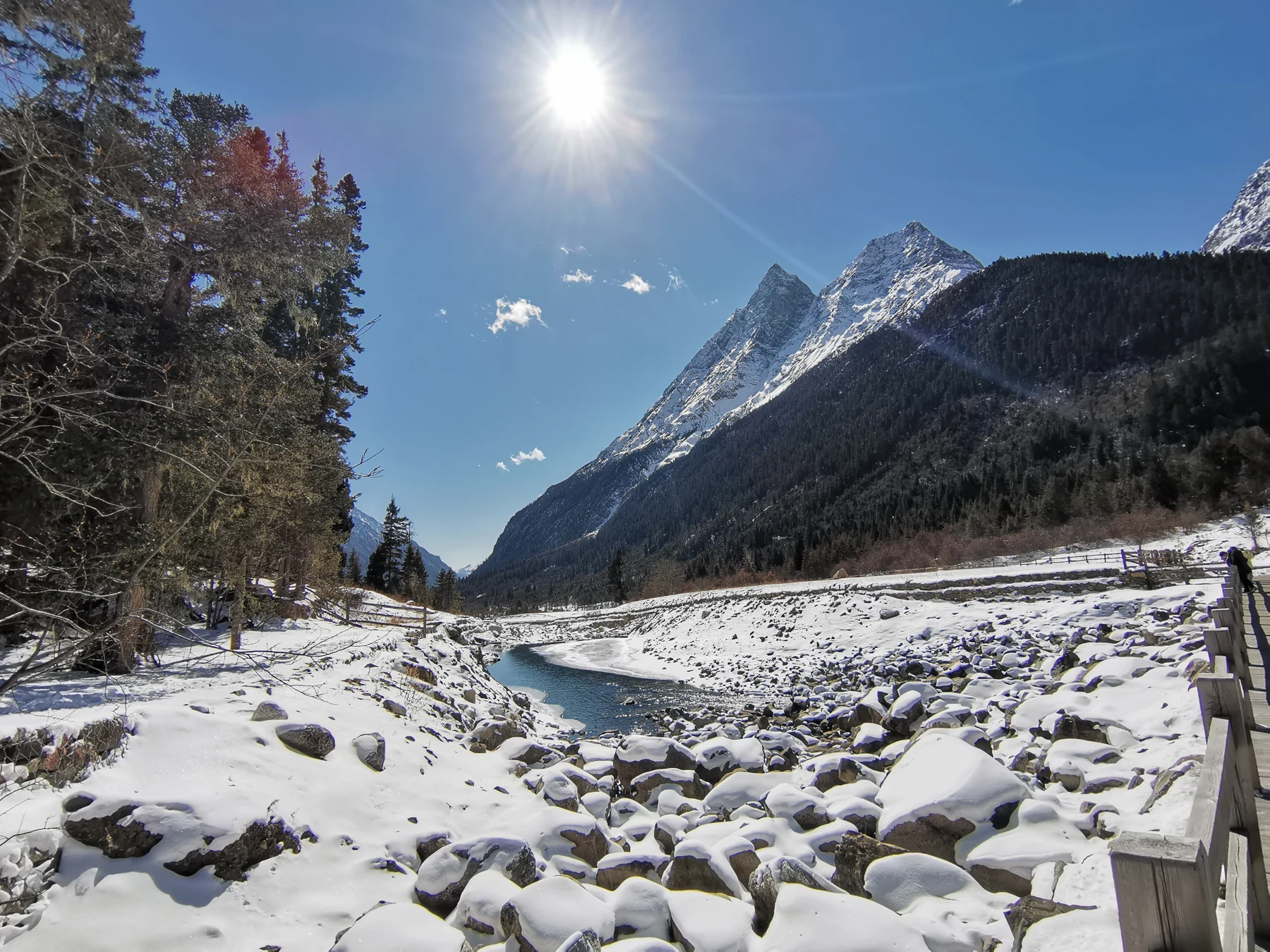
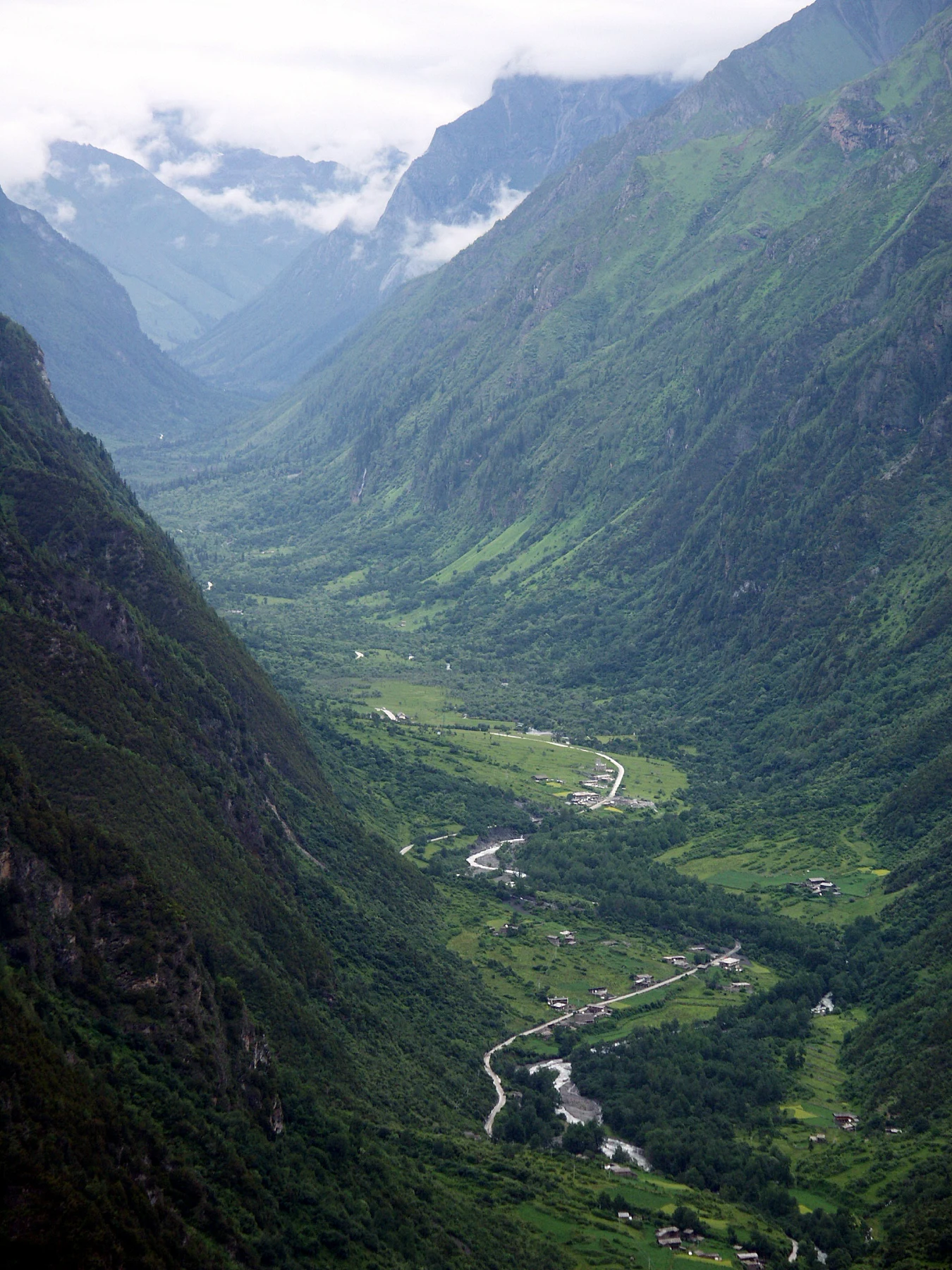
The lead photograph shows Shuangqiao Valley on 4 February 2022: Polyphys, via Wikimedia Commons, CC BY-SA 4.0; resized and converted to WebP under the same licence. The body photograph is Munford’s July 2005 public-domain view, credited beneath it. Both are historical real photographs, not current conditions or records of Vero Trip guests. No AI image is used.