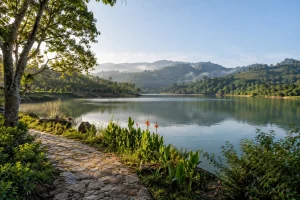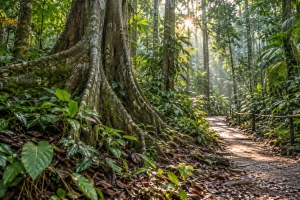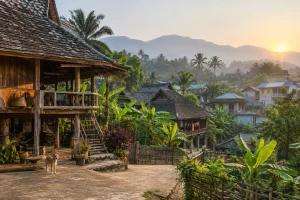
Pu’er city and Jingmai Mountain offer different travel experiences. Choose local tastings and coffee in Simao, or allow extra nights for forest tea villages.
The name can be misleading
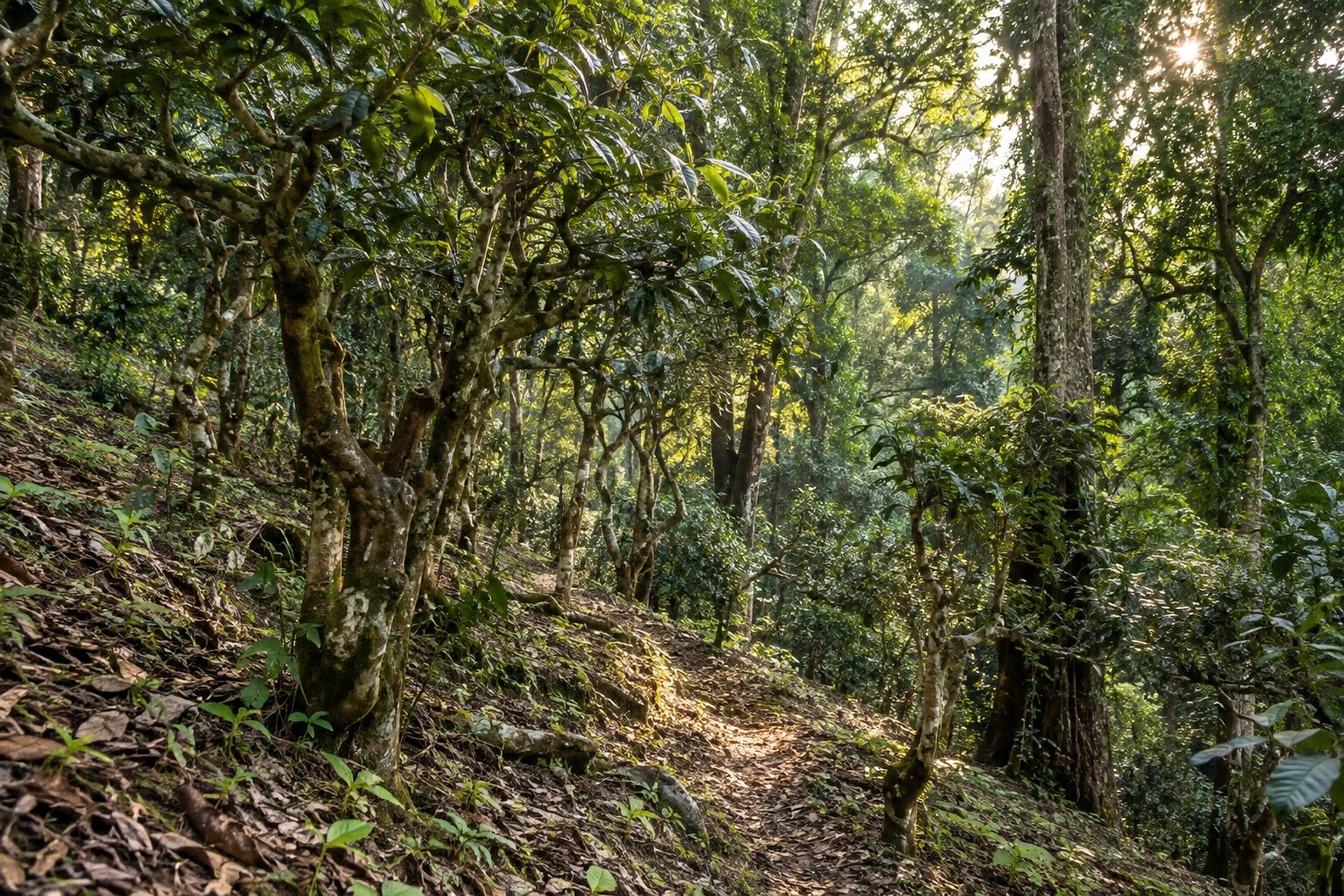
Pu’er is both a place name and a name associated with a broad tea tradition. Sleeping in Simao does not put you beside every famous tea mountain. Before choosing a tour, check the actual growing area and driving time. A city tasting can be rewarding, but it is a different experience from walking beneath the canopy of Jingmai’s old tea forests.
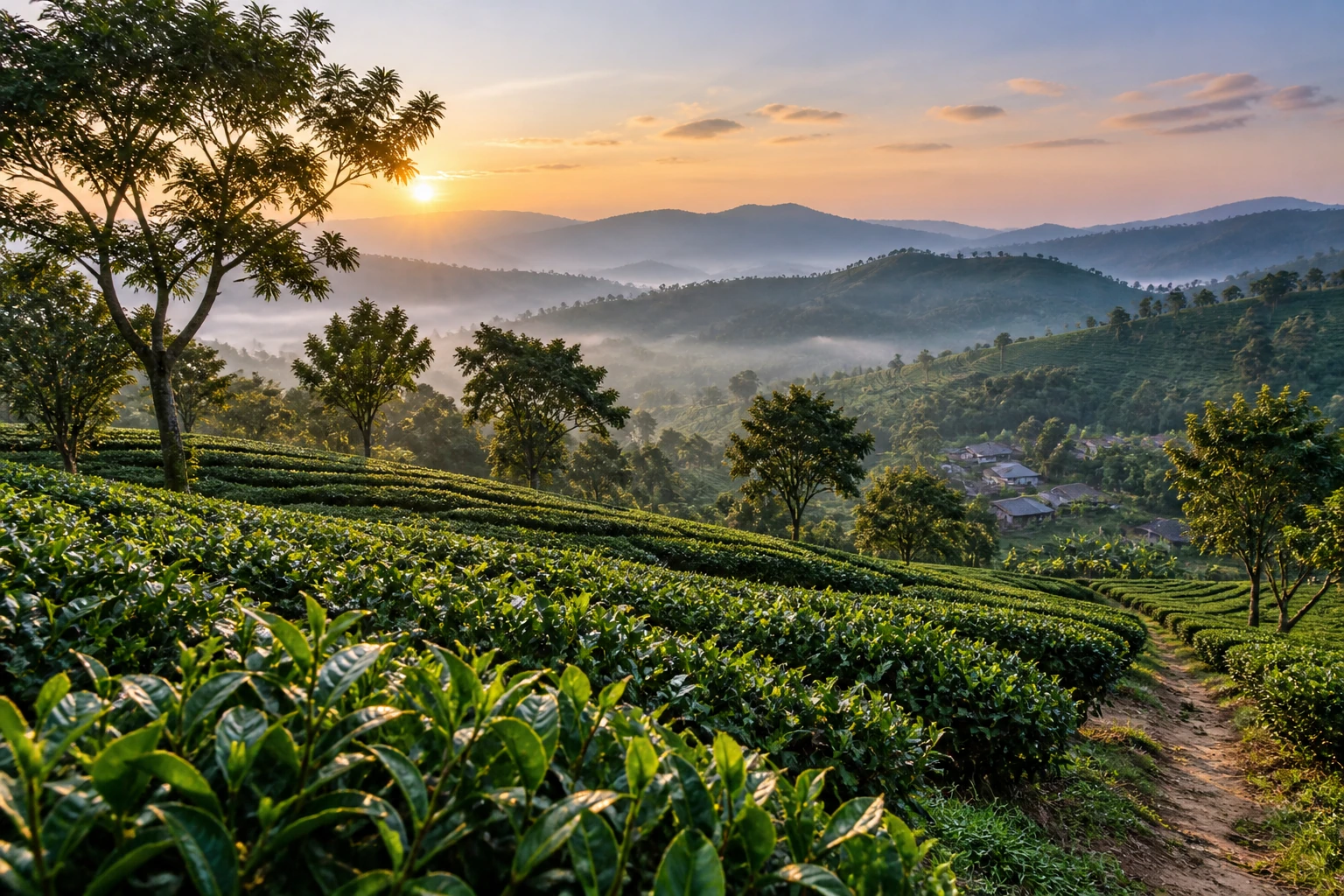
Choose Simao for a short, varied stop
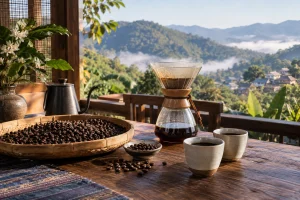
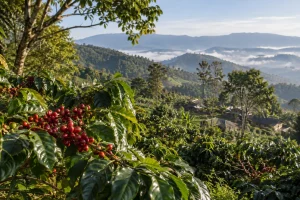
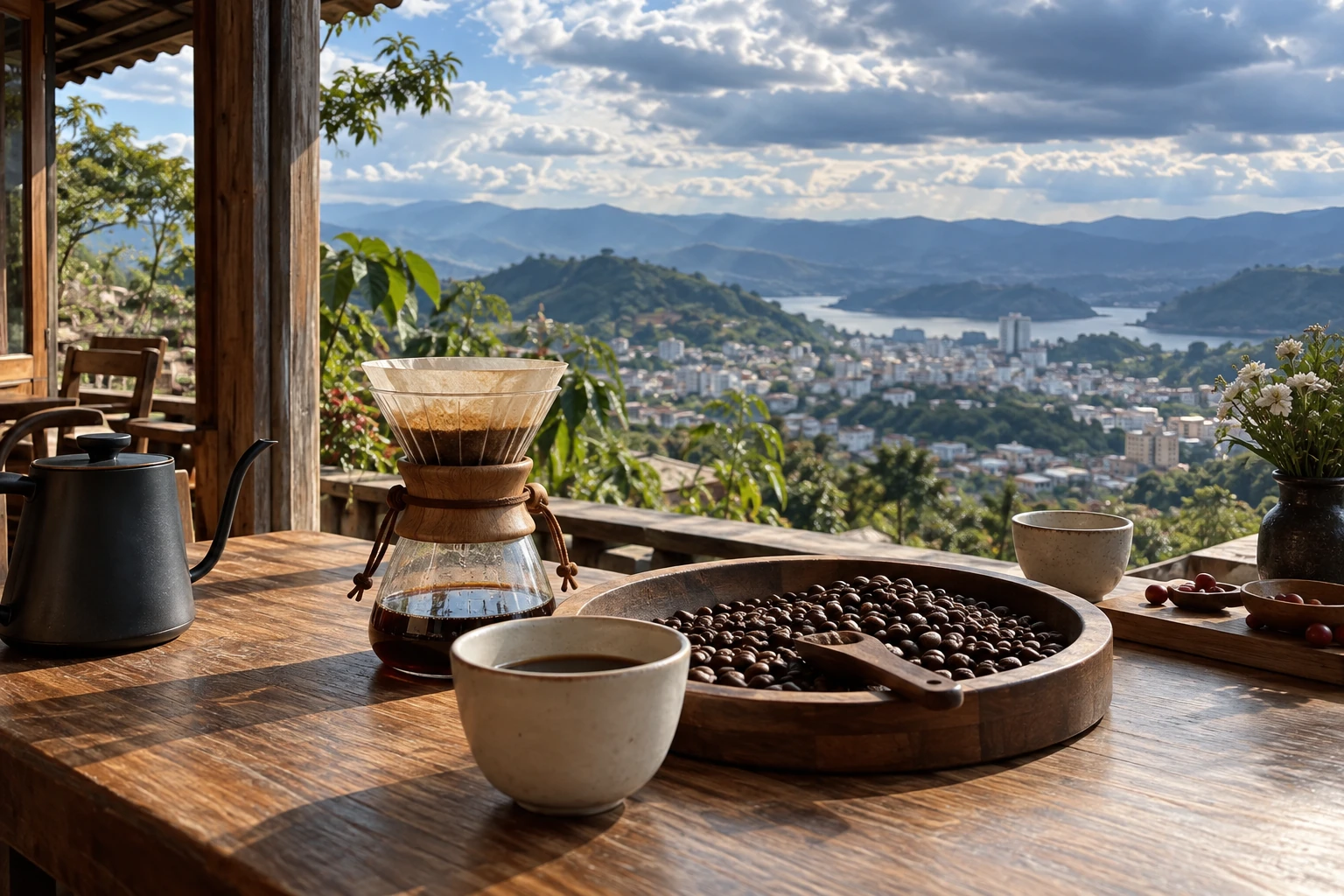
Simao works well for travellers who want cafes, local tea tastings, nearby coffee farms and straightforward city accommodation. A one-day tasting tour can compare coffee and tea without a long mountain transfer. Several nights allow farm visits and relaxed meals. This is useful when Pu’er is a stop between Kunming and Jinghong rather than the only destination in your holiday.
Choose Jingmai for the landscape and village stay
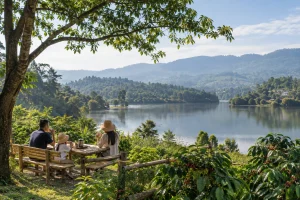
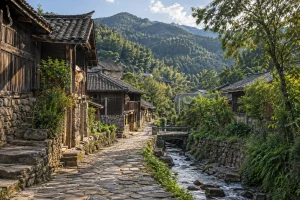
Jingmai deserves its own mountain nights. The interest includes forest-grown tea, village lanes and time with willing hosts. From Pu’er, allow roughly four to five hours by road with breaks, then keep the first afternoon light. Three or four mountain nights give time for a forest walk and separate village visits without making each day a transfer.
A tasting does not establish origin by itself
Ask where the tea was grown and how it was processed. A shop in Pu’er may sell tea from several parts of Yunnan, and a beautiful mountain setting does not prove the grade or age of a product. Enjoy the conversation and buy only if you want to. A guide can help translate questions without turning the trip into a shopping obligation.
Combine them when you have a week
Use two nights in Pu’er for arrival and coffee, then four on Jingmai Mountain before returning or continuing south. This gives each place a clear role. A shorter trip can focus on one instead. Avoid trying to turn the forest visit into a quick add-on between a morning train and an evening departure.
Match the trip to your interests
Choose Simao if coffee, accessible tastings and city comfort matter most. Choose Jingmai if you want village accommodation, forest walking and a slower rural setting. If you have mobility concerns, compare the actual guesthouse access and path surfaces before deciding. The right choice is the one that fits your time and preferred pace, not the most famous name.
Frequently asked questions
Can I visit Jingmai as a day trip from Pu’er?
The long road journey makes it a tiring choice with little village time. An overnight route is more comfortable.
Is all tea sold in Pu’er grown nearby?
No. Ask for the specific growing origin and product details rather than assuming the shop location is the source.
Can I combine coffee and forest tea?
Yes. A multi-night Pu’er and Jingmai route is designed for that combination, with separate road-transfer days.
Private trips for this destination
- 5-Day Pu’er Coffee Farms & Tasting Tour
- 4-Day Pu’er & Ning’er Tea Heritage Tour
- 3-Day Pu’er Family Forest & Coffee Break
- 2-Day Pu’er Coffee Country Photography Tour
- 1-Day Pu’er Coffee & Tea Tasting Tour
Compare more Pu’er tours and travel advice.