
HOTEL OPTIONS
Places to stay
Explore our Yunnan hotel collection and discuss the location, room style and comfort you prefer.
View hotel examples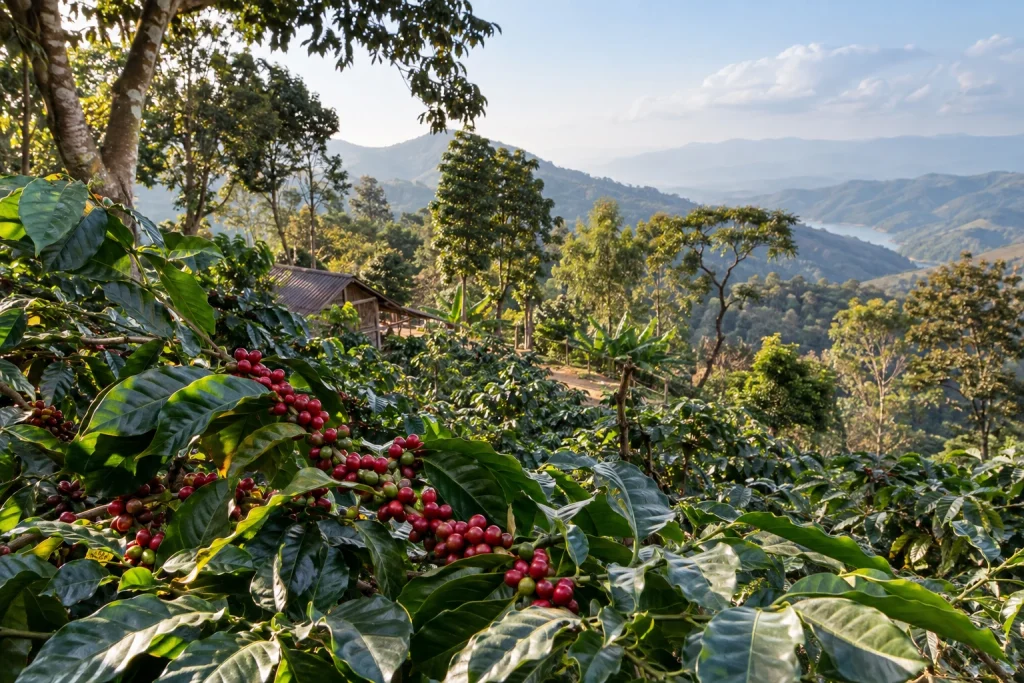

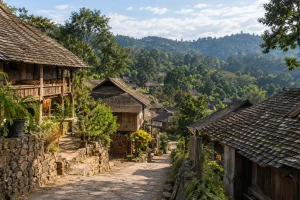
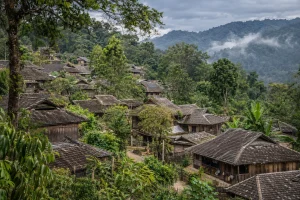
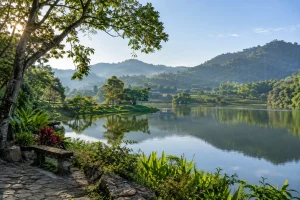
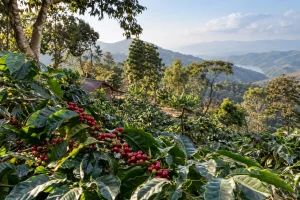
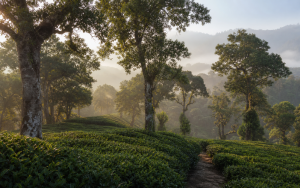
Use these views to compare the settings on the route. Illustrative images are identified in their individual notes. Your confirmed itinerary sets out guiding, visits and included activities.
Compare Pu’er coffee with Jingmai tea. This week-long plan uses separate city and mountain bases. It is suited to travelers who want both drinks and enough time to understand the surrounding places.
Travel scenes are illustrations; route maps are schematic.
| Decision | Practical answer |
|---|---|
| Best use of your time | Choose the Pu’er coffee activity explicitly: a cafe visit, field walk and practical session are different appointments. |
| Arrival and departure | Do not mistake Pu’er city for the Jingmai heritage area; the change of base is a real road stage. |
| Experience scope | A tea tasting is easier to arrange than picking or a working production line. Hosts, fresh leaves and weather determine the hands-on options. |
| Weather alternative | Move a wet-path walk to a village tea session. Cloud seas and harvest activity are possibilities, never fixed appointments. |
Book the last road leg and a village pickup point together; an airport or county-town arrival is not arrival at the mountain guesthouse.
Request the exact host or venue, meeting point and experience format in the proposal. A cafe stop, a guided tasting, a walk and a workshop are different arrangements. Name the language support you need and ask who provides it. If you want a specialist conversation, send the topics in advance so it can be arranged with the right person.
State food allergies, vegetarian or halal needs and any requirements for children or older travelers before the rural visits are booked. Ask where lunch takes place and whether it meets your needs. Keep meal and rest time in the day; tea or coffee tasting does not replace lunch.
| Service | Ask to see in writing |
|---|---|
| Transport and language | Pickup and finish points, vehicle, driver, guide or interpreter duties |
| Rooms and meals | Named accommodation, room arrangement, nights and meals actually included |
| Visits and alternatives | Admission, host appointments, activity scope and changes if unavailable |
| Separate costs | Onward tickets, optional activities, purchases, insurance and other exclusions |
Enquire for a private proposal for your travel dates. This page describes the route; it does not promise a fixed departure, a particular producer’s availability or insurance coverage. Only the services itemized in your accepted quotation are included. Optional purchases are separate decisions.
Yunnan Tea Villages: Wengji or Nuogan on Jingmai Mountain? · Yunnan Tea Routes: Getting to Jingmai Mountain
Send your dates, arrival and departure points, party size, main interests, walking comfort, room preferences and language needs. Send your dates and preferences. We can shape a written proposal around available hosts and transport. The quotation lists the services, dates, booking terms and alternatives you accept before payment.
Before choosing the week-long route, use the Yunnan tea-and-coffee trip-planning guide to compare regions, full visiting days and the difference between tasting, a field walk and a practical session. Discuss any extra city night before departure in your proposal.
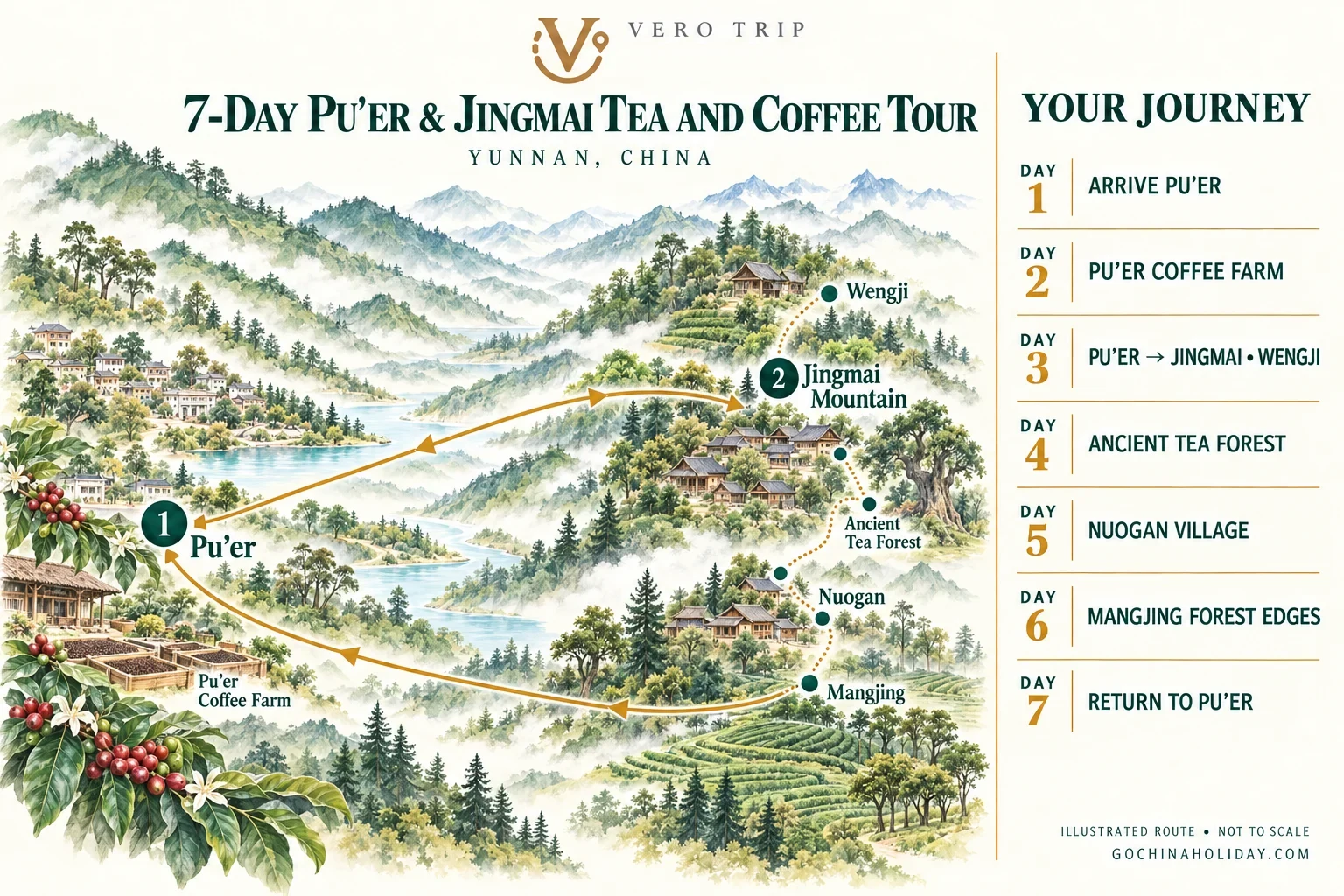
This 7-day itinerary starts in Pu’er and finishes in Pu’er. Compare the day-by-day programme with the alternatives below to choose the trip length and extra stops that suit you.
On a phone, swipe the comparison table sideways to see all columns.
| Route | Duration and endpoints | Programme to compare |
|---|---|---|
| This itinerary | 7 Days; Pu’er → Pu’er | Day 7: Return to Pu’er with time to spare |
| 10-Day Yunnan Pu’er, Jingmai & Xishuangbanna Tea Journey | 10 Days; Pu’er → Jinghong | Day 7: Descend to Menghai’s tea country; Day 8: Menghai tea tasting and the Lancang riverside; Day 9: A tropical garden day in Menglun |
Match the entry and exit cities to your flights, then count arrival, departure and transfer dates before adding another stop. Ask for any extra gateway hotel night to be shown explicitly. Departure participation, rooms, transport, guiding and inclusions are confirmed for your dates in the written proposal; this comparison does not amend either product’s booking scope.
Meet at Pu’er railway station or the airport and transfer to your hotel. Keep the first afternoon light, with a short lakeside walk and local rice noodles if arrival time permits.
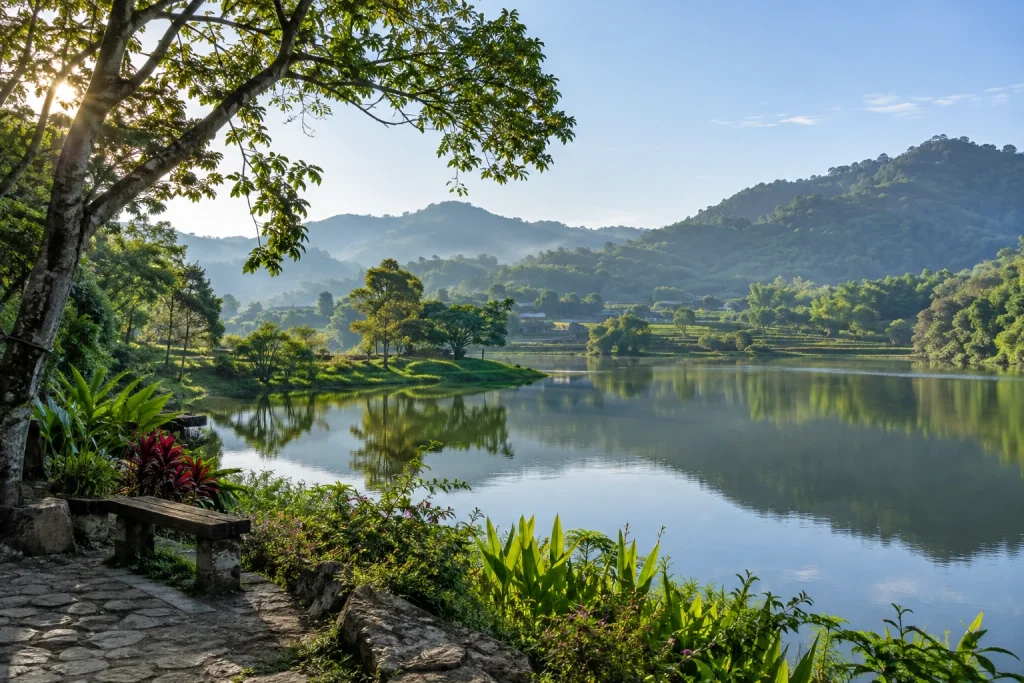
Discuss tea preferences and the upcoming farm appointment with your guide. A late arrival goes straight to the hotel; no essential visit depends on arriving before lunch.
Overnight: Pu’er.
Travel and walking: Local transfers, usually 30–60 minutes according to arrival point.
Visit the small coffee farm outside Simao arranged with its host. Walk a manageable section between shade trees before comparing a locally roasted cup with the agricultural product.
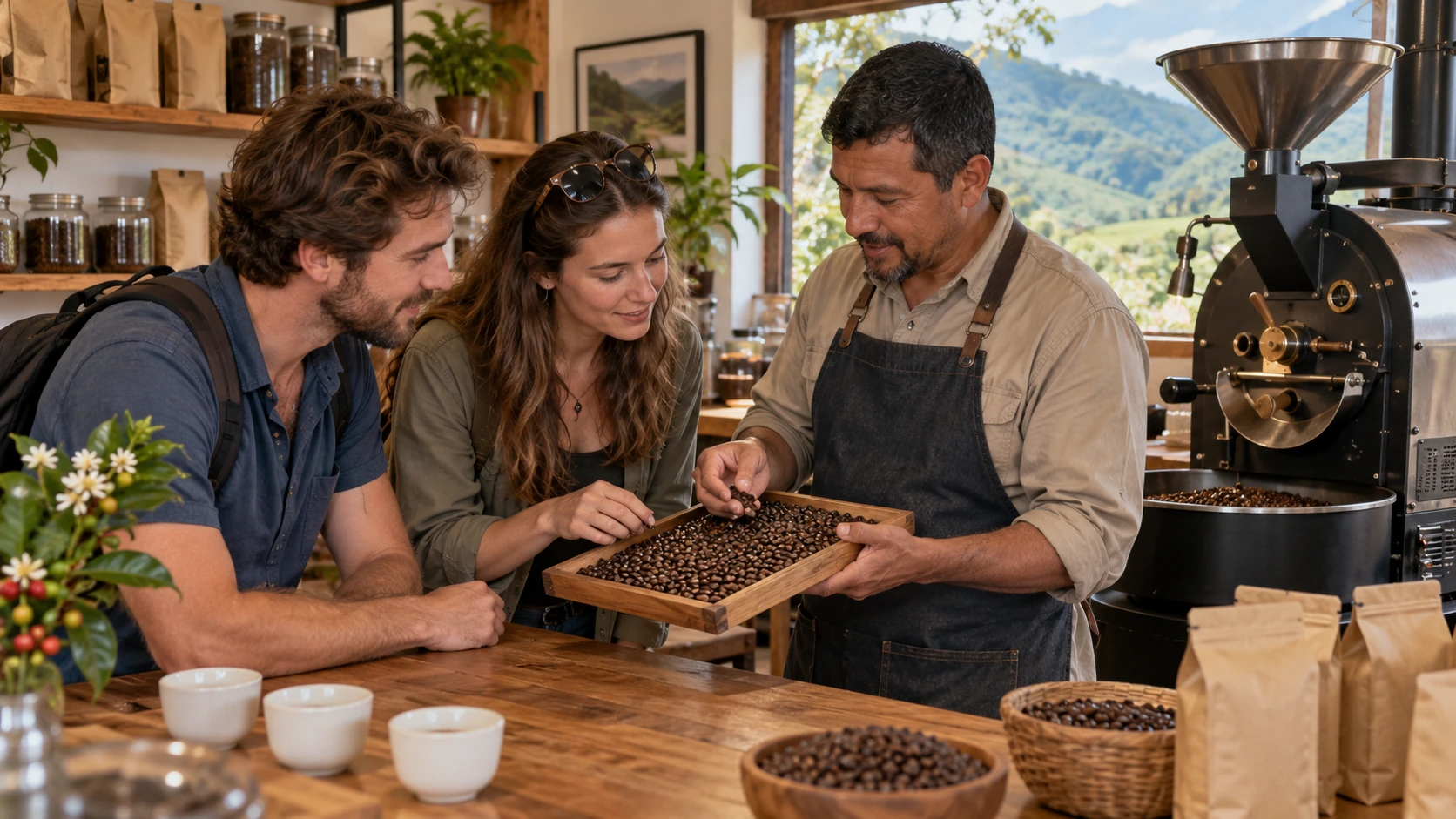
Harvesting and processing are seasonal, so follow the work actually happening that week. Return after lunch with the late afternoon available for a café or rest before the next outing.
Overnight: Pu’er.
Travel and walking: Allow 1–2 hours of road travel in total; easy farm walking.
Leave Pu’er after breakfast for Jingmai Mountain, allowing most of the morning and early afternoon for the road, lunch and comfort stops.
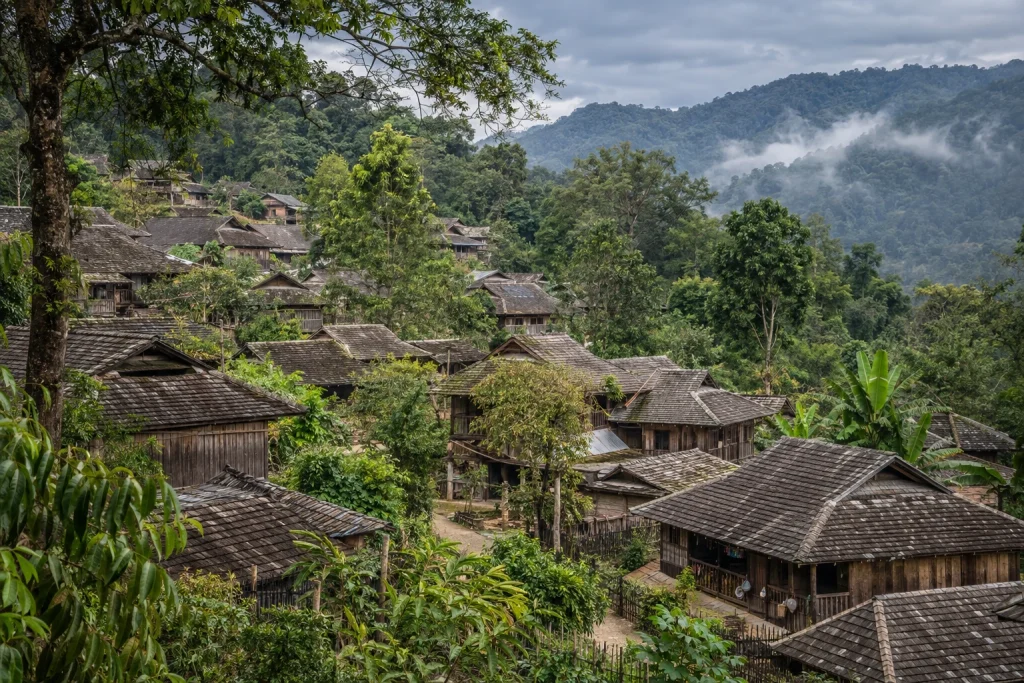
Settle into the village guesthouse before a short Wengji walk. Notice timber homes among mature trees and tea gardens. Ask before entering homes or photographing residents, keeping this transfer-day outing modest.
Overnight: Jingmai Mountain.
Travel and walking: Pu’er to the mountain villages: roughly 4–5 hours including sensible stops.
Follow an established old-tea-forest path with the local guide. Look beneath the high canopy at scattered tea trees, leaf litter and the relationship between shade and cultivation.
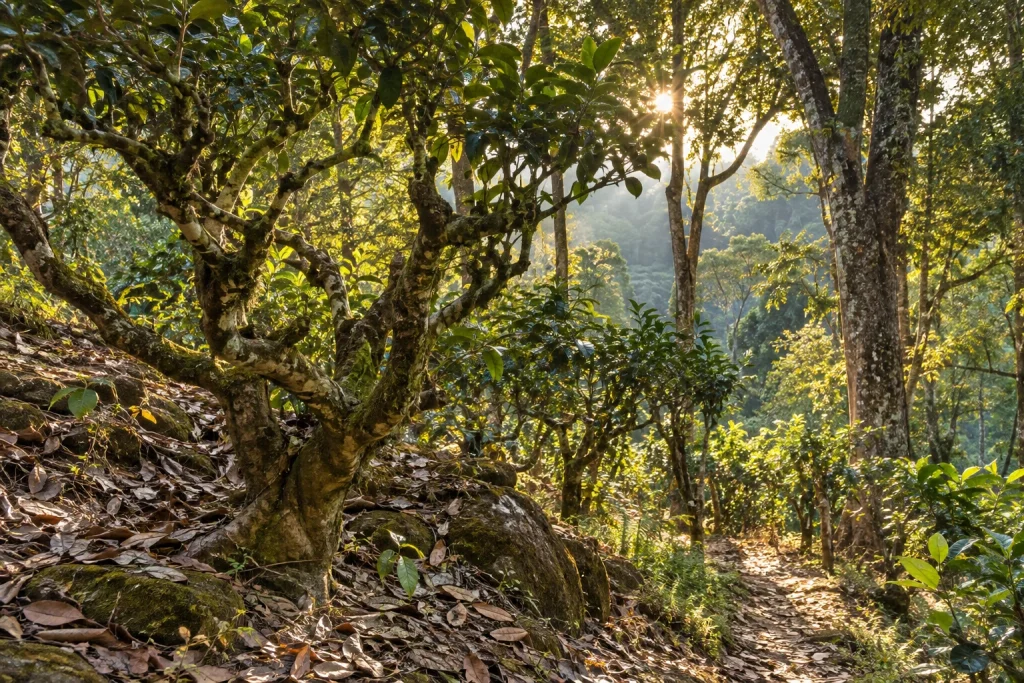
Allow about two hours with pauses, choosing a shorter route when wet. After lunch, take the hosted tea tasting. Picking is added only in a suitable harvest period with the grower’s agreement.
Overnight: Jingmai Mountain.
Travel and walking: Short village drives; approximately 2–4 km of uneven forest walking, adjustable.
Walk Nuogan’s lanes between timber houses at a relaxed pace. Explore the distinctions between nearby Dai and Blang communities without treating everyday life as a performance.
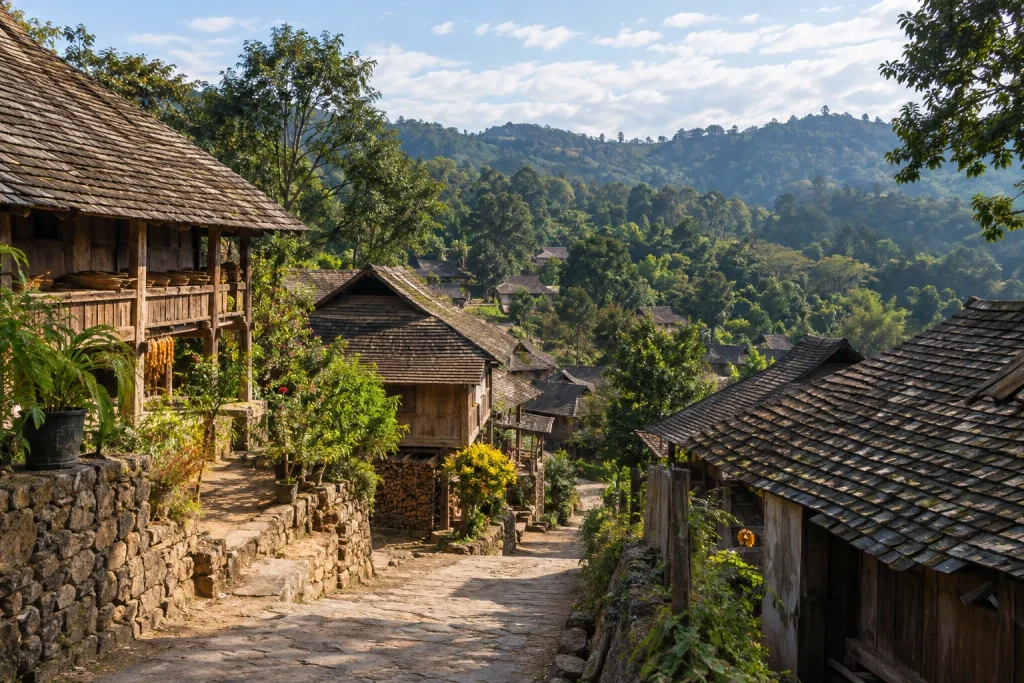
Spend the afternoon over tea with a willing host or on the guesthouse veranda. Allow photographs in changing light, entering or photographing private interiors only when invited.
Overnight: Jingmai Mountain.
Travel and walking: Short mountain-road transfers, generally under 1 hour each way.
Explore a village-edge route near Mangjing with the local guide, selecting the path for weather and residents’ advice. Notice the transition from homes to tea trees and taller woodland.
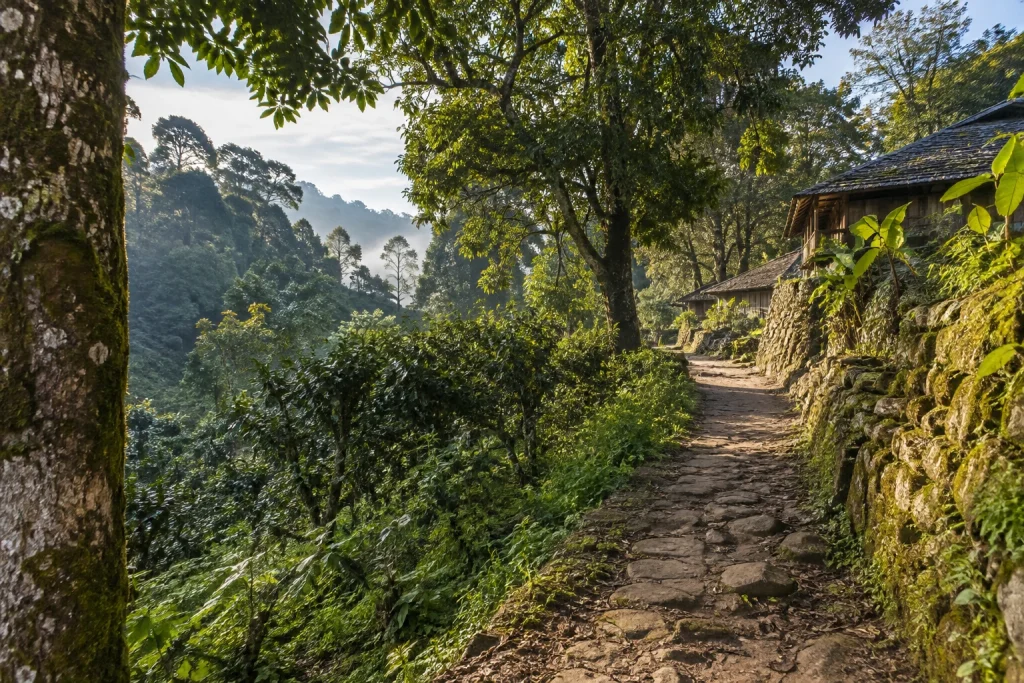
Return for a leisurely lunch, leaving the afternoon for another tasting or a missed viewpoint. Sacred areas and private plots remain outside the walk unless the community expressly welcomes visitors.
Overnight: Jingmai Mountain.
Travel and walking: Short drives between villages; around 1–2 hours of optional walking.
Have an early breakfast before the road return to Pu’er, taking a comfort break and finishing at the agreed city hotel or station.
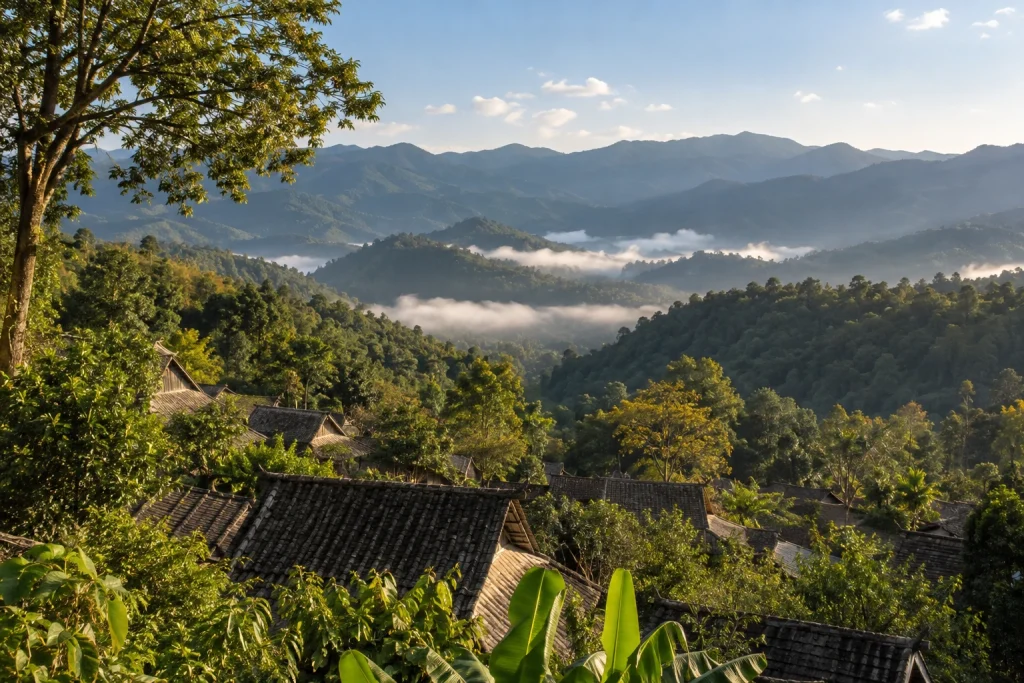
The journey takes priority over extra sightseeing. Choose a late train only after checking the current road estimate, or add a Simao night and depart the next morning.
No overnight stay is included after the tour ends.
Travel and walking: Allow 4–5 hours with breaks; onward departure buffer is additional.
The main spring harvest often falls between March and May, with exact dates varying by weather and grower. A tasting and forest walk can operate outside harvest time. We confirm whether picking or processing is possible for your dates rather than promising it throughout the year.
Expect uneven ground, roots and occasional steps. The usual forest outing can be kept to roughly 2–4 km with rests. Tell us about mobility needs before booking so we can select a shorter village-based alternative and a guesthouse with suitable access.
Village guesthouses are generally small and individually run. Room heating, air-conditioning, bathroom layout, stairs and vehicle access vary. We confirm the property and room type in your proposal; a scenic photograph does not describe a specific room.
Only when the residents agree. Your guide asks before arranging a home visit or photographing people. Ceremonies are community events, not scheduled performances, and private or sacred areas are respected.
The planned tastings explain tea growing and preparation. Buying tea is optional. Tell the guide if you prefer a tasting without shopping, and check your onward baggage allowance before purchasing large quantities.
Feedback on 7-Day Yunnan Pu’er & Jingmai Tea and Coffee Tour.
There are no reviews yet. Be the first one to write one.
Travelled on this itinerary? Tell future travellers what it was like.
No account is needed. Your display name, rating and review may be published after moderation. Your email stays private. Please avoid passport numbers, booking references and other private information. Read our Privacy Policy.
All ratings are welcome. Reviews are checked for relevance, authenticity and personal information before publication.
Places to stay. People to rely on. A journey clearly arranged.
Explore our Yunnan hotel collection and discuss the location, room style and comfort you prefer.
View hotel examples
See vehicle interiors, seating and luggage space, then discuss the right fit for your group.
View our fleet
Meet one of our tour guides and discuss guided visits, your preferred language and travel pace.
Meet William
Meet our Kunming-based travel team and view the company details behind your journey in China.
About Vero TripYour proposal confirms the hotels, vehicle and guide services included in your trip.
Plan My Trip