Updated 22 October 2026
Start a Yunnan tea and coffee trip by choosing the experience: a relaxed tasting, a working landscape, or an arranged hands-on session. For a short first visit, use Pu’er’s Simao city area for two full days with hosts. For a week, combine those city nights with a Jingmai Mountain stay. Choose Fengqing or Baoshan instead when black tea or western Yunnan coffee country is your main interest.
Do not try to collect every famous tea mountain and coffee estate in one holiday. Yunnan’s producing areas are spread across different road corridors. Two good appointments, explained in a language you understand, can be more rewarding than several scenic cafes and a succession of hurried shop visits.
Choose the region before collecting estate names
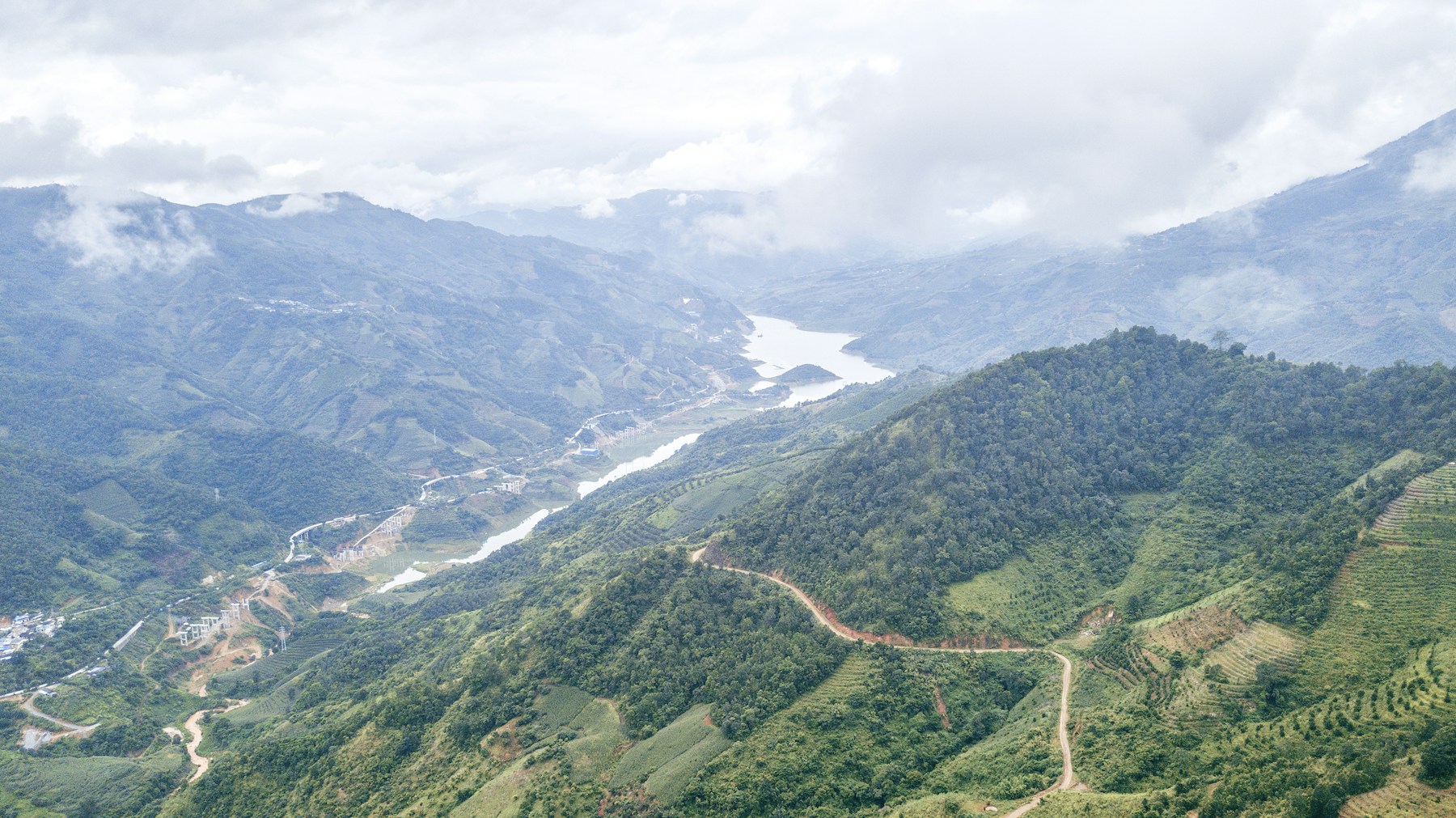
Pu’er can mean the tea, the city or a much larger administrative area. Jingmai Mountain is within that wider area, in Lancang County; it is not a tea garden beside the city centre. Lincang also names both a city and a wider region. Put actual hotel and meeting pins on your route before comparing the number of stops.
| Your main interest | Start with | Planning consequence |
|---|---|---|
| An easy introduction to both drinks | Pu’er city / Simao, with a named nearby host. | Use a city base; separate a cafe stop from a countryside appointment. |
| Living tea landscapes and village stays | Jingmai Mountain in Lancang County, within Pu’er’s wider administrative area. | Add mountain nights and road-transfer stages; Pu’er railway station is not arrival in a tea village. |
| Dianhong black-tea context | Fengqing in the Lincang region. | Build around the black-tea visit and local host rather than adding it to a short Pu’er stay. |
| Coffee country on a western Yunnan route | Lujiangba / Xinzhai (新寨), in Baoshan. | Use the actual estate address; the valley, Baoshan city and Tengchong are different stopping points. |
| A city coffee afternoon during another holiday | Kunming, Dali or another city already on your route. | Choose the drink, setting and access you want; a cafe does not establish local farming or production access. |
The province’s tea-and-coffee tourism presentation identifies different origins including Jingmai, Pu’er’s coffee estates, Mengku and Baoshan’s Xinzhai. Treat these as choices between regions, rather than a ready-made checklist for one week. Local appointments, access and your onward journey decide which combination works.
Use the Lincang regional guide for Fengqing, Mengku and Bangdong/Xigui choices. If you are already travelling through western Yunnan, coffee country near Baoshan may fit your journey better than a long diversion south to Simao.
Count full visiting days and leave room to talk
A producer conversation is difficult to enjoy while watching the clock for a distant station. Keep a major appointment on a full day, agree its likely finish, and put transfer stages where they do not force a rushed goodbye or late arrival at a village room.
| Available time | A useful shape | What the time does not mean |
|---|---|---|
| One free afternoon | One hosted tasting or a city cafe, close to your existing base. | A full origin journey or a guaranteed production demonstration. |
| 4 days / 3 nights | Arrive in Simao, use two full days for different appointments, then depart. | Four full farm days; arrival and departure still use time. |
| 7 days / 6 nights | Simao 2 nights → Jingmai 3 nights → Simao 1 night before departure. | A reason to add Lincang and Baoshan to the same week. |
| A longer specialist trip | Choose two complementary regions, then allocate gateways, transfer stages and rest. | A fixed length until actual appointments and transport have been mapped. |
The week-long framework below returns to Simao on the day before departure. That city night gives more breathing room than coupling a mountain-road transfer with an essential flight or train. If you finish instead at Lancang Jingmai Airport or continue to Jinghong, rebuild the final stage around that actual gateway; those places are not interchangeable pickup points.
Book an experience, not simply an estate address
A public cafe can be a fine destination if you want a drink, a view and a quiet seat. A farm appointment needs a willing host. A working factory may have safety and hygiene limits, and a hands-on lesson needs materials and supervision. Ask for each component in plain language before comparing prices.
| Experience | Ask the host to specify | A workable alternative |
|---|---|---|
| Tasting | Samples, origin information, language, duration and fee. Is buying optional? | A smaller comparison with a host who can discuss your questions. |
| Tea-forest or coffee-field walk | Permitted plot and path, guide, surface, shade, steps and the return point. | A shorter accessible introduction and a seated session. |
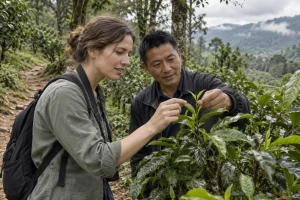
| Harvesting | Fresh material available that week, permission, supervision and who may participate. | Plant identification and an explanation using suitable prepared material. |
| Processing or roasting | A working production visit, a scheduled demonstration or a hands-on lesson; these differ. | A process explanation or tasting when equipment is idle. |
| A technical course | Teacher, topics, practice time, language and any qualification genuinely provided. | A holiday workshop with no certification claim. |
There are real examples of these different formats. An August 2026 report from Simao’s local media centre describes tea picking and making at the Chayuan Tanmi workshop in Yixiang, including an interview with its operator. It also describes the Xichen coffee experience centre. A report about available formats is a starting point for an enquiry, not a reservation for your party or proof of English delivery.
For a booking request, write a short brief: “We would like to understand growing and processing, walk a short permitted path, then compare a few samples with English interpretation.” Add whether you want to take part, watch or simply talk. The host can then explain what is possible on that date and what the fee covers.
Do not enter a planted field, touch drying produce or pick leaves because it appears accessible from a public path. A host’s invitation applies to the agreed activity and plot. It does not extend to another family’s trees or an unattended production room.
Use one mountain base in a seven-day journey
This example combines two different perspectives: a Simao appointment and a Jingmai tea-landscape stay. The six nights are two in Simao, three at one mountain base and one back in Simao. It is a planning framework; the host, weather and room approach determine the final daily choices.
| Day | Plan | Overnight |
|---|---|---|
| 1 | Arrive in Pu’er / Simao, settle in and confirm the next day’s appointment. | Simao, night 1. |
| 2 | One substantial coffee or tea-host visit, with lunch and an unhurried city return. | Simao, night 2. |
| 3 | Road transfer to the agreed Jingmai village; check in and take a short orientation walk. | Jingmai, night 3. |
| 4 | A permitted tea-forest route and a hosted tasting, adjusted for footing and weather. | Same Jingmai base, night 4. |
| 5 | One other village or an agreed craft/tea session; keep a flexible afternoon. | Same Jingmai base, night 5. |
| 6 | Return to Simao with breaks. Keep any evening activity optional. | Simao, night 6. |
| 7 | Depart from the agreed airport or railway station. | Departure; no extra night included. |
Three mountain nights give two full days without packing every morning. You can revisit a place in different light, spend longer over a conversation or change a wet walk. You do not need a different guesthouse for each village. The Jingmai itinerary guide develops that local decision without adding another province-wide route.
If you have three nights altogether, keep the stay near Simao and choose appointments within a workable local range. If Jingmai itself is the reason for travelling, build a mountain-focused trip around its gateways instead of using all your short stay on a city-to-mountain return.
Understand the tea forest before choosing a walk
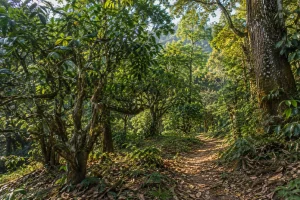
Jingmai’s interest is a living cultural landscape, with tea grown among forest vegetation and communities that maintain it. UNESCO’s description explains the relationship between old tea forests, traditional villages and local stewardship. Expect a different setting from uniform rows of clipped plantation bushes.
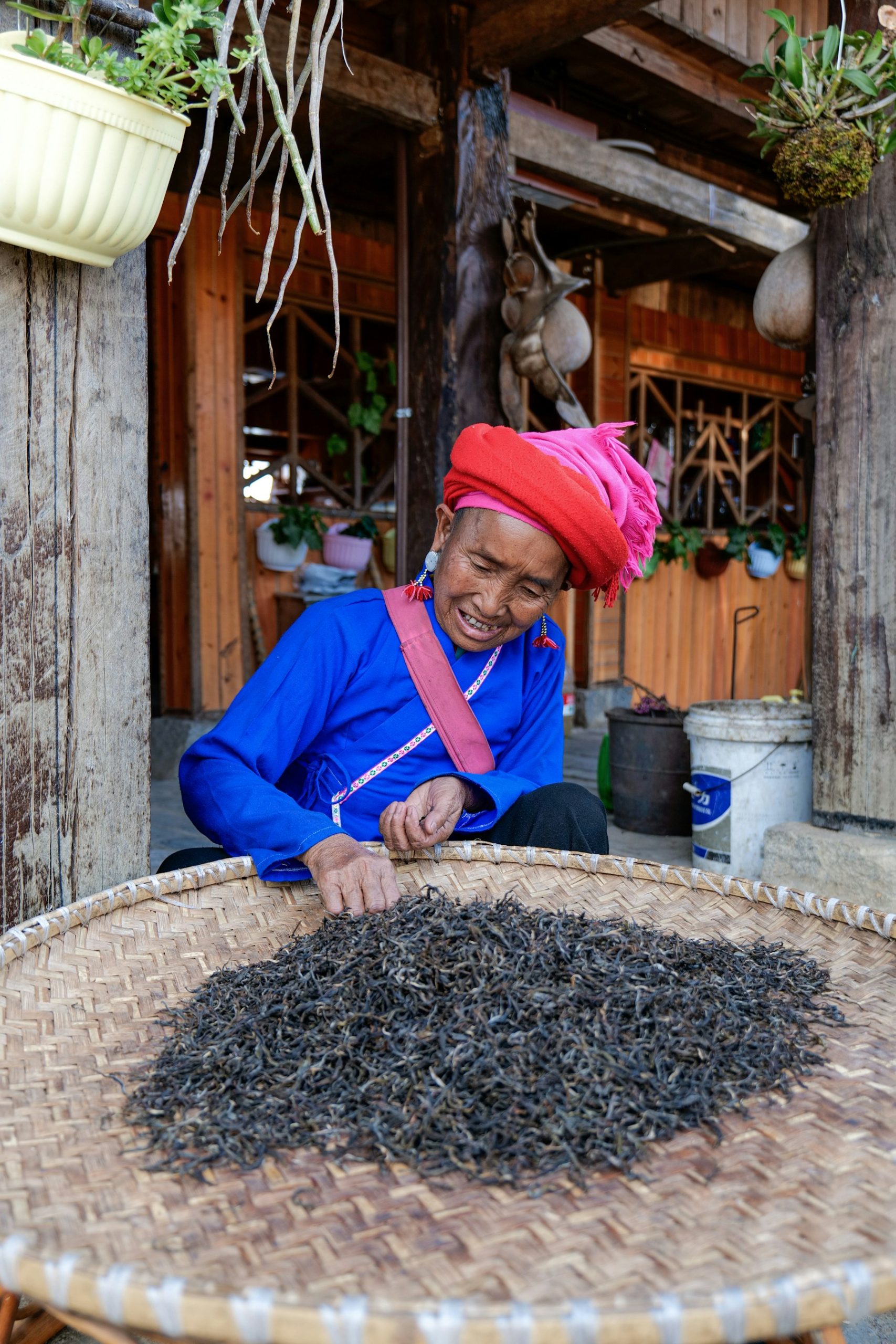
Choose an established visitor route with a local person who can explain what you are seeing. Agree the length, steps and wet-weather option. Remain on permitted routes, respect private and sacred spaces, and ask before photographing a resident or entering a home. A tasting does not create a right to a portrait or a performance.
Keep drone plans out of an ordinary sightseeing assumption. The heritage authority’s April 2026 notice applies continuing controls across the heritage area and requires the relevant approvals for exceptional flights. A hotel booking or a drone app’s display does not supply those approvals. Ground photography and a good conversation can be the focus of the visit.
Arrange mountain entry and the final walk to the room
The heritage authority’s July 2026 management report describes the reservation system and capacity-based vehicle entry through Jingmai Bridge. An 8 October local report again describes advance vehicle reservations. Confirm who handles the vehicle booking and which name, plate and date it uses before leaving the gateway.
The published visitor registration arrangements include an on-site route for overseas visitors holding passports. Tell the receiving team which documents you use and ask how the current process applies to you. Do not assume a reservation made for a different vehicle, or a room order on its own, admits your party automatically.
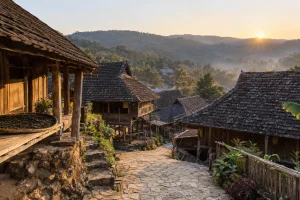
For the guesthouse, ask about the last car stop, luggage assistance, steps, bathroom, temperature control and meals. Earlier travellers have reported opposite reactions to the same mountain stay: some loved the atmosphere, while others found the room or long approach unsuitable for their family. Choose from the actual room and access description, not a promise that every village stay is comfortable for everyone.
The Wengji and Nuogan accommodation guide helps narrow the base. Keep enough daylight to find the property and settle in; a late arrival should not become a reason to accept an unclear roadside pickup or an unsuitable room.
Let the host set harvest expectations
Growing, harvesting, drying, roasting and serving do not happen on one convenient timetable. Ask what work will actually be taking place during your appointment. Tea picking depends on the plot, leaves and the grower’s decision. Coffee cherries at one estate do not establish the harvest stage at another.
A useful visit can still happen when there is no picking. You might compare prepared samples, look at plants from a permitted path or discuss processing with photographs and equipment that is idle. Ask in advance which alternative the host offers, and whether a cancelled practical activity changes the fee.
A 2026 report quoting a Pu’er coffee-estate operator describes picking and roasting experiences at Meili Xingcun Youfeng Kagu. That supports asking about those activities there; it does not mean all estates offer them every day. For detailed appointment questions, use the Pu’er coffee farm booking guide.
Compare cups without turning the holiday into shopping
Ask the host to identify each sample’s origin and processing, and explain which differences you are comparing. A small, well-explained selection is easier to remember than repeated rounds at several shops. Say if you prefer small servings or want to focus on aroma and preparation rather than finishing every drink.
Keep buying optional. For anything you purchase, request the product name, quantity, price, packing and relevant producer information. A claim about a tree’s age, a prestigious village name or an investment return is not a substitute for clear product details. Decide what you enjoy and what you can carry, rather than treating an expensive purchase as proof of a successful trip.
In a scenic cafe, compare the setting, menu and access with what you value. Recent independent Kunming accounts disagree about the same lakeside venue’s atmosphere and value; comments also raise weekend queues, parking and limited non-coffee choices. Check whether there is shade, comfortable seating, a suitable drink for each person and a practical return. These are city-visit considerations, not evidence of origin-farm access.
Plan for the people who are not tasting
Keep meals, water and rest separate from tasting appointments. Children and non-drinkers need a worthwhile visit too: a short permitted plant introduction, a suitable non-coffee drink, or a comfortable place to sit with an accompanying adult. Agree supervision around hot kettles, roasting equipment and uneven paths before booking a family session.
Communicate allergies, milk preferences and food requirements early. A special drink may include dairy, spices or other additions, while a village meal may need advance preparation. Halal preparation, vegetarian food and simply avoiding pork are different requests. Ask the receiving team to identify meals and a workable prayer arrangement rather than assuming any rural host provides them.
Check payment methods and the contact number that will work on arrival. For a specialist conversation, establish who interprets and whether they understand your topic. A driver can handle transport without being a tea expert or an English-speaking guide.
Build a written proposal from the right starting route
The published Pu’er and Jingmai tea-and-coffee route is one starting option. Compare its actual overnight sequence with your needs, including whether to add a city night before departure. The accepted proposal should name rooms, hosts, transport, language support, admissions, activities, meals and the arrangements if a visit changes.
Send Vero Trip your dates, gateways, nationalities, group size, children’s ages, luggage, walking comfort and knowledge level. Say whether you mainly want tea, coffee, landscapes, production or a relaxed introduction to both drinks. Include food and prayer requirements and any topic you want to discuss with a producer. Those details allow an enquiry to become a specific route and an itemised quote, with optional purchases kept separate.