
Quick answer: The most balanced 7-day Yunnan itinerary is Kunming → Dali → Lijiang. It gives each base enough time for one meaningful regional day while keeping transfers manageable. Adding Shangri-La is possible, but it creates a faster four-city route with less flexibility for altitude, weather and old-town time.
Is Seven Days Enough for Yunnan?
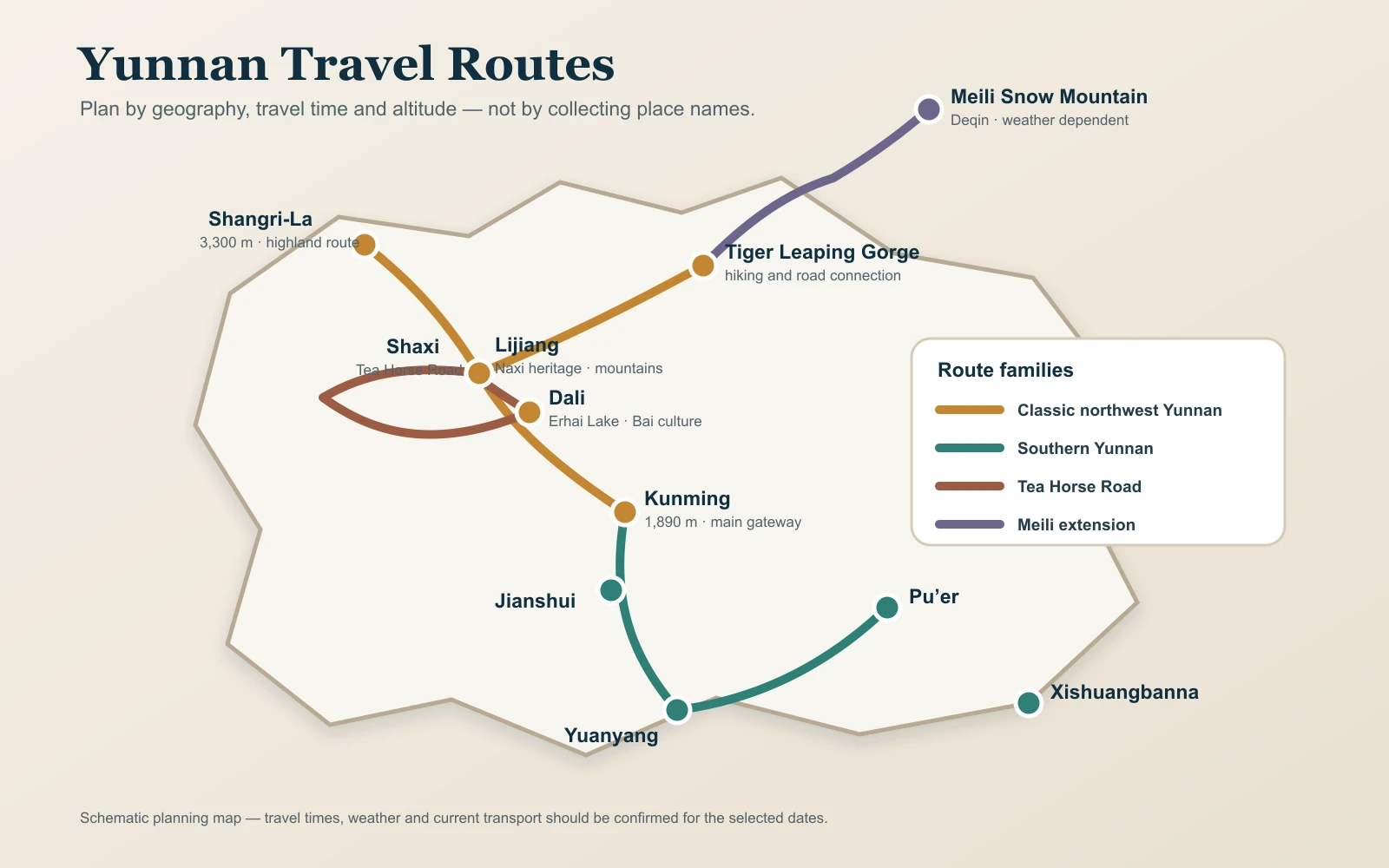
Seven days is enough for a first look at northwest Yunnan, but not for the whole province. Yunnan stretches from tropical Xishuangbanna to the Tibetan-influenced highlands around Shangri-La and Meili Snow Mountain. A useful one-week journey chooses one route family instead of collecting distant highlights. For most first-time visitors, Kunming, Dali and Lijiang create the cleanest structure. Rail connects the main bases, elevation rises gradually, and each place contributes something different: Kunming as the gateway, Dali for Erhai and Bai cultural context, and Lijiang for Naxi heritage and mountain access.
Recommended 7-Day Yunnan Route
Day 1: Arrive in Kunming
Use the first day for arrival, payment and connectivity setup, a gentle walk around Green Lake or the old streets, and an early night. Do not schedule the Stone Forest after a long international or domestic connection. Keep the arrival day recoverable if a flight changes.
Day 2: Kunming and the Stone Forest
Choose either a full Stone Forest outing or a deeper city day. The Stone Forest works best when karst landscapes are a priority; a city day allows more time for markets, Yunnan food and local neighbourhoods. Return to Kunming for the night rather than adding an evening transfer.
Day 3: Train to Dali and Settle by Erhai
Travel to Dali, transfer to the chosen hotel area and keep the afternoon light. Dali Ancient Town offers convenience and evening atmosphere, while villages nearer Erhai may provide quieter surroundings. Confirm vehicle access because some lanes require a walk with luggage.
Day 4: Dali, Xizhou and Bai Culture
Build the day around one coherent area rather than circling the entire lake for photographs. Xizhou, a Bai village experience, local food and a carefully selected Erhai section create more depth than repeated roadside stops. Cangshan can replace part of the lake day when walking and mountain scenery matter more.
Day 5: Dali to Lijiang
Take the train or a private road transfer, depending on hotel locations and the experiences planned between the cities. In Lijiang, distinguish Dayan, Shuhe and Baisha rather than treating them as one attraction. Use the afternoon for one old-town area and leave the evening unhurried.
Day 6: Lijiang and the Mountain Region
Choose Jade Dragon Snow Mountain when tickets, weather and individual health support it. Baisha, Naxi cultural sites or a slower village day form a strong alternative. Mountain visibility changes quickly, so the route should still feel worthwhile when conditions shift.
Day 7: Lijiang Departure
Depart from Lijiang when flight or rail schedules make sense. Returning to Kunming is sometimes necessary, but an open-jaw ticket can save backtracking. If the onward journey is international, allow enough connection margin and avoid relying on a fragile same-day chain.
Should You Add Shangri-La?
A seven-day Kunming–Dali–Lijiang–Shangri-La circuit suits travellers who accept a faster pace and already know they want the highlands. It usually means shorter stays in Kunming and Dali, more hotel changes and less weather flexibility. Shangri-La sits above 3,000 metres, so it should not be treated as a quick photo stop. If highland culture is the main priority, another solution is to start in Lijiang and use the week for Lijiang, Tiger Leaping Gorge and Shangri-La. This removes Kunming and Dali rather than compressing all four cities.
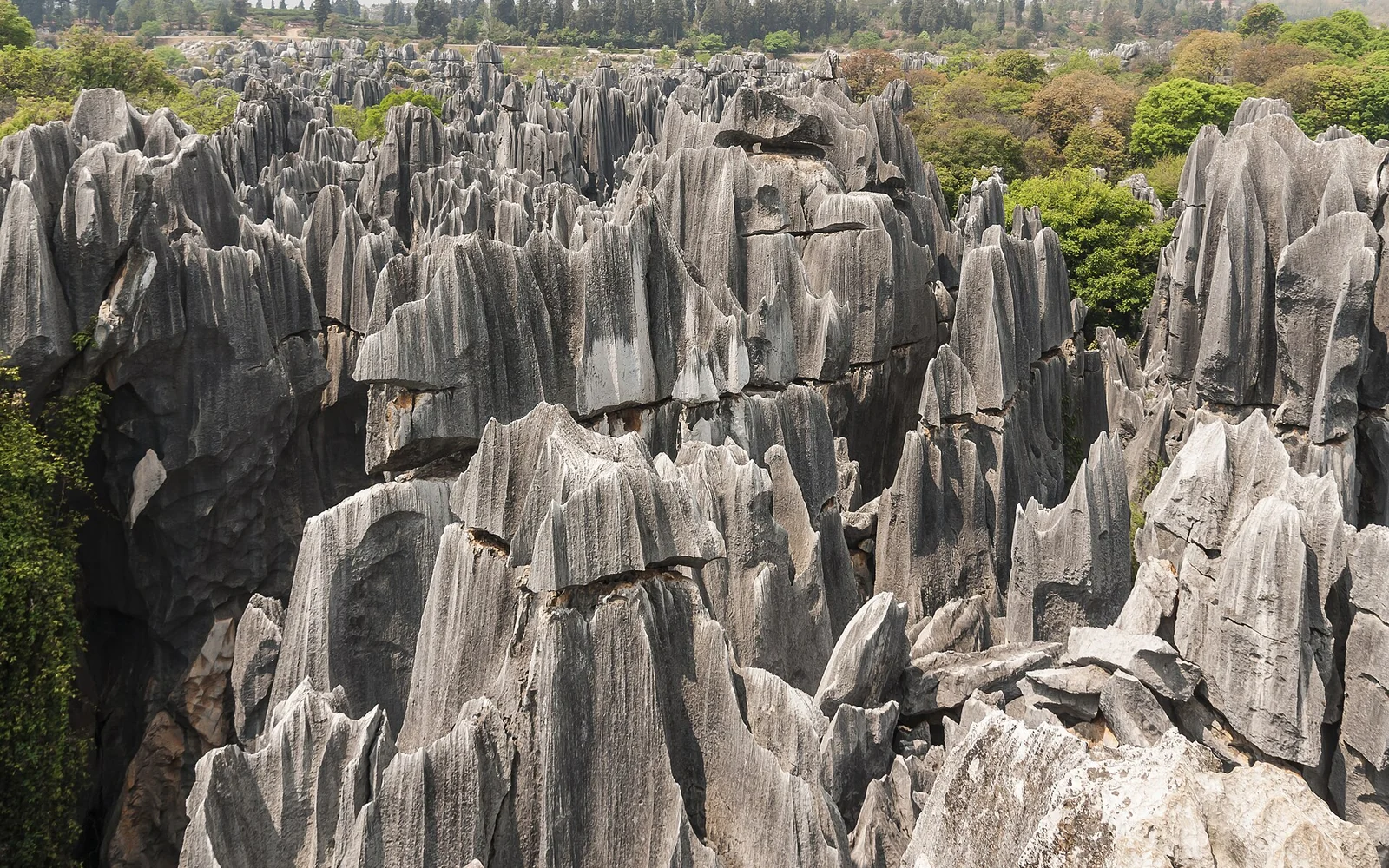
Photo credit
Photograph by CEphoto, Uwe Aranas; available on Wikimedia Commons; under CC BY-SA 3.0. Cropped and resized for web use.
Three Practical Route Choices
| Route | Best for | Main trade-off |
|---|---|---|
| Kunming–Dali–Lijiang | Balanced first visit | No Shangri-La |
| Kunming–Dali–Lijiang–Shangri-La | Travellers prioritising the highlands | Fast pace and four bases |
| Lijiang–Tiger Leaping Gorge–Shangri-La | Mountains and active travel | Misses central Yunnan |
Transport and Hotel Strategy
Count transfers from hotel door to hotel door, not only the train time. Checkout, station transfer, security, waiting and the final hotel transfer can turn a short rail journey into half a travel day. Keep major sightseeing away from tight connection windows. Use three hotel bases for the balanced route. In atmospheric old towns, ask about stairs, noise and vehicle drop-off points. Before an early departure, a practical hotel with easy road access may be more valuable than a scenic lane.
Budget and Seasonal Decisions
Private touring costs depend on group size, hotel level, guide language, included meals and whether a dedicated vehicle is used outside the rail corridor. See the Yunnan tour cost guide for planning ranges. Spring and autumn broadly suit the classic northwest route. Summer is green but wetter, while winter can be clear and quiet with cold nights. Match the month to each elevation in the month-by-month Yunnan guide.
What to Remove When the Week Feels Crowded
- Remove the destination that creates the biggest detour.
- Do not reduce every city to one night.
- Keep one weather alternative for a mountain day.
- Protect the final connection rather than using every available hour.
Compare Existing Seven-Day Tours
The Kunming, Dali and Lijiang route is the more balanced starting point. The four-city route with Shangri-La is for travellers who knowingly prefer broader coverage. These published tours remain unchanged; use them as route references.
Frequently Asked Questions
Can I see Dali and Lijiang in seven days?
Yes. Use Kunming mainly as an arrival or departure point, then allow at least two nights in Dali and two nights in Lijiang. Adding Shangri-La, Yuanyang or Xishuangbanna needs more days because those regions require extra road or rail time.
How many nights should I spend in each city?
Two nights in Dali and two or three in Lijiang creates a workable pace. Spend the extra night where your priority lies: Dali for Erhai and villages, or Lijiang for Baisha and a weather-dependent mountain day.
Is a private car needed?
Rail works well between the main cities, while a private vehicle is useful for regional outings, hotel-to-station transfers and areas without a convenient station. Many sensible seven-day routes use both rather than treating one option as universally better.
What happens if mountain weather changes?
Keep one flexible day and choose an alternative that still suits the location, such as Baisha, a food visit or a shorter old-town walk. Do not make the whole itinerary depend on a single cable-car, viewpoint or clear-mountain forecast.
Can this route be adapted for slower walking?
Yes. Choose hotels with vehicle access, avoid back-to-back old-town walks and state any concerns about steps, uneven lanes or rest breaks before the route is confirmed. A private plan can reduce walking without removing the character of each stop.
Continue Planning Your Yunnan Trip
Choose a Tour or Request This Route
Compare the 7-day Kunming, Dali and Lijiang tour with the daily outline above. Stops and transfer arrangements can differ, so use the product itinerary to confirm what you are booking.
Plan the rest of your trip: Yunnan private tours · compare itineraries by length · Yunnan tour costs · best time to visit Yunnan.