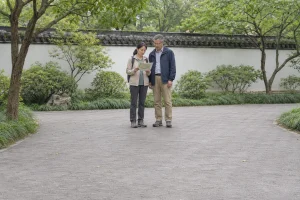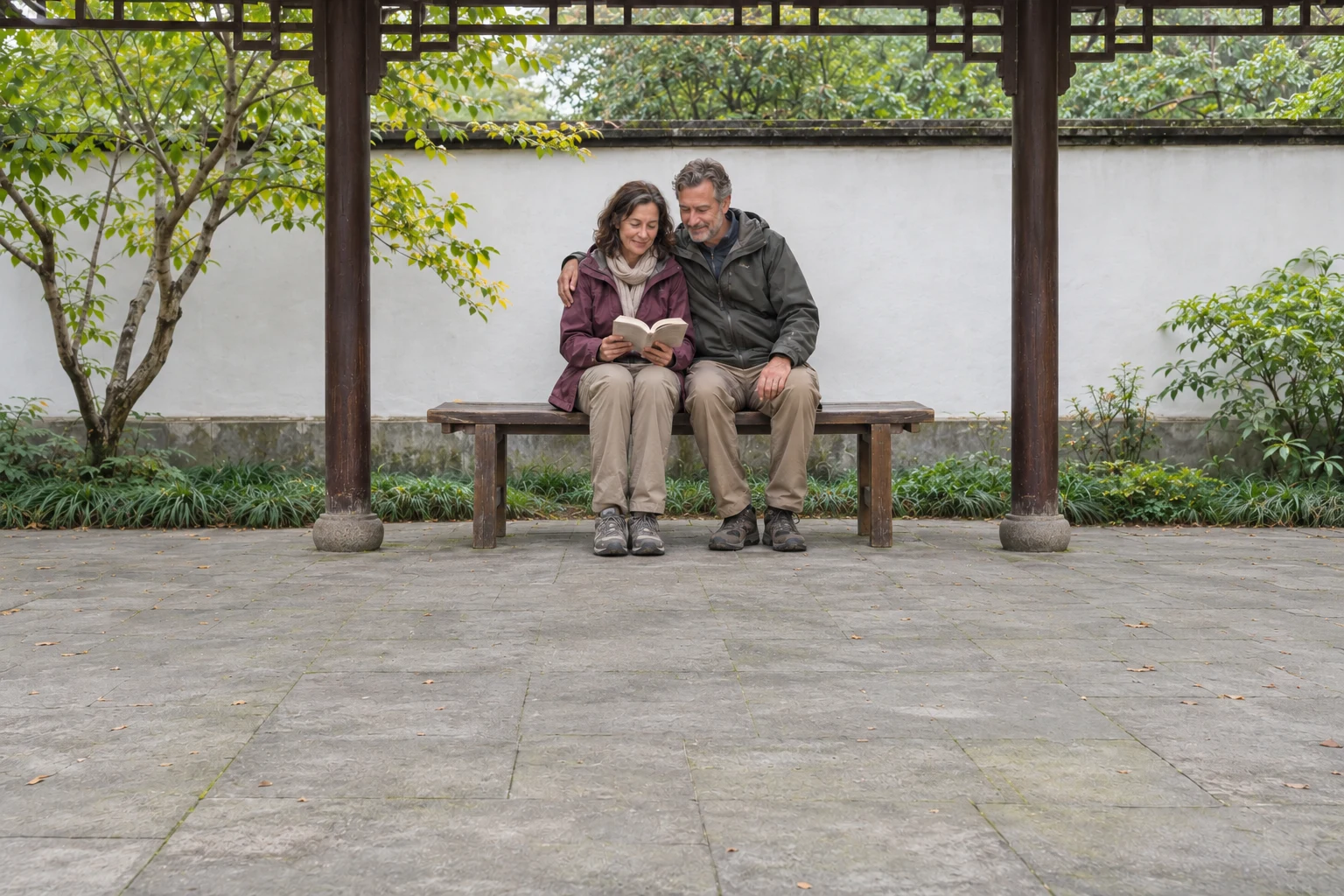
Make Yanhua Pool a Chongzhou garden day with a literary purpose. Water and pavilions lead into Lu You’s story and the adjoining Confucian setting. Give the selected subjects sustained attention, then lunch and the full Chengdu return, without requiring another town or mountain.
Save the name 罨画池博物馆 / Yanhua Pool Museum, Chongzhou with the current public entrance. English references also use Yanhua Pond or Yanhuachi. This is the garden and heritage complex in Chongzhou’s urban centre, distinct from Jiezi Ancient Town elsewhere in the Chongzhou area.
Let three questions shape the visit: how the garden frames views, how the shrine remembers Lu You and how the temple expresses learning. The first can be enjoyed without reading Chinese; a short explanation can open the other two.
Choose the garden, literary and temple balance
| Your main interest | Give time to | Keep optional |
|---|---|---|
| Garden design | One pond-side sequence and the relationship between water, roofs and planting. | Every bridge, pavilion interior and a complete circuit. |
| Lu You and poetry | The current shrine exhibition, with one part of his life explored closely. | Every panel, digital effect or a particular object. |
| Learning and civic history | The Confucian Temple setting and an open, permitted view of its principal hall. | Ceremonies, live calligraphy and access to every room. |
| An easier cultural day | A shorter garden route, selected interpretation and a seated lunch. | Another town or a night performance. |
Check the current visitor map and open areas when you arrive. Choose the essential subject before following every side path, and establish the exit and return meeting point. The sequence below is a way to organise attention, not a surveyed walking circuit or a guarantee that all connecting doors are open.
For a party with different interests, begin together in the garden and decide which exhibition section deserves the longest pause. A person who enjoys architecture may want a sketch or photograph from one public viewpoint, while someone interested in literature may prefer longer with the shrine’s explanation. Agree a meeting place if separating.
Read the garden through water, roofs and changing views
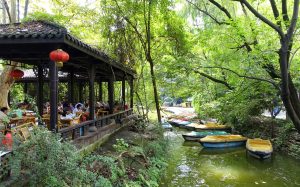
The Sing & Learn Chinese introduction describes rockwork, curved bridges, pavilions and mature trees around the pool. It places the garden in Lu You’s Chongzhou story. Use those elements as subjects to look for on the current public route, rather than expecting one photograph to show the whole garden.
Find a public view joining water and building. Compare roof, reflection, screening plants and a bridge changing the direction of sight, then move to another allowed position. Wind or cloudy water changes the picture without removing its design interest.
Look along repeated passage posts and then through an opening towards the garden. For children, comparing roofs or drawing a window can focus attention. Keep the activity clear of circulation instead of treating every stop as another photograph.
A 2024 account supplied by Chongzhou’s culture and tourism bureau describes repairs to paving and pavilions, work on the water, and new uses for some previously underused spaces. This is a maintained, changing garden. Traditional appearance does not make every visible surface an untouched survival from the same historical period.
Ask how a repaired pavilion or room relates to its surrounding garden rather than dating wood by appearance. Even a closed interior can leave a useful relationship between exterior, courtyard and pool to observe.
Lu You Shrine: follow a life, then identify the objects
The shrine’s exhibition was reopened after an upgrade in November 2025. The Sichuan Online report of the reopening describes four thematic areas: an overview of Lu You’s life in Xiangrugu Hall, his journey into Sichuan and military experience in the north wing, his Shuzhou years in Fangweng Hall, and family and legacy themes in the south wing. Shuzhou is the historical name used in this local story.
The same report explicitly mentions replicas among the displayed materials. Do not assume that a manuscript-like sheet, armour or writing implement belonged to Lu You himself. Read the present label for the object’s identity and date; a reconstruction can explain a period without being an original personal possession.
Choose one thread in Lu You’s life: travelling official, locally remembered writer or a selected poem shaped by experience. A short explained passage may serve a first visit better than many titles read in haste.
Distinguish text author, later calligrapher and displayed medium. A copy, printed reproduction, carved inscription and panel are different objects. That distinction helps identify what is actually visible without recognising every character.
The reported four-part layout is a starting framework, not a promise that every room or interactive feature operates on your date. Ask which current displays best match your interest. If detailed English interpretation matters, request someone prepared for the literary subject; a vehicle booking or general English conversation does not establish that service.
Allow for standing time. Reading a sequence of panels can be tiring even when the distance walked is short. Take a break before the group loses concentration, then either continue with the temple setting or finish the main visit. A worthwhile encounter with Lu You does not require reading every wall.
The Confucian Temple adds a different cultural subject
A December 2025 first-person visit by Tang Shenghua describes the museum complex as encompassing the garden, Lu You Shrine and the Confucian Temple. The writer observed the Dacheng Hall setting, Confucius imagery and local calligraphy activity. These are useful distinctions between a literary memorial, a garden and a place associated with Confucian learning.
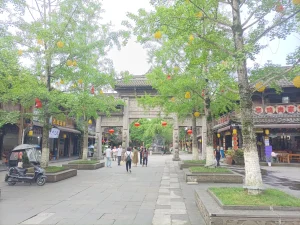
If the relevant public area is open, look at how the hall, courtyard and approach differ from the more varied garden views. Ask what the arrangement expresses about education and commemoration. A temple name does not mean that an ordinary visit includes a ritual, an indoor tour of every building or a scheduled lesson.
The writer’s encounter with a child interpreter and a resident practising calligraphy belonged to that visit. Enjoy such activity respectfully if it happens, but do not travel expecting those people or a daily demonstration. Ask before photographing anyone closely, keep entrances clear and follow current instructions around sculptures and inscriptions.
Finish after garden and shrine when attention or mobility calls for it. Someone chiefly interested in learning and civic culture may instead begin with the temple setting. Give the main subject time while preserving lunch and the return.
Seasonal colour and performances are separate decisions
The winter account describes colourful foliage during its December visit. That establishes a dated observation, not the leaf colour on a future November or December afternoon. Choose buildings, garden composition and the literary story as the dependable purpose of the trip; treat sunshine, reflections and particular foliage as variables.
The June 2026 Dragon Boat Festival report records a dated programme involving penjing displays, craft activities and other events in and around the complex. It does not establish a daily bonsai workshop, market, parade or performance throughout the year.
The Sing & Learn introduction also describes a night-production concept. If an evening show interests you, establish the actual operating date, ticket scope, language, outdoor exposure and finish before changing the itinerary. This guide’s core plan is a daytime cultural visit and does not depend on a show taking place.
A night event changes the return or the reason for staying in Chongzhou. Do not simply attach it to a daytime hotel-return agreement. Decide whether the party can comfortably manage the later finish and whether accommodation would make the trip easier. In rain or unsuitable weather, use the confirmed change terms instead of assuming an event will proceed.
Lunch and a short look at the neighbouring streets
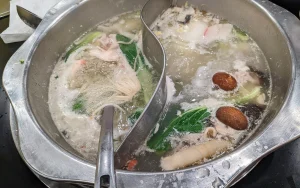
Chongzhou’s November 2025 local introduction places Zhengdong Street and Xiaodong Street in the wider visiting area and names foods including buckwheat noodles, bingfen, lianggao and danhonggao. These provide a local food direction after the cultural visit, without requiring a second sightseeing transfer.
Make lunch a seated meal first, with a snack afterwards if wanted. Buckwheat noodles can be the starting question at a suitable restaurant; ask about broth, toppings, chilli and cooking oil. Bingfen is a jelly-style dessert, lianggao a chilled rice-based sweet, and danhonggao an egg-based cake often served with a filling. Recipes and fillings vary, so explain allergies and dietary needs rather than relying on an English name.
Choose the actual venue on the route and confirm that it is operating. A historical food list is not a reservation or proof that every stall serves the same dish today. If a substantial meal, particular diet or accessible toilet is essential, settle the restaurant before departure rather than leaving it to a long search after the walk.
After lunch, a short browse can be enough. Keep any shopping or tea order separate from the garden admission and agree the price before ordering. Festival stalls and craft demonstrations described in older reports are optional date-specific activities, not a standing part of this day.
Build the complete journey from Chengdu and back
Begin with breakfast and a manageable day bag. Save the museum’s full Chinese name, the operating entrance and your hotel’s return address. For an arranged car, specify the legal drop-off and collection point; a pin in the middle of a heritage complex is not a place a vehicle can necessarily stop.
A coherent day is hotel departure, arrival and orientation, a garden viewing sequence, the selected shrine or temple areas, lunch, an optional short street pause, and the complete return to the same Chengdu hotel. These are stages rather than fixed clock times. The actual hotel, traffic, admission and chosen walking pace determine the day’s length.
For independent travel, check the current outward and return services together. Any rail journey still leaves a station-to-entrance stage and the reverse connection. Save the boarding location and allow time to reach it. A train ticket or a city taxi does not itself provide garden admission, English interpretation or luggage storage.
Agree whether a vehicle waits or returns later, how to contact the driver, and what happens if the group finishes early. The final hotel drop-off must be explicit. Keep a time-sensitive airport or railway departure on a separate planning basis, including bag collection and the correct terminal or station.
Our Jiezi Ancient Town guide covers a separate Chongzhou-area street-and-river day. Do not assume Jiezi and Yanhua Pool are adjacent stops simply because both use the Chongzhou name. Add another destination only after checking the real transfer and giving each main visit sufficient time.
Choose a Chengdu base or a deliberate Chongzhou night
| Stay | Suggested rhythm | Hotel nights |
|---|---|---|
| 3 days / 2 nights | Arrive; choose the Chongzhou outing as the main full-day priority; depart. | Two Chengdu nights. |
| 4 days / 3 nights | Arrive; one separate city or panda day; one Chongzhou day; depart. | Three nights at the same Chengdu base. |
| 5 days / 4 nights | Arrive; city day; Chongzhou day; another chosen subject or rest day; depart. | Four Chengdu nights. |
| Optional Chongzhou overnight | Replace an agreed Chengdu night when a slower local stay or confirmed evening event matters. | Name each town and keep the total unchanged unless adding a date. |
Arrival and departure dates are not automatically full visiting days. With only two nights, compare Chongzhou with your essential Chengdu interest before using the sole intervening day. With three or four nights, keep pandas, another museum or a major excursion on its own day.
The Chengdu trip planner helps choose a base for the whole stay. For a Chongzhou overnight, compare an actual urban hotel’s access to meals and the museum with its room comfort and vehicle approach. Do not book a vaguely described rural property expecting to walk out into the garden streets.
Confirm passport registration, bed configuration, bathroom, lift and heating or cooling at the named property. Agree luggage storage and collection when returning to Chengdu; no museum suitcase facility is assumed. If changing hotels, include the transfer with bags instead of counting it as free sightseeing time.
For a different literary garden, Guihu in Xindu develops Yang Shen and Huang E’s story. Choose it as another subject or another day. The Sichuan regional planner is more useful when adding a wider journey beyond a Chengdu base.
Walking, documents and services to agree
Ask about the current entrance, thresholds, bridge approaches, surfaces and rest points for the route you actually want. A garden description does not prove continuous step-free access. State both walking and standing limits, and retain a shorter version that still reaches the main subject.
Wear shoes with grip and bring suitable rain protection. Covered passages do not shelter the whole journey, and wet paving can change the comfort of a short walk. Shorten exposed sections in light rain; move or replace the outing when weather or closure makes it unsuitable. An indoor fallback needs its own confirmed access.
ChengduPlus has reported international youth participants visiting Yanhua Pool and Lu You Shrine. That supports an international-visitor context, but an organised group visit does not verify every independent passport booking or payment channel. Establish the current process for your original document and date before arranging the day around it.
| Part | Specify clearly | Separate unless included |
|---|---|---|
| Admission and interpretation | Open areas, document channel, date and actual language support. | Night events, workshops and another attraction. |
| Transport and luggage | Named hotel, legal meeting points, waiting, bag custody and full return. | Airport or station transfer and extra stops. |
| Food and accommodation | Meal basis, dietary needs, named hotel and counted nights. | Tea, shopping, additional nights and insurance. |
Price on request. A Verotrip arrangement includes the items in the accepted written proposal. This guide does not confirm tickets, an English-speaking companion, a vehicle, meals or accommodation merely by describing them. Keep the cultural purpose and the complete return clear when comparing offers.
Questions before visiting Yanhua Pool
Is this only a garden walk?
No. The garden can be combined with the current Lu You Shrine exhibition and the Confucian Temple setting. Choose the balance according to your interests and the areas open on your date.
Are the shrine objects Lu You’s original belongings?
Do not assume that. The 2025 reopening report explicitly describes replicas among the display materials. Read current labels to distinguish an original object, reproduction and explanatory reconstruction.
Do I need an overnight stay in Chongzhou?
The daytime plan can return to Chengdu. Choose a Chongzhou night when a slower local stay or a separately confirmed evening programme is a real priority, with hotel access and onward travel arranged.
Will there be a performance or a calligraphy demonstration?
Only if an actual programme is confirmed for your date. Festival reports, night-show descriptions and a writer’s encounter with local calligraphy do not establish daily scheduled activities.
Plan a garden and poetry day around your interests
Use Plan My Trip to tell your Verotrip travel consultant your date, hotel, party size, passport nationalities, language, walking needs, luggage and dietary requirements. Say whether garden design, Lu You or the temple setting matters most, and whether you want a Chengdu return or a specific Chongzhou night.