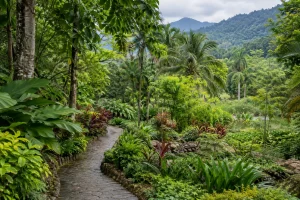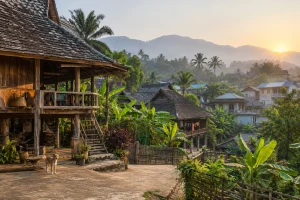
Choose Xishuangbanna Primeval Forest Park for a manageable outing from Jinghong that combines a forest walk with peacock-related displays and cultural presentations. For a first visit, plan around one viewing session and one suitable walking section, then add another activity only if the group still wants it. Leave a half-day in the itinerary as a starting allowance rather than trying to catch every performance.
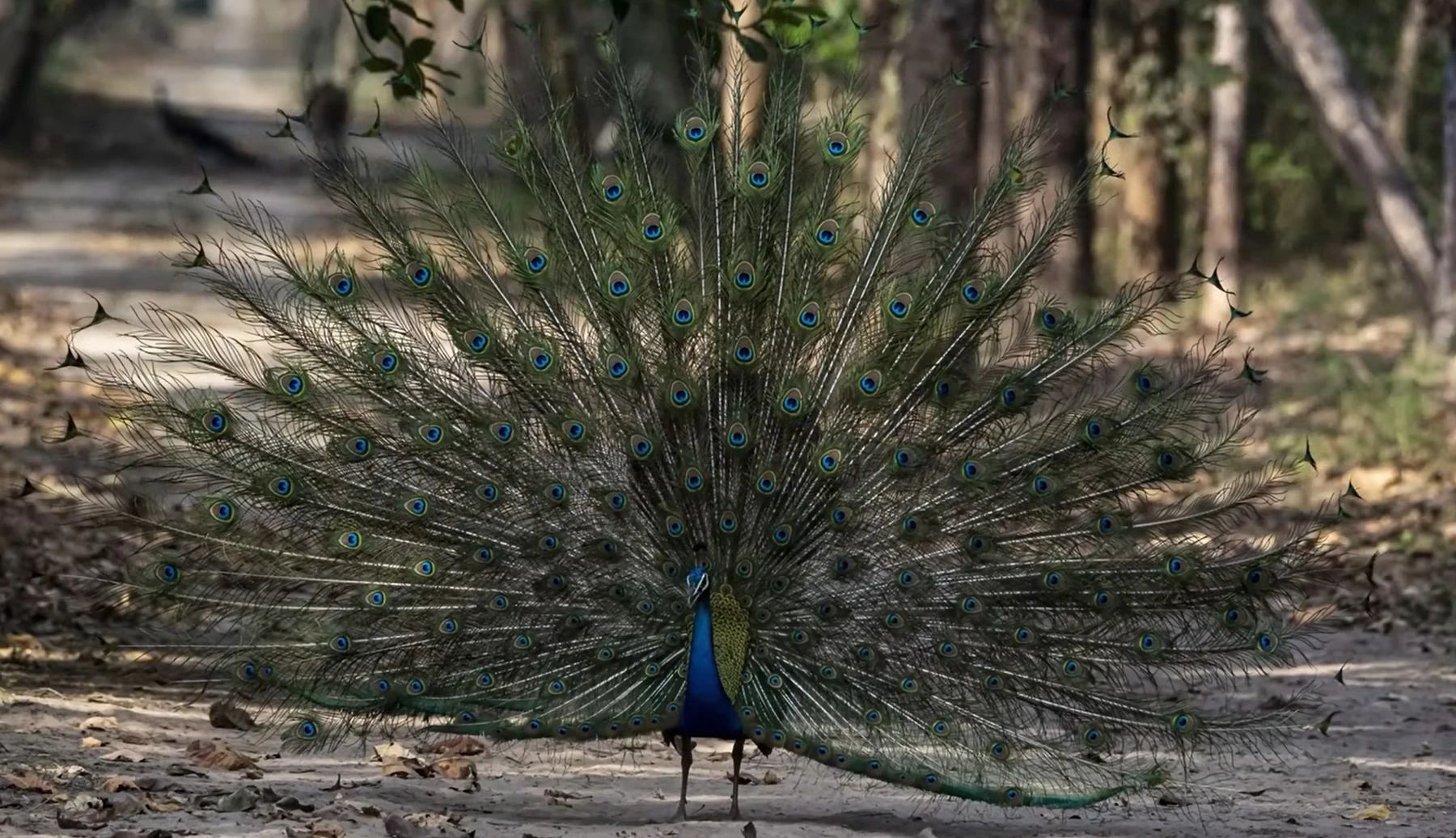
The park is also translated as Xishuangbanna Primitive Forest Park. Save its Chinese name, 西双版纳原始森林公园, for tickets and transport. It is a different destination from Wangtianshu near Mengla and the tropical botanical garden in Menglun. The opening peacock photograph was taken elsewhere and illustrates the bird’s appearance, not this park or its display.
What kind of visit should you expect?
The provincial location reference describes three themes: tropical valley forest, peacock-related animal displays and cultural presentations associated with Hani communities. This is a developed visitor attraction with several kinds of activity, rather than a single uninterrupted wilderness trail.
That distinction helps you choose. A family wanting a varied outing near Jinghong may enjoy a short walk and a scheduled presentation. A traveler who wants hours of quiet plant observation should ask about the actual forest route before committing. Someone seeking wild-bird photography should not equate a managed peacock display with an independent wildlife sighting.
Choose your priority before buying a bundle. If the birds are the main reason for going, establish the current viewing arrangements first. If the forest matters most, select the walking section and allow time to stop and look, rather than letting the entire visit become a rush between programmes.
| Your priority | Build the visit around | Check before paying |
|---|---|---|
| Peacock viewing | One confirmed viewing session, with a comfortable waiting and exit plan | Current programme, viewing area and what happens if conditions change |
| Forest scenery | A permitted route chosen for your walking level | Surface, steps, route length, rest points and how to return |
| Cultural presentation | A named performance or interpreted cultural stop | Actual programme, language support, participation and photography instructions |
| Optional adventure activity | One specific activity you actively want | Separate price, eligibility, equipment, supervision and operating conditions |
Peacock displays: how to plan without chasing a timetable
A China Tourism News report describes peacocks crossing the lake as a characteristic programme and discusses the park’s breeding and care work. Understand the display in that managed setting. It is not a promise that wild birds will fly past you at a time of your choosing.
Ask at the entrance which sessions are operating that day and where to wait. Use that answer to arrange the rest of the visit. Online lists may refer to different seasons or programmes; a photograph’s timestamp is not a current schedule. If a viewing session is essential, ask about changes before making the journey.
Choose a position where your group can see comfortably without blocking paths. Keep children beside you, give other visitors room and follow staff instructions about where to stand. Do not climb a barrier or move into an animal’s route to improve a photograph.
You do not need close contact to appreciate the birds. Watch their movement and plumage from the permitted area. Do not chase, handle or offer your own food to an animal. If a paid photograph or feeding option is offered, establish the rules and decide whether you want it; it is not automatically part of an ordinary visit.
Give the forest walk its own time
Ask staff to identify the current forest section on the visitor map. A park-wide ticket does not mean every patch of forest is open to visitors. Follow the designated route, including where it takes you away from the shortest line between two activity areas.
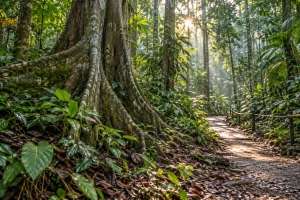
A 2026 China Tourism News account describes a boardwalk routed around an old tree’s root system. Use that as a reason to look carefully at how a visitor path fits the forest. Do not step off the path onto roots or vegetation to recreate a picture.
For an enjoyable short walk, pause at a few features: a broad root at the base of a trunk, a woody climber and the change in light between the forest floor and canopy. Ask a guide to identify what you are seeing. Looking slowly is more useful than collecting unconfirmed plant names from image searches.
With children, choose one simple task, such as comparing two leaf shapes or finding where a climber reaches towards the light. Sketch or photograph from the path rather than collecting leaves. If the children are already tired after waiting for a programme, shorten the walk instead of turning it into a compulsory final activity.
Should you buy the sightseeing vehicle?
Decide from the actual route, not from a blanket rule that every visitor must ride or that every visitor should walk. Ask the ticket desk which vehicle service operates, where it stops and how much walking remains between those stops and the experiences you want.
A transport ticket can help with a longer link between areas, but it does not necessarily take you through a forest walking trail or to every entrance. Confirm direction, boarding points, the final return and any restrictions on bags or mobility equipment. Keep the walking and vehicle purchases clear in your notes.
| Your group or aim | A useful decision | Ask about the remaining route |
|---|---|---|
| You enjoy walking and have time | Compare a walking visit with the available vehicle option | Total distance, climbs and the route back after the last activity |
| Children or older relatives need frequent breaks | Reduce the number of stops and consider the vehicle for suitable links | Queues, boarding, seats, toilets and walking from each stop |
| Wheelchair or stroller access is essential | Confirm a continuous route before buying | Steps, gradients, surface, vehicle boarding and access to viewing areas |
A sightseeing vehicle is not proof of step-free access. If a traveler cannot manage steps, ask about the complete journey from drop-off to viewing area, toilets and exit. If the required route cannot be established, choose another activity instead of relying on companions to carry the traveler or equipment.
Cultural presentations are a different experience from a home visit
Treat a staged cultural programme as a performance with its own hosts, presentation style and participation rules. Ask which community or tradition the particular programme introduces. Xishuangbanna is home to different communities; one costume, dance or village-style setting should not stand for all of them.
Join only the participation you want. Ask before photographing performers closely and follow any rules during a demonstration. If an activity involves water, protect your documents and electronics and confirm whether you will need a change of clothing. Do not assume a cultural session is included simply because it appears in an old park description.
If your priority is conversation with a resident host, food preparation or a household craft, an arranged community visit is a separate choice. Our village-visit etiquette guide explains why an invitation, the host’s agreement and a clear activity matter.
A simple half-day sequence
The sequence below is a planning framework, not the park’s official one-way route. Begin with the current map and programme. Reverse or shorten the order when it avoids an unnecessary walk or a long wait.
| Part of the outing | What to do | When to simplify |
|---|---|---|
| At the entrance | Confirm the viewing programme, open forest route and transport choice | Resolve any ticket or access issue before heading to a distant stop |
| Main interest | Attend the chosen session or begin the planned forest walk | Skip a programme that would leave too little time for the activity you value most |
| Break and second interest | Sit, drink water and choose one further stop | Return sooner if the group is hot, wet or tired |
| Exit and meal | Meet at the agreed pickup and have a proper meal or hotel rest | Leave another major attraction for a different part of the trip |
For a family outing, a successful shorter visit is enough. Do not book an ambitious morning here and then assume everyone will want a distant garden or another long walk after lunch. If an optional adventure activity is the priority for one person, agree how companions will spend that time.
Getting there from Jinghong and arranging the return
Amap places the park east of Jinghong. Save the full Chinese name and a confirmed entrance pin rather than searching only for “forest park,” a name used in many Chinese cities. Confirm the drop-off point with your accommodation or driver, particularly if you carry a stroller or need a shorter approach.
For a taxi or arranged transfer, clarify whether the agreement covers only the outward journey or both directions. Decide on the return pickup point before entering, keep a working contact method and save your hotel address in Chinese. A vehicle agreeing to drop you at the attraction has not necessarily agreed to wait.
A September 2026 notice attributed to Xishuangbanna tourism authorities warns that parking can fill during busy periods and asks visitors to follow on-site directions. If driving, use the parking area staff indicate and allow time to reach the entrance. The holiday notice does not establish parking arrangements or charges for every later date.
If considering a bus, check the current stop, route and last return for your date. Do not rely on an old route number or assume public transport drops you at the same place as a tour vehicle. On a flight or train departure day, finish sightseeing according to the connection you must protect.
Tickets, meals and optional activities
Confirm admission separately from internal transport, adventure activities, meals and any special programme. For foreign-passport holders, ask which booking channel accepts your document and what you must show at entry. Never enter invented Chinese ID information to complete an online form.
For children or older travelers, check the evidence required for any concession and the scope of the discount. A reduced admission ticket does not establish eligibility for a separate activity or a discount on every service. Read the actual change and cancellation terms rather than assuming all sellers offer the same conditions.
Plan a meal that meets the group’s needs. A park restaurant, snack stall or cultural presentation does not automatically provide vegetarian, halal or allergy-suitable food. If the requirements are important, agree a specific meal arrangement or eat at a suitable restaurant before or after the visit. The Xishuangbanna food guide gives practical ordering questions.
Weather, clothing and optional adventure
Bring water, sun protection, lightweight rain protection and shoes with grip. Protect documents and phones if rain or a water activity is possible. Shade varies between forest sections and open viewing areas; a park name containing “forest” does not mean the whole visit is shaded.
When heavy rain, wind or thunderstorms affect a route or activity, follow the closure or change. Do not turn a closed attraction into a self-guided detour through the forest. For a broader wet-weather plan, use our rainy-season and heat guide.
Choose an adventure product only after reading its current requirements, supervision and equipment arrangements. Confirm any age, size or other eligibility conditions directly. Ordinary park admission is not permission to use every high-level course, and an activity is not essential just because a promotional photograph features it.
Primeval Forest Park, Wangtianshu or the botanical garden?
Choose Primeval Forest Park when you want the combination of a forest section, peacock viewing and cultural programming in a Jinghong-based outing. Choose Wangtianshu near Mengla when the rainforest setting and canopy-walk choice are central to the day and you are prepared to arrange the longer journey.
Choose the Menglun botanical garden for plant collections and botanical interpretation. On a short trip, give each selected place a distinct purpose. There is no need to visit several similar-looking attractions if that removes time for meals, rest and the experiences your group actually wants.
Questions before visiting
Can I come mainly for the peacocks?
Yes, if the current viewing programme fits your day. Confirm it first, then decide whether a forest walk or another activity adds value for your group.
Does the vehicle replace the forest walk?
Ask which links it serves and where walking remains. A ride between visitor areas and a walk inside a forest section are different parts of the outing.
Will I see wild animals?
Do not plan around a guaranteed wild encounter. A managed animal presentation is different from wildlife watching; appreciate the forest without chasing a particular sighting.
Plan a comfortable Jinghong outing with Vero Trip
Use the Xishuangbanna attraction guide to place the visit in your wider stay. Through Plan My Trip, send your dates, hotel, group size and ages, walking requirements and whether peacocks, forest scenery or a cultural programme matters most. Ask for admission, internal transport, guiding, meals and any optional activity to be stated clearly in the written proposal.
Related Journeys to Compare
These existing routes offer starting points for the region or travel interests discussed above. Read the full daily itinerary to see what is included. A visit described in this guide, a specialist session or an international border crossing is added only when confirmed in your own programme.