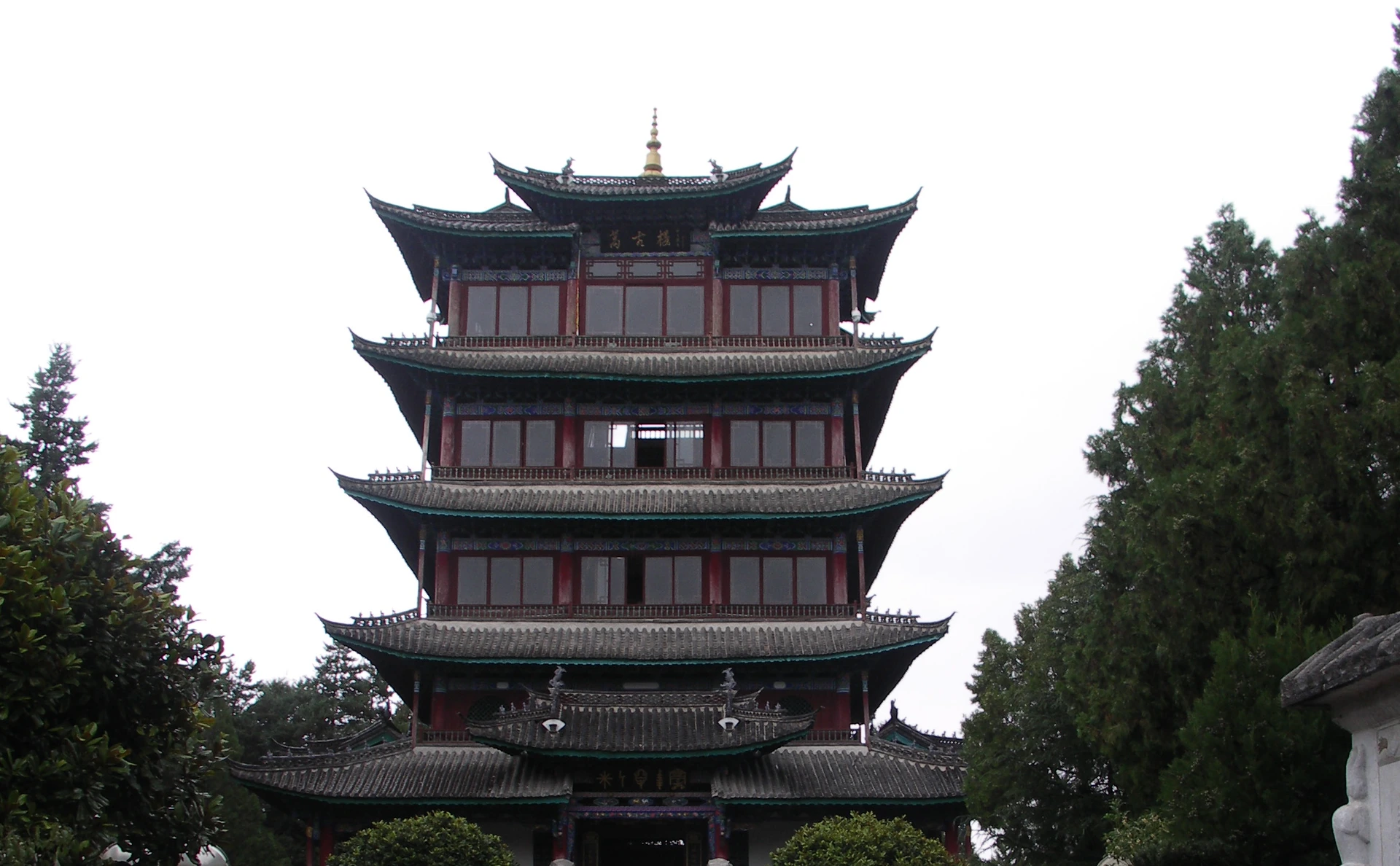
For Dayan rooftops, use an open Lion Hill view before committing to Wangu Pavilion. The tower adds timber architecture and several directions of outlook, but trees can fill upper windows. The image you want may come partway up rather than at the top.
Lion Hill, or Shizi Shan (狮子山), rises beside Lijiang Old Town. Wangu Pavilion is marked 万古楼 and also appears on maps as Wangulou or Wangu Tower. Save both the Chinese name and the point where you entered the hillside. Cars meet visitors at an accessible road outside the walking lanes. On the way back, the difference between the nearest exit on your map and the agreed pickup point matters more than the short distance across the hill.
Reading Dayan from a hillside viewpoint
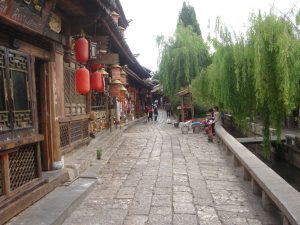
From Sifang Street, follow signed public lanes uphill. Watch one row’s eaves sink beneath the path while roofs at different angles reveal the slope and courts. Link those broad patterns with the streams glimpsed between buildings below.
Near Wenchang Palace, an open viewpoint can let the group reassess the climb. Public platform, tower and cafe terrace may involve different entries or purchases. Confirm a business seat and terms before ordering for its view.
Compare the low eastern roofs with newer Lijiang on the other side and the conditional northward mountain sightline. Small shifts in direction change trees and buildings in the frame. Grey weather can clarify eaves without justifying a long wait on narrow stairs for a summit.
| What you came to see | Where to look | When to turn back |
|---|---|---|
| A photograph of old-town roofs | Try a signed open terrace above the lanes. Take a wide view, then frame a smaller group of neighbouring roofs. | When you have a clear angle. The tower can be a separate visit. |
| The building itself | Continue through the wooded hill to the open grounds of Wangu Pavilion. Step back to see the tiers of eaves. | The exterior can be the endpoint if the upper level is closed or the stairs feel tiring. |
| Old and new Lijiang together | Compare available windows or open viewpoints facing different directions. | If cloud or branches fill one view, move on. Another flight of stairs may change very little. |
| A shorter outing with a companion | Walk a stretch of lane together, choose a lower meeting point, then let anyone who wants the tower continue. | Arrange where both walkers can sit down for lunch afterwards. |
What to notice at Wangu Pavilion
At the pavilion grounds, step back to follow layered eaves, narrowing roofs and finial, then compare the main entrance columns with upper detail. Its roughly thirty-three-metre height and locally described sixteen main columns give scale, not the only reason to look.
The architecture also helps date what you are seeing. A local history of Lijiang’s conservation identifies construction of Wangu Pavilion as part of the rebuilding programme after the 1996 earthquake. Traditional roof forms give it a visual connection to the old town below. The history of the settlements and the construction of this particular building belong to different periods. This distinction is especially helpful if you have just been to Mu Palace, where the story concerns the hereditary Mu rulers and their residence on the slope.
If inside is open, compare successive directions and frames rather than assuming higher means wider. A tree beside one roof can be its own view. The reported obstructed panorama is a reason to retain the lower hillside stop; another season’s photograph predicts no window sightline.
Reserve time for descent over stone, edges and wet leaves. Keep to marked direction and pause only where others pass. An exterior finish works when tower stairs are busy or tiring; private terraces and walls remain outside the route.
A half-day from your Lijiang hotel
Have breakfast at the hotel and leave large bags there. If you are staying outside Dayan, agree a road-accessible drop-off near the old town and save the Chinese name of the return meeting point. Start on foot at the square or at the lower end of the lanes leading towards the hill. A local route published for an earlier event approached from the big waterwheels, via East Street and the upper Huangshan section of Xinhua Street. That gives you landmarks for orientation. Follow the entrance actually in use for your daytime visit.
Walk to the first view together, then separate only with a precise restaurant or reunion pin. Adjacent cafes on a map may sit a long stair apart. Check the complete approach for pushchairs or level access, including business seats upstairs.
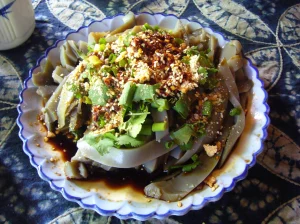
For lunch back in Dayan, look for chickpea jelly (jidou liangfen, 鸡豆凉粉) and Lijiang baba (丽江粑粑), a local flatbread that can be sweet or savoury. Ask how the jelly is dressed and what filling is available before ordering. On a cold afternoon, a seated meal with a pot of cured pork ribs may suit a group better. Leave time for it before the next pickup. Return on foot to an old-town hotel or walk out to the meeting point and take the vehicle back. The Lijiang food guide covers dishes and questions to ask when ordering.
If you want a second cultural visit, compare the hill with Mu Palace. Choose the palace for the residence, courtyards and the story of the Mu family. Choose the hill for the relationship between the roofs, the land and the tower. A map shows them beside one another, but it cannot guarantee a through gate, combined admission or a vehicle at the top. Give each visit its own entrance and an end point. A full morning in the palace followed by lunch and a lower viewpoint can make a satisfying day.
Where to sleep and how many nights to allow
A hillside inn can offer a fine outlook but make every trip with luggage an uphill walk. Ask for the route from the actual drop-off to reception and for the number of steps from reception to your room. Some travellers will prefer a lower Dayan address for this reason. Others may enjoy a hill stay because it lets them visit a viewpoint early and return for breakfast while the streets below are waking up. Request a photograph or description of the specific room view when it affects your decision.
A hotel at a road-accessible edge can make more sense for an evening arrival, an early departure or several days by car. Walk into the lanes with a daypack for the hill visit. On departure day collect your suitcases at the hotel before the transfer. Someone staying in Shuhe can keep the same room throughout and treat Lion Hill as a separate excursion into Dayan. The Lijiang accommodation guide explains how to compare the bases and confirm the last stretch from the vehicle.
| Trip length | Where to sleep | Where the climb fits |
|---|---|---|
| 3 days, 2 nights | Two nights in the same Lijiang hotel. | Arrive and walk the lower lanes on day one. Give day two to Lion Hill, lunch and an easy afternoon. Return to the station or airport on day three. |
| 4 days, 3 nights | Three nights in Dayan or near a road-accessible entrance. | Visit the hill on day two. Keep day three for Shuhe or Baisha, with transport back to the same base. Depart day four. |
| 5 days, 4 nights | Four Lijiang nights, with no hotel change required. | Use separate days for the hill, a village excursion and a weather-dependent mountain outing. Retain an easier city option before departure on day five. |
For a broader organised day, Verotrip’s one-day Lijiang Naxi culture itinerary starts at the morning market, includes Dongba paper and food activities, then visits Lion Hill and Shuhe. A traveller interested in learning how paper is made has a reason to choose that sequence. If you want an unhurried tower visit or frequently stop to photograph roof details, plan a separate half-day. Confirm the actual tower entrance, workshop appointments, lunch and final hotel transfer when requesting the day route.
Access, weather and costs
Bring your original passport and confirm which document the current ticket channel accepts for the pavilion. An old-town visit, any applicable old-town maintenance charge, tower admission and a private terrace purchase are separate items. A room in a hillside inn does not settle them. Check the last entry, open levels and return route for the date you plan to visit. Night walks and lighting events have been held on Lion Hill. Their past operation is no assurance of an evening opening today.
| Before setting off | What to check | How to adapt |
|---|---|---|
| Rain, poor visibility or a late arrival | Current hill and tower access, wet paving and remaining daylight. | Have lunch first or walk beside a lower canal. Keep the tower for a dry part of the stay. |
| Stairs and bags | Number of climbs, actual road pickup, hotel luggage storage and an agreed meeting time. | Leave suitcases at the hotel and choose one viewpoint before committing to the tower. |
| Tickets and service | Passport channel, pavilion admission, language support, meal, waiting vehicle and return. | Request each item in the written proposal. A named hill stop alone does not establish a tower ticket. |
For help fitting the hill into a longer Yunnan journey, tell a Verotrip travel consultant where you will sleep, how many steps the group is comfortable with and whether the roofs or the timber building matters more. Price on request. A vehicle can support the two road transfers while the old-town section remains on foot. Agree on any English-speaking companion, meals, ticketing and luggage assistance in the written itinerary.
Questions about visiting Lion Hill
Do I need to climb the tower for a view of Lijiang?
A lower open viewpoint can show the tiled roofs particularly well. Stop there first and decide whether the timber pavilion itself justifies the climb for your group.
Is it possible to see Jade Dragon Snow Mountain?
There are northward views in suitable conditions. Clouds, trees and the exact viewpoint all matter. Plan the day around the hill and old town, and treat a clear mountain view as a bonus.
Can I visit with someone who dislikes stairs?
Start in the lower lanes and choose a meeting place there. Ask locally about access to any particular viewpoint. The hillside walking route and tower staircases can involve several climbs, and the descent also requires time and footing.
Should I combine the tower with an evening show?
Only after confirming that the evening activity operates on your date and that you can reach it after the descent and dinner. For a first visit, daylight makes it easier to pick out the rooflines and find the way back.
Sources include a local account of the climb from Sifang Street, Lijiang’s history of old-town conservation and the National Ethnic Affairs Commission’s description of Dayan’s streets and waterways.
Cover photograph of Wangu Pavilion by Caitriana Nicholson. Cropped to the timber façade, resized and converted to WebP. The adapted photograph is available under the same CC BY-SA 2.0 licence. Original photograph and attribution.