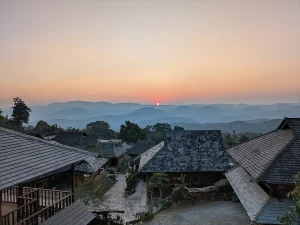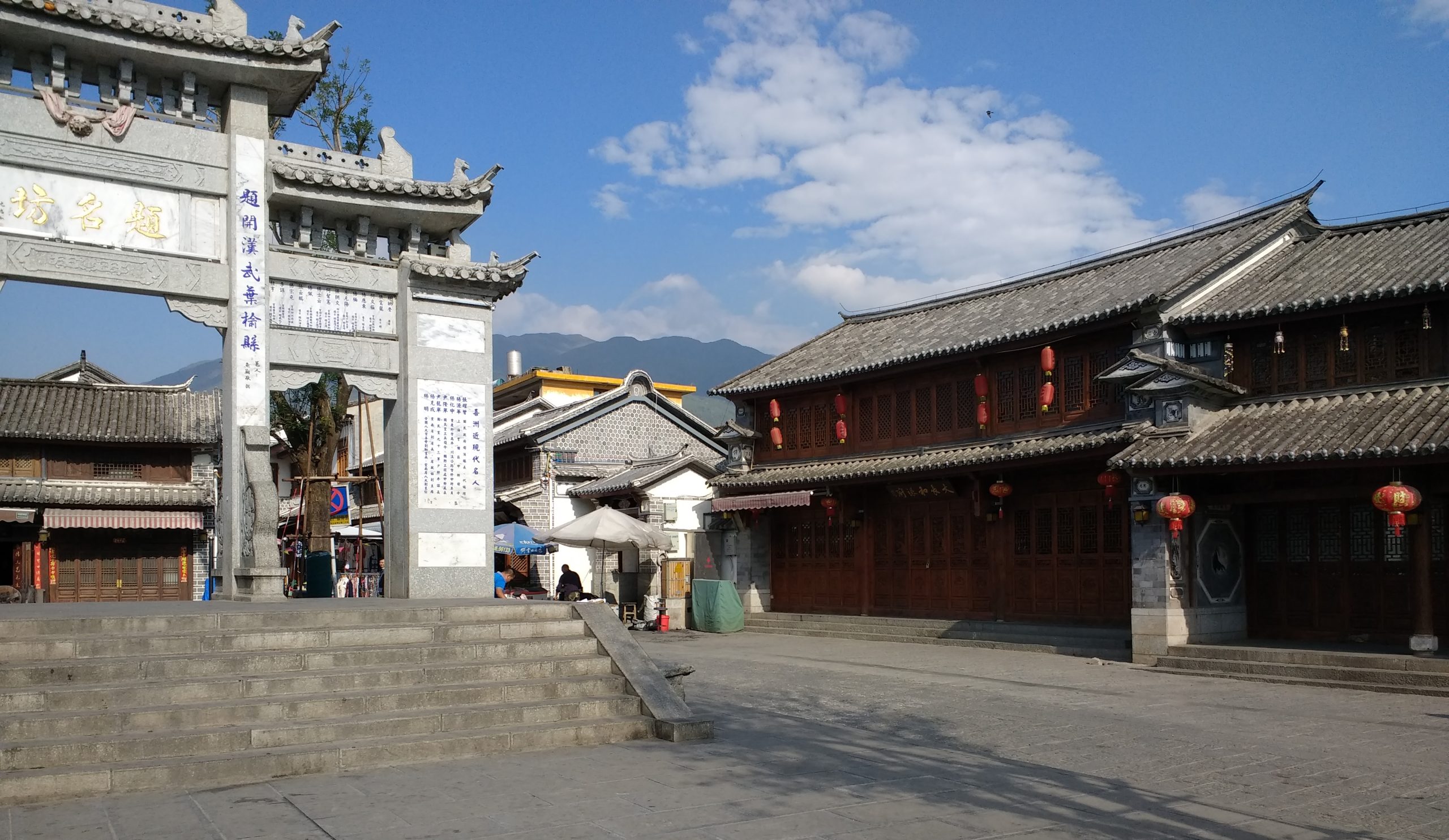
Give a Yunnan village visit a clear purpose: Bai architecture and tie-dye near Dali, Naxi history and murals around Lijiang, or a slower journey to Yuanyang’s Hani terraces and Jingmai’s Blang and Dai tea communities. Choose places on your existing route and leave time to talk and understand what you see.
Choose between a public walk, a hosted workshop and a home invitation before setting out. Each offers different access. Agree the language, activity and meeting point, then ask permission again before a portrait or entry into a private space.
Updated 9 October 2026
Which village area fits your Yunnan trip?
Begin with the region where you will stay. Dali and Lijiang have cultural visits in their surrounding areas, while Yuanyang and Jingmai need more deliberate transport and overnight planning. Each introduces particular communities rather than representing every Yunnan tradition.
| Where to look | Choose it for | Plan around this |
|---|---|---|
| Dali: Xizhou and Zhoucheng | Bai architecture in Xizhou; tie-dye craft in Zhoucheng. | Choose a street walk, a reserved workshop or both. Allow for workshop waiting and finishing time before fixing your return. |
| Lijiang: Baisha | Naxi history and the murals’ wider cultural connections. | Arrange interpretation if art and history matter to you. Ask about access and photography in each gallery. |
| Yuanyang: Hani terrace villages | The relationship between settlements, forest, water and farming. | Allow for the road journey and overnight stays. Ask which public paths suit your mobility and the day’s conditions. |
| Jingmai Mountain: Blang and Dai communities | Forest tea cultivation and a conversation with a willing tea host. | Reserve host time and language support. A tasting, forest walk and harvest activity are different arrangements. |
Baisha is near Lijiang; it is not the Bai village area around Dali. The similar-looking names can confuse trip planning. Baisha’s murals also reflect several cultural traditions, so a guide should explain specific buildings and artworks without reducing the whole place to a single label. Yunnan’s 2026 account of the murals and their digital interpretation provides useful background.
Use our Dali travel guide or Lijiang and Naxi heritage guide to place a village visit within a wider stay. Do not combine places merely because they all appear in the same list of “Yunnan villages”.
Choose the kind of cultural visit you actually want
Tell your planner what you want to understand or take part in: architecture, a craft lesson, tea discussion or a staged performance. A lane, workshop and show serve different interests. Modern shops and everyday clothes are part of a living community too.
| Your interest | A suitable format | Check before committing |
|---|---|---|
| Architecture and everyday surroundings | A walk along public streets, with interpretation if wanted. | Walking distance, steps, toilets and where public access ends. |
| Learning a craft | A reserved workshop with time to practise. | Your own hands-on steps, teaching language, materials and collection time. |
| Art, history or religion | A museum, heritage building or permitted place of worship. | Opening arrangements, available explanation and rules for that room or space. |
| Music or a performance | A ticketed cultural production, such as Impression Lijiang. | What the production presents and how it fits the rest of your day. |
Keep performances, household ceremonies and portrait sessions distinct. A show does not provide entry to a private ceremony. If renting clothing, ask what it represents and what photographs or files the session includes. Keep residential doorways clear, and enjoy the village on its own terms.
Booking a worthwhile tie-dye or tea experience
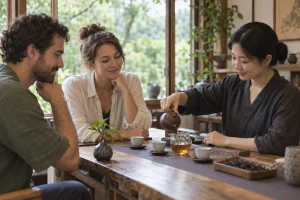
“Tie-dye experience” can mean anything from choosing a ready-folded item to spending time learning how to tie and sew your own pattern. Bai tie-dye involves more than a final blue-and-white photograph: the National Ethnic Affairs Commission’s account of a Zhoucheng craft practitioner describes the making process and its transmission. Ask the host which parts your booking includes.
Send these questions before paying a deposit or arranging a long transfer:
- Who will teach us, and in which language? Request interpretation if you want a cultural explanation. A driver booking does not automatically include a guide or translator.
- What will we do ourselves? For dyeing, distinguish choosing a pattern, stitching or tying, dyeing, rinsing and finishing. For tea, distinguish tasting, processing demonstrations, walking and picking.
- How much time should we keep free? Ask about waiting, the activity itself, drying or collection, and the latest sensible arrival. Avoid scheduling a train immediately afterwards.
- What is the total for our party? Specify the item and material, teaching, translation, transport and any delivery. Check whether children and accompanying adults participate or observe.
- What happens if the host is unavailable? Agree whether you can reschedule, use a named alternative or omit the activity, and how payments are handled.
Popularity alone does not tell you how much individual teaching you will receive. Ask about the number of participants and who will assist your group. A short demonstration may suit a tight schedule; a hands-on lesson needs more room in the day. Neither requires a promise that everyone will finish the same design.
If buying tea or cloth, ask about the particular item’s materials and production. Agree the price directly and make purchases voluntarily. A hospitable welcome is not an obligation to shop. For a tea-focused trip, compare Pu’er city with Jingmai Mountain before choosing your base.
Photography: ask about the person, place and intended use
Start with a greeting and keep the camera lowered while asking. Permission to walk through a village is not permission to enter a home, photograph a child or record a ceremony. Yunnan’s September 2026 travel guidance asks visitors to respect local customs and residents’ wishes when sharing photographs of their lives.
For a portrait, explain whether you want one still photograph or a video and whether you plan to post it online. Ask a parent or guardian before photographing a child, and respect the child’s own reluctance. If someone declines or seems uncomfortable, thank them and move on. A smile, a costume or someone working beside a road is not a clear invitation.
| What you want to ask | Mandarin phrase to show | What to do next |
|---|---|---|
| May I photograph you? | 可以给您拍照吗? | Wait for a clear response before raising the camera. |
| Is photography allowed here? | 这里可以拍照吗? | Ask staff or the host about that specific space. |
| May I share the photo online? | 我可以把照片发到网上吗? | Explain where it will appear. Do not assume portrait permission covers publication. |
| It is fine if you prefer not; thank you. | 不方便也没关系,谢谢。 | Stop asking and leave the person comfortable. |
These phrases help start a conversation; Mandarin is not everyone’s preferred language. Use a guide who can communicate with your host when the answer is unclear.
At Baisha, check each gallery’s instructions before taking out your camera. A photograph of a replica or digital display does not establish permission to photograph an original mural. Ask which spaces allow cameras, leave flash off unless explicitly permitted, and follow staff directions. Keep your visit worthwhile even if photography is unavailable: spend time with the explanation and use only materials the venue expressly permits you to obtain and share.
Ask separately about tripods, commercial shoots and drones. Seeing another visitor fly a drone or step into a doorway does not establish permission for your own visit. Never move tools, touch an artwork or ask someone to repeat their work just to improve a picture.
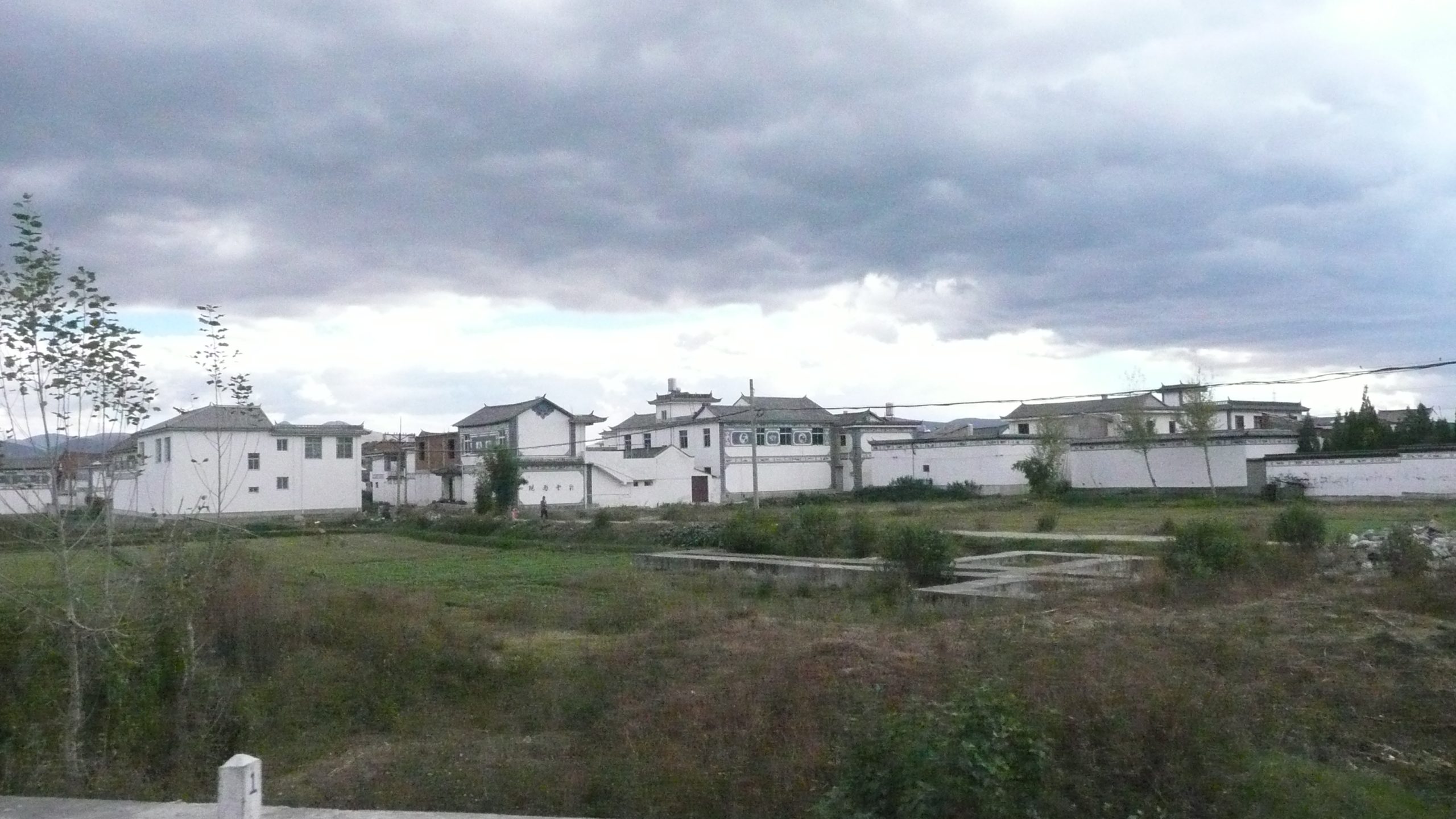
Make the transfer and village walk work for your group
Before departure, save the host’s name, Chinese address, map pin and a photograph of the meeting point. Confirm whether you meet at a car park, a village entrance or the workshop door. Ask who will call whom if you arrive late; a location pin without a reachable contact can leave you at the wrong entrance.
For a return transfer, agree the pickup place and driver’s contact details before leaving the vehicle. Give your planner the number and size of bags and any child-seat requirements. Ask whether luggage can remain securely in the vehicle or be stored at an agreed place; keep passports, money and essential medication with you.
For older travellers, wheelchair users or families with pushchairs, ask about the actual approach: distance from parking, surface, steps, seats and toilets. “Easy village walk” is too vague. A seated craft demonstration or short architectural walk may work better than attempting every lane. Ask for recent photographs of the approach if access is important.
Bring your passport when required for a booked attraction or overnight stay, and check how the venue handles foreign-passport bookings. If an advance activity requires an app payment you cannot complete, ask the host or your planner for an accepted alternative before travelling. Do not assume English support or international-card payment will be available on arrival.
For a Dali day, a workable outline is one Xizhou walk, one reserved Zhoucheng activity, a meal and the return transfer. Set the order around the host’s appointment and your hotel location. Drop a stop if the workshop runs longer; avoid adding a distant lake circuit simply to fill the itinerary.
Working landscapes, meals and household boundaries
At Yuanyang, the terraces are part of a connected system of forests, villages, water and farming, as described in the 2026 account of the Hani terrace landscape. View the fields from permitted paths and viewpoints. Keep out of crops and irrigation channels, leave narrow routes available for residents and ask before crossing a working plot.

At Jingmai, the tea landscape’s heritage account connects forest tea cultivation with Blang and Dai communities. A forest visit does not include permission to pick leaves or enter a household. Ask your tea host what is possible on your date and accept a tasting or explanation when seasonal work is unavailable.
Agree any home meal in advance, including who is cooking and what you can eat. For Muslim travellers, distinguish a nearby halal restaurant from a host’s ability to prepare an appropriate meal; discuss ingredients, preparation and your own requirements explicitly. Vegetarian requests and allergies also need clear communication. Plan a suitable restaurant or packed meal if the household cannot meet your needs.
If you need time and a suitable place for prayer, raise this while arranging the day. Ask about an appropriate space and washing facilities; do not assume a private room or religious building is available. Our Yunnan food, markets and tea guide helps with the wider meal plan.
When a visit does not go to plan
Keep one optional part of the day, so a cancelled appointment or difficult walk does not force a poor alternative.
| Problem | A useful alternative | Confirm first |
|---|---|---|
| The host cannot receive you | Reschedule, shorten the day or use an agreed public heritage stop. | Do not replace the appointment with an uninvited visit to another home. |
| Rain makes paths uncomfortable | Choose an indoor explanation or seated workshop if available. | Access from the vehicle, indoor capacity and whether the host can accommodate the change. |
| The workshop is crowded | Take a later slot or choose a shorter demonstration. | Who will teach you, waiting time and the effect on your return journey. |
| A festival or ceremony changes access | Ask which public areas welcome visitors and give participants space. | Current local arrangements; a festival date does not guarantee visitor participation. |
| Steps or distance are too demanding | Use an accessible meeting place and reduce the walk. | The real approach and facilities, rather than a generic difficulty label. |
Choose a route with time for the visit
The three-day Yuanyang route from Kunming has road-heavy first and last days and a full middle day around the terraces. Ask how a village visit fits alongside viewpoints, and consider extra time if your group wants a gentler pace. Weather cannot guarantee a sunrise scene.
The three-day Jingmai Mountain route uses Jinghong as its entry and exit, with two mountain nights. Discuss the host appointment and language support when requesting the itinerary. It is a different journey from a short outing based in Pu’er city.
For Dali, Lijiang or a wider journey, ask Verotrip about a private Yunnan itinerary. Send your dates, hotel or arrival point, party size, children’s ages, luggage and walking needs, preferred language, dietary requirements and the experience you care about most. This gives the planner a basis to check host availability and propose transport, interpretation and an itemised quotation for your particular day.
The two related tour cards below use travel illustrations.
Frequently asked questions
How should I arrange arrival, transport and the return?
For a return transfer, agree the pickup place and driver’s contact details before leaving the vehicle. Give your planner the number and size of bags and any child-seat requirements. Ask whether luggage can remain securely in the vehicle or be stored at an agreed place; keep passports, money and essential medication with you.
What should I know about walking, luggage and access?
For older travellers, wheelchair users or families with pushchairs, ask about the actual approach : distance from parking, surface, steps, seats and toilets. “Easy village walk” is too vague. A seated craft demonstration or short architectural walk may work better than attempting every lane.
How should I plan meals and dietary requirements?
For Muslim travellers, distinguish a nearby halal restaurant from a host’s ability to prepare an appropriate meal; discuss ingredients, preparation and your own requirements explicitly. Vegetarian requests and allergies also need clear communication. Plan a suitable restaurant or packed meal if the household cannot meet your needs.