Plan Tiantai Mountain as a choice of managed forest-walking sections, with the return transport settled first. A comfortable visit does not have to connect every level of the park. Choose one priority walking block, use the current sightseeing-vehicle arrangements where appropriate, and leave enough time to get back to your hotel or Chengdu.
This guide concerns Chengdu Tiantai Mountain in Qionglai, Sichuan — 成都邛崃天台山. Save that full name with the visitor centre in your plan; “Tiantai Mountain” on its own can lead to a different destination. An overnight near the park can give you more usable walking time than adding a long day-return journey around a crowded sightseeing list.
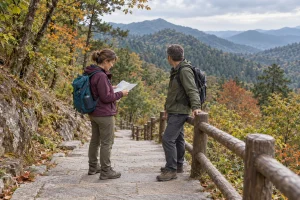
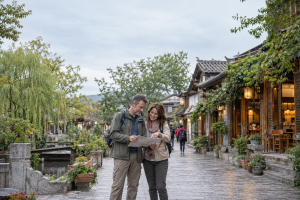
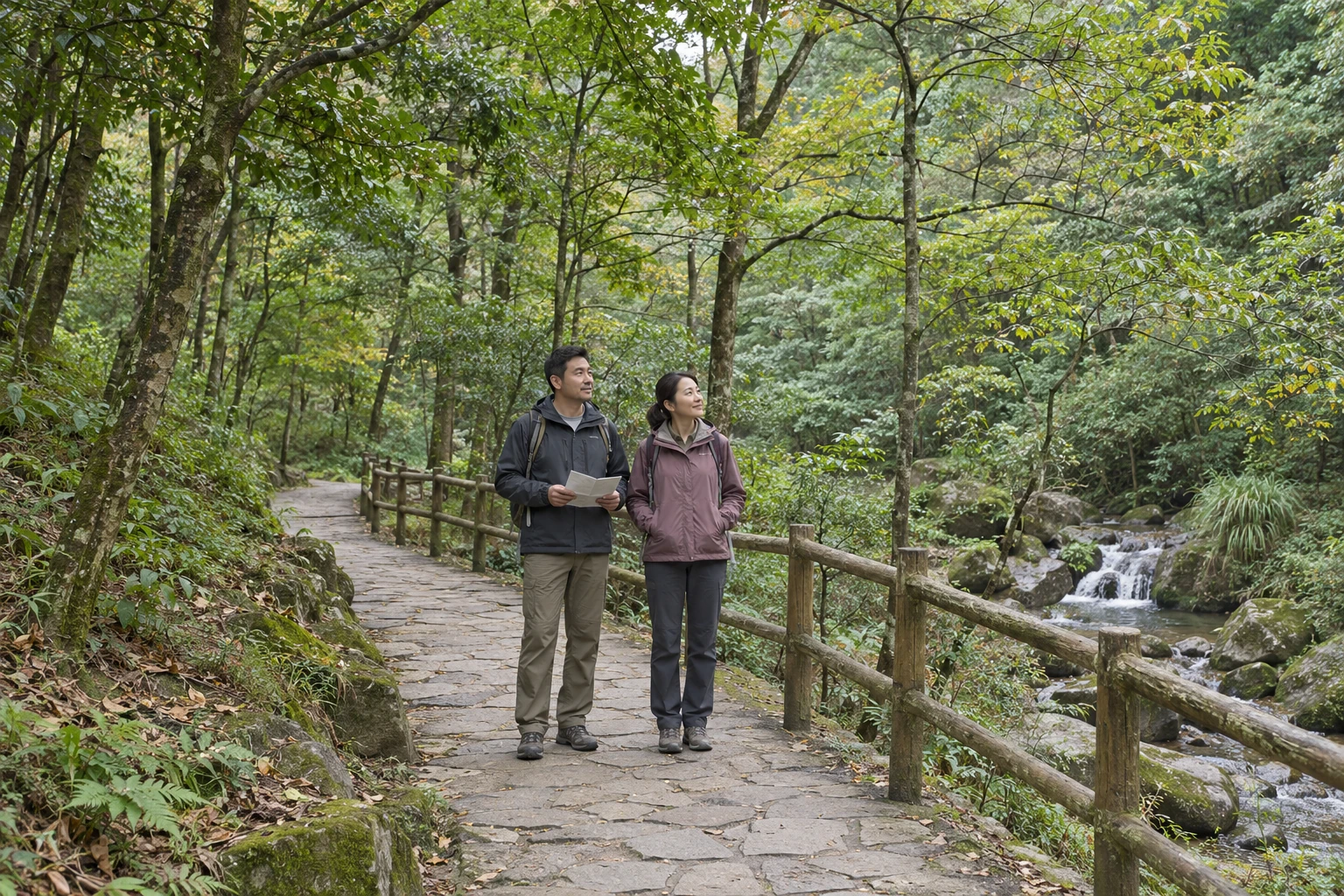
Lead image: AI-generated travel illustration of two fictional adult travellers on a generic maintained forest path. It is not a photograph or reconstruction of a precise Tiantai trail, current conditions, real customers or a Vero Trip departure.
Choose the walking level before building the day
The Ministry of Culture and Tourism’s scenic-area entry places the park in southwestern Qionglai and describes three rising terraces, forest, streams and waterfalls. That helps explain the visit: this is a landscape with separate areas and travel between them, rather than one flat loop beginning at the visitor centre.
A September 2024 account supplied by the local publicity department, with scenic-management material, names Yi Tiantai, Er Tiantai and Zheng Tiantai as the three-level visiting system. Use those names to read the current map and ask where your chosen walk starts and finishes. A named level is an orientation, not proof that every path or exhibition there is open.
| Your interest | A useful planning choice | Keep the visit comfortable |
|---|---|---|
| A first forest-and-water introduction | Choose one currently open lower-area walking section around Yi Tiantai, with a clear return or pickup point. | Protect time to pause by the scenery without blocking a narrow path; do not add all upper levels automatically. |
| Forest interpretation and slower observation | Ask for a public nature-learning section and the relevant signs or displays on the current route. | Take short walking blocks and seated breaks; a learning trail is worthwhile without a long climb. |
| A fuller day using more than one level | Choose one main walk, then add an Er Tiantai or Zheng Tiantai block only if transport and daylight allow. | Confirm the link and final return first. Do not turn a road transfer into an assumed continuous footpath. |
A simple sequence for the main walking day
Begin at the agreed visitor centre or hotel meeting point, check the current map and settle the return before entering the walking section. Know which part will be on foot, which part uses a scenic vehicle and where the party meets again. Save the names in Chinese, especially when two stops sound similar in translation.
Use the first walking block for your main reason for coming: forest, flowing water or interpretation. Stop before fatigue makes the return uncomfortable, and take a proper lunch or seated rest. Treat another level as an optional afternoon addition. There is little benefit in reaching a second entrance too late to enjoy the area or to make the final vehicle.
A family can choose one stream or forest question for the walk, such as how the water changes between pools and cascades, or how shade differs along the path. A photographer can agree a short stop and a leaving time before unpacking equipment. Both approaches give the day a focus without requiring every viewpoint.
Keep to the authorised public route. Stay behind barriers at water and slopes, and do not step into a stream, cross a closed bridge or take an informal forest shortcut for a photograph. A summer image of a water activity does not establish a permitted activity in colder weather.
Use sightseeing vehicles as links, not a substitute for planning
A 27 September 2026 on-site report in Chengdu Daily quotes the scenic-area management bureau on visitor transport and parking controls. It describes ordinary, supporting and emergency vehicle capacity and encourages hotel guests to park properly and use sightseeing vehicles or walking. Those holiday arrangements do not guarantee a November timetable or unrestricted driving between every stop.
Before leaving the visitor centre, identify the boarding point, the ticket or fare arrangement, the final returning service and what happens if a path closes. Ask whether your chosen walk returns to the same stop or finishes elsewhere. A vehicle ticket should match the route actually proposed, including the last stage back to stored luggage or the hotel.
If arriving by car, establish where it may be parked on the date and whether the named hotel needs an arrival or parking arrangement. Do not assume a room booking permits driving along every scenic road. A driver waiting outside the park and an internal sightseeing vehicle are different services.
Choose the overnight base and count the real days
Decide whether you want to return to Chengdu, stay in the wider Qionglai area or use a named property near the selected park route. Compare the actual hotel pin and entrance arrangement, rather than treating the town name, visitor centre and walking start as one place. Ask when you can check in and where the main bags stay during a walk.
| Pattern | What the time can support | The connection to protect |
|---|---|---|
| Chengdu day return | One priority walking section, lunch and the complete road journey in both directions. | Set a firm leaving time; a late start is a reason to shorten the visit. |
| Two days, one night | Arrive, settle in and use the remaining daylight for a modest walk; give the next main block to the selected area before departure. | One night does not produce two complete days when both travel stages are substantial. |
| Three days, two nights | Keep the same base; use the single complete middle day for a measured visit with breaks. | Use arrival and departure days for travel and optional short outings, rather than promising three full walking days. |
For the one-night version, a late arrival should mean dinner and rest. The next morning’s walk can still be worthwhile. Do not recover an ambitious schedule by entering an unfamiliar path after dark or assuming that a night attraction will be operating.
Have foreign-passport registration, room heating, stairs or lifts, meals and luggage storage confirmed with the named property. For a mobility aid, ask about the full hotel-to-vehicle-to-path sequence, including boarding and uneven surfaces. A scenic-area hotel is not automatically beside the route you selected or accessible without steps.
Make passport and language arrangements specific
The 2024 management-supplied account describes foreign-language maps and payment facilities for overseas visitors. It provides international-visitor context, not a current promise that every card works or a complete passport-booking procedure. Check the official arrangement for the travel date, including the document type, name format, reservation or collection point and original document needed at entry.
Carry the document used for the booking and keep it accessible. Do not invent a Chinese identity number if a booking form does not accept your passport. Ask for the correct official channel or a confirmed alternative procedure. A route enquiry does not reserve an admission or establish a concession.
Distinguish translated signs, a live English-speaking guide, a device and help at a ticket window. They offer different levels of support. If explanation is central to the trip, have the actual language service and the area it covers stated in the proposal; do not infer it from a photograph or an English tour title.
Weather, steps and an easy way to shorten the walk
The September report describes inspections around steep slopes, water, bridges and railings. Those features are a useful reminder to ask about the actual route rather than accepting a universal “easy walk” label. Discuss the longest comfortable walking block, steps, places to sit, toilets and the shortest authorised return.
Take shoes with grip, a rain layer and a warm spare layer in the day bag. Keep meals, drinking water and personal essentials accessible while the large case stays at confirmed storage. A damp or cold day may call for one shorter section and an earlier hotel return. If staff close the priority path, revise the visit rather than seeking a different way around the closure.
For a fixed onward train or flight, consider a final night in the departure city. First return from the mountain area, collect luggage and settle in; make the transport connection the next day. A scenic detour should not decide whether you reach an important departure.
Plan a worthwhile day without a firefly guarantee
Tiantai is associated with fireflies, and the 2024 account describes seasonal observation and interpretation. A dated summer report is not a forecast for a November evening. Choose the trip because the daytime forest and water appeal to you, then add a night programme only after its current location, availability and return arrangements are confirmed.
An interpretive display and a wild outdoor observation are different experiences. Ask which is being proposed. Do not promise a density of lights, a particular photograph or a sighting for every visitor. Follow current restrictions on lighting and visitor movement, and avoid disturbing wildlife.
Separate the services in the quotation
| Item | What the written plan should name | Why it matters |
|---|---|---|
| Admission and internal transport | The travel date, public visitor area and each vehicle direction or fare arrangement. | An entrance ticket does not settle every ride, parking or hotel access condition. |
| Intercity and local transfers | Starting hotel or station, passenger and bag capacity, waiting, final pickup and complete return. | A ride to the visitor centre is one stage, not the whole excursion. |
| Rooms, meals and interpretation | The actual property and room nights, meals, guide language and any separate evening activity. | A suggested walking sequence does not reserve a hotel, guide or night programme. |
Price on request. Transport, admission processing, internal rides, meals, accommodation, language support and insurance apply only when itemised in the written proposal. Ask how the plan and costs change if weather shortens the walk or the chosen visitor area closes.
Questions before you choose
Can Tiantai work as a day trip from Chengdu?
It can be considered as a focused day-return plan when the complete travel window supports one priority area and a reliable return. Choose an overnight when you want a slower start, more walking flexibility or an optional evening that would otherwise make the return late.
Must we walk all three levels?
No. Use the level names to understand the map, then choose the public section that suits the party. A main walk with time to observe, eat and return comfortably can be a fuller experience than a rushed sequence of boarding points.
Should we add another town on the same day?
Only after checking the complete journeys and the walking priority. A nearby name on a map does not make another attraction a free extra. Keep another town as a separate travel block or replace part of the mountain visit explicitly.
Send Vero Trip your dates, starting hotel, return connection, party size and walking needs. Say whether forest observation, water scenery or a slower overnight matters most. The Sichuan hiking planner helps compare managed scenic walks with more demanding trips; the Sichuan trip guide places the stop in a wider journey. Use the Chengdu planner to decide which city day and final hotel night the outing will use.
Reviewed 3 November 2026. Walking emphases and overnight patterns are Vero Trip planning advice. Source dates are identified; current entry, route availability, vehicle operation and services need confirmation for the travel date.