For a Tacheng snub-nosed monkey visit, arrange the official viewing programme first, then fit your accommodation and road journey around its confirmed meeting time. A nearby overnight is a useful starting point for a wildlife-focused trip. Avoid treating the visit as a quick stop between a long drive and a fixed onward connection.
The destination is Tacheng, 塔城, in Weixi county, 维西, northwestern Yunnan. Listings may call the experience “Yunnan Golden Monkey National Park” or refer to the Xiangguqing area, 响古箐; English spellings vary. Keep the Chinese place names and the actual entrance pin together when discussing transport.
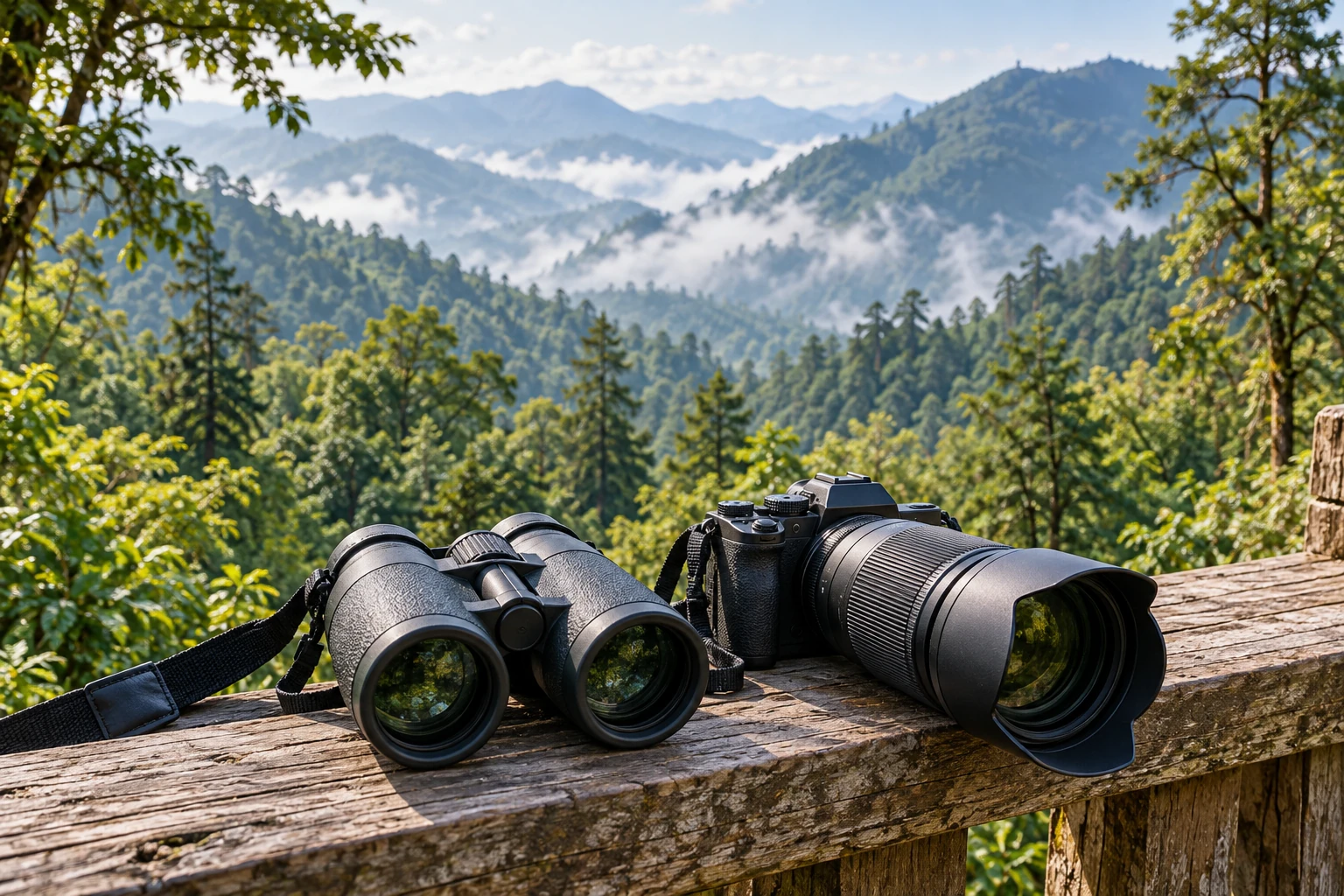
Updated 29 October 2026. The featured image is an original illustration of wildlife-watching equipment in an imagined forest. It does not show a real Tacheng platform, an included activity or an animal sighting.
Why visit Tacheng for these monkeys?
The Yunnan snub-nosed monkey is also called the black snub-nosed monkey. The Yunnan forestry department’s account of its conservation places its range in the Yunling mountains between the Jinsha and Lancang rivers. It is a particular conservation story, rather than an interchangeable monkey attraction anywhere in China.
Weixi’s 2026 tourism presentation identifies the Tacheng viewing destination. The attraction’s value is the chance to observe animals within an organised nature visit and learn about their habitat. Keep the experience observational: a close-up photograph, a particular group or a long viewing period cannot be treated as an included result.
This suits travellers who are willing to wait quietly, follow the permitted route and give the visit enough time. If your priority is a guaranteed photograph or you cannot accept changes, a wildlife-led detour may be a poor fit. Discuss that before committing to remote accommodation and road transfers.
Confirm the current visitor arrangements before making the detour
A 16 October 2026 government report discusses reconstruction and improvements at the monkey scenic area. It describes work and development priorities, rather than a daily timetable. For your trip, obtain the current visitor notice and a date-specific answer about the entrance, available programme and walking route.
Use the full destination name when checking. A hotel being bookable, or an experience remaining on a website, does not by itself establish the visitor arrangement for your date. In particular, a “national park” label is not permission to explore the surrounding protected forest independently.
| Question to settle | Ask for this detail | Why it changes the trip |
|---|---|---|
| Is the visit available on my date? | The current official visitor arrangement, meeting time and booking channel. | Choose the road journey and overnight only after the visit fits. |
| What does the booking cover? | Admission, any local transfer, guiding, language and the permitted viewing area. | A vehicle quote and a viewing ticket may cover different services. |
| What is the actual walking? | Start and finish, surface, steps, expected duration and waiting places. | A short description or a photograph cannot establish suitability. |
| How is my passport handled? | Accepted document, booking procedure and what original to carry. | Resolve any advance assistance before travelling to the entrance. |
| What if the programme changes? | Rebooking or cancellation terms and the agreed alternative. | Avoid a chain of non-refundable bookings built around one uncertain activity. |
Do not use an old feeding-time reference as a current visitor appointment. If your booking has an early meeting, stay close enough to reach it without a rushed mountain drive. If no suitable visit can be arranged, change the route before departure rather than seeking an informal way into the forest.
One night or two? Build a simple road-and-forest rhythm
A one-night stay can work when the arrival journey is comfortable and the confirmed viewing visit fits the next day. Two nights give you a full day without checking out first and can suit families or travellers who want a slower valley stay. Extra time improves flexibility; it does not guarantee sightings or access on another day.
| Stage | A practical sequence | Keep this flexible |
|---|---|---|
| Arrival day | Reach the confirmed Tacheng-area accommodation, eat and discuss the following visit. | Leave the last part of the day for road delays and settling in. |
| Before the viewing visit | Use the agreed breakfast and pickup plan; carry only the bag you need. | Follow the booked meeting time, not a timetable copied from a blog. |
| Viewing period | Stay with the approved visitor route and listen to the site staff. | Animal movement, weather and management instructions determine the experience. |
| After the visit | Return for a meal or rest, then continue only if the road plan remains realistic. | Use a second night if the next stage would otherwise feel rushed. |
A day trip from a more distant base needs a complete hotel-to-hotel calculation, including approach roads, the entrance process, walking, waiting and the return. Ask the transport provider to show that sequence. A drive estimate to “Tacheng” is not an estimate to the correct viewing meeting point.
Getting there: use the exact local base and entrance
Compare arriving from Lijiang, Shangri-La or another stop on your own route, using the actual hotel addresses. These are different road journeys; do not assume that being in the Shangri-La region means the site is beside Shangri-La city. The Yunnan route map helps distinguish a regional arrival from the final local transfer.
For a road arrangement, specify passengers, luggage, pickup, the visitor entrance, waiting or return pickup, and your finish point. Agree who communicates a changed meeting time. Ask about current road conditions shortly before departure and leave a daylight arrival margin rather than relying on the shortest map estimate.
If you plan to use public transport for part of the journey, check the actual service and the final leg together. A bus to a county town does not establish a connection to the viewing entrance. For a time-dependent visit, the last local segment should be clear before you buy the regional ticket.
Choose accommodation for the visit you have booked
Start with distance and access to the agreed pickup point, then compare room comfort. Ask about heating or warm bedding for the expected conditions, bathrooms, steps, meal times and where the vehicle can stop. A scenic village address is not a complete luggage or accessibility plan.
Songtsam’s published monkey-viewing experience associates Xianggujing forest with its Tacheng lodge. It is a useful first-party reference for identifying the experience. It does not establish a reserved room, current availability, an English-speaking guide or a service included in a Vero Trip proposal.
Whichever property you choose, confirm registration for your passport and booking and the exact room arrangement. Request breakfast or a packed option if the confirmed meeting time requires it. State food allergies, vegetarian or halal needs before arrival; a countryside setting does not guarantee a suitable kitchen or meal.
Walking, weather and equipment: ask about the whole outing
The effort includes reaching the viewing area, standing or waiting, and returning—not only the minutes spent looking at monkeys. For children or older relatives, ask about the shortest permitted version, rest opportunities and how an early return works. Do not assume wheelchair or stroller suitability from the words “wildlife park.”
| Your need | Discuss before booking | Prepare for the day |
|---|---|---|
| Shorter walks or less standing | Surface, steps, distance, seating and a permitted early-return option. | Comfortable footwear and a pace your group can sustain. |
| Children | Age suitability, keeping the party together and the return plan. | Explain quiet watching and keeping food packed away. |
| Photography | Where equipment is permitted and any restrictions on flash or tripods. | A zoom lens or binoculars, spare power and a weather cover. |
| Wet or colder conditions | The operating decision, path conditions and cancellation terms. | Layers and rain protection suited to the local forecast. |
Keep the equipment modest enough to carry safely. Binoculars let you watch without moving closer, and a zoom lens can be more useful than extra gear that makes walking awkward. You can still enjoy the visit without a specialist camera.
Pack the water and personal essentials appropriate to the confirmed duration, within the site’s rules. Keep snacks contained and use the eating places specified by staff. Take rubbish away; do not leave fruit skins or food scraps in the forest.
Watch without feeding, touching or pursuing
The Yunnan forestry department’s 2026 message to visitors asks people not to enter unopened protected or primary-forest areas, and not to feed or touch terrestrial wildlife. It also calls for keeping a safe distance. Apply those principles throughout the visit, alongside the local staff’s instructions.
Remain in the designated visitor space even when an animal moves out of sight. Do not follow into the trees, call or play sounds to attract attention, or offer food for a photograph. Staff or conservation work is not an invitation for visitors to imitate it.
For photography, allow others to see, keep the path clear and follow the site’s rules on flash and equipment. Leave drones packed unless the relevant authorities and site management have expressly permitted their use. An aerial photograph online is not visitor flight permission.
If the visit changes, keep the alternative worthwhile
Choose accommodation and a valley stay you can enjoy without making one animal encounter responsible for the whole journey. Discuss an appropriate local village walk or another open visitor activity with your host, with access and timing agreed. Follow our village-visiting and photography advice around homes and working land.
Our Nanjiluo and Meili three-day guide follows a different valley-and-mountain itinerary that passes through Tacheng. Passing the town does not provide a monkey-viewing slot. Add time or change an overnight if you want both experiences; do not insert a full wildlife visit into that route’s already substantial first road day.
Questions about a first Tacheng monkey visit
Is a sighting guaranteed?
No particular animal position, behaviour, group or photograph is promised here. Ask what the organised visitor programme involves and what happens if the experience changes before accepting a quotation.
Can I go independently into the forest?
Use only the official visitor arrangement and permitted route. A forest road, lodge booking or regional tour does not establish access beyond the area opened to visitors.
Is Tacheng a quick add-on to Shangri-La?
Compare the actual road journey and the booked viewing time. A nearby overnight may make the experience more comfortable. Keep a distant departure flight or train separate from a wildlife visit whose duration can vary.
Discuss a Tacheng visit with Vero Trip
Send your Tacheng interests and travel dates, arrival and finish points, group size, available nights, walking comfort, preferred language and meal requirements. Include whether you mainly want observation, photography or a slower village-and-nature stay.
Request the dated visitor arrangement, accommodation, transport, guiding or interpretation, admissions and change terms in writing. Price is on request for a feasible proposal; only the expressly agreed service list establishes what is included. Do not book a tight onward connection until that sequence works.
The featured binoculars and camera scene is an original preparation illustration. It is not a photograph of a Tacheng viewing facility, equipment supplied to guests or a guaranteed wildlife encounter.
Plan This Visit as Part of Your Journey
This guide introduces a possible visit rather than a confirmed package departure. Share your dates, starting point and the experience you want through Plan My Trip. Vero Trip can check access, travel time, language support and the services to include before quoting.
For the wider area, explore Shangri-La, Yunnan and confirm the separate transfer needed for this visit.
Explore related travel themes for other ways to shape the journey.