For your first Mount Huashan hike, choose the walking route before buying the cable-car combination. A selected West Peak walk with the West cableway in both directions is the most flexible way to keep the outing shorter. West up and North down covers more of the mountain, but adds a long stepped descent. North up and West down adds a substantial climb. Both cableways reduce the approach; neither removes the mountain walking.
Huashan, also called Mount Hua (华山), is in Huayin, Shaanxi, east of Xi’an. It is different from Huangshan in Anhui and Jiuhuashan. Plan a dedicated mountain day with time for admission, the scenic shuttle, both cable-car queues and your onward transfer. The diagrams below show named route connections, not distances or navigation; current signs, open paths and staff instructions determine the walking direction.
Choose by stairs and return route, not the five-peak checklist
Decide whether your priority is selected mountain views, a longer traverse or a sustained climb. “West up, North down” describes transport endpoints; it does not mean an easy downhill stroll. A four-peak West-return circuit can also be tiring, so shortening the walking selection matters as much as choosing the cableway.
| Choose this plan | What you gain | What walking remains |
|---|---|---|
| Selected West walk, West return | A flexible upper-mountain visit with the same cableway exit. | Steps to viewpoints; optional South Peak, then the walk back. |
| West up, North down | A longer connection through the upper peaks toward North Peak. | Repeated steps and a substantial descent before the North cableway. |
| North up, West down | A climbing approach to the upper peaks and a different exit. | A substantial ascent from the North area, followed by upper-peak walking. |
| North local visit, North return | A selected visit near North Peak without the upper-peak traverse. | Local steps and viewpoint paths; the high peaks are outside this plan. |
| Yuquan Yuan foot ascent | A much longer developed-path climb from the mountain’s foot. | The climb to North Peak before any upper-peak extension or descent. |
For a party with different walking abilities, agree on the shortest shared plan first. An optional extra peak is useful only when the whole group can manage it and still return comfortably. Do not split into fast and slow groups without a clear meeting point, reachable contact and a return arrangement.
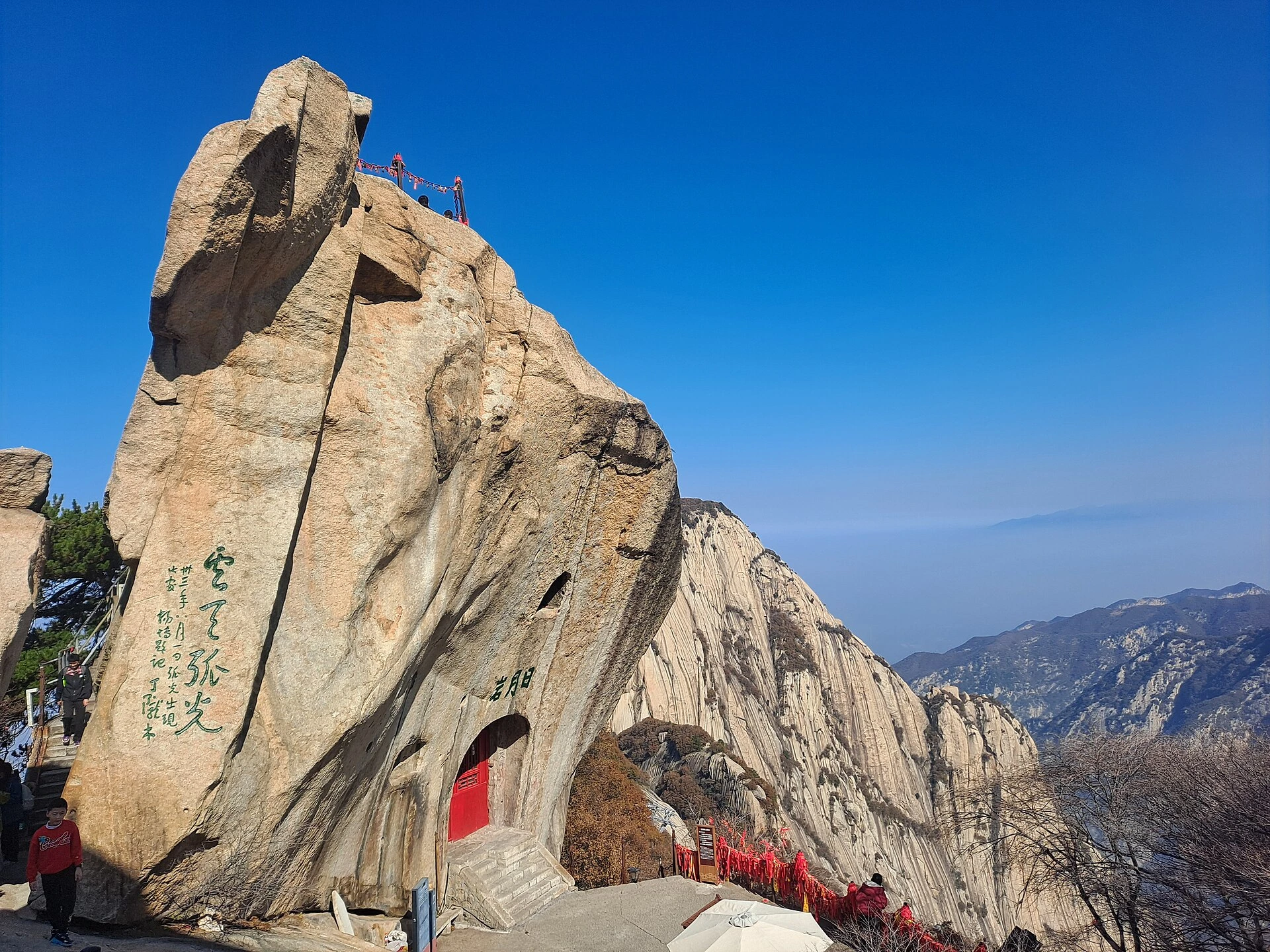
The visitor centre, shuttle and cableway are separate stages
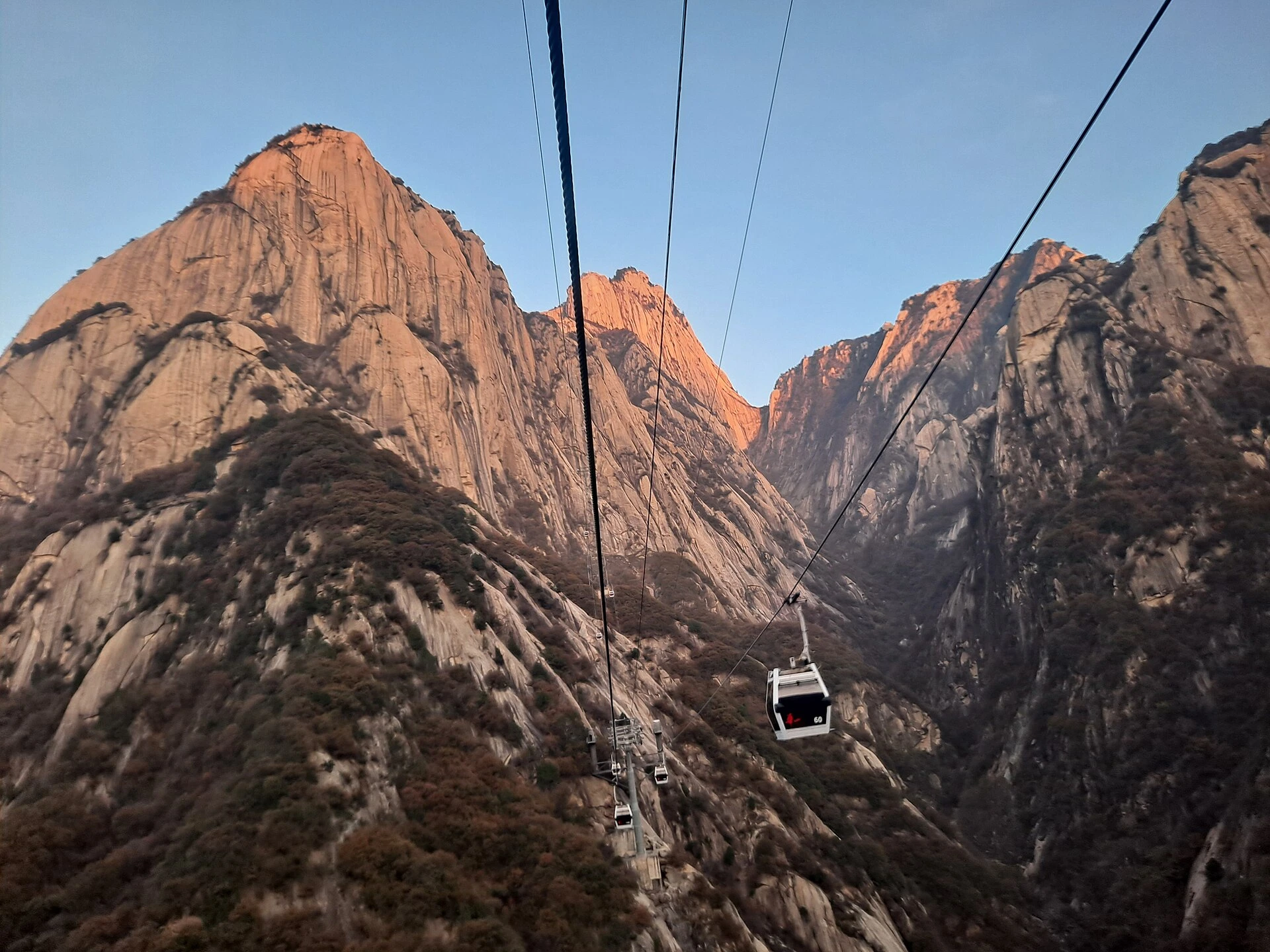
The cableways have different valley approaches. The West cableway operator’s published route comparison places the West lower station in Wengyu and its upper station below West Peak; the North cableway connects Huangfuyu with the North Peak area. A hired road vehicle to the visitor centre does not take you onto the peaks.
Write the complete outbound and return chain on your booking. The West-to-North combination returns by the North shuttle; the reverse combination returns by the West shuttle. If someone is collecting you, agree on the visitor-centre meeting point instead of describing it simply as “the cable-car exit.”
| Part of the day | Where it fits | What to confirm |
|---|---|---|
| City or rail-station transfer | Your hotel or station to the agreed park meeting point. | Exact station, pickup point, luggage and return contact. |
| Admission and reservation | Entry for the chosen date, time slot and approach. | Correct traveller details and the cableway or foot-entry route. |
| Scenic shuttle | Visitor centre to the chosen cableway’s lower station. | Correct West or North direction and the return shuttle. |
| Cableway tickets | Lower station to upper station, and the chosen descent. | Both directions or different cableways; date, availability and closing instructions. |
| Mountain walking | Upper stations, selected viewpoints and the exit station. | Open signed route, remaining steps and an earlier return decision. |
Compare packages by these components rather than their headline price. A cheap city coach, a single cableway ride and a complete mountain booking solve different parts of the day. Ask for an itemised total and cancellation conditions, including what happens if one cableway stops. A discount on admission does not establish a discount on the shuttle or cableways.
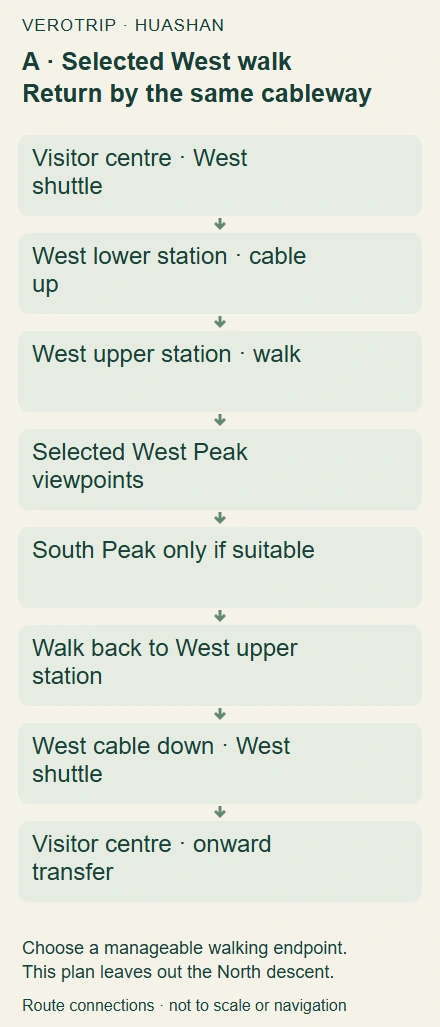
Route A: a selected West Peak walk with West return
From the visitor centre, take the West-bound scenic shuttle and West cableway, then follow the open visitor path to selected West Peak (西峰) viewpoints. Choose the amount of ridge and viewpoint walking you actually want. Return to the same upper cableway station, ride down and use the West shuttle back to the visitor centre.
South Peak (南峰) can be an extension if the steps, weather and remaining time suit your group. Assess that choice after the initial walk. Do not quietly turn a shorter West visit into a four-peak circuit through South, East and Central peaks because a map labels it “easy.” Each extension adds walking and still requires a return to West.
This is a useful starting choice when you want to avoid committing to the long North descent. It is not a step-free plan or a promise that a visitor with knee pain can complete it. Test how the first section feels, ask staff about the next section and choose an earlier return before fatigue becomes the deciding factor.
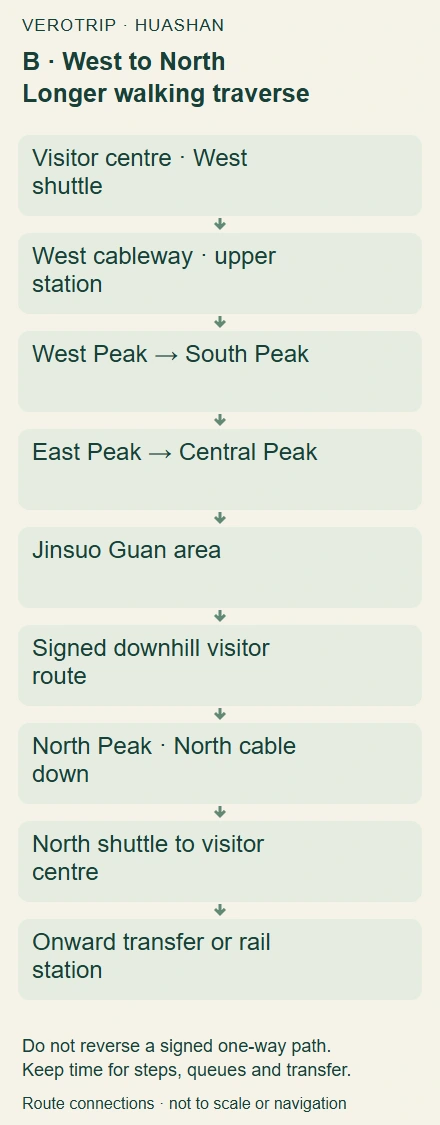
Route B: West up and North down
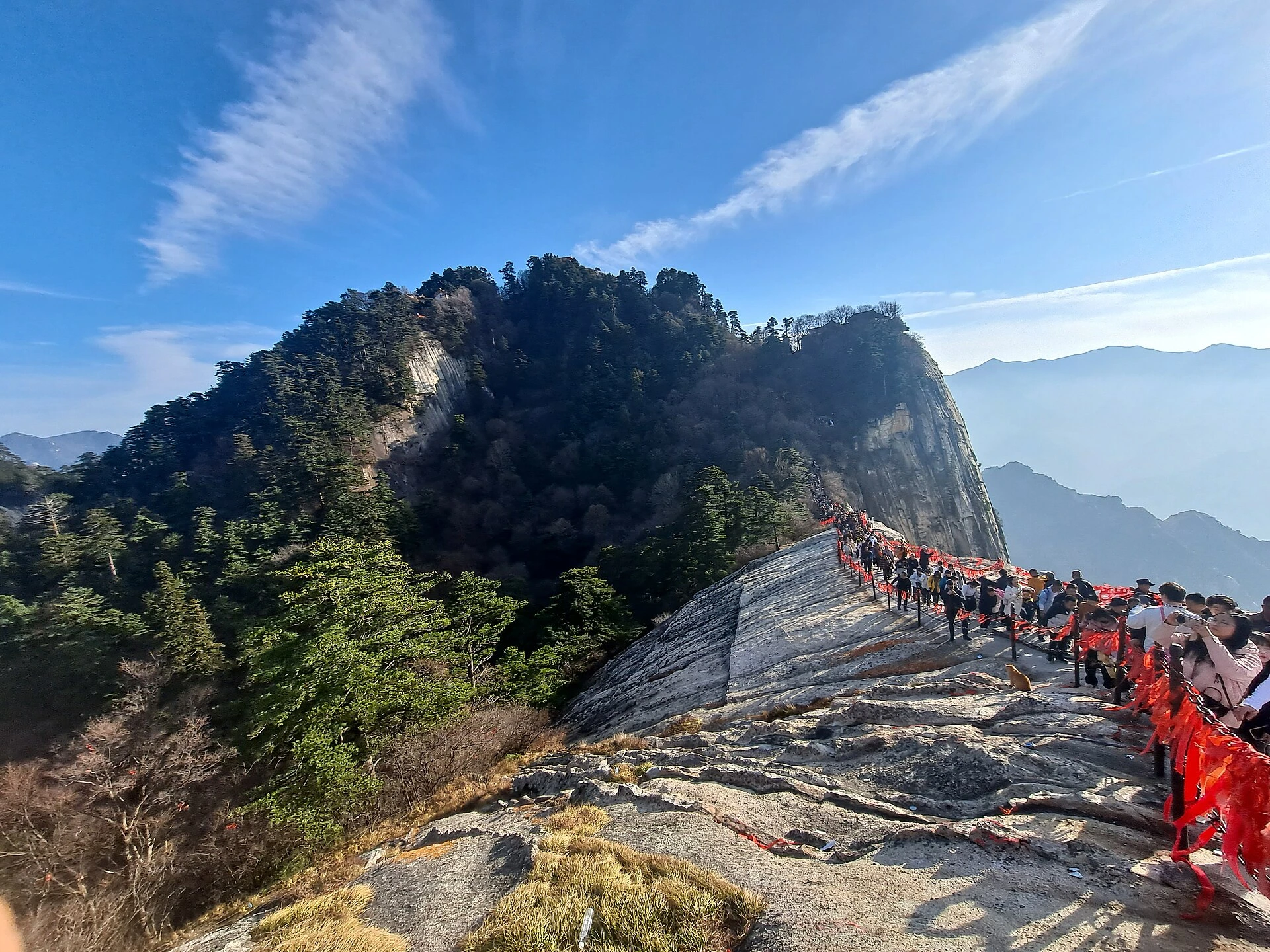
Use the West approach, then plan the upper-peak walking sequence around West, South, East (东峰) and Central (中峰), before the Jinsuo Guan (金锁关) area and the signed descent toward North Peak (北峰). Exit by the North cableway and its shuttle. The exact open path and direction take priority over a social-media route line.
This option suits visitors who actively want the longer connection and can manage repeated steps. Leave time for North Peak instead of treating the last section as a quick walk to transport. The cableway cannot collect you midway through the descent. Before leaving the upper-peak area, ask about the remaining route, queue and cutoff, and decide whether continuing is realistic.
Canglong Ridge (苍龙岭) is often shown in photographs of the North approach. Do not assume the descent follows the same narrow ridge in reverse. Use the designated downhill visitor route and any diversion indicated that day. Do not add a second climb purely to reproduce a photograph when it would consume your return margin.
Route C: start from North, then choose local return or a climb
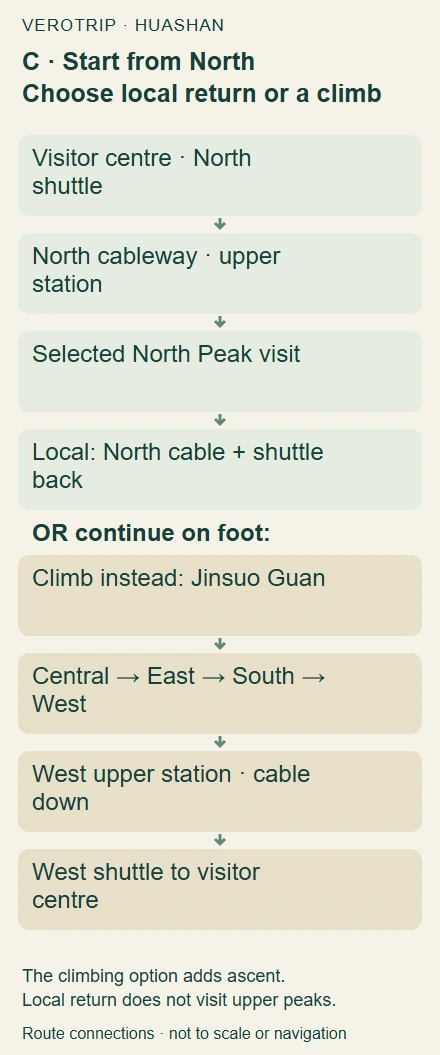
The North shuttle and cableway can support a selected North Peak visit followed by the same transport back. This is a distinct plan: it does not include the upper peaks. Ask where the viewpoint paths go and choose a manageable local turnaround, rather than following the stream of walkers automatically toward the upper mountain.
For a climbing day, continue by the open signed North approach toward Jinsuo Guan and the upper-peak area. An extended sequence can visit Central, East, South and West before taking the West cableway down. This swaps much of the long North descent for an uphill approach, but it is still strenuous. Choosing it solely to “protect knees” does not establish that the climb is suitable for your health or mobility.
A full ascent from Yuquan Yuan (玉泉院) and Huashan Gate (华山门) is a separate undertaking, starting below the cableway-served North area. It is not a simple replacement when a cableway reservation is unavailable. Confirm the foot-entry booking, current access, developed route, equipment and descent plan first. Night climbing adds darkness and sleep loss; a sunrise photograph is not sufficient reason to make it your first mountain outing.
Xi’an day trip or a night at the mountain’s foot?
A day trip works best when you can start early and leave the mountain plan adjustable. In China Railway’s booking service, check Xi’an North (西安北) and Huashan North (华山北) for your date. Huashan railway station (华山站) is a different station. Keep the Chinese names and the booked train number with your transfer arrangements; neither arrival is a mountain entrance.
A high-speed train journey is only one part of the outing. Allow for the hotel-to-station journey, security, the local park transfer, admission and both internal transport stages. Confirm the local bus or licensed transfer arrangement before arrival. Do not build the day around an assumed free bus, an old route number or a fixed station-to-gate journey time.
Staying in Huayin or near the mountain’s foot the previous night can reduce morning transfer pressure. Check the hotel’s actual location, foreign-passport check-in, breakfast, bag storage and early transport. A hotel name containing “Huashan” does not locate it beside the correct entry point.
A summit stay is a different decision. Obtain the precise location, original-passport acceptance, room or bed type, heating, meals and permitted arrival route before booking. Do not use an unconfirmed summit bed as the fallback if the descent is delayed. If the purpose is simply to avoid a rushed Xi’an return, a night at the foot may be the more practical arrangement.
Passport reservations and the return you protect
Qunar’s current booking notice directs foreign visitors with passports to a special-ticket desk. Ask your chosen provider where that desk is, when to attend and whether your order needs exchange before joining the entry queue. Carry the original passport and order confirmation; do not assume the mainland identity-card gate procedure applies to you.
Use each traveller’s own details, matching the passport, and check that the booking covers the intended approach. If the form will not accept your document or telephone number, resolve it through the provider’s support before travelling. An order for a different person or a different entry route is not a workable substitute.
Ask separately for the entry cutoff, the latest usable descending cableway and the return shuttle. Then work backward from your onward train or pickup. Include the walk to the upper station, queue, cable ride, shuttle, local transfer and any bag collection. Keep an earlier decision point on the mountain; a late train alone cannot keep the cableway running.
| Situation | Decision to make | Practical next step |
|---|---|---|
| Long entry or uphill queue | Shorten the walking target. | Drop optional peaks before starting the traverse. |
| Steps already feel too demanding | Return before adding an extension. | Ask staff for the open route back to the chosen station. |
| Return margin is shrinking | Stop adding viewpoints or activities. | Go to the agreed descending station while it remains usable. |
| One cableway is unavailable | Reassess the whole route. | Ask staff and your provider about permitted alternatives and ticket changes. |
| Wind, ice or a closure instruction | Follow the restriction. | Use the instructed exit or change the day’s plan. |
Weather, closed activities and a city-day alternative
The notice displayed on the ticket provider’s Huashan page on 14 October 2026 says the Plank Walk (长空栈道) and Sparrowhawk Flip (鹞子翻身) have been suspended since 15 September for maintenance and safety upgrades, with reopening to be announced separately. Leave both out of your route and check the current reopening notice before any later visit.
These activities are not the connection between the cableways. Visiting the mountain does not require a harness activity, and neither is included in the plans above. Keep photographs of earlier visits separate from the open-date decision.
The China Meteorological News report from Huashan explains why a forecast for Huayin alone is insufficient: conditions on the mountain can differ, and strong wind affects cableway operation. Check the mountain forecast and the scenic area’s notices, then check again before entering. Winter also needs an explicit decision about ice and open paths; a cheaper or quieter date does not make the walk suitable.
If the mountain plan cannot work, keep a usable Xi’an day available. The three-day Xi’an heritage itinerary and Xi’an folk-craft and Tang-culture day describe different city experiences. Check their reservations and walking requirements for the date; they do not include Huashan automatically.
Children, meals, prayer breaks and the bag you carry
For children or older travellers, assess balance, step tolerance, fear of heights and the ability to return under their own power. Age alone does not select the route. Cableways may remove a long approach while leaving narrow paths and repeated steps. If stairs or exposure are already unacceptable, choose a suitable city outing.
Carry a small daypack with water, food you can eat, suitable layers, rain protection and a charged phone. Keep hands available for rails and steps. Shoes should grip and be familiar; gloves can help with cold rails. A support or walking aid does not turn an unsuitable route into a suitable one.
Leave large luggage at an agreed hotel or staffed storage point, with collection time and closing instructions confirmed. For an overnight visit, ask exactly what you must carry. Do not take a wheeled suitcase onto the mountain or rely on unconfirmed storage at a cableway station.
Arrange dietary needs before departure. A meat-free dish is not automatically halal, and a packaged snack still needs its ingredients checked. Pack an appropriate meal if the agreed catering cannot be supplied. Discuss prayer timing and an appropriate resting place with your guide or the visitor-service team; this guide does not identify a dedicated prayer room on the mountain.
Plan the mountain day within your China trip
Use our China hiking-route planning guide to compare developed mountain visits with longer trekking days, and the China hiking and mountain collection for the wider journey. Huashan should have its own walking and transfer plan within a Xi’an stay.
Through Plan My Trip, send your date, party size, children’s ages, hotel or train details, stair tolerance, comfort with heights, dietary needs and the walking option you prefer. VeroTrip can help you work out where the mountain day fits. Request a proposal that states the guide language, pickup, admission, each shuttle and cableway, meals, exclusions and weather-change terms; confirm the actual arrangements before paying.
Questions that change the booking
Can I see Huashan without the Plank Walk?
Yes. The selected viewpoint and cableway plans here do not use that activity. Follow the current open visitor paths; check restrictions on other sections as well.
Is West up and North down easier than the reverse?
It reduces the sustained climb from the North area but adds a long stepped descent. Choose according to the effort and return you can manage, rather than treating one direction as suitable for everyone.
Must a West-return trip cover all four upper peaks?
No. A selected West Peak visit can return at the same cableway. Adding South, East and Central peaks is a longer walking plan and should be an explicit choice.
Can I change the descending cableway on the mountain?
Ask staff and the seller about availability, ticket changes, the open connecting route and time remaining before committing. A different ticket alone does not solve the walk between stations.