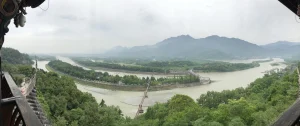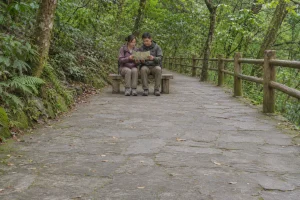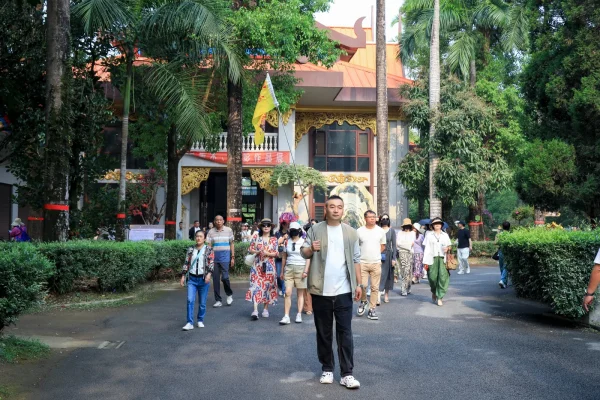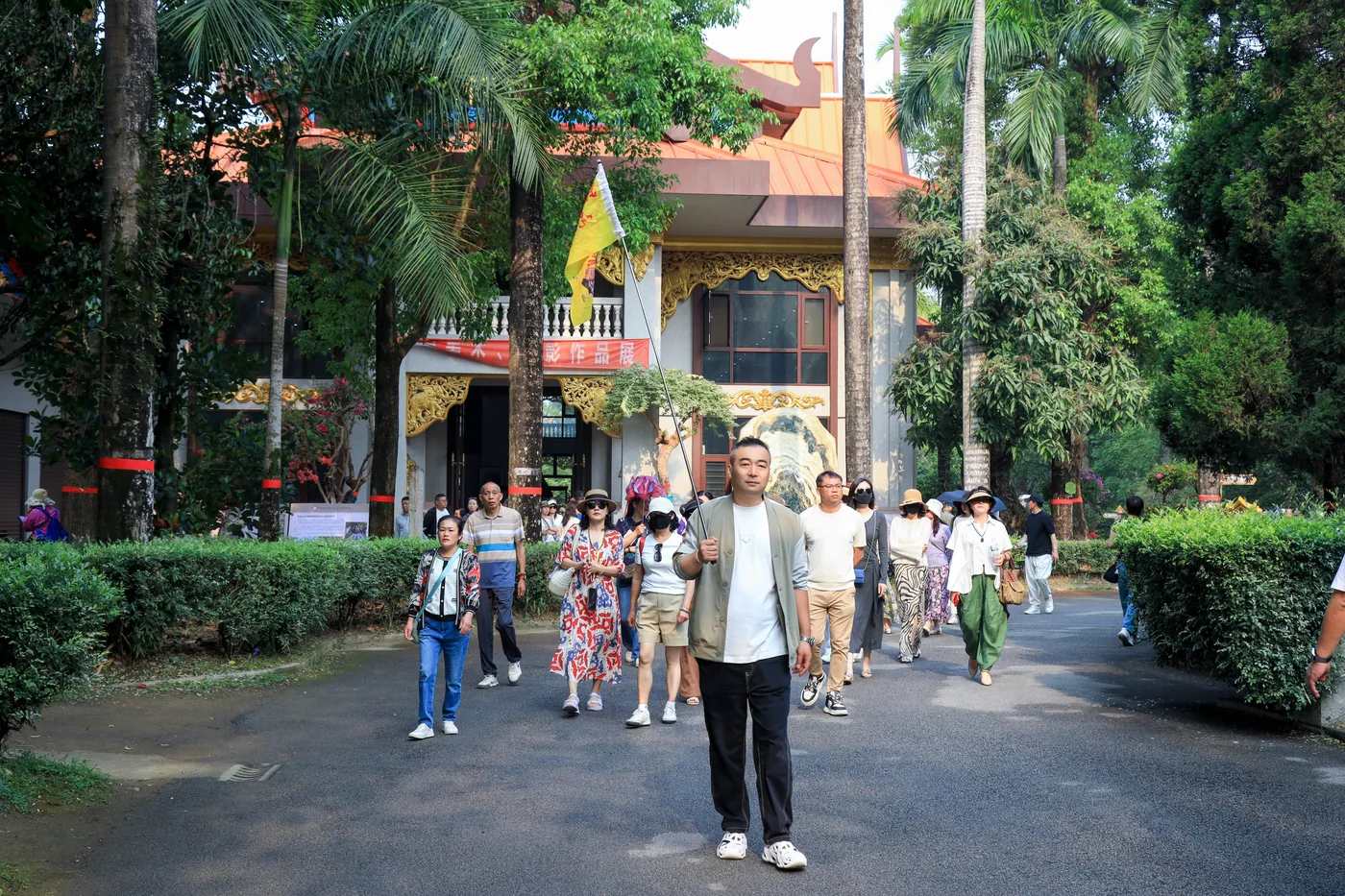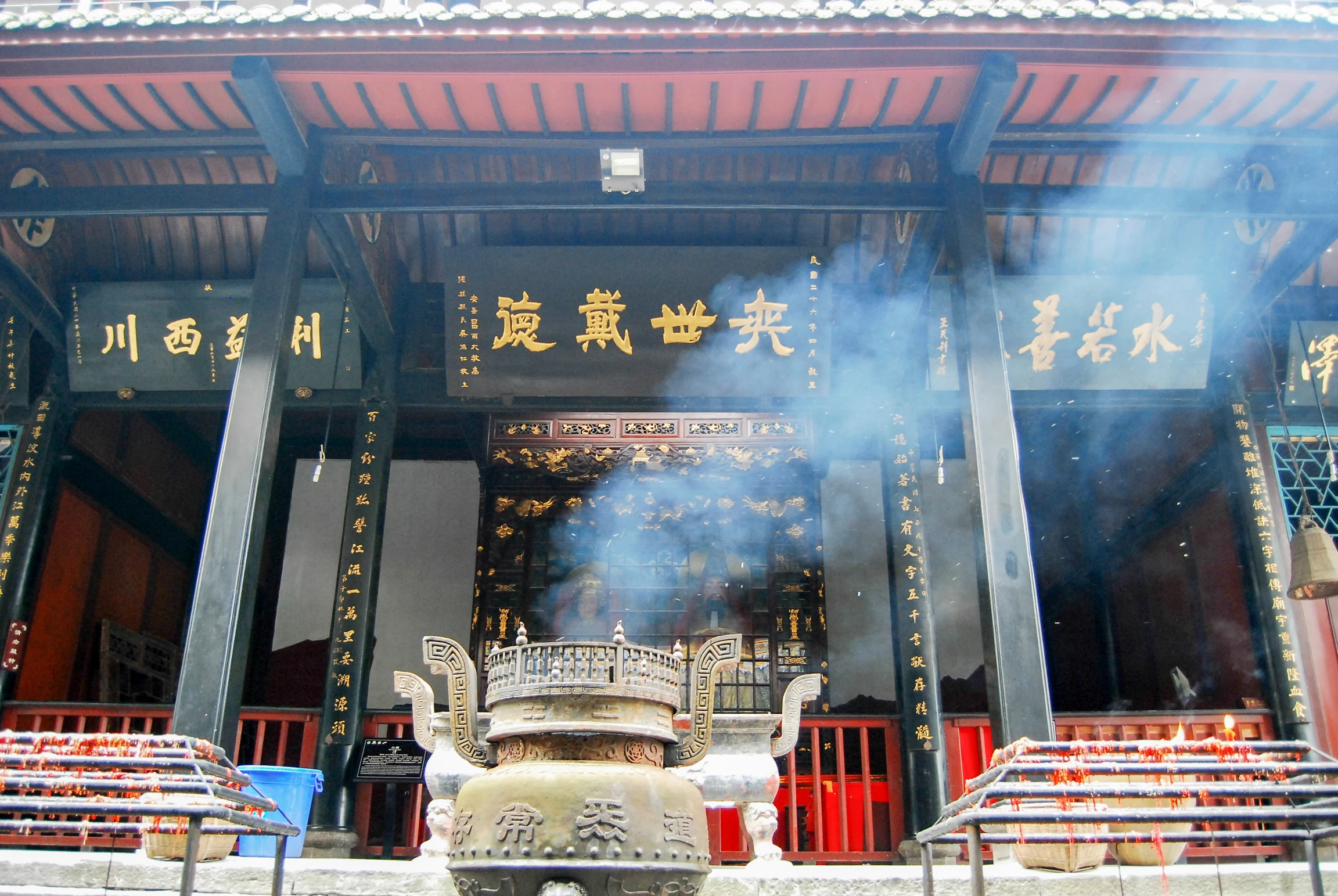
At Erwang Temple, connect the writing in a hall with the river below. Li Bing and the figure remembered as his son Erlang are honoured here, but the story also concerns repeated dredging and weir care. Looking at the dividing Min River makes those maintenance instructions concrete.
Allow a generous half-day for the temple and one waterworks view, with a full day from Chengdu for travel, lunch and return. If stairs are difficult, centre the outing on an open developed riverside route. Decide about the hall at the climb’s foot rather than spending return energy in advance.
What do you want to see at Dujiangyan?
| If you are coming for… | Spend your walking time here | What you can leave for another day |
|---|---|---|
| The people behind the engineering | Erwang Temple, its plaques and the link between the inscriptions and the river below. | A second mountain or the climb to every viewpoint. |
| The way the water divides | An open riverside view of the Fish Mouth, followed by a look at the overflow or intake if the route allows. | The temple stairs. Keep a photograph of the Chinese characters for the upkeep rule to discuss over lunch. |
| A mix of scenery and local life | One temple courtyard or approach, a river view and lunch in Guanxian Old Town. | A second crossing or an afternoon transfer to Qingcheng. |
Erwang Temple (二王庙), often translated as the Temple of the Two Kings, sits on the lower slopes of Mount Yulei within the Dujiangyan waterworks scenic area. Save both names on your phone. A train ticket to Dujiangyan city or a hotel reservation labelled Qingcheng gives you a starting point for the journey. You still need the entrance, the walk to the temple and a way back from the exit you actually use.
A short lesson in river maintenance
If its section is open, find 深淘滩,低作堰: dredge the bed deeply and keep the weir low. The first action restores room for irrigation flow as sediment accumulates. At Feishayan, the low crest lets surplus water and sediment spill towards the outer river. Each half addresses a different task.
An April 2026 visit by Hunan Daily reporters with a researcher from Dujiangyan’s local heritage centre gives the words a physical meaning. Iron markers set in the riverbed served as a reference for the depth of the maintenance work. A crew clearing sediment could use that reference to judge when to stop. Those markers usually lie beneath the bed. Understanding their purpose makes the river view rewarding even when all you can see is moving water. The reporters’ visit with Dujiangyan heritage researcher Fu Sanyun.
Distinguish the short maxim associated with Li Bing from Zhang Yuan’s longer 1946 pillar inscriptions. Find the six familiar characters within the writing beside the main-hall entrance. Zhang’s own repair work joins the founding story to the later people who kept the system functioning.
From the hall to a view of the river
| Stop | What to look for | Decision on the ground |
|---|---|---|
| Temple approach | The hillside setting and the flight of steps leading towards the gate. | Check the route back before climbing. Allow for descending the same steps if the onward path is closed. |
| An open hall or courtyard | The pillars, dedication plaques and the writing that links this place of worship to water management. | Look from the visitor area. Ask before photographing worshippers or moving close to an altar. |
| A designated river viewpoint | The split in the river or the relationship between an intake and an overflow. | Use the current visitor map to choose a view. A single position rarely explains all three structures. |
At eye level, separate dedication plaques from the river-maintenance inscription you came to find. The 2011 photograph’s burner, dark pillars and gold lettering show how many written subjects share a courtyard. Ask which hall contains the desired text instead of assuming any prominent plaque is the maxim.
The age of the irrigation system and the age of the timber in front of you are also different things. Xinhua’s photographic record shows extensive damage to the Erwang complex after the 2008 Wenchuan earthquake and workers repairing buildings in 2011. Look at the way roofs follow the slope and courtyards sit at different levels. A repaired structure can tell you how a place is used today without every beam having survived from its earliest building period. Xinhua’s illustrated record of the waterworks and temple repairs.
Use Fish Mouth, Flying Sand Weir and Bottle Neck intake as separate references: division, overflow with sediment, and control of irrigation entry. An open Qinyan Tower route may reveal their wider relationship. Below, the sound and force of one channel offer a different understanding.
Check the open direction and exit before using Anlan suspension bridge as part of a circuit. Someone uneasy on a moving bridge can choose the near-side view with an agreed reunion. Keep Erwang Temple and Fulong Temple distinct: the historic Li Bing stone statue reported at Fulong belongs to that visit.
A day from Chengdu, with lunch in Guanxian
Leave from your Chengdu hotel after breakfast with a day bag and your original passport. If taking the train, check the exact departure station, arrival station and return departure in the reservation. Add the local journey from the arrival station to the selected entrance. For a car day, agree both the drop-off and where the driver can legally wait or return to collect you. A February 2026 holiday notice placed restrictions on waiting near Qinyan Tower. That illustrates why a hotel pickup and a roadside collection after the walk need separate addresses.
At the gate, show 二王庙 and establish both approach and way back. A higher entrance can trade ascent for a long descent. If inscriptions lead your interest, start there, choose one river view afterwards and finish with enough energy for Guanxian lunch.
Guanxian Old Town (灌县古城) gives the visit a natural lunch stop. Local reporters on foot found congcongjuan rolls, skewers called chuanchuan and soft doufunao tofu among the snacks. Look at what is being prepared and ask about chilli oil and seasoning before ordering. A seated bowl of noodles or tofu with a side to share suits a party that wants a break from standing. If you have a food allergy, show the ingredient in Chinese and ask about the broth and sauces. An old report can help identify dishes even when individual stalls have moved. A Chengdu reporter’s walk through Guanxian Old Town.
After lunch, return to the named station or meet your driver for the journey back to your Chengdu hotel. Leave a margin for the transfer across town and for collecting any bags at the hotel. In steady rain, a shorter riverside visit and a longer lunch make a workable day. If gates or paths close, follow the scenic area’s directions instead of trying to reach the temple by a hillside shortcut.
Which Chengdu itinerary has room for the temple?
| Time available | Nights and order | What the choice gives you |
|---|---|---|
| Three days, two nights | Both nights in Chengdu. Arrive on Day 1, spend Day 2 at Dujiangyan, depart on Day 3. | An unhurried temple morning and lunch with no change of hotel. |
| Four days, three nights | Chengdu, Dujiangyan, Chengdu. Take the main suitcase to the local hotel on Day 2 or arrange storage in Chengdu in advance. | A night near Guanxian, plus a separate morning for a second visit or a return to Chengdu. Check entry terms for a second day. |
| Five days, four nights | Use Chengdu for all four nights. Reserve one day for the river and temple and another for a museum or Qingcheng. | More choice if the weather changes and fewer luggage transfers. |
Verotrip’s one-day Dujiangyan and Qingcheng itinerary uses the morning for the irrigation works and the afternoon for a short front-mountain visit. It treats elevated temple viewpoints as optional. If seeing the couplet is the purpose of your visit, ask to spend the extra walking time here and shorten or omit Qingcheng. Agree that change and the final return before leaving Chengdu.
The five-day Chengdu, Dujiangyan, Qingcheng and Leshan itinerary also pairs the waterworks with Qingcheng, on its second day. A longer holiday does not automatically mean a longer temple visit. To decide whether you want both sites in one outing, see the Dujiangyan and Qingcheng planning guide. The Qingcheng Back Mountain guide describes a different walking day if your priority is a ravine rather than the history of the Min River.
Questions about visiting Erwang Temple
Can an overseas visitor book the scenic area with a passport?
A February 2026 public-service notice described purchase with a passport or residence document and a staffed admission channel for foreign visitors to the Dujiangyan scenic area. It also covered holiday arrangements. For your date, confirm which gate handles your document, whether a time slot is needed and whether the temple route is open. Take the original document used to book. Dujiangyan’s visitor and traffic notice for that holiday.
How much climbing is essential?
The temple occupies a slope and the main approach has steps. Someone who can manage a short flight may still find the descent or a long walk to a different exit difficult. Ask staff about the actual route between the gate, open halls and pickup point. For a traveller needing a continuous step-free route, confirm that whole connection first. The lower waterworks can be the centre of the outing if the temple section is unsuitable.
Is a stop at Qingcheng Mountain necessary?
No. An Erwang visit, one view of the river and lunch in Guanxian make a complete day from Chengdu. People who particularly want a Taoist mountain walk can give Qingcheng another day. The two places involve different gates, transport and walking conditions.
What goes into the price of a private day?
Price on request. Give your Verotrip travel consultant the hotel or station, the return address, your preferred walking limit, luggage and whether you want help reading the inscriptions in English. Ask for an itemised quote covering admission, transport to both ends of the walk, driver waiting, interpreting, meals and any local hotel night. Confirm which of these are included and what happens to the route if the hillside paths close.
Cover photograph: Erwang Temple inner hall, June 2011, by Shizhao. Resized and converted to WebP. The photograph and this version are available under CC BY-SA 3.0.