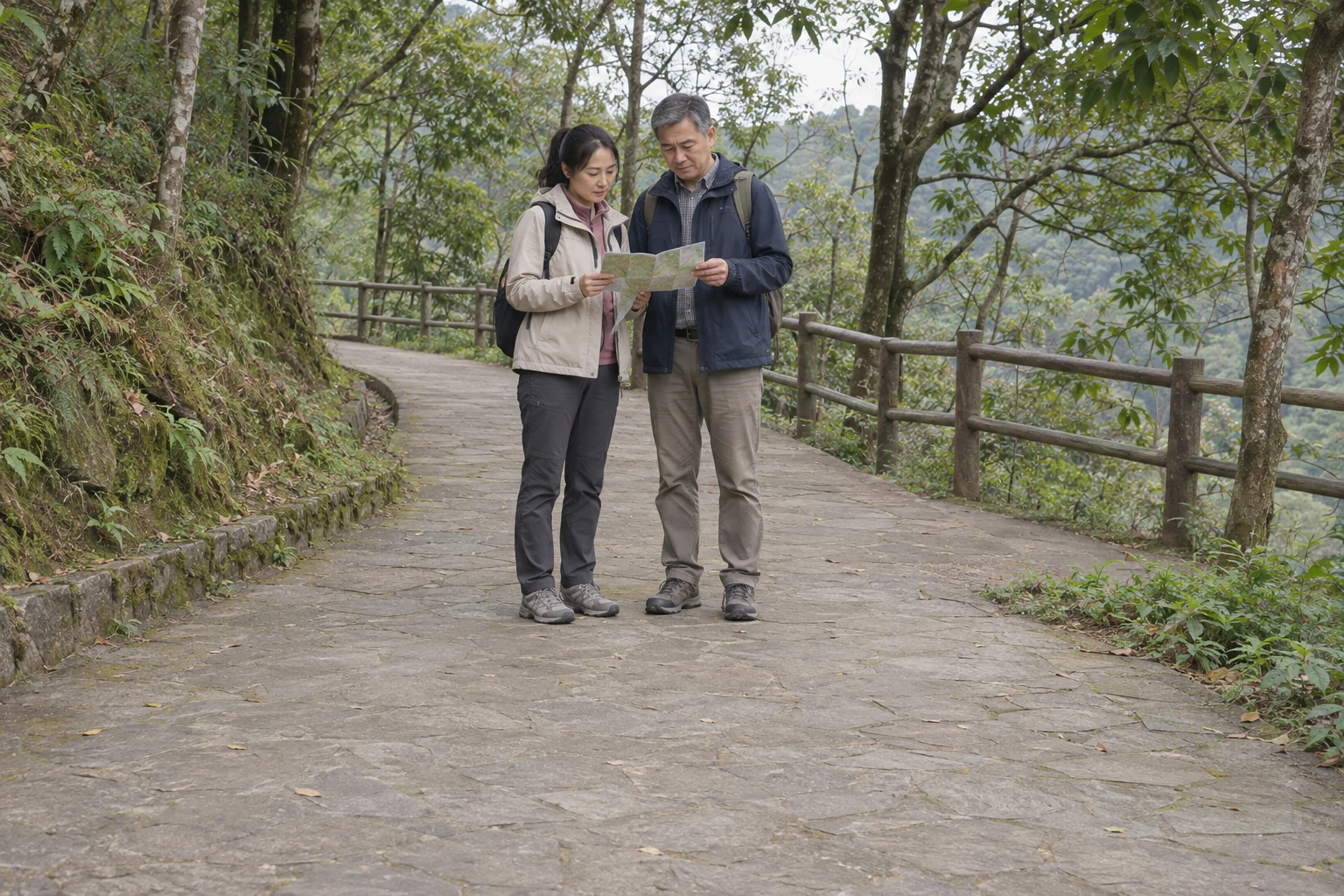
Give Danjingtai’s orange City Eye and managed hillside a focused Chengdu day. Choose a short return or one open extension after the main architectural viewpoint. Lunch and the hotel journey back should be settled before deciding how far to walk.
Use the full destination name, 成都龙泉山丹景台旅游景区. This is the Danjingtai visitor area in the Longquan Mountains, in Chengdu Eastern New Area. Do not substitute a map result for Danjing Mountain in Pengzhou. Similar English spellings can conceal a different destination and a very different transfer.
This guide focuses on the managed visitor landscape and the architectural viewpoint. It does not propose an undeveloped ridge crossing, a night climb or a through-hike across Longquan Mountain Urban Forest Park.
The choice at a glance
| Priority | Main attention | Keep optional |
|---|---|---|
| Architecture and a short walk | The City Eye and a permitted return to the agreed approach. | A complete circuit and every paid facility. |
| A longer hillside outing | The main viewpoint plus one confirmed signed extension. | Glass walking, adventure activities and a through-hike. |
| Mixed walking abilities | A shorter shared route with pauses and a clear collection. | Splitting without separate support or a dependable meeting. |
These are ways to organise your attention, rather than guaranteed operating routes. On arrival, use the current visitor map and signs to choose the permitted approach, turning point and return. A shorter outing is a complete visit when it gives everyone time to enjoy the main subject.
Look at the City Eye as architecture
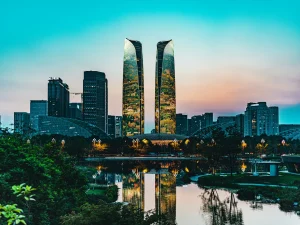
The report from the January 2020 opening describes an orange, metal-like structure rising in a spiral, with a Sun and Immortal Birds motif at its centre. Its eye-like aerial form explains the “City Eye” nickname. The report places it on a ridge in the southern demonstration area of Longquan Mountain Urban Forest Park.
From ground level, follow the curved orange outline against softer wooded slopes. A drone is not needed to notice changing geometry as you approach. Pause clear of the walking line and compare another signed public viewpoint.
Use an operating upper route only if it suits the party. Its ascent, descent, standing and possible queue add a real block of effort. A high deck is more than a photograph taken from a vehicle.
Let architecture and nearer slopes remain the subject when haze removes distant detail. Airport, lake and city panorama are not conditions that can be guaranteed. Promotional views should not become forecasts.
The opening report also describes an interior planning exhibition and other facilities as they existed in 2020. That is useful background to the complex, not confirmation that those rooms, films, displays or businesses operate today. Check any indoor attraction separately before making it the reason for travelling.
Choose the walking length before adding attractions
An operator-supplied guide published in March 2026 identifies the east-gate P2 parking approach and a route towards the main viewing platform, Danjing Ting (丹景亭), Danjing Ge (丹景阁) and other facilities. It describes a particular spring circuit, not a requirement to finish every component on a later visit.
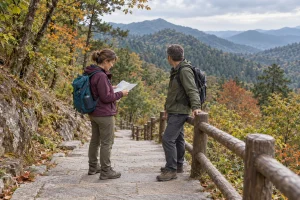
For a short outing, establish the open main viewpoint approach and same-area return. Ask where to turn without entering a paid attraction or starting a longer descent. Save energy for the final walk to the car rather than the farthest image.
For more walking, add one signed pavilion or tower section after checking steps, access and return. Keep 丹景亭 and 丹景阁 distinct in the plan; a shared English “pavilion” translation can obscure different features.
Assess downhill movement as well as climbing. A comfortable ascent may become tiring on wet or repeated descending steps. Use the slowest traveller’s recent walking, stair tolerance and rest needs, rather than a broad advertising label of easy.
Leave glass walkways, adventure and camping businesses outside the core walk unless separately selected and suitable. A companion avoiding heights should not be pressured into an extra to enjoy the main outing.
Stay within signed public routes and respect barriers. Do not follow a social-media shortcut, plantation track or connecting ridge because it appears to lead back towards the car park. A broad forest-park name is not permission to walk everywhere within its landscape.
Match the entrance to the complete journey
The March guide distinguishes east and west parking approaches. Its public-transport suggestion is Metro Line 18 to Sancha, 三岔, followed by a taxi to the scenic area. That leaves a separate road transfer; the station is not the visitor entrance. Check the current rail journey and actual final approach for your date.
For a first visit, a clearly agreed same-entrance return can simplify the day. Save both the full Chinese destination and the precise permitted pickup point. If you deliberately start on one side and finish elsewhere, settle that with the driver before separating. A pin for the entire attraction is insufficient for finding each other at the end.
Compare door-to-door arrangements. A city-hotel departure, metro connection, station-to-entrance taxi and final uphill walk involve more stages than a single rail journey. A direct car can reduce changes, but it still requires a legal stopping point and an agreement about waiting or collection.
Arrange the return road leg before setting off. Do not rely on finding an immediately available car at an unfamiliar hillside finish. If the plan uses the metro, include the ride back to the correct station, the onward rail journey and the last movement to your hotel.
Leave large cases at the hotel only after storage and collection have been accepted. Carry a manageable day bag with water, suitable layers, essential medication, phone and payment. State who holds any bags left in an arranged vehicle. No entrance locker, porter or permanent luggage counter is assumed here.
Build a full day with lunch and a real finish
Start after breakfast from the real hotel, then check notices, chosen path and reunion on arrival. Give the City Eye the first block and a pause before deciding whether an extension improves the whole party’s day.
Protect a seated lunch after the main walking block. Choose a suitable business actually operating near the agreed finish, or return towards your hotel area to eat. Carry water and a modest snack so that the walk does not depend on a particular cafe being open. This guide establishes no reserved table, menu or included meal.
Explain food needs before travel. Less chilli, vegetarian ingredients, allergies and halal preparation require different answers. If essential requirements cannot be met near the visitor area, settle a suitable meal location or packed alternative in advance. A forest outing need not become a search for food after someone is already tired.
After lunch, complete the return to the agreed city address. Keep any later stop modest. Sancha Lake, exhibition grounds and an airport finish each require additional movement and operating arrangements rather than filling spare time by default.
Danjingtai should not become an automatic stop between flights because a map puts it in eastern Chengdu. An airport connection must allow for the actual terminal, bags, check-in and road conditions. A dedicated sightseeing day gives the group more freedom to shorten the walk or wait out a brief shower.
Keep a practical base and count the nights
| Stay | Full days between travel dates | Place for this outing |
|---|---|---|
| 3 days / 2 nights | One. | Danjingtai as the main interest, with arrival and departure kept practical. |
| 4 days / 3 nights | Two. | A dedicated hillside day and a separate city day. |
| 5 days / 4 nights | Three. | One main attraction, this outing, and another independently chosen subject. |
For a city holiday, keep one Chengdu hotel unless another part of the journey gives you a reason to move. Choose the property around the whole stay, not only this outing. Confirm passport registration, bed configuration, lifts, room comfort and the actual vehicle access with bags.
The Chengdu stay planner helps allocate the usable days. In a three-day stay, Danjingtai uses your one full day if it is the priority. With three nights, it can occupy one day while the other stays in the city. Four nights create space for a separate principal attraction and another subject without borrowing time from departure.
If you already plan extensive travel across Sichuan, compare the Sichuan walking choices before adding another excursion. A managed hillside outing near Chengdu and a western highland programme have different access, overnight and physical considerations. They are not interchangeable versions of one hiking day.
Allow the weather to change the ambition
The March operator material concerns spring flowers and a dated seasonal activity. It does not establish today’s flowers, autumn colour, daily entertainment or a currently available promotion. Choose the shape of the walk for the conditions you find, rather than travelling to reproduce a photograph from another month.
In light rain, shorten the walking section and take care on wet steps and paving. Use shoes with grip and practical rain protection. A lookout can feel more exposed than the hotel neighbourhood, so carry a layer even when a city forecast sounds mild.
In storms, strong wind or other unsuitable conditions, follow management instructions and change or omit the outing. Do not use a glass walkway or an exposed platform as the fallback for poor conditions. A prepaid optional activity is not a reason to continue when the route is unsuitable.
For a gentler architectural setting within a city day, compare Tianfu Art Park’s selected outdoor walk. It offers a different subject and location. An indoor substitute there still requires its own current museum arrangements; a wet forecast does not create an available reservation.
Use daylight as the default for this first hillside visit. Sunset, night lighting and a late return need a separate current operating and transport plan. Tell the planner if someone uses a walking aid or pushchair: confirm the exact slopes, steps, toilets, rest opportunities and return path instead of assuming that a modern building makes the entire area step-free.
Passports, costs and the written day plan
A 2024 report of Chengdu’s tourism-bureau briefing for foreign visitors includes Danjingtai in its promoted sightseeing routes. That supports its place in the ordinary inbound-tourism context. It does not demonstrate that every passport, overseas phone number or payment method works in each attraction’s booking system today.
Have the current public entrance and any required original-passport process established for your party. For a separately chosen exhibition, tower or activity, name the exact ticket and operational area. General access to the grounds does not settle the admission conditions of every facility inside.
The March operator guide treated grounds entry separately from charged components. Use that distinction when comparing costs, rather than carrying its promotional tariffs or opening times forward. This guide fixes no current price, entry cutoff, last transport or daily availability.
| Part | Written detail | Cost boundary |
|---|---|---|
| Access and walking | Date, actual entrance, open segment, turning point and any original-passport channel. | Grounds access and individually selected attractions are separate. |
| Transport and bags | Hotel, legal collection point, waiting, custody and complete return address. | Name both directions and any station transfer. |
| Language, meals and rooms | Type of accompaniment, suitable lunch and any exact property and nights. | Included only when itemised in the accepted proposal. |
Price on request. A Verotrip proposal should identify the selected walk, any independently confirmed attraction, the actual outward and return transport, waiting, language support and meal basis. Hotel nights, tickets, specialist interpretation, activities and insurance apply only when specified in the accepted written arrangement.
Request a day that specifically names Danjingtai. A published Chengdu itinerary should not be assumed to include this hillside visit unless its actual programme says so.
Frequently asked questions
Is Danjingtai the same as Danjing Mountain in Pengzhou?
No. Use 成都龙泉山丹景台旅游景区 and the confirmed visitor entrance for this outing in Chengdu Eastern New Area. Check the Chinese destination before accepting a map route or booking a car.
Do I need to complete the whole walking circuit?
No. Choose a permitted short return around the main architectural interest, or add one open section when the group is comfortable. Establish the turning point and road meeting area before walking away.
Are the exhibition hall and glass walkway included?
Only if the named facility is operating, suitable for the party and expressly included in your accepted proposal. The core day can focus on the managed landscape and viewpoint without depending on either attraction.
Can I return to my Chengdu hotel the same day?
Build the day that way from the start: name the hotel, visitor approach, lunch plan, collection point and complete return. Confirm the road leg as well as any rail journey, and shorten the walk when needed to protect the finish.
Plan a hillside visit with a complete return
Send a Verotrip travel consultant your date, hotel, party size, walking and stair limits, language, food and luggage needs through Plan My Trip. Say whether the building, a short woodland walk or a longer managed section matters most. The resulting day can give that interest enough attention while keeping a seated meal and the journey home.