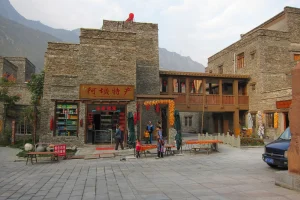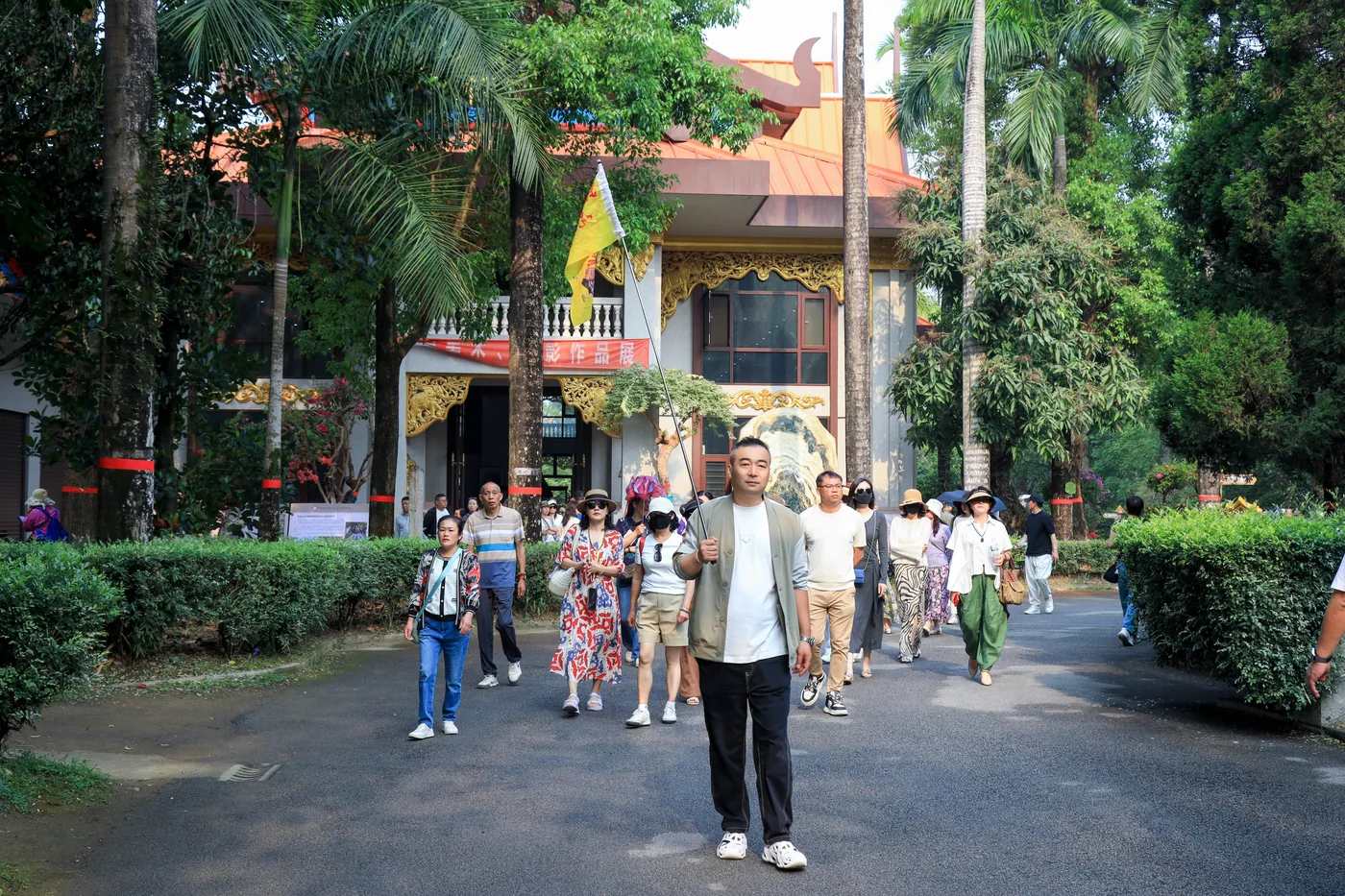
Start at the Beichuan Qiang Folk Museum (北川羌族民俗博物馆) in Yongchang, Beichuan’s new county town. Choose one piece of clothing or embroidery to study closely, then compare it with a reconstructed scene that shows how objects were used. This makes a focused half-day from Mianyang. A walk or lunch in the nearby Banaqia district can round it out if the weather and your pickup time allow.
Use the full Chinese museum name and Yongchang (永昌镇) when you save the map pin. The earthquake memorial and old Beichuan county town are separate destinations with different approaches. Give them their own time if you want to visit.
Choose what you want to see
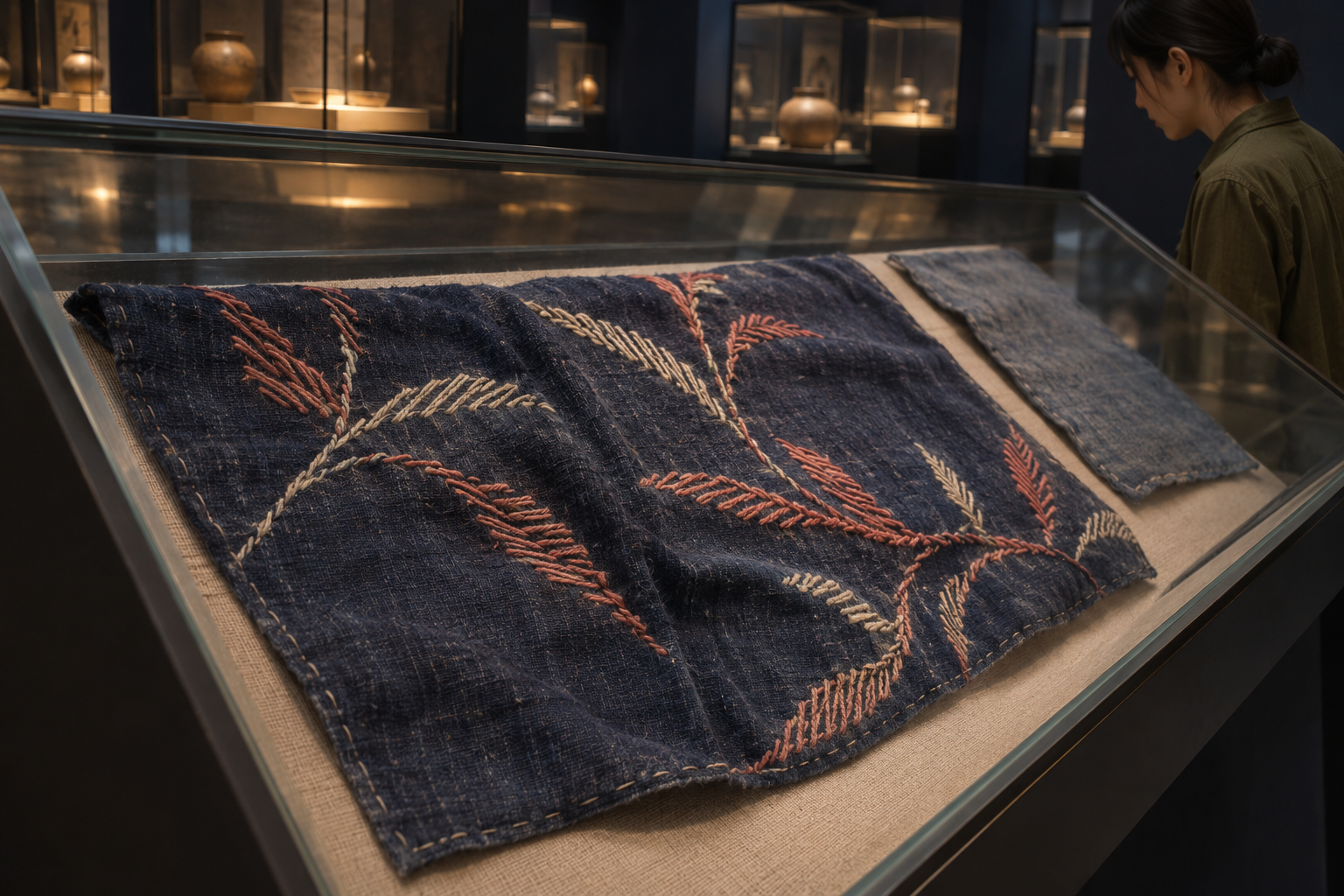
Textiles and clothing. Ask what clothing or embroidery is on view when you arrive. Pick one object whose edge is easy to see. Notice where rows of stitches meet a cuff, opening or seam, and where the cloth is left plain. Step back and see how the placement of each embroidered band changes the overall garment. Labels about maker, date or community help you put the piece in context. Designs can vary by garment and place, so leave the symbolic meaning open when the label does not give an explanation.
Original objects and reconstructed scenes. The museum uses physical objects and gallery reconstructions to illustrate parts of Qiang daily life and history. Read the text beside the display before treating a room, set of tools or costume as a historic original. Ask which parts are objects from the collection, which are teaching materials and what period or place the display is describing. If an instrument is on view, compare it with the way the scene shows it being used. Keep the visit focused on one or two examples you can see clearly.
A craft demonstration or short lesson. Allow extra time only if an appropriate host is available. Museum admission and the chance to watch or try embroidery are separate arrangements. Ask whether the session is a demonstration, an introduction to a few stitches or a project you can finish. Check the venue name, materials, seating, teaching language and any age or dexterity requirements before you reserve time.
| Stop | Look for | Confirm before relying on it |
|---|---|---|
| Textiles and clothing | One garment or accessory. Look at where the decoration sits and how seams interrupt the design. | Whether textiles are displayed and which gallery can be reached. |
| Objects and reconstructed scenes | Compare the label on a displayed object with the label on the setting or model. | Which scenes, original objects and interactive displays are available. |
| Optional craft stop | Choose a separately arranged Qiang embroidery demonstration or lesson. | Host, venue, project, seating, materials and teaching language. |
A Sichuan University field visit describes the museum’s use of objects and reconstructed scenes, then reports a separate visit to a clothing shop. That distinction helps you set expectations. An old description of a floor layout, recent technology upgrade or workshop address may help you ask what is on, but check the relevant gallery and entrance on your date.
Read the displays in the new county town
The present museum was rebuilt following the 2008 earthquake. A Macao Foundation report documents its role in the rebuilding and the museum’s reopening. The Yongchang setting helps explain the difference between looking at Qiang material culture in a museum and visiting sites connected with the earthquake itself. Allow the museum enough time to make that distinction clear, especially if you are visiting with children.
Qiang embroidery also continues outside the museum. If you see garments for sale in Banaqia, compare a seam or border with what you saw in the gallery. Ask who made the item and whether it is intended for daily wear, a particular occasion or sale as a souvenir. A shop display can be an opportunity to ask about technique. A workshop visit should go into the itinerary only once you have agreed a time and host. Ask before photographing any maker or work in progress, and obey the museum’s photography rules.
Carry your original passport. Ask whether the museum accepts it at a counter, requires an advance reservation or uses another channel on your date. Confirm stairs, lifts, seats and current visitor galleries if someone cannot stand for long. At the entrance, you can ask for 羌绣 (Qiang embroidery), 展厅 (gallery) and 洗手间 (restroom). Ask separately for any English labels, interpretation or guide you require.
Plan lunch and the return ride
Leave your Mianyang hotel for the museum’s confirmed entrance in Yongchang. Share a pin and decide where the car will be after the visit. Ask about the walk from the drop-off to the door, especially in rain or if you need a short approach. You can spend the whole morning in one area of the museum and leave from the same gate. In poor weather, choose an indoor museum visit and a nearby meal with an easy approach. If the museum is closed, consider a confirmed indoor stop back in Mianyang.
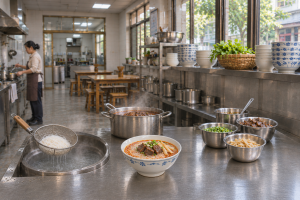
For lunch, look in Yongchang for a seated meal near the Banaqia commercial district. Ask what local dishes the kitchen can serve that day. A meal of vegetables, tofu and rice is a practical option if you have time or spice constraints. If you order smoked meat or preserved pork, ask about salt and chilli. For a vegetarian meal, specify whether you avoid lard, meat stock and dried meat used as seasoning. If you prefer to eat when you get back, the Mianyang rice noodle guide explains the broth and toppings. Ask whether your chosen shop still has bowls available after the morning rush.
| Stage | Suggested plan | What to check |
|---|---|---|
| Morning | Leave the agreed Mianyang hotel and arrive at the museum’s Yongchang visitor entrance. | Original-passport method, open gallery and step-free access if needed. |
| Lunch | Sit down for lunch in Yongchang or return to Mianyang for a meal. | Meal hours, stairs, ingredients and time for the next pickup. |
| Final leg | Prearrange the pickup and finish at the original hotel or a named departure terminal. | Bag capacity, driver waiting and enough time for the onward train or flight. |
After lunch, finish at your Mianyang hotel or arrange the entire leg to the station or airport. If you need bags from the hotel, put that stop in the plan before estimating the terminal arrival. If you take them to Beichuan, confirm space in the car and where the bags can stay while you are inside. Ask for the driver’s waiting arrangement before the car leaves. The earthquake memorial has its own road time and should not be added to a tight rail connection.
Stay in Mianyang or Yongchang
Choose Mianyang for rail arrival or an early onward connection. Give the Yongchang museum its own morning and leave Yuewang Tower or another city stop for a different block of time. Choose Yongchang if you want to check in before the museum day or have booked a separate craft visit without making two drives from town. Confirm hotel location, bag access and an evening meal you can reach comfortably.
| Length | Suggested order | Hotel nights |
|---|---|---|
| 3 days / 2 nights | Arrive in Mianyang. Make the museum outing and return on day two. Leave from the agreed terminal on day three. | 2 Mianyang. |
| 4 days / 3 nights | Arrive in Mianyang. Keep day two for central Mianyang, day three for Yongchang, and depart on day four. | 3 Mianyang. |
| 5 days / 4 nights | Arrive in Mianyang and spend day two there. Transfer to Yongchang on day three. Visit the museum on day four. Drive to the agreed Mianyang hotel, station or airport on day five. | 2 Mianyang, then 2 Yongchang. |
If you are interested in Qiang architecture in a village setting, our Taoping Qiang Village guide covers a different place in Li County. Leave it for another travel day. Use the Sichuan planning guide to decide where Beichuan fits alongside other stops.
Questions about the Beichuan Qiang Folk Museum
Is this the museum at the earthquake memorial?
Use the Qiang Folk Museum address in Yongchang for this outing. The Wenchuan earthquake memorial and old county-town ruins are separate visitor stops. Confirm both their map pins and arrangements if you want to visit them as well.
Will I always be able to see Qiang embroidery?
Ask which textiles or clothing are on view before making that your reason for the trip. When textiles are unavailable, you can compare which objects and reconstructions are open that day or choose another museum date.
Can I take an embroidery class after the museum?
Only if a host and venue have been confirmed. Ask what you will make, whether materials are provided, how long you will sit and how the teacher will explain the work.
What can Verotrip quote for this visit?
Price on request. Tell your travel consultant your hotel or terminal, travel date, walking needs, group size and language preferences. Ask for current admissions, any craft session, vehicle waiting, full return, meals and hotel nights to be listed separately in the written plan.